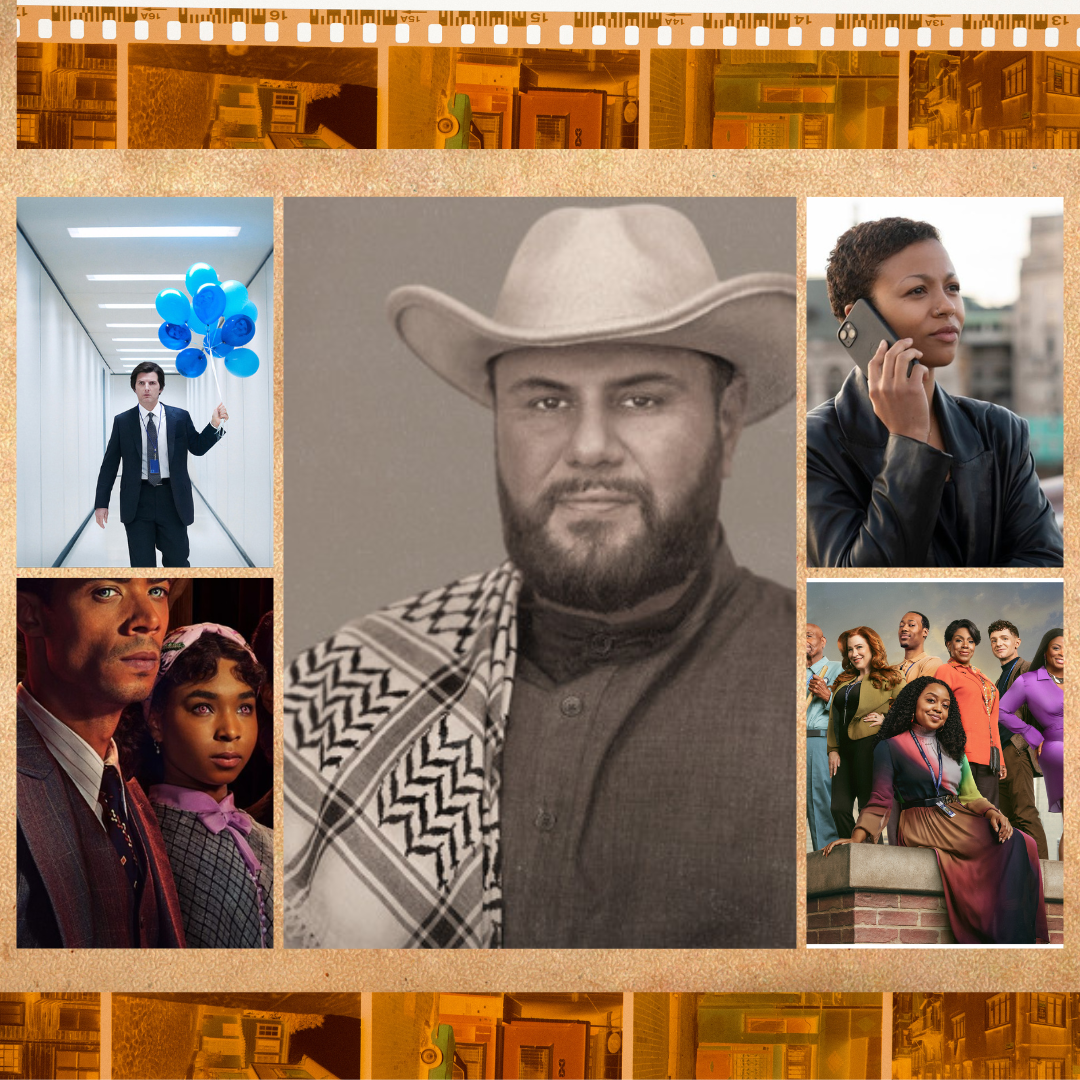
First, an oldie: In 1970, a white filmmaker chased down an increasingly hostile James Baldwin for a documentary interview on his “escape” from racist America to the so-called utopia of Paris. Because Baldwin wouldn’t necessarily give the journalist what he wanted, the documentary only wound up being about 30 minutes long, but it has a classic quote that inspired my latest piece:
Black Girl Watching is a reader-supported publication. To receive new posts and support my work, consider becoming a free or paid subscriber.
“Where would a fleeing Black man go, if he wanted to escape?” Baldwin responds to the filmmaker, dripping with disdain. There is no “safe” place for Black people in an anti-Black world, but dating all the way back to American slavery, Black Americans have found a port in the storm in Hawaii. In 2023, I spent 5 weeks hopping around the islands, researching and interviewing Black scholars, historians, activists, artists, healers and more to write this piece on the long tradition of Black and Hawaiian solidarity—how we lost it, and how we might get it back. After two long years of writing and selling this piece and it getting killed and publications folding, I’ve finally found a home for the piece that pays what I deserved for the love and work I put into it. Check it out on ContrabandCamp:
Though the annoying filmmaker is annoying, Baldwin is brilliant and this slice of his life in Paris is illuminating and invigorating. Watch the short film James Baldwin: Meeting the Manon MUBI or Criterion Channel (or if you just search on YouTube you can watch it full for free—don’t tell em I sent you though lol)
Mid-Century Modern
I was so wrong about this show! After a bit of a rocky start with the pilot and second episode, I was ready to throw this show in the dustbin. But by the 3rd episode, everything just gels for this modern-day Golden Girls sitcom that features three gay men best friends of a certain age (and one of their moms) choosing to live together in Palm Springs after the death of their fourth bestie. In this sweet tear-jerker starring the iconic Nathan Lane as the Dorothy, the hilarious and fabulous Nathan Lee Graham as the Blanche, and a surprising Matt Bomer as the loveable ditzy Rose. If you’re in need of a pick-me-up, you will not regret this heartwarming watch.
Watch Mid-Century Modern on Hulu.
Dying for Sex
TW: cancer, chemo, childhood sexual abuse
Okay with all these trigger warnings, this is still a dramedy in the truest sense of the word. Molly (Michelle Williams) is a breast cancer survivor two years into remission when she learns that her hip pain is cancer that has not only returned at stage four but has metastasized in her bones. Somehow, this news—and the libido-killing medication she had been taking to prevent the cancer from returning—makes her very horny. After a seriourealizes that her sexless marriage is not for her and takes charge of her cancer journey and what’s left of her life by pursuing pleasure at all costs. With the help of her best friend Nikki (Jenny Slate) she starts choosing the life and the sex that she wants with a bevy of hilarious suitors. Of course, the premise is in the name, and Molly is dying of inoperable cancer, while also trying to heal from childhood sexual abuse. It’s handled with care and love and is based on the true story of real best friends Molly and Nikki and the podcast they did together recounting these adventures of the same name.
Watch Dying for Sex on Hulu.
Black Mirror
The sci-fi-horror-drama anthology series about what fresh hell new technology will bring us is back—despite the fact that we’re already living in the fresh hells of new technology and our tech overlords IRL. Though it digs in its own backyard for many of the episodes — there are sequels and spiritual sequels to fan-favorite episodes this season — series creator Charlie Brooker still has some fresh horrors up his sleeve. Read my full review of the season—featuring Rashida Jones, Tracee Ellis Ross and Issa Rae here.
Your Monster
Okay, another oldie but goodie—I’m so behind on supporting my girl Melissa Barrera! When Hollywood’s zionists came for her neck for supporting Palestine, she continued to thrive and still educates her social media audience on the genocide daily. So, I had every intention of watching her 2024 Sundance romantic comedy and just never did. But I finally watched last week before attending a panel with the filmmakers and when I say this movie has everything, I mean everything: Rom-com-horror-fantasy-MUSICAL. And it’s brilliant at every genre. Melissa plays Laura who gets dumped at her hospital bedside when her horrible boyfriend can’t deal with her illness anymore. Recovering alone in her childhood home, she meets the Monster (Tommy Dewey) whose been hiding under her bed and in her closet. With a little help and love from Monster, Laura learns to tap into her long-simmering rage.
Watch Your Monster on HBOMax.
Stay Watchin’,
Brooke
Black Girl Watching is a reader-supported publication. To receive new posts and support my work, consider becoming a free or paid subscriber.
*Spoilers for The White Lotus, Season three below*
The girls are upset about this underwhelming season three of The White Lotus—an anthology series that follows a revolving cast of wealthy white people as they vacation in tropical locales of the exorbitant titular resort chain. Among those fans on social media who are devastated by the death of a fan-favorite character, are fans who are confused by the plot holes and annoyed by the finale’s lack of resolution and overall sense of meaninglessness.
Black Girl Watching is a reader-supported publication. To receive new posts and support my work, consider becoming a free or paid subscriber.
But it was always going to end this way.
And I don’t just mean the 50-’leven instances of Chelsea foreshadowing her and Rick’s deaths throughout the season. Or the glaringly-obvious-to-anyone-with-eyes fact that rich hotelier Hollinger didn’t kill Rick’s dad because he is Rick’s dad. Not even that the audience would excuse Lochlan as just a sweet confused boy instead of someone who sexually assaulted his own brother, or that they’d blame the female wellness worker for Rick’s violent rampage—boys and men are rarely responsible for their own actions and somehow there’s always a woman to blame instead.
Yet, in a season of predictable and unsatisfying events, the most predictable of all is that creator/showrunner/writer/director/producer Mike White would frame white male violence as an inevitable force, corrupting everything around it without any hope (or desire) for change.
Of course there are white men like Timothy Ratliffe (Jason Isaacs) the wealthy patriarch who would rather murder (most of) his family and kill himself—out of “love” for them, no doubt!—before confessing that he’s led them into financial ruin and the shame of federal criminal charges. And sure, there are men like Rick (the criminally underused Walton Goggins) who, instead of seeing the love staring them in the face would rather pursue a decades-long vendetta over the love he didn’t get in his childhood. And of course, both of these kinds of violent men end up corrupting the most vulnerable people around them—women, children, people of color.
Obviously I mean Chelsea (an adorable Aimee Lou Wood) who gets caught in the literal crossfire, and Ratliffe’s wife and children who get caught in the metaphorical one. But also, because of the cycle of global white male violence, gentle Buddhist Gaitok corrupts into a typical cop who would shoot in the back an unarmed man holding a dead woman; Belinda (Natasha Rothwell) and her son Zion (Nicholas Duvernay) become complicit in murder in exchange for 1% of the murderous Greg’s ill-gotten fortune (though be serious, people who think Belinda “betrayed” her one-night stand by not going into business with him after she became wealthy: Belinda had no obligation to financially tie herself to that random man she met a few days ago and made tentative pillowtalk plans with. And idk, maybe Belinda was Tanya’s one-night stand and she was never obligated either!). And Hollinger, the originator of this cycle of global white male rage and violence, in a full-circle moment, gets hoisted by his own petard.
And still, the world of The White Lotus keeps turning. Nobody even seems to notice that 5 people were murdered at the hotel they’re staying at. What was it all for?
Yes, we see structural whiteness is a corrupting power. Structural male violence is a corrupting power. Structural greed is a corrupting power. But we saw that in season one (though it’s stated much better by bell hooks, who named our intersecting systemic oppressions as white supremacist capitalist patriarchy). So, what now?
White’s just a writer, after all, just an observer of human behavior making TV shows. What else could this creative “genius” do anyway, other than just observe and report on our global white, patriarchal, violent reality for entertainment (and a lot of money)?How many times can he dig from this same well without providing any new insight or stakes or even—God forbid—a call to action?
At least for another season, apparently, as location scouting for season four was reportedly already underway before the season 3 finale even aired.
Because what the world needs is even more capaganda: capitalist propaganda masquerading as entertainment that humanizes the ruling class and makes an eager working class audience sympathize with their self-made plights. Worse, capaganda as entertainment makes workers feel even less inclined to revolt because they see that the wealthy aren’t as happy with their choices as it seems, and perhaps that karmic justice is enough. (I have a theory that AppleTV produces my favorite show Severance for these same reasons, but my theory is still baking in the oven at the moment.)
Both of White’s shows Enlightenment and The White Lotus rub me the wrong way because I see a white male writer come to the same conclusions about power—racial power, patriarchal power, capitalist power— and turn away from any sort of revolutionary application of that knowledge. As if the knowledge itself is enough and he can breathe a sigh of relief and pat himself on the back for doing “the work”. It’s actually infuriating to watch white male creators get lauded and paid for making less coherent (and therefore less dangerous) points about white male violence than the people who are most victimized by it and who have been screaming about this on pain of death for actual centuries with no relief. It’s all, at the least, unimpressive and unserious.
After season one’s offensive storytelling where the Hawaiian and Black characters at the Hawaii White Lotus were rendered backdrops for white enlightenment, I wrote a piece for Refinery29 on White and “The Limits of White Self-Critique.” It still applies:
“Excellent performances (and performers) like Natasha Rothwell as Belinda are wasted as the Black and Hawaiian characters — the ones actually best suited to critique their white oppressors through the lenses of race, class and gender — are sidelined to focus on The Real Story: the humanity of rich and powerful white people. In the characters’ fight for power, the rich white people emerge victorious as ever, the exploited white hotel manager winds up dead, and the Black and Hawaiian characters barely even get to play. This is, after all, a six-episode story about white people for white people, created, written and directed by one white man, (pun inherent) Mike White.
The White Lotus is far from alone in its shallow, self-congratulatory attempts at white introspection. Most of the so-called prestige dramas center on horrible, rich white people, with their racist, classist obliviousness as part of the appeal: Big Little Lies, Billions, Arrested Development, Succession, The Crown, The Undoing, and on and on.
Each show parades these horrible rich white characters across the screen and we’re supposed to laugh or shudder at or empathize with their messy ridiculousness, as each series flirts with the idea of disrupting the status quo. We cheer when that one outsider character calls bullshit, and — like The White Lotus’ Belinda, who believes her rich white client is really going to invest in her and make her dreams come true — we think maybe this time, maybe on this show, things will be different.
But it’s Lucy with the football. Before the nails even come out, the white savior jumps down from the cross, unscathed. The rich and powerful are only more humanized, more excusable. Even if individuals change, the system of the powerful remains powerful; the system of the rich remains rich; the status quo remains intact.
White explains what’s going on in all of these Rich White Shows (perhaps unintentionally) in an illuminating and stunningly meta interview with Vulture. Responding to a criticism he read that white people like The White Lotus because they get to remain the center of the conversation and nothing ever changes, he says, “If I took that assumption to its fullest, it would make it so that I shouldn’t even be creating anything anymore. It’s a deep criticism of who’s getting what stories made, which is a completely valid conversation.”
White — who, again, wrote and directed every episode of The White Lotus by himself — has taken the critique of whiteness being centered in his show and distilled it into the nonsensical conclusion that “white people shouldn’t exist or create things.” Even as White finds the question of “who’s getting what stories made” to be a “completely valid conversation,” clearly, there are limits. After all, what would happen to him if marginalized people got the chance to tell stories too?
Shot: “[O]bviously, it would threaten me in some way! Because this is all I can do! I don’t know how to be a general manager of a hotel!” He says.
Chaser: “I’m that white kid, I guess,” he says. “Am I going to hate myself? What do you do?”
Therein lies the frustrating end of the line for white wokeness. If you do a little digging beneath the surface of white supremacy and all of its damage, you quickly hit on the obvious answers to the question: What do you do with all of this undeserved power? These answers are carved in stone with lightning, like The Ten Commandments: give up your power; redistribute your wealth. And the white woke’s response to those obvious truths is, “But wait, like, not really, though, right? I’m that white kid. Am I going to hate myself?”
White people hating themselves is useless to us. Nobody asked for that and nobody cares how they feel about themselves. It’s a common deflection —the entire argument for why Critical Race Theory shouldn’t be taught in schools is that it might make white children feel bad about the legacy of white supremacy. It’s a plugging of the ears to silence the cries for what we’re really demanding: Reparations Now.Give up your ill-gotten power. Give up your stolen wealth. But they can’t seriously entertain that. (“Obviously, it would threaten me in some way!”)
So instead, Mike White ate his own lotus, took every dime of that HBO money and made himself the creator, the writer and director of every episode of a show that takes place on stolen land, using marginalized characters and colonization as props, instead of giving a shit in a suitcase about putting Hawaiians in place to tell their own stories — in front of and behind the camera.
It’s a satire of a satire within a satire.
“The show will move on to a different exotic-to-white-people location, presumably with new people of color to disappear into the background of The Real Story.
But perhaps Mike White might cede a sliver of power and bring on, say, a Connie Britton girlboss type to showrun next time. The title of the aforementioned Vulture interview is “Mike White Accepts the Criticism,” after all.
Or perhaps, like White admits in the interview, “accepting” criticism after you’ve been paid, praised and promised even more is literally the least one can do. “Accept” the criticism all the way to the bank. The series enjoyed steady ratings through the finale and dominated Twitter talk during its Sunday night run. The Emmy buzz for the show continues to grow. The people who keep winning are the Shanes of the world (who are really just Armonds but with the promise of white supremacy actually fulfilled). So, what incentive is there to change?
Which leaves the marginalized viewer and critic alike as Paula [the only Black guest of season one, a young friend of a rich white family]. We, the Black friendTM, have come to the realization that our white liberal shows love to talk a good talk, sprinkle in a little “white supremacy is wrong!” Add a dash of, “Obviously, imperialism was bad!” (an actual line from The White Lotus season one recited by Steve Zahn). But when it’s time to act, to divest, and to redistribute — both on the page and screen and behind the camera — they bristle at the thought and slink away with White’s infuriating conclusion on their lips: Am I supposed to hate myself?
They’ll serve us up the next unseasoned critique of whiteness (here’s looking at you, Nine Perfect Strangers), but now we know. The camel won’t be educated, dragged or willingly walk through the eye of the needle. And we’re left to decide if we want to burn it all down in a righteous blaze or be complicit in exchange for a glimpse into a world in which we were never meant to belong.”
What did you think of season 3? Let me know in the comments.
Stay watchin’
Brooke
Black Girl Watching is a reader-supported publication. To receive new posts and support my work, consider becoming a free or paid subscriber.
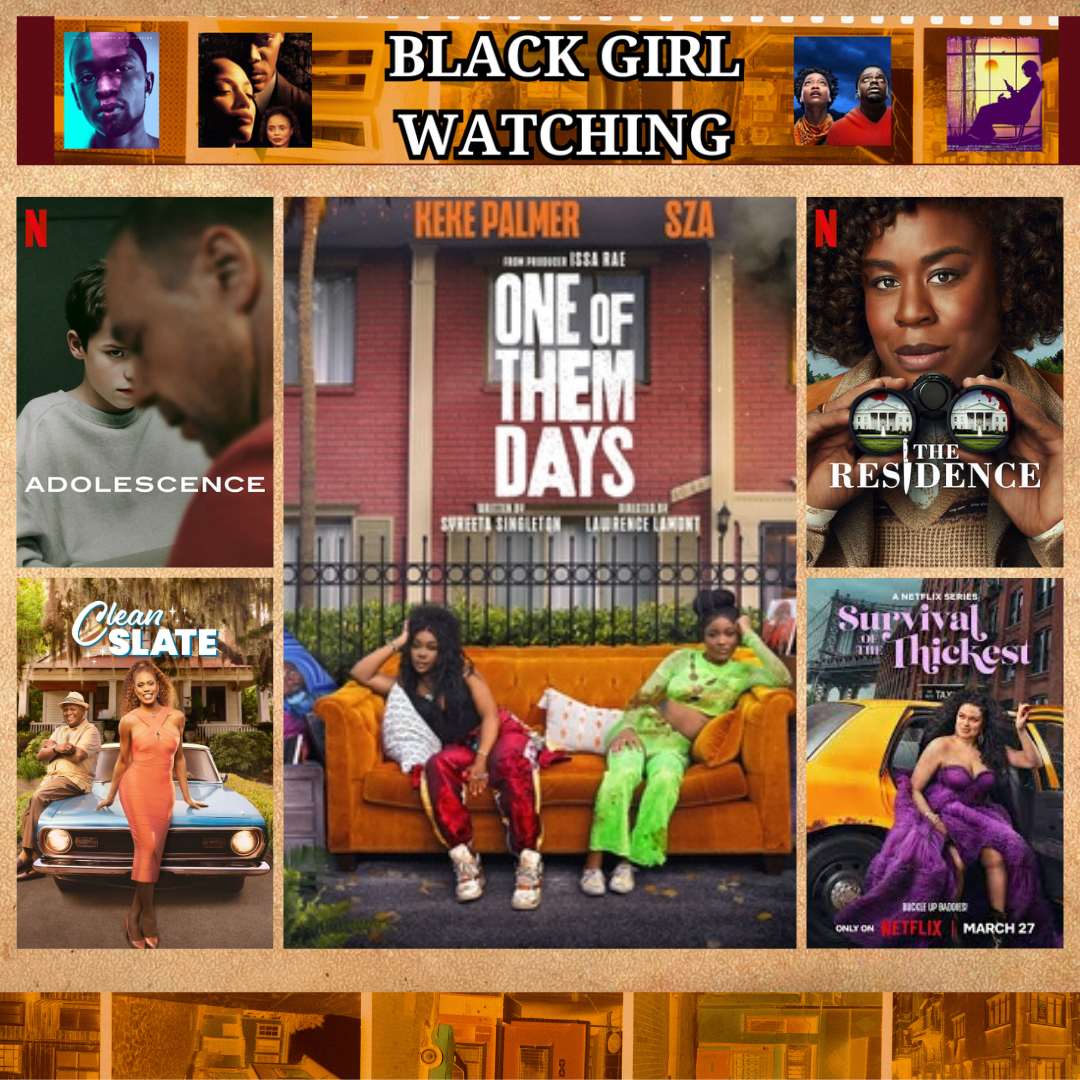
In the midst of disaster, Mister Rogers always taught us to look for the “helpers.” We’re certainly living through a disastrous age, and there are people still working hard to help change people’s minds and inspire them to act. These bingeable streaming shows and films will either light a fire under you to keep going or help you find the joy in our weary world, or both. Here’s my list of the best things to binge this week:
Adolescence — It’s the number one show on Netflix for a scary-good reason. Well-written and acted, the four-episode limited series out of the UK marks a remarkable debut turn from 15-year-old star Owen Cooper, who plays the adolescent in question, Jamie, who is suspected of being an incel murderer of a girl in his school. While the show is being hailed as an unprecedented look into the misogynistic radicalization of young boys on the internet, it’s actually quite precedented to center disturbed boys at the expense of the girl and women victims at the end of their knives.
Black Girl Watching is a reader-supported publication. To receive new posts and support my work, consider becoming a free or paid subscriber.
True to form, the girl that’s murdered in Adolescence is not the focus of any of the four episodes. Her devastated Black girl best friend is tossed to the side after the second episode, never to be seen again. Girls are merely collateral to this series as it focuses on the real concerns: what’s going on with this boy and the dad who raised him. Even the boy’s sister and mom are no more than props to be pushed around at the dad’s whim, to show how deeply disturbed and broken the dad is. Do they ever get to break at the terrors they’ve had to live with and sleep next to for years? Who knows. Who cares. This is about the boys.
Still, it has sparked worthwhile conversation among parents and teachers about what toxic masculinity and misogynistic men are teaching young boys through podcasts, chat forums like Reddit and 4Chan and how to recognize the signs of a little incel-in-the-making. For that reason, and to encourage people to be more aware and involved in the lives of the boys in their care, it’s worth a watch.
Watch Adolescence on Netflix.
Clean Slate — On the week to celebrate Trans Day of Visibility, there’s no better time to start the quick binge of this Prime Video series. Starring LaVerne Cox in the classic rom-com trope of city girl returning home to small-town Alabama, Clean Slate follows Desiree Slate (Cox) as she reconnects with her father Harry (George Wallace), whom she hasn’t seen in 17 years—since before she transitioned. This sweet, father-daughter reunion story subverts expectations by allowing the shocked and stubborn Harry to still be accepting and loving of his daughter immediately and for Desiree’s transness not to be the butt of the joke in this comedy. With the help of Desiree’s childhood (and closeted queer) best friend Louis (D.K. Uzoukwu), Desiree shakes the town up and helps everyone become a little bit more free. Clean Slate is a wholesome good time that’s long overdue.
Watch Clean Slate on Prime Video.
Have your watched the BGW exclusive interview with Severance star Tramell Tillman yet? Upgrade to paid to watch here.
Number One on the Call Sheet: Part 1 & 2 — This two-part documentary film features many of Black Hollywood’s biggest stars and tells the story of the industry through their rise. Part one focus on leading Black men, while part two centers leading Black women. Part two is the better half, as it’s more in-depth and honest about the challenges that Black women have faced in Hollywood (considering that Halle Berry is still the only Black woman to win Best Actress at the Oscars) and part one is more of a celebration of the men with a “we’ve still got a long way to go” caveat clipped onto the end.
There are a few headscratchers in the mix on part two who shouldn’t really be there—and especially not at the expense of legendary #1s on the call sheet like Sanaa Lathan, and Queen Latifah. But overall, it’s an interesting documentation of Black film history and what it took to rise in an industry that remains determined to shut the door on us.
Watch Number One on the Call Sheet on AppleTV+.
One of Them Days— I never reviewed this hilarious buddy comedy starring Keke Palmer and SZA back when it premiered over MLK weekend, but that’s not because I didn’t like it. I love it! I did some consulting work with the Sony marketing team and I like to avoid the appearance of impropriety at all times. But this film is LOL funny and follows two best friends on the first of the month scrambling to make back their stolen rent money by 6 P.M. I love a comedy with a message and this one is chock full of them—calling out gentrification, capitalism and all the other anti-Black systems that try to keep us down. Just like in real life, in the end, it’s community that helps us survive. If you need a genuine laugh and a bestie in your head that knows what you’re going through, this film is it.
Watch One of Them days on Netflix.
Survival of the Thickest S2— I guess this is going to be a Netflix-heavy post today! Season two of comedian Michelle Buteau’s show about Mavis, a 30-something, plus-sized fashion stylist making in the big city, is out now. From an Italian villa to AfroPunk, the show takes Mavis around the world and back as she finds herself and helps others do the same through fashion. The show centers fat bodies, queer bodies, Black women’s bodies and all the intersections in between, in a way we never get to see on screen. It’s a charming, quick binge that will leave you feeling warm and fuzzy.
Watch Survival of the Thickest on Netflix.
The Residence — The always excellent Uzo Aduba hasn’t really gotten her due since her award-winning supporting actress turn in Orange is the New Black. But that may change with The Residence, Shonda Rhimes’ new show from her Netflix deal. If not for that pesky Adolescence being #1 for two weeks straight, The Residence would definitely hold that spot. Aduba stars as Detective Cordelia Cupp, a clearly neurodivergent problem-solver brought in to investigate the death of the White House butler (a fantastic Giancarlo Esposito). When the powers that be are ready to call the death a suicide, Cupp puts the clues together that determine he was actually murdered in seconds. But this Agatha Christie who-dunnit will take 8 episodes for even the brilliant Cupp to solve. With great turns from Susan Kelechi Watson, Edwina Findley and Randall Park, it’s well worth the fun and funny ride.
Watch The Residence on Netflix.
The Studio — This comedy about a bumbling film studio head who wants to make great films but is hamstrung by an art-hating capitalist CEO hits a little too close to home. Enemy number one during the writer’s strike was Warner Bros. head David Zaslav and he continues unabatted with the same mission as the CEO in The Studio. But if you have to cry about the state of the industry, why not laugh? That’s show creator and Seth Rogen’s mantra, I guess. The series follows Matt (Rogen) as his old boss Patty is fired for greenlighting too many women films and he’s promoted in her place if he promises to stop trying to make great films but focuses on ridiculous money-grab IP like, say, a Kool-Aid movie. Matt easily drops his morals for the chance to be a studio head and we’re off to the races as his new job turns him into everything he claims to hate. It might be a little too inside-baseball to know that Matt’s old boss Patty, played by the hilarious Catherine O’hara, is a version of IRL disgraced Sony producer Amy Pascal whose racist emails leaked in the Sony Email Hack of 2014—but you can still enjoy the show without knowing all the little nuances. With The Studio, it seems all of Hollywood knows the truth about studio execs—they’re driving this industry straight into the ground and they don’t care, as long as they can make a buck on the way down.
Watch The Studio on AppleTV+.
Black Girl Watching is a reader-supported publication. To receive new posts and support my work, consider becoming a free or paid subscriber.
******Warning: spoilers for Season 2 of Severance******
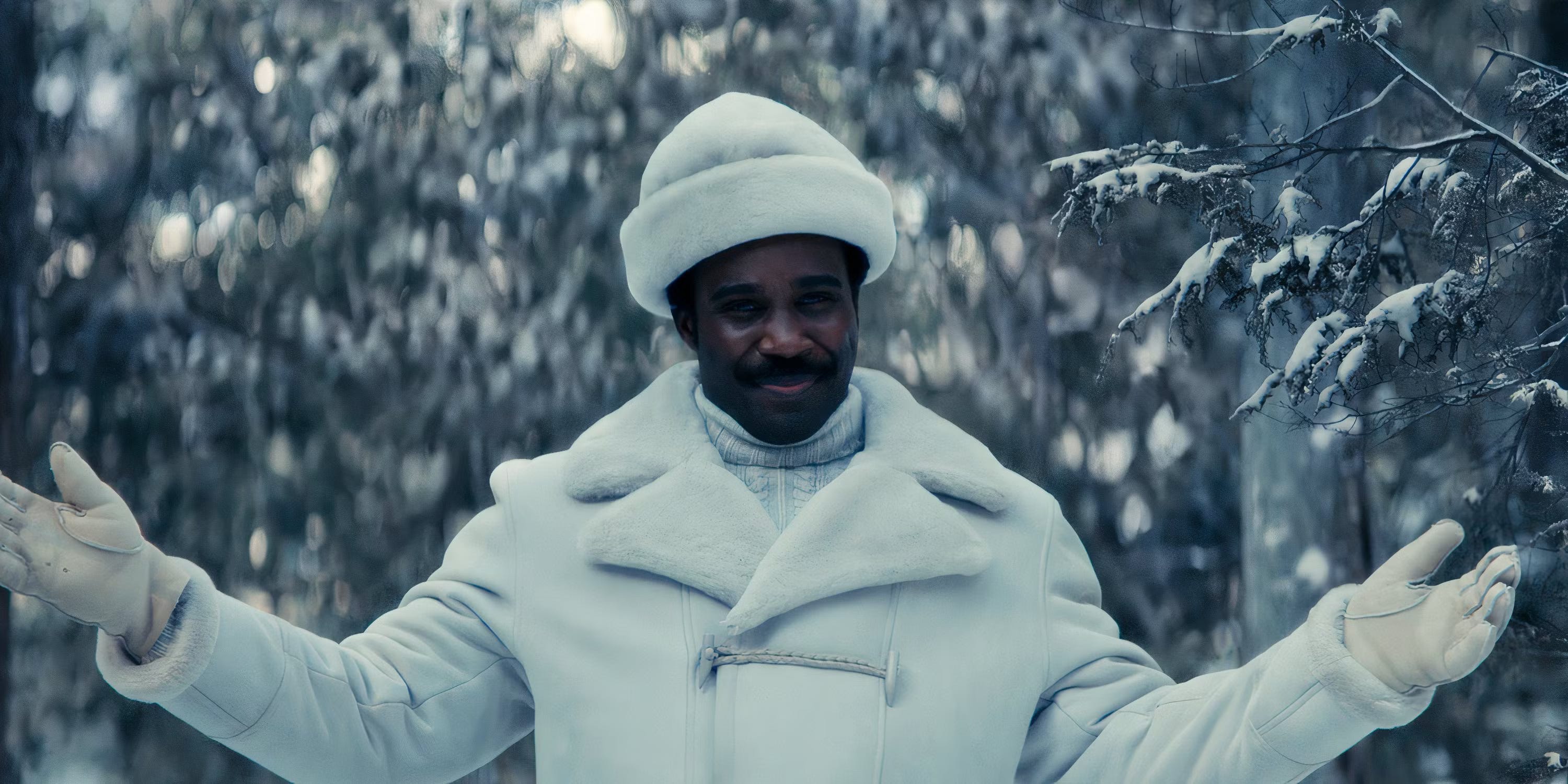
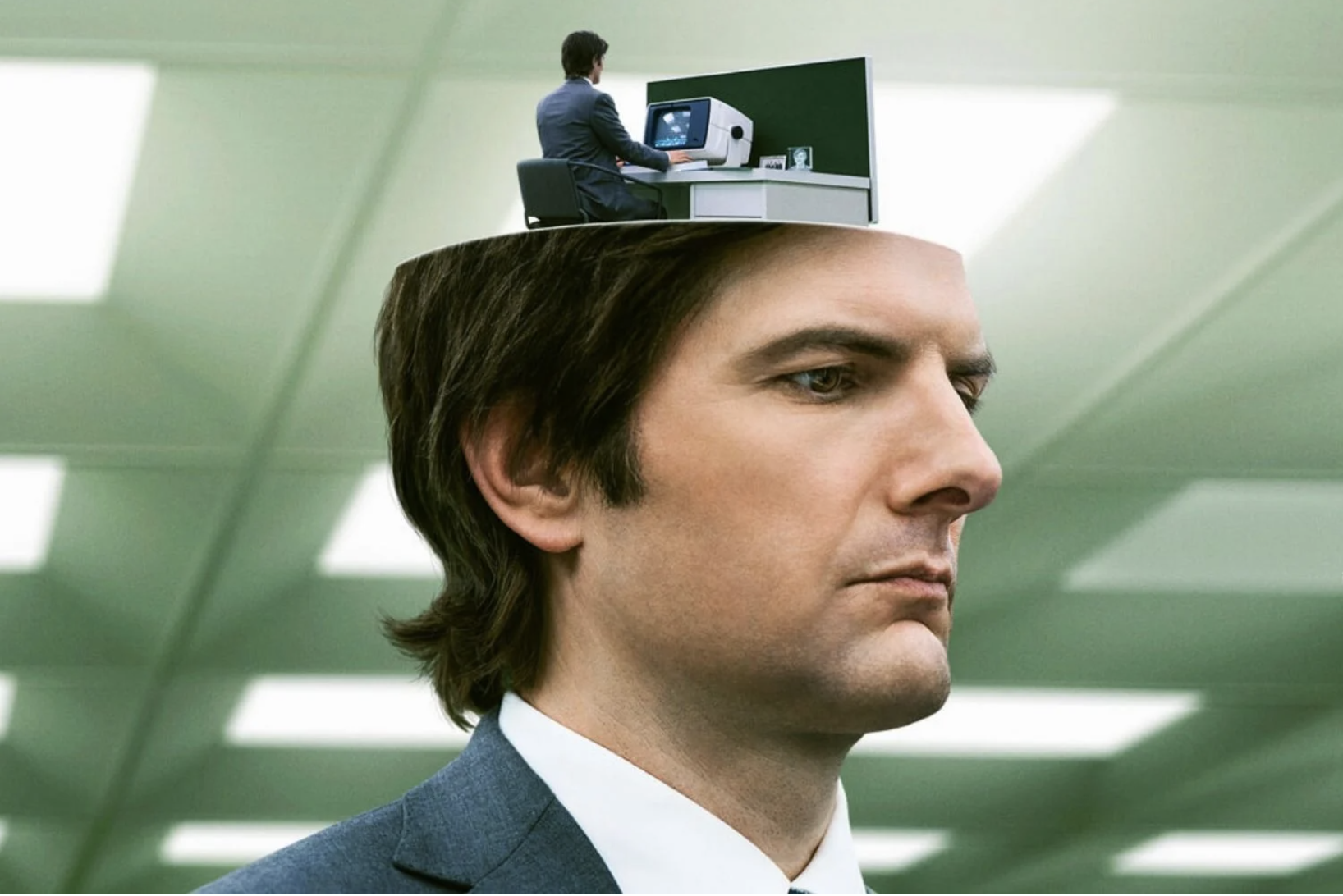
As you must know by now, my vote for Best Show on Television is Severance —the workplace dark comedy that ponders what it would take for someone to sever their brain in order to avoid the pain or even discomfort of being alive. As I’ve written before, Severance is a brilliant metaphor for capitalism and slavery, and no character on the show has had a bigger breakout than our favorite handsome overseer, Seth Milchick.
Played with a delicious devilishness by Tramell Tillman, Milchick is a labyrinth of emotion in season 2 as the newly promoted manager of the Severance floor at Lumon Industries. The only Black man in Lumon leadership that we know of, Milchick plays the role of keeping the severed innies in line during the workday and wrangling their wayward outies at their respective homes, while riding the sickest motorcyle you’ve ever seen. But why is this handsome, stylish Black man there? What motivates him to play this role at a company that proves in season two that it is, in fact racist, and it is, in fact, doing slavery?
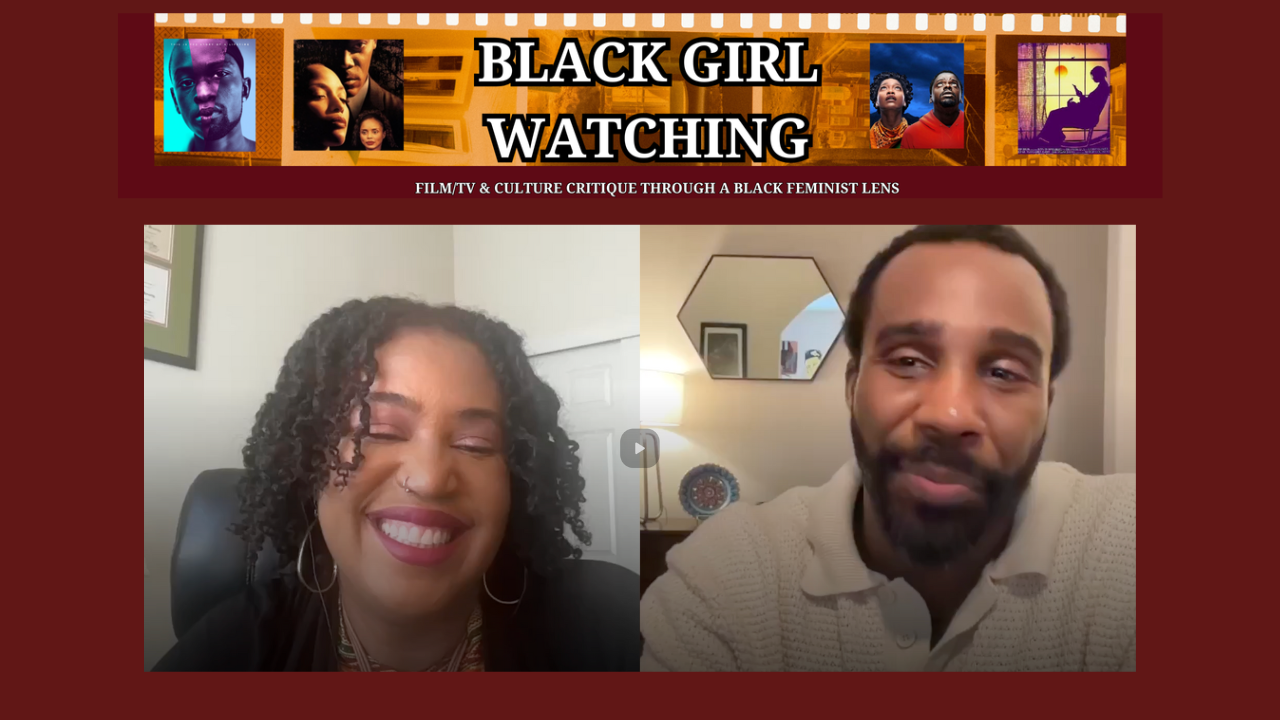
I caught up with my fellow HBCU grad and 1985-baby Tramell Tillman to talk all this Milchick and the Black Breaking Point we’ve all been through in corporate America.
Here’s a brief transcript of my SPOILER-FILLED interview with Tramell. *Paid subscribers, scroll down and watch the full video interview below the fold.*
BLACK GIRL WATCHING: This was such an amazing season. You did such beautiful work on season two. I did not think they could top season one, but y’all came back with season two like, ‘You have not seen anything.’ So I, as a Kier devotee, I am super just thrilled with how this season turned out and.
TRAMELL TILLMAN: Thank you.
BLACK GIRL WATCHING: There’s no worries about spoilers, so we’re gonna go all into [season 2] and all of your beautiful work. But first, I wanted to talk to you about when I met you last month. I was at your Rising Star Award event and you just gave such a beautiful speech. You specifically asked for family to challenge you to get you back on the right path if you’re not there. And that just felt like it spoke so much to your character and who you are. And I would just love to hear why you chose an award acceptance speech to take the time to be like, ‘We’re in this together and I want to be accountable to you.’
TT: Well, thank you. I really appreciate that. For me, the theme, you know, to dream forward, you know, I really meant when I said that that’s that’s a scary thing to do [with] where we are right now. And I’m a person who is a dreamer. And it feels as though there’s so much cost to activate your dream or move on the dream or have a conviction towards something because we’re in such a polarized world right now. And anything that’s said or done, you are canceled or pushed out and your whole lifestyle has changed and whatnot. So what it was for me was just speaking from pure honesty.
I do dream and I do dream big. And I want us all to have opportunities to grow and learn and share our art and create with one another. But there’s a lot of resistance to that. We’re still fighting with each other. We’re still wrestling with one another. And it’s disheartening to see. And so I do my best to be part of the solution to make myself available to other Black creatives, other queer creatives to advocate as much as I can in the ways that I can because I do understand the importance of community. And while I have been very fortunate to travel the world doing what I love to do and work with all of these wonderful, talented legends, you know, I also understand and know for a fact that there’s not many people that look like us that are in these rooms. That should change.
And so, if it does mean advocating for a Black hairstylist to come on board because she has the knowledge and the expertise to take care of my hair, then I am going to advocate for that. If it does mean having more PAs of color on set, so they can have the opportunities to learn how a set works and operates and understanding financial management on set and producing and so forth and so on, then I’ll be a part of that as well.
BGW: I love that. Speaking of being the only one set, we have Milchick, Seth Milchick, the only Black man in at least upper management that we’ve seen. And I remember you saying, I think several times now, you’ve said that your first question to Ben Stiller [the director and executive producer] and Dan Erickson, the creator of the show, was, ‘Is Milchick Black? Does he know he’s Black?’ But I never heard the answer. What answer did they give? What was the conversation that you all ended up having to create how Milchick’s Blackness shows up in the world?
TT: I laughed because there was no answer.
BGW: Ooh!
TT: You know, it basically evolved into something that is still very much alive now. It’s a continual conversation. You know, and I wondered if they knew what I meant by that question. Cause I’ve been in a few conversations with friends and whatnot and we’re talking about dating and such like that. And they say, ‘Well this person’s Black.’ And then we jokingly say, ‘Well, do they know they Black?’ And it creates this whole different world because there’s that connection to culture, a connection to who you are as a person, the realization that you are in a world that does not look like you. And so you will very well be treated differently. So the depth of the question also was connected to whether or not we’re approaching race in season one, you know. ‘Cause that was very important to me.
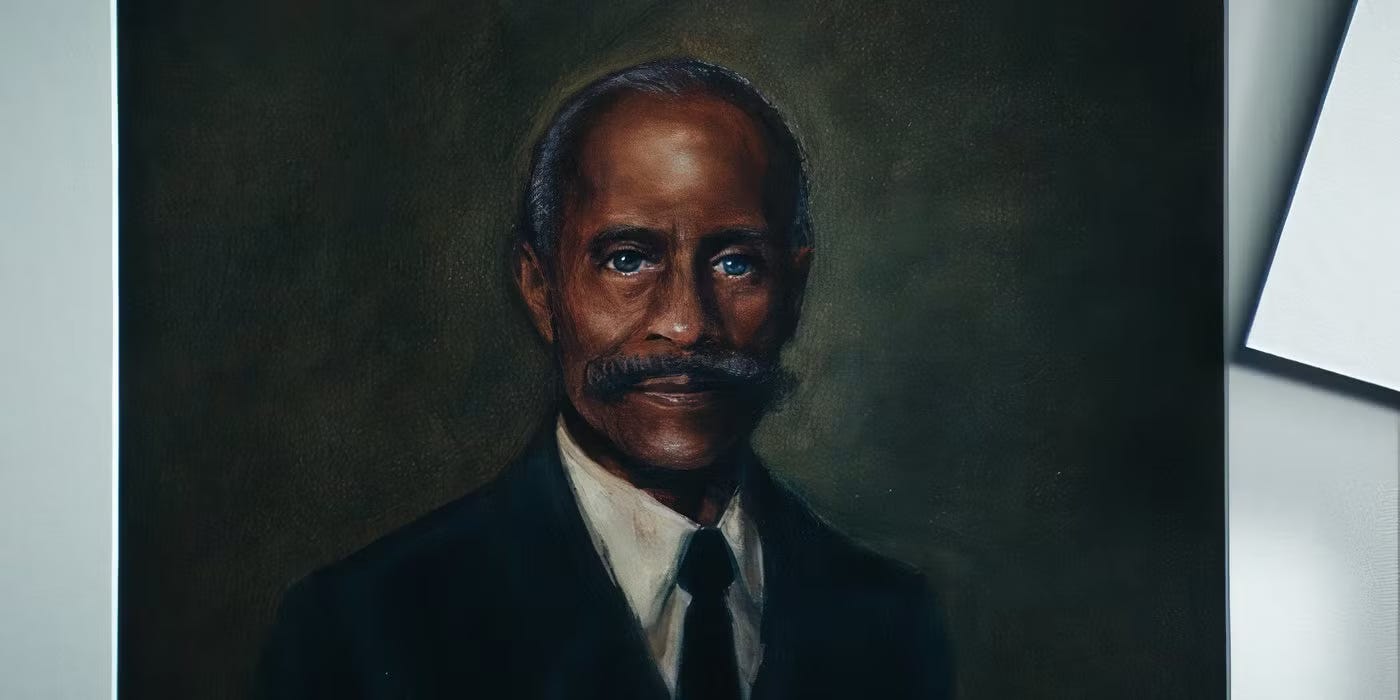
And the reason why I asked that question is because I had learned that Ben [Stiller] specifically wanted Milchick to be Black. And there was nothing in the show that spoke to his Blackness. So I was thinking, well, why do you want him in Black? What is that? You know, so that’s why we continue to have these conversations around Blackness. And when we were exploring season two, Dan Erickson had approached me and said, ‘What do you think about Milchick having these paintings from Keir that are basically blackface?’ And I asked him, I said, ‘Well, how does he respond to this?’ Because that’s going to be indicative of where his journey goes. And it’s also going to tell us how our Black audiences are going to respond or disconnect or connect with this character. And so that led to even more dialogue.
Working with Sydney Cole Alexander, who plays Natalie, and when she presented me with the Kier paintings, Ben pretty much was like hands off. He said, y’all do what y’all wanna do. And I asked for rehearsal space and we got the time to get together and Natalie and I chatted and bonded and everything. And so, when it was time to film, there was direction that Ben would give us, but for the most part, it was us, me and her feeling the scene out. And she would throw me something, I was like, ‘I see you, let me throw that back. Okay, we doing this.’ So it was really, very collaborative, as it should be when it comes to dealing with Black characters or characters as a whole that are not often displayed in such a specific way as we see with Severance.
BGW:So I love that you and Sydney have that relationship because Milchick and Natalie obviously do not, you know, he is reaching out to her for anything— like, ‘Connect with me, please.’ Like, ‘Let me see—let me know that I’m not in this by myself.’ And she’s like, ‘Not me! I’m not the one! Don’t don’t try that.’ So I am interested in like what what was going through Milchick’s head when he’s seeing these paintings. So, he’s obviously not OK with it. He’s obviously disturbed with it enough to put it away in the back of his closet and never see it again. So what’s his rationale for you as you’re as you’re, you know, bringing this to life? What’s what’s Milchick’s rationale for why he’s upset by these paintings?
TT: Well, my interpretation is that he is very surprised by this. It is a performative effort in corporate inclusion that is absolutely ridiculous, right? And as a person who has worked in the corporate world, I’ve been in that space. I know exactly what that feels like. And to send another Black employee that happens to be fair skinned to give you these paintings as the Board is watching is extremely off-putting. And just stepping away from Milchick’s, you know, response to it, but more so just the show at large, it speaks to, you know, the colorism aspect.
There’s a little bit of—and I hate to distill it to this point—but this is what it reminds me of: it’s kind of like the field Negroes versus the house Negroes, because she is closer to whiteness and she is closer to the Board. And so, now she is coming down from the Board to go down to the field to send this guy this gift from the board—I know, that kind of feeling as well. And the Board is watching. They won’t show themselves, but they are making their presence known. And so his job is to receive this with grace. And that is also part of his performance review. So not only is he unable to enjoy it authentically, because he is going to be evaluated on how he’s done, but he can’t connect with the only other person of color that’s in a high position that we see in the world of Lumon.
And one thing that I appreciate in episode [five] is that there was conversation of taking that scene out where Milchick and Natalie connect before he goes into the performance review. Before he goes into performance review, they’re standing outside the hallway. They were gonna remove that scene. They were gonna remove it. And I said, no, you need to keep that. It’s really important to keep that because we need to see how this man is still wrestling with what he just experienced. And it wasn’t enough for him to take this iconography and just push it away and then it’s done. That’s not how it works. That’s also not reflective of human behavior.
If someone does something that is jarring, you’re trying to do everything you can to make peace with it. And so we needed that scene. We needed Natalie. We needed to see her make a decision if she was going to give something to him or not at all, or basically insinuate that it’s, “Not right now,” because [Lumon boss] Drummond is waiting.
BGW: is that what she was communicating? Like maybe at a later date, but not now?
TT: That is up for interpretation.
Paid subscribers can watch the full 32 minute video interview with Tramell Tillman on Severance and the Black Breaking Point below:
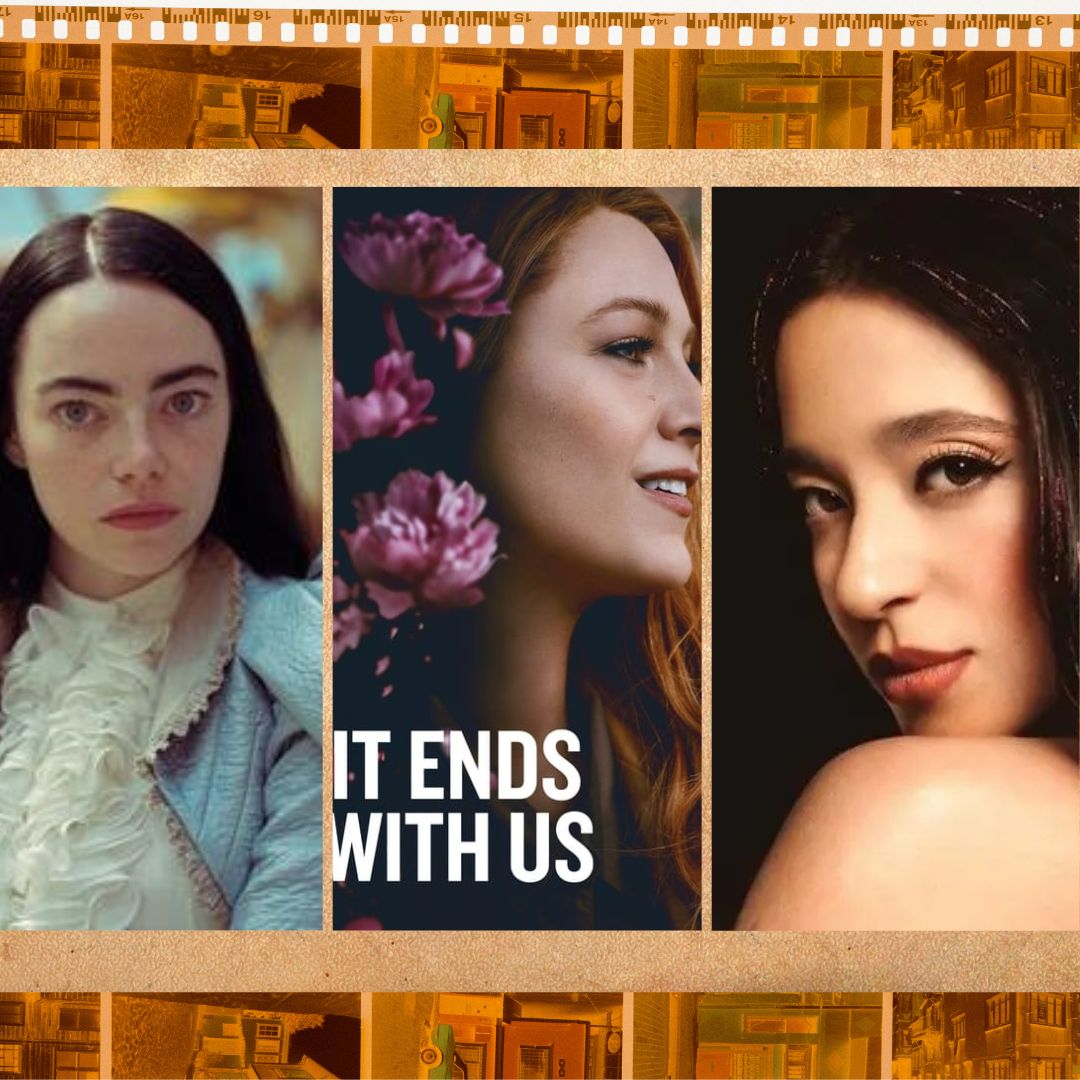
Every week, more news drops from the legal battle surrounding the nightmare production of the blockbuster rom-dram It Ends With Us. The film’s star Blake Lively has sued the film’s director Justin Baldoni and his production company Wayfarer Studios for sexual harassment and retaliation. Baldoni and Wayfarer have denied the claims and have countersued Lively and her husband Ryan Reynolds for defamation, extortion and breach of contract. Many of Lively’s on-set complaints around sexual harassment stemmed from feeling “uncomfortable” with things her director and co-star Baldoni said and did during filming, including adding sex scenes and improvising moves that were not in the original script. Baldoni has countered that an intimacy coordinator was made available to Lively before production began and Lively declined to meet with the IC, leaving him to meet with the IC alone and recap what they coordinated to Lively later on set.
While the case won’t be heard in court until March 2026, this is truly a worst-case scenario production that artists should be invested in learning from—not for the sake of tabloid salaciousness, but to make sure nothing like this ever happens again.
Yet, there still seems to be a prevalent backlash to the profession in general among top stars.
Just yesterday, a clip from a Vanity Fair interview with Gwyneth Paltrow (52) went viral after she said she felt “stifled” by the presence of an intimacy coordinator during sex scenes with her co-star Timothee Chalamet (29) on the set of their new film. Paltrow—who was infamously victimized by Harvey Weinstein and spoke out against him during the #MeToo movement—stopped the intimacy coordinator from choreographing a sex scene, saying: “I was like, ‘Girl, I’m from the era where you get naked, you get in bed, the camera’s on.’” She told the intimacy coordinator “We [Chalamet and I] said, ‘I think we’re good. You can step a little bit back.”
Anora star Mikey Madison (25) also came under fire when she admitted in an interview that filmmaker Sean Baker gave her the option of an intimacy coordinator and she declined because she felt comfortable with Baker (54).
Paltrow and Madison aren’t alone; Sean Bean, Toni Collette, Michael Douglas, Kim Basinger are just a few more who have spoken against the present of intimacy coordinators on set. But in an industry that’s infamously unsafe, it’s paramount that we start doing things in a different way.
In the new world that artists build, I believe intimacy coordinators are essential to a safe and liberating production. But I had no idea just how radical the profession could be until I met up with Veronica Burt, an intimacy coordinator and my colleague in the WIF 2024 fellowship. At an afternoon tea for WIF fellows, Veronica introduced herself and what she does and her approach totally blew me away. I had to interview her and find out more. Here’s what she had to say about the future of her profession and the “consent-forward” world we could have:
This interview has been edited and condensed. Paid subscribers can listen to the full audio interview on the BGW podcast Another Possible World below:
BLACK GIRL WATCHING: When we were all introducing ourselves at the tea for Women in Film Fellows for 2024, and you were introducing yourself as an intimacy coordinator—the only one in our program—and what it is that you do, I was just so impressed and excited about it, because I do think there are some misconceptions about what it means to be an intimacy coordinator. So I would love it if you would just start off by saying what it is that you do as an intimacy coordinator. What is an intimacy coordinator?
VERONICA BURT: Totally. I explain it as someone that works to ensure an actor’s boundaries are being maintained on set. That’s one part of the job. A second part of the job is liaisoning that information to all the parties that need to know that, whether that be a producer, a director, a DP. And then the third component is choreographing said intimacy. So, those are kind of the three branches of work that I do. Working with actors to maintain boundaries, liaisoning with departments to make sure that everyone has that information, and then choreographing.
So there’s a lot of real technical parts to that, right? Like the choreographing is very specific. Working with wardrobe on modesty garments is very specific. And then there’s also this like emotional social component to it as well, which is a lot of the work with actors and a lot of the work to navigating, sharing that information with other people on set and navigating the power dynamics of that.
BGW:That’s really, really important. And I loved hearing about your background too, like how, like all of the different parts of your experiences and how they came into you becoming an intimacy coordinator. So can you talk a little bit about that and how you decided that intimacy coordination was the path for you?
VB: Yeah, it’s one of my favorite things about the community as a whole because everyone comes to it from such different backgrounds. So any intimacy coordinator you talk to is going to have such a unique story, which obviously is the case with all artists, but it’s because it has such a different set of skill sets that you need. But for me, I started in the entertainment business as a dancer in theater. So almost exclusively a live performance. And while I was a dancer, I was back in New York doing it, I sometimes felt like just a body, like there was no one behind that. I was just something to be used and manipulated in space. And I started to get really sick and tired of that.
As I was starting to feel that exhaustion really, I began a doula training. I truly was just like listening to a podcast and in it, they were [discussing the] horrific Black maternal mortality rates in this country. And I was like, what is going on? And so started to get involved in some like local doula groups that were doing amazing things to reverse some of those rates. And in those doula trainings, I was learning about trauma-informed advocacy, somatic work, community care work. Like I just started to understand the ways in which we can disrupt hierarchy by using collectivity and somatic trauma-informed awareness to disrupt that.
I started to bring some of those tools into rehearsals as a dancer. So, someone would say something, someone was concerned with something, there was some language that was being used—I had the tools now for non-violent communication from one of my classes I had to take for my doula training. So, I started to use that in the [performance] space and began to realize not only was it really needed in those spaces, this was a job, like people were doing that already. And so I really took the pandemic to train up properly, try things out, build my own practice.
I made the decision in 2022 to move back to Los Angeles and then started to creep my way into the film business. What was really helpful was I started off as a COVID monitor. And so, I learned how to honestly code switch between departments, trying to get people to follow the rules for this collective idea of safety. And I will say, my COVID monitoring really, really, really has informed my intimacy coordinating. Sometimes I will have to use language like, ‘I know it’s just the rules, right?’ [to get people to comply non-defensively.] You’re not the bad guy. you’re just trying to bring people in to this common thing that we all have to do together. So yeah, that was kind of my journey.
BGW:Okay, this is all really, really amazing. I wanna get into all this, but like just the overlap between the resistance to COVID cautiousness and resistance to intimacy coordinators—like I do think that it’s getting at like a common root and the doula training and intimacy coordination connection, like I feel like that also has a common root, as well. There is a separation between us and our bodies, and I feel like that comes probably from our capitalistic training [to disassociate]. When you were talking about being a dancer and feeling just like a body that’s being used, that’s what capitalism has trained all of us to do. So, the work that you’re doing is so revolutionary on so many different levels, like between the doulaing, between being the COVID monitor on set, [your job is really] putting us back into our bodies. That is probably the most anti-capitalist thing that you could be doing, which is really amazing.
VB: I’ve said this before already, but somatic community care work is really what I call it; that’s what all these jobs are, right? That’s what it all is and what it all comes down to. And oftentimes when I’m talking to a producer, because some people come to this work as fight directors or advocates for survivors of sexual assault, right? Like there’s a lot of different pathways to this. And so producers are like, ‘What’s your kind of niche or how did you enter?’ And I often am like, ‘Well, I come to this work as a dancer and doula. So I approached this job as somatic community care work.’ That’s like literally my pitch line for myself.
BGW: One of the things that you said in our tea that was it’s not your job to stop things from being sexy, but your job is to say, ‘let’s make it as filthy as possible, but within the bounds of like what’s comfortable for people. What are the things that you say to reframe people’s thinking about these things? Like, ‘This is not necessarily an indictment of who the people are, but maybe we could think about this in a different way and see how this is actually you being a person who is caring about your community on set’?
VB: Okay, there’s so many like pillars to this question, but yes, I think what I do first is try to educate producers on the scope of the job itself, right? Because some people do think that you’re an on-set therapist, right? That’s actually a different job in our industry. I have mental health first aid training, but I’m actually not equipped to offer that sort of support, right? So being clear about that. I am not a fight director, right? Sometimes people really think that intimacy coordinators automatically do fight direction as well. Some do, but it’s really important that producers don’t think that because I don’t have that skill set, right? And that’s putting actors in great danger, actually, if you have someone that doesn’t quite have those tools. So it’s communicating with them what the scope is, how this is going to go. What is the process of this?
Because so much of intimacy coordination is like, are these grand sort of ethos about how we keep actors safe, how we promote sustainability. So what does that actually practically look like on set, and it just is a lot of communication. It really, really is. And making it very clear to everyone that although you are there to support the production as a whole, your first job is to support the actor. Of course, I’m also supporting a director in this, which I think a lot of directors think that intimacy coordinators are coming in and taking over their set, when in fact, I’m offering support so that you don’t have to do a lot of that emotional labor. Like you’re free to just enact the vision because I’m taking on a lot of that work.
So yeah, I also just make it very clear to producers that I’m not there to censor anything, right? In fact, I’m really interested in the most daring, the most vulnerable version. And I’m a great believer if we have those protections in place, we have a clear understanding of what we’re doing. Actors are able to go that much further then because they have that, the boundaries are set and in place.
If you know what the parameters are, you’re able to execute the job a lot more clearly, smoothly, efficiently. So I think people get this idea that having an intimacy coordinator on set is going to disrupt efficiency. And in fact, I’m a big believer that it promotes efficiency.
BGW: That kind of leads like perfectly into the next thing that I wanted to talk about. So I don’t know if you saw Mikey Madison, the star of the movie, Anora, did an interview, Actors on Actors, with Pamela Anderson, and Pamela was asking Mikey about intimacy coordinators and if they had any on set, because, for anyone who hasn’t seen it, Anora is a sex worker, and so there is quite a bit of explicit sex scenes and nudity and all of that throughout the film. And so she was basically saying no. She felt really comfortable with her director. So she did not feel the need to have an intimacy coordinator. So when you like see interviews or actors, especially young actresses, like Mikey Madison like saying things like this, like what goes through your mind?
VB: Yeah, I mean, I always wanna advocate for an actor, which means that I’m not placing any of my own feelings onto the situation for them. Whatever they feel like their needs are, that’s great. The thing about this is that it’s not just her, right? That’s also her scene partner. It’s also the DP [director of photography]. It’s also the rest of your crew. Yes, it is a role that primarily prioritizes the safety of actors, but it’s also ensuring the professionalism of these sort of scenes so that everyone is safe on these sets. So, I think one of the issues here is the lack of specificity in the SAG [Screen Actors Guild] guidelines around intimacy coordinators. There’s been a lot of work lately as intimacy coordinators are beginning to unionize with SAG. I think that those will really change those guidelines, but right now they’re very loose. And so it’s really up to the discretion of producers if they want to have this position on set or not. So I’m hoping that there’ll be a bit more regulation there. And so then there’s just an intimacy coordinator on set. And if they are not used, right, if a director doesn’t want to use them or an actor doesn’t want to use them, fine.
They can just sit there and watch, but there’s eyes and ears out for everyone there. There’s a resource for everyone from number one on the call sheet to crafty for someone to go to should they have any issues with closed-set protocols, nudity protocols, maybe wardrobe needs some support, right? So we’ll see, but yeah, I know that she got a lot of flack and I think that’s really unfair, right?
She knows how to do her job best, right? Like she knows her character best. It’s one of the first things I always say to actors. You know your character best. I’m just here to help facilitate all the other parts around that. I’m not here to tell you how to act your role. I’m here to offer suggestions, to ask questions. I’m not here to do that. So I think, you know, she did her job beautifully. We know that. But I wish that it was just a set standard so that some of these power dynamics weren’t there so that everyone just has the resource if they need it.
BGW:I’m with you, I believe it should be a mandatory position. I feel like we’re having the same kind of situation with an opposite outcome with It Ends with Us because you have Justin Baldoni, the director of that movie, saying that, ‘Well, we offered Blake Lively an intimacy coordinator. She said she didn’t want to meet with them in advance, that she felt comfortable, she felt good.’ He’s releasing his side of the text messages saying this is what she said. So, I mean, just to go back to your point about the way that your role actually collaborates with directors as well— it would have ended with an intimacy coordinator. Like, none of this would have happened, you know? If there had been an intimacy coordinator there, just all of the problems that they were talking about would just kind of not really exist.
VB: That’s if this set had producers that were also collaborating with the intimacy coordinator, right? There’s only so much you can do if you don’t have the support of a producer on set, right? You can start to have some of these conversations, especially at this high level, where you’re working with big names, stars, and all of what comes with all of that. I think there’s a lot of mitigation and conversation and parameters that you can set, but unless you have the backup of producers being like, yes, this is what we’re doing, or yes, we’re following through with this complaint or allegation, it’s like your hands are kind of tied.
I’ve had mentors of mine that have worked at some of these higher levels and it’s like, “Better is better,” is the motto of Chelsea Pace, who’s amazing. She’s just like, you know, we’re chipping away at the thing. And sometimes it can be really hard for an intimacy coordinator when you’re leaving set and you’re like, I could have done better. I could have handled that situation better. You know, someone’s leaving upset. There was harm that was enacted on this set, you know, and it’s like, you have to remember better is better. Because you can’t be a martyr for the work either, right? And I’ve had to learn that the hard way, specifically in theater spaces, which when you’re just around a lot more, that you have to be following the same guidelines that you’re setting for everyone else in terms of taking care of yourself, treating the work in a sustainable way. It means you also have to have closure practices and those sort of things that we gift to actors. It’s important to have that for yourself too.
BGW: I love that. Tell me a little bit more about the closure practices that you do for yourself when you get it when you’re getting off of a set.
VB: Yeah, I mean, I love a voice memo. So I will often kind of do a dump for really close friends of mine, just kind of getting it out of my system, talking out the thing. The drive home is very much the time for me to get it all out of my system if something has happened. And then when I come home, I love a long hot shower. So, I try to kind of tackle both the mind and body aspect of it, Kind of like work through my thoughts, get that out of my system, verbalize the day, and then have a time to really wash that off of my being. I have friends of mine that will light a candle when they get home, when they blow it out, it’s done. The moment of the day is done. It’s over.
I also have an amazing community of intimacy coordinator friends. our group chat name is Bold and Nasty Intimacy Cohort. And because it’s such a solitary job on set—you’re a department of one most of the time—it has been amazing to build this community of other intimacy coordinators to be able to lean on, to ask questions to, because, you know, sometimes we’ll be on set and it’s a scenario that you’ve never been in. It’s the wild west of a job sometimes. And so you need people to kind of talk through situation with or help with language when you’re negotiating. Again, for me, it’s all about community. All about collectivity. And it just proves time and time again that that’s what gets us through things. Like that’s what support is, is when you do things together.
BGW: What are the ways that people in this industry can support and advocate for intimacy coordinators?
VB: A million dollar question. I think I feel really supported on set when a DP wants to actively work with me. When [the sound department] is also practicing consent practices in the way that they’re asking to mic actors and touch their bodies to adjust microphones and whatnot, right? Like when the whole crew has this consent-forward collaborative approach, again, it makes the shoot more efficient. We make our days when everyone works together in this way and it makes for better art because if I’m actually in communication with the DP, we can really mask something well. We can pick up on this detail. We can tell the story that much better. So I just think that folks that are working below-the-line on sets can just support the work by actually speaking to the intimacy coordinator, by saying hello, by welcoming that role. A lot of times ICs are coming in for one or two days on a long shoot, so we don’t have a lot of the relationships or rapport that you build on sets. So when folks just bring us in, we’re able to do our work that much better. So I would say that’s a very small thing that anyone on a set.
I think educators can continue to make sure that young artists understand the role, understand the power that they can gain by having someone on these sets. I think that actors with big platforms can continue to talk about how productive and helpful these positions are. I loved last year hearing about Emma Stone in Poor Things. She was someone that was like, ‘Well, I’ve worked with this director before, so I feel like I’m gonna be fine. I know this DP really well. I’m a producer. I have a lot of title power already on this set.’ And I’m not sure who was the person that pushed—maybe other producers. Someone there said, ‘No, let’s just have an intimacy coordinator on that set.’ And then she spoke about how helpful that was for her, especially as someone who had to navigate multiple roles on that set. Because an intimacy coordinator is helping you process and remove some of that weight so that then she could go do her role. So I loved how she really spoke about how she kind of came around to it. Those sort of conversations really help as well.
I have a lot of hope with the next generation for how things will shift.
Paid subscribers can listen to the full audio interview on the BGW podcast Another Possible World below:
Before I get into this week’s post, a special note for BGW subscribers! After the Severance finale next week, come right here to BGW for my spoiler-laden interview with the show’s breakout star, Tramell Tillman, AKA Mr. Milchick, AKA Mr. Milkshake! Paid subscribers will also get to see the whole video interview, so if you’ve been waiting to upgrade, this is the time! See you again next week!
I love critics. The work we do is so vital and necessary. As I’ve said at the launch of this platform, criticism is how we fight fascism and it’s also how we grow in critical thinking. Last year, I made my list of the best films of 2024 —many of which had only been seen on the festival circuit at that time. Now that most of the films have had a theatrical run or are streaming, the masses have had their chance to weigh in on what’s really good with these industry faves. After reading their reviews, even some films that I initially enjoyed, like Anora, I’m now looking at sideways. Check out the best critiques of the most popular films of the season.
Anora’s male fantasy of sex-worker representation— As you may have read in my piece last year, I initially enjoyed this gritty Gen-Z Pretty Woman. But since the film has left the festival circuit and more audiences have been able to view it in theaters and on streaming, I’ve been reading the reviews of sex-workers, and let me tell you, they are not on board. In a scathing and heartbreaking review/personal essay, sex worker Marla Cruz writes: “Anora embodies the dehumanizing consumer fantasy of a devoted worker who loves the consumer so much she does not conceive of her servitude as labor.” The whole piece is well worth the read.
Black Girl Watching is a reader-supported publication. To receive new posts and support my work, consider becoming a free or paid subscriber.
It’s also super creepy that director Sean Baker—who has now made several films about young women sex workers in danger—made his 23-year-old (at the time) star Mikey Madison responsible for whether or not a film with a large percentage of nudity and sex scenes would have an intimacy coordinator. Madison decided that she felt comfortable enough with Baker that she didn’t want an intimacy coordinator—removing the agency of other nude cast members, including her younger co-star Mark Eydelshteyn who was 19 or 20 at the time of filming and didn’t even speak English fluently. (My next piece for BGW will be on intimacy coordinators, how they keep actors safe, and why it’s so egregious the profession is not required on set.) Madison is no stranger to acting, but this is her first lead role, and with her youth and inexperience as #1 on the call sheet, it’s really on writer-director-producer Baker to have instituted an intimacy coordinator and not scapegoated his young star to avoid having one. Creep!
Also, sex worker, therapist and educator Raquel Savage created a Red Light Rules test of four questions by which to measure the portrayal of sex workers on screen. She scored Anora a failing 1 out of 4.
Raquel Savage’s ECC which certifies therapists to offer care for sex workers
Conclave’s condescending intersex representation— The most memeable film of the year, Conclave is about the process that leaders of the Catholic church undergo when it’s time to pick a new pope. Conclave didn’t really do anything for me personally because, despite the idea of “secret progressivism” in the film, the Catholic Church as an institution is still very much in power and very much unchanged at the end of the movie. Yet intersex filmmaker Pidgeon Pagonis found the film frustrating. “The world needs to know about the injustices intersex people face. And for once, we had the stage. But instead of opening the doors, Conclave left them locked.” Read the spoiler-filled review here.
Dune: Part Two’s non-existent Muslim representation— The sci-fi/fantasy epic continues in this film starring the whitest white man, Timothee Chalamet, and Zendaya on a planet called Arakkis that’s clearly Iraq and filmed in the Middle East. It’s a story of colonization and appropriation, with many white stars ripping off Arab and Muslim culture with no Arab and Muslim actors. “The film simply relegates its cultural inspirations to exotic, Orientalist aesthetics, which is frustrating at a time where such communities are openly discriminated against and demonised,” writes Furvah Shah in Cosmopolitan.
Javier Sethness for The Commoner writes: “And Broadly speaking, it is hard to dissociate the stark anti-Muslim prejudice and chauvinism against Arabs and Amazighs evident in the Dune films from current events: specifically, Israel’s genocide of Palestinians in Gaza. The symbolic violence seen in Villeneuve’s erasure of the centrality of Islam and MENA culture to Herbert’s fictional universe for his own adaptation is ironically part of the same continuum as the ongoing mass-violence committed against Arabs and Muslims, especially in the Occupied Palestinian Territories, Occupied Kashmir, Syria, Iraq, Xinjiang, and Burma (Myanmar), among other places.”
Emilia Perez’s offensive and retrograde Mexican and trans representation— This film about a trans Mexican cartel leader who later gives back to her victims’ families through charity work, was not filmed in Mexico, starred zeroes Mexican actors in main roles and was written and directed by a white French man who does not speak English or Spanish. It’s no wonder that Mexicans were outraged by the film: “It shows a Mexico full of stereotypes, ignorance, disrespect and profiting from one of the world’s worst humanitarian crises,” Mexican actor Mauricio Morales tweeted. “Maybe. .. just maybe, believe the Mexicans.” GLAAD echoed these criticisms in a round-up of reviews of why its also “a step backward for trans representation,” noting that the first reviewers hyping the film as “progressive” were cisgender and not trans”:
“Who gets to dictate what “progress” looks like: the well-meaning cis people desperately trying to prove they’re not transphobic by hyping up a regressive mess, or the actual LGBTQIA+ community who have been speaking out against it since the now-infamous “from penis to vaginaaaaaaa” song clip started making the rounds on social media?”
Mo’s “disneyfied” take on Palestinian struggle: I wrote a raving review of season 2 of the Netflix TV show Mo, the show about a Palestinian refugee seeking asylum in Houston for the last 22 years of his life. The comedy shows not only the plight of what Palestinians endure as “stateless” people in a crumbling American dream, but also the horrendous U.S. immigration system. However, The Middle East Eye had serious concerns about the only Palestinian show on TV, calling it “the most frustrating view of the year”:
“Mo 2 is a Disneyfied version of the Palestinian cause: a confused, watered-down domestic comedy that wants to have its cake and eat it; an irrefutable emotional saga with a lot of heart that nevertheless feels ill-fitting in the morally and politically charged post-7 October world.
The importance of Mo in maintaining the Palestinian narrative at the forefront of popular American culture is unquestionable; yet for anyone absorbed or engaged with Palestine outside the US, it offers little but rehashed ideas in a reductive form.” Ouch!
No Other Land’s “normalization” of Israeli apartheid: This is another film that I marked as one of the best movies of 2024, and is now an Oscar winner for Best Documentary—still, as I predicted last year, with no distributor. For Palestinians who have been able to see the film at festivals or indie theaters, there has been some critique, not so much about the film, but it’s co-star and director, Israeli filmmaker Yuval Abraham. Though he is essentially a “pariah” in Israel after his involvement in the film and criticism of the Israeli government, he still manages in his press tour and even on the Oscar’s acceptance speech stage to center Israeli feelings over Palestinian lives in what Mondoweiss has called “liberal Zionist hasbara” [meaning propaganda]. The BDS Movement has derided the film as an act of “normalization,” of Israel’s atrocities in and occupation of Palestine that partners with Israelis for validation, and has called for a boycott of the film”:
“Palestinians do not need validation, legitimation or permission from Israelis to narrate our history, our present, our experiences, our dreams, and our resistance, including artistic resistance, to the colonial system of oppression that denies us our freedom and inalienable rights,” the Palestinian Campaign for the Academic and Cultural Boycott of Israel that founded the BDS Movement said in a statement. “It is therefore imperative for us to challenge the racist conditions, whether covert or overt, imposed by the colonial West and its hegemonic institutions, which do not platform Palestinians except with the permission or validation of Israelis.”
Wicked’s lack ofcharacter development:On a lighter note: y’all know I love me some Wicked: Part One, and consider it the most radical film of 2024, teaching us how to fight fascism through fiction. I even compared the film to the Broadway musical to the book. But I’d only seen the Broadway musical on YouTube prior to writing my piece, and only after having watched the film. YouTuber The Writer’s Block has studied the Broadway musical and raises some excellent points in this video essay on why the film adaptation misunderstood the Broadway musical. What’s funny is that the musical adaptation and the film adaptation were written by the same people, so perhaps “misunderstood” isn’t the right word, but The Writer’s Block makes a case for why the adapters and Jon Chu as a filmmaker undermined plot, character development and visual story from the musical in favor of visual spectacle in the film. Elphaba’s character arc is also a big sticking point for The Writer’s Block, because she starts out confident, she wears stylish clothing and doesn’t have much room to grow from beginning to end as compared to Elphaba on Broadway. Cynthia Erivo has talked about how she never wanted Elphaba to be played as a “joke,” but there is something lost when the protagonist has no real character flaws. The only thing I strongly disagree with from the essay is that The Writer’s Block does not take into account that Cynthia Erivo’s Elphaba is BLACK, as opposed to the other versions of Elphaba, and the way she moves in the world of Oz on film must be different from the way white Elphabas move on the Broadway stage due to the consequences of white supremacy. However, other points were made, including the centering of Glinda in the film vs. the Broadway musical:
There’s nothing wrong with still enjoying films even after they’ve been critiqued! The joy of critique is offering a fuller understanding of a piece and expanding the way we think about the art we consume and the impact it has on the most marginalized communities. With the widest lens possible:
Stay watchin’,
Brooke
Black Girl Watching is a reader-supported publication. To receive new posts and support my work, consider becoming a free or paid subscriber.
I don’t watch the Academy Awards. In a town built on cowardice and complicity in the face of fascism and entertainment as distraction over art as liberation, Hollywood and its institutions are ill-equipped to judge, let alone honor the best art produced in a year. So, I didn’t tune in to watch the two best singers in the joint with the most challenging performances of the year in a very radical film open up the awards show and bring the house down only to later lose awards to less challenging performances in offensive and exploitative films. I just caught the clips on Threads later.
But what I did see again this year—as every year—is a constant yearning for the validation of institutions that were created explicitly to keep us out. Social media was abuzz with praise for the Academy awarding “the first Black man” costume designer, the “first Dominican,” “the first Palestinian film,” in the Academy’s 97-year history, as if these are not embarrassing, damning indictments of this institution’s white supremacy and cultural irrelevance.
Black Girl Watching is a reader-supported publication. To receive new posts and support my work, consider becoming a free or paid subscriber.
There were also cries about the lack of political speeches from the Oscars pulpit in an era of fascism and repression. Folks were big mad that Zoe “I did blackface and wore a prosthetic nose to play Nina Simone” Saldaña didn’t acknowledge the trans community or our government’s violent transphobia in her acceptance speech…for a movie that is undeniably transphobic and racist garbage. Others were upset about the visually stunning Dune: Part Two not getting its due when it’s literally the story of an Arab liberation group fighting a bunch of white colonizers for their lives, liberty, resources and land. Not quite this crowd’s cuppa tea! Though none of the Dune 2 cast or crew ever spoke up for Palestine as they appropriated Muslim fashion on the red carpet for their press tour, at least The Brutalist star Guy Pearce wore a Free Palestine pin on the red carpet last night. But I’m much more interested in the protestors who gathered outside the Dolby Theater in Hollywood to disrupt traffic and the red carpet with chants of “While you’re watching bombs are dropping” and “No celebration until liberation.”
The message was further elevated from the main stage when No Other Land, the Palestinian film about the zionist state’s illegal and brutal occupation of Palestine, managed to win Best Documentary in a room full of seething zionists. Its director Basel Adra used his acceptance speech to call on the world to “stop the ethnic cleansing of Palestinians.” But the insult to injury was swift when the film’s Israeli co-director both-sided the genocide, centered himself, and “intertwined” Palestinian suffering under settler colonialism with his own suffering as a… *checks notes* …settler colonialist.
Without a doubt, in Zionist Hollywood, No Other Land could not have won as a purely Palestinian film by Palestinian filmmakers about Palestinians surviving oppression. They must be dignified and validated by a liberal zionist co-signer who will come behind a Palestinian and undermine his speech about liberation from zionist occupation and oppression by papering over it with the equivalent of a “coexist” bumper sticker.
And that’s just what made it into the ceremony.
As I mentioned last year, Marianne Jean-Baptiste in Hard Truths and Clarence Maclin in Sing Sing gave two of the best performances of the year and would never be recognized by the Academy for those performances. MJB played with care what this industry dismissed as an “angry Black woman,” but who was actually deep in suffering and depression, relentless and hilarious, harrowing and heartbreaking. Black women don’t win Oscars for roles that don’t service a white supremacist understanding of Blackness. We barely win them at all.
And Sing, Sing—a film about incarcerated men at the infamous prison finding hope and healing through a dramatic arts program—was 2024’s best film, not just thematically and cinematically. Still, it would never have a chance. This is not just because of the subject matter and the fact that white Academy voters refuse to watch themselves being racist on screen anymore (the “woke” days are over, hunny.) But also because of the radical way the film was made.
The film’s star, Colman Domingo, was paid the exact same amount for his work on the film as the film’s most entry-level worker, a production assistant. Each person who worked on the film also received an investment stake in the film so that the film’s financial success would be split amongst its workers based on the amount of work they did for the film. Workers owning the means of production? Not in Hollywood. The institution not only has every reason to dismiss the great art and message of this film, it also has every motivation to prevent its mass success. What if others see the model and *gasp* start to emulate it? This is a town built on hierarchy. The Academy is the zenith of elitism. Who would it serve to remind people that our power collectively surpasses the power of their institutions?
In 2023, after Beyoncé lost Album of the Year at the Grammys for the best work of her career, Renaissance, and several Black directors and Black women’s performances were ignored at the Oscars, I wrote a piece on “The Grammys, The Oscars, and the Prison of the White Imagination.” Despite Beyoncé winning her long-coveted Album of the Year Grammy this year for an album I’ll never listen to twice, the ideas I shared on these entertainment institutions and their purposes still stand, as well as our need as artists to tear them all down. Here’s an excerpt:
“We know that radical queer AF Black art like Bey’s “Renaissance” album is not going to be rewarded by anti-Black, white supremacist institutions, right? We know, but we still show up to the tweet party, we still turn on the TV with our fingers crossed, hoping against hope — only to be reminded of what we already know.
Take some time, lick your wounds, but please, my people, stand up.
Every year, these white supremacist institutions do the exact same thing, sprinkling a few wins for colored folks here and there to make believe that the door to the ultimate white validation prizes is still open. And every year, Black artists pour their hearts into their art, breaking records and literally creating the culture that makes every industry move, only for the door to be slammed in their faces.
It’s been 65 Grammys ceremonies, 95 Oscars ceremonies; what is it going to take?
And I’m not asking white people how much harder we need to tap dance for their love. The point of white supremacy, after all, is to be and remain supreme. There is nothing we can do but be beneath them, living or dead, as far as white supremacy is concerned. So, I’m asking us, my people, what is it going to take for us to get off their self-defeating, goal-post-moving hamster wheel of white supremacy?
Step one is acceptance, and that’s always the hardest. Wouldn’t it be easier if white people just stopped being racist? If they uprooted the systems of power that keep them in control of resources to the detriment of every other group of people that isn’t white? Sure. But at what point in history have they ever just stopped of their own accord?
There was an entire war fought over slavery, so, they didn’t freely stop back then. For about six months in 2020, white people and their institutions pretended that the cold-blooded murder of George Floyd by police was enough to change entire systems, to uproot the historic rot of anti-Black racism that had been their playground for actual centuries. But I’ll remind you, it wasn’t the snuff video of his brutal murder that brought about even the pretense of change; it was the masses who took to the streets around the world and the protestors who burned the Minneapolis Police 3rd Precinct headquarters to the ground in the name of Floyd that incited governments and corporations to act.
Now the backlash to even the tiniest movement of the needle has been so swift that our society has literally regressed in all areas, as white people have put their New York Times best-sellinganti-racism books back on the shelf, never to be seen again. Ron DeRacist has made it actually against the law in Florida to teach white people their own abhorrent history. We’re back to denying that white supremacy and anti-Black racism are systemic systems of belief that control entire industries around the world. So no, my people, they are not going to just stop — not on the big stuff, like the system of policing or education, and not on the more subtle stuff, like the systems of creating and validating the images and sounds that shape our daily lives.
Your album won’t make them do it. Your movie won’t. Your talent won’t. You may wind up being in the handful of Black people who won a big one, who made history as a “first,” who gets invited into all of the rooms, who gets a seat at their table. But these industries only work by continuing the illusion that anyone can succeed in them if they work hard enough. Any success you get within their industries will not only be used against you when you hit the Black ceiling, but also against every other Black person who never even makes it through the door. No amount of Black success within their institutions will ever uproot the anti-Black reasons for which these institutions were created in the first place.
They were created to hoard wealth. They were created to seize power. They were created to quash organizing and rebellion of the working class.
As the evil Oscars architect himself, Louis B. Mayer, once said, “I found that the best way to handle [moviemakers] was to hang medals all over them. If I got them cups and awards, they’d kill themselves to produce what I wanted. That’s why the Academy Award was created.”
The Grammys were literally created by white record executives who were upset about the impact of rock and roll on popular music and culture, with the goal of controlling the standard for what “quality” music is.
This is what the white imagination does; it stifles everything around it, keeping us in a loop of bland mediocrity, as they sit as judge and jury over the “quality” of our inherent right to create. The architects could not have been more explicit in sharing their nefarious purpose. Subsequent generations could not be more explicit in their intent to enact their nefarious plans in perpetuity.
Mother Toni Morrison once said, “the very serious function of racism is distraction. It keeps you from doing your work. It keeps you explaining, over and over again, your reason for being. … None of this is necessary. There will always be one more thing.”
We’ve tried begging. We’ve tried shaming. We’ve tried being more excellent than the white imagination can ever hold. But there will always be one more thing. The white imagination is a prison. It’s past time for us to tear it all down.
Their awards shows would crumble without Black talent in the audience, on the stage and in the virtual audience making them relevant. Let them crumble. But we cannot stop there.
In its place, we must not build the same institutions with the same white supremacist values, as we’ve seen time and again Black institutions upholding colorism, transphobia, queerphobia, ableism, capitalist exploitation and misogynoir, like good foot soldiers for white supremacy. Instead, we must get liberated from the white imagination that says we can’t be as boundless as we were created to be.
In the world that we artists create, there will be no anger and heartbreak over white supremacist snubs because the art we create was never for them and their rubrics and their judgment in the first place. We must reimagine ourselves as artists unchained by the desire for their distraction trophies.
We need the radical imaginations of the artists to create outside of these systems of oppression. If they’ve created systems to squash collective power, then we already know what we must do. We must organize the financing for our art. We must organize its production. We must organize our own distribution. Let’s pour our collective power into this work, into building the artists’ world, where we are free to work and create in safe environments for livable wages.
When we march and tear down and rebuild, let it not be for the goal of a VIP suite in their prison or a cell with a view; let it be for our total liberation from the limits of what they’ve said is possible.”
Turn the TV off on the Oscars and Grammys; stop submitting to them and lending them your credibility, culture and influence, and watch their power whither on the vine as we build another possible world together.
Stay watchin’,
Brooke
Black Girl Watching is a reader-supported publication. To receive new posts and support my work, consider becoming a free or paid subscriber.
*Spoilers for Severance seasons 1 and 2 and Trigger-Warning for discussion of r-pe*
I’ve been having a ball talking Severance theories with folks on social media every week after each episode. I love that the show asks the audience to think deeply about its premise of a corporation whose employees volunteer for a severance procedure that prevents them from knowing what work they do all day and that the show gives us new clues each week to help us solve the show’s mysteries. I love that we’re debating the ethics of the procedure which essentially creates a whole new person (the “innie”) who’s enslaved to the corporation and has no memory of their “outie’s” life. It’s fascinating and disturbing, the lengths we go to in order to avoid feeling pain or even discomfort. I love a show that makes the audience examine our own character.
Black Girl Watching is a reader-supported publication. To receive new posts and support my work, consider becoming a free or paid subscriber.
The fun of theorizing around a mystery-box show like Severance is coming up with theories that are rooted in actual evidence that the show’s writers and performers give to the audience: through dialogue, cinematography, props, production design, body language, facial expressions, etc. I’ve seen some AMAZING theories so far, but I’ve also seen some duds. Truly, some of us are watching the show with our Third Eye and the other two are closed! But, it’s been awhile since we had a mystery-box show this epic—(maybe Lost in the early aughts?)—so, I understand if we’re a bit out of practice. And sometimes our theories wind up revealing more about us and the way we view the world rather than whatever the showrunners might have intended.
One theory that has been getting on my last nerve for the past few weeks is that Lumon’s highest-ranking Black un-severed employees are going to team up to take the company down. Yes, according to some loud fans, Severed Floor Manager Seth Milchick and Natalie, the comms director and public face of Lumon, are oppressed prisoners who will band together to take down their evil corporation. Again, that’s the middle manager of Evil Corp. and the actual public face of Evil Corp. Banding together. To take down the company they sold out to years ago. Okay.
It all started back in Season 1. Milchick was a deputy manager of the Severed Floor workers, or the “innies,” Mark S., Dylan G., Irving B. and Helly R. He often played the “good cop” to their floor manager Ms. Cobel’s “bad cop” (ignoring the fact that a cop is a cop, I guess). While each of the innies are called by their first names, Milchick and Cobel get the title of Mr. and Ms.—despite the fact that Milchick is much younger than Irving and at least not far enough in age from Mark, Dylan and Helly to be called Mr. But, by Lumon law, innies are not considered people. They are essentially enslaved to both Lumon and to their outies, who decide whether they live or die, what they eat, how they dress every day and more. That makes their managers, Mr. Milchick and Ms. Cobel, their overseers. Overseers, if you remember from slavery, are bad people.
But Milchick starts to get some sympathy early in season one when he sends our innie heroine Helly R. to the “break room.” Unlike the typical corporate break room where people, you know, take breaks, Lumon’s break room is a bit more literal. It’s intended to “break” the rebellious spirit of wayward innies by hooking them up to a lie detector test and making them read a pre-written apology statement thousands of times until the lie detector test says that they mean it. As Milchick tortures Helly in the break room—“I believe you still don’t mean it,” he repeats over and over —she pleads with him, like, hey, you’re a reasonable guy, you know torture is bad, don’t do this. And you know what he does? He proceeds to torture her anyway for the rest of her time on the clock that day and picks up again the next morning when she comes back to work. But he looked sad for a second when he did it! So people were like, “Oh, a flash of humanity??? Maybe he’s not so bad???” I repeat: he tortured Helly R. for several hours over a two-day period!
Don’t be fooled by Mr. Milchick’s hot face and strong, welcoming arms. He’s evil.
The actor who plays Milchick, Trammel Tillman, is fantastic in the role; he’s playing the character with layers; he can code switch with the best of them, and plaster on that corporate, toothy grin while he’s seething inside and lying straight to an innie’s face. It also doesn’t hurt that Trammel/Milchick is very good looking. And hey, audiences love a handsome villain redemption arc! So people are rooting for Milchick to one day stop being the bad guy.
Yet, by the end of Season 1, all he has done is spark a revolution with both his incompetence and his evilness. First, he accidentally leaves a radicalizing book from outside of Lumon for the innies to find that teaches them the exact opposite of what Lumon has been brainwashing them to believe: Your job needs you—not the other way around! Milchick also wakes up innie Dylan after work hours at outie Dylan’s home, where innie Dylan accidentally finds out his outie has a kid, a son who calls him daddy! Milchick rips the kid out of innie Dylan’s arms and puts Dylan back to sleep. This not only incentivizes Dylan to revolt, but also reveals to Dylan and the other innies that it’s possible for the innies to take over their outies after work—even off Lumon’s grounds. Big mistake, Milchick. Huge.
The final act of Milchick’s unmitigated evil in season one was to kill Irving’s budding love with fellow innie Burt. Once Milchick discovered that they were falling for each other, Milchick had Burt “retired,” which is Lumon corporate speak for killed, as an innie only exists on Lumon’s severed floor, and if their outie never comes back to work, the innie is essentially dead. It was unnecessarily cruel and the final straw that sent Irving, Lumon’s most faithful innie employee, into a rage. “Let’s burn this place to the ground!” Irving says, and that’s exactly what he, Dylan, Mark and Helly attempt to do in the season one finale—none of which would’ve happened without Milchick’s cruelty.
Half-way through Season 2, Milchick is still a torturous, evil company man, except now he’s been promoted for his troubles. With Cobel fired, he’s now floor manager, and though he’s pushed some ludicrous “kindness reforms,” (again, playing “good cop”) it’s evident that Milchick has no idea what kindness is. The break room has been transformed into an actual break room, with posters co-opting images from the innies’ season one revolution into corporate propaganda. Instead of being locked in their departments, as Milchick did to the team in season one, he’s now given them hall passes to roam the halls freely when they need a break. And he says he’s removed all the cameras and recording devices from the floor so the team can speak freely to each other. The best way to keep a prisoner is to make them believe they’re free, as Cobel said in season one. Of course, Milchick knows there’s a mole among the team that’s reporting back everything that they say, so what do they need cameras and recording devices for? Again, this is more of Milchick’s corporate cruelty shining through, treating the innies as subhuman things to be toyed with and manipulated for the needs of the company.
But then, Lumon was racist to him.
Genuinely, this is where all the “Milchick’s about to turn on Lumon!!” hot takes are coming from. The only Black guy in management—middle or otherwise—faced some racism this season from Lumon’s governing Board, and that is enough for people to not only sympathize with him but to project a radicalized spirit into him. Here’s what happened:
After Milchick is promoted to Cobel’s old job of Severed Floor Manager, Natalie, the Black comms director and liaison between Lumon’s Board and everyone else, comes into his new office with gifts. “The Board is jubilant at your ascension,” she tells him, speaking as the mouthpiece of the Board with that same plastered corporate smile Milchick does so well. “It wants you to feel appreciated.” Natalie gives him the gifts—a cycle of iconic paintings of Lumon’s founder (and god—did I mention Lumon is also a Scientology-level religious cult??) named Kier. Except in these paintings, the very white, blue-eyed Kier is in blackface. Painted dark brown, with a glorious mustache just like Milchick’s own. I’m surprised they didn’t also copy Milchick’s incredible ‘fro onto Kier as well.
A ‘Kier in blackface’ painting gifted to Milchick from the Board
Natalie explains that the Board wants him to be able to see himself in Kier and feel a connection. Actress Sydney Cole Alexander plays the scene with chilling ease, stuffing down any of Natalie’s unauthorized emotions.
“Oh, my!” Milchick says, taken aback by the gifts, but I’m not entirely sure why! Is he mad that his employer —whose whole business model is slavery —sees him as a Black person, instead of just “Seth, the great manager of the Severed Floor”? Or is he mad that the Board thinks he needs Kier to be Black in order for him to obey and be loyal to Kier and Lumon, even though he’s clearly done so for a number of years already? I guess it says something about Milchick that he’s not happy with this ridiculous, empty racist corporate gesture of “inclusion,” but I seem to be in the minority of people who don’t know exactly what the audience should get out of his discomfort with the portraits.The nicest way I could phrase my confusion is: Corporate sell-outs don’t like corporate sell-out things???
The sympathy for not only Milchick but Natalie got more intense when Natalie shares that the Board wants her to convey that they also gave her blackface Kier paintings when she ascended to her comms director/face of the company role. Yikes. Milchick struggles to express gratitude to the Board for the horrifying gifts and Natalie, ear-piece firmly in her ear, interrupts him to say, “The Board has ended the call,” through that blank staring grin she always wears. So they’ve both suffered a bit of racial humiliation at the hands of Lumon, with Natalie now serving as both the mouthpiece and the handmaiden of the Board, responsible for inflicting it on another Black employee. Milchick doesn’t blame her for her role, however, and tries to connect with her over the “complicated” feelings the paintings evoke, but she gives him nothing to bond over. She leaves and he buries the paintings in the back of his closet.
A month later, just before his first monthly performance review as floor manager (HILARIOUS, Severance writers! The only thing worse than a corporate performance review is having it monthly.) Milchick tries again to connect with Natalie over the paintings and she once again blank stares him into oblivion and says don’t keep our masters waiting. This has led people to conclude that Natalie is a prisoner of the Board—they may even be lurking inside of her head, if she’s severed!—and can’t connect with Milchick. I even saw a theory that Natalie must be severed to the point that she’s no longer a Black woman and that’s why she can’t connect with Milchick.
I hate to use this language, I truly do. But they have pushed me to the edge. Have these people never met a coon??????????
Genuinely! Non-rhetorical.
Have these theorists never met a Black person who identifies as Black and is the happiest agent of white supremacy one could ever meet? NYC Mayor Eric Adams. Supreme Court Justice Clarence Thomas. Trump Secretary of Housing Ben Carson. Skinning and grinning, as the elders say! Not to leave out democrats: were these theorists asleep during the Biden genocide when his formerly pro-Palestine Black woman press secretary Karine Jean-Pierre became the administration’s mouthpiece, excusing and obfuscating the genocide of Palestinians? Did we forget the Black woman ambassador to the United Nations Linda Thomas-Greenfield who single-handedly (literally! it was her single raised hand that did it, several times!) blocked UN votes for a ceasefire in Gaza? Black people aren’t inherently immune to selling out other marginalized people for a check, for prestige, for power. They don’t have to “sever” from their Blackness to excuse their choices to advance, either. We just know, as the saying goes: all skinfolk aint kinfolk.
Milchick and also to a higher degree Natalie, are extremely powerful Black characters in the Severance world. Natalie not only serves as internal comms for Lumon (keeping even the CEO-in-waiting, Helly R.’s evil outie Helena, at arms length from speaking to the Board directly) Natalie is also literally the face of the company. In the pilot episode, we see the twice-marginalized Natalie out in front, taking the bullets from journalists on the news who questioned the legality and ethics of Lumon’s severance procedure. That grinning face defended, obfuscated, and shielded Lumon from accountability and criticism, all while presenting the company as an inclusive, progressive place just by hiring her, a Black woman, to be its public face.
Black agents of white supremacy whitewash their corporate and governmental overlords with their presence every day.
Remember when “Grandpa Joe”—the author of the Crime Bill which targeted and mass incarcerated hundreds of thousands of Black people while his own white criminal son walked free—was seen as not racist because he had a Black woman Vice President and played second fiddle to Obama for a few years? Remember when every criticism of Kamala upholding her genocidal boss’ policies—even when it was clear she would lose the election over it—was dismissed as racism and sexism against her? Remember when we couldn’t hold Obama accountable for expanding and exceeding Bush’s racist immigration policies; building 100 miles of border wall in Mexico; not closing Guantanamo Bay; droning more people (and American civilians!!) than any other president in history; signing the Blue Lives Matter law protecting police in the middle of the BLM uprisings; and deporting more people than any president until Biden’s term— because he was already facing racism from white people so we just had to sit on our hands? It’s not his fault he can’t do anything to help Black people specifically—they’ll kill him! Apologists hushed Black critics in the lead up to his 2012 re-election.
Well, damn. Wouldn’t it be better to get someone in power that can actually do something for us instead of being satisfied that the person with all the power who’s not doing anything for us is also Black??
If you can’t tell, these Milchick and Natalie defenses are triggering old wounds! I wouldn’t be a bit surprised to see that the same people that think Natalie is in some Get Out sunken place situation held against her will by Lumon also have “The 92%” somewhere in their social media profiles. Get Out is an interesting parallel, though not for the reasons they point out. In the same way, eager audiences who have been socialized to see white women as inherently innocent, ignored every single evil thing that Allison Williams’ character Rose did in Get Out to proclaim that Rose was actually hypnotized by her parents and wasn’t doing evil things knowingly. The leaps, the bounds, the lies we tell to make conventionally attractive evildoers innocent of their crimes.
Natalie is a pretty, blonde-haired, blue-eyed, Black woman who did enough to earn the complete trust of the Board she represents. While we don’t yet know her backstory and why she chose to work at Lumon, we do see that she comes and goes freely onto the severed floor and in the outside world, showing zero signs that she is severed herself; showing zero signs that she doesn’t revel the power she has in her role—even putting CEO-in-training Helena in her place in episode 5 of season 2. She happily spouts Lumon propaganda on camera and off, and is even in the process of hijacking the book that radicalized the innies in season one in order to turn the book and its author into yet another Lumon propaganda tool. Co-opting a revolution is what Milchick and Natalie do best. (It’s giving Obamacore!) If being the mouthpiece for the slave-holding company didn’t radicalize Natalie, giving a fellow Black employee a few racist blackface paintings isn’t going to do it either.
Same with Milchick. Yes, the Board praised him in his monthly review for receiving the racist paintings with “grace” and appropriate enthusiasm, and that had to be humiliating. And sure, getting reamed out in a performance review for using paper clips the wrong way and using “too many big words” when he speaks has to be frustrating. Especially when they’re deriding his ideas as “calamitous” in the same breath! Being criticized for being “too kind” to the innies has to be upsetting when his whole identity is I’m the good cop (not to mention, as a tall, muscly, dark-skinned Black man,he has to be the least threatening version of himself to succeed in this snow-white corporate world). But Lumon’s biggest insult to Milchick’s injury to date might just be filling his old job of deputy floor manager with an actual child! Ms. Huang looks about 12 at most? She’s maybe a robot, maybe a clone, maybe a severed child with an adult’s consciousness in the chip in her brain—who knows! But as far as we the audience and the innies she supervises can tell, she’s an actual small child. Where Cobel had him as a right-hand man, he has a mouthy pre-teen who just might be ratting on him to his supervisors. The disrespect! And after all Milchick has done for these people!
But people have taken these racist inconveniences Milchick has suffered as evidence that this clearly power-hungry Black man is one small step away from leading the revolution against Lumon.
First, don’t disrespect my revolutionaries Helly R., Irving B., Mark S., and Dylan G. like that! They’ve already started the revolt inside Lumon. Not to mention, Dr. Asal Reghabi, the rogue Lumon doctor who left the company and has now reintegrated two severed employees. If you want some Black revolutionaries to cheer for in this show, Reghabi and Dylan G are right there. Milchick and Natalie, if they ever tire of the power they wield gleefully over others long enough to try and take Lumon down, they would be joining a revolution already in place, at best.
“The Board has ended the call” Natalie tells Milchick after giving him the paintings.
But I don’t think they will. Milchick is horrible to Dylan, a fellow Black man whom he doesn’t even see as human. He manipulates Dylan to obey him by dangling time with Dylan’s outie’s wife in front of him and threatening to take that time away if Dylan gets out of line. Just as Natalie has no racial solidarity with Milchick, Milchick has no racial solidarity with Dylan. Milchick lies to the innies as easily as breathing. He tortures them. He whitemails them. He throws their smores into the fire to punish them for laughing. He taunts Mark S. for being a victim of r-pe (more on this later). And he’s really mean to and resentful of his child-assistant, who, though annoying, is a child (maybe!). All in the name of Lumon. Some of this stuff is corporate policy. A lot of this stuff he chose to do on his own. If enslaving the innies instead of treating them like people wasn’t enough to radicalize him against this company, a little racism won’t do it either. Perhaps he’ll get fired like Cobel, and perhaps lie in wait for the chance to take down the company like I think Cobel is doing. But it will be about revenge, not moral obligation, not justice—not revolution.
And that brings us to the worst theory I’ve read yet: that Helena Eagan is also trapped by her family, against her will. Yes, the Evil Corp. CEO-in-waiting, and noted r-pist of innie Mark (yes, it was r-pe! Mark did not consent to having sex with Helena! He thought he was having sex with Helly R.! that is r-pe!) is somehow the real victim in all of this. Sure, Helena was only a child when she planted the idea in her father’s head (pun intended) that everyone in the world should be severed. But she’s a full-grown adult now—thirty years old, according to Milchick in the pilot episode—and doing her part to make sure that global severance domination happens.
Oh, she’s so sheltered by her family’s religious cult and she’s never had a boyfriend and she’s jealous that her innie has found love with Mark S. and she just wants to experience it for herself! NONSENSE. This lady is a legit psychopath. Did you see the look she gave to Irving in his tent when he refused to ignore the signs that she was a mole?
Terrifying!
She’s not down there on the severed floor to experience the love she’s never had—she’s not capable of it! She’s down there to spy, undermine the innies’ revolution, break down their alliance, and gain leverage to keep them under her control. This is why she manipulates Mark into having sex with her, r-ping him by deception, knowing that he believes she is someone else. That’s who Helena is—a manipulator and a deceiver. (This other theory, that Mark S. starts being mean and cold to everyone in ep. 5 because he’s “reintegrated” with his mean, cold outie rather than because he’s upset, hurt, confused, scared and violated in the aftermath of learning that Helena sexually assaulted him is disturbing! Reintegration is obviously a slow process, Mark is not yet fully reintegrated and the usually light-hearted Mark is reacting understandably to the trauma of Helena’s serious physical and emotional violation of his body and heart!)
What leverage Helena gains by r-ping Mark is yet to be seen, but it might be a pregnancy. Nothing like holding a man hostage with a baby—that’s as retro as your bangs, Helena! I hate this theory, but it seems to be an obvious outcome, since there is a baby crawling around with Kier’s head on it in front of Mark in the season two opening credits. The Kier baby’s head is also covered in snow that it shakes off, mimicking the snowy terrain of Woe’s Hollow, where Helena infiltrated the innies and r-ped Mark. Horrific if true!
R-pe is never about love or attraction, it’s always about power, and Helena, as the heir to Lumon, has the ultimate power over all of them, but especially the innies. It’s unclear what excuses she’s making—if any—for r-ping Mark, someone who is clearly deemed “special” to the company, though we still aren’t sure why yet. But we do know that Milchick knows what Helena did to him and uses it to threaten Mark S. in the elevator in episode 5 this season. Two evil heffahs ganging up on poor Mark.
Sure, Helena’s daddy, the current Lumon CEO, Jame Eagan, is the original evil one. He invented the severance procedure that enslaves everyone; He calls Helena “fetid moppet” when she embarrasses him in public; He raised her in a cult with no love and no care and no nurturing (seriously, where is her mother??). And you know what, thems the breaks sometimes. She is, again, 30 years old. She does not deserve innocence to be projected onto her. She’s shown nothing but delight at being cruel to people—from Cobel on down to the innies! I do not feel sorry for her and hope there is no redemption arc in her future. Let Helly take over Helena’s body full time and do something good with it, like pop a Plan B for starters, end the Eagan line and then destroy that company once and for all.
In my last piece on Severance, I wrote of the show’s premise as a metaphor for what capitalism forces us to do—sever from our humanity in order to survive. Milchick, Natalie, and to a lesser degree, the more powerful Helena, have metaphorically severed parts of their humanity in order to keep working at Lumon. Sure, they’re victims to varying degrees, in the way we’re all victims of capitalism. But that does not remove their agency. And that does not make them innocent. (The strong defenses of these characters choices though makes me wonder what excuses people are making for their own behaviors at work. If you see yourself relating to Helena, Milchick and/or Natalie, maybe change course ASAP!!)
Props are obviously due for not only Tillman, Alexander, and Britt Lower who plays Helena/Helly, as their nuanced portrayals of truly awful characters have sparked a level of audience sympathy that, as you can see, has blown my mind. But jumping out the window to see some phantom goodness in villainous characters only helps to obscure and excuse villainous behavior.
It’s concerning that people don’t see Helena tricking Mark into sex as r-pe. It’s concerning how much sympathy the Black characters who are doing evil things in order to gain power are getting just because the face-eating leopards they work for started nibbling on their faces. What did they expect?? In the meantime, let’s just enjoy these excellent TV villains for who they are and, if that’s where the writers are going with their characters, let these calamitous malefactors earn a redemption arc with their actions instead of our projections.
But let me go before the Board gets on me for being long-winded and using too many big words.
Stay watchin’!
Brooke
Black Girl Watching is a reader-supported publication. To receive new posts and support my work, consider becoming a free or paid subscriber.
In the best of times, in the worst of times, we do language, as Toni Morrison says, and we make art. And these 10 incredible shows are nothing less than soul-stirring, heart-warming, fire-sparking art. Here are my picks for the best shows to watch on TV right now:
Abbott Elementary
This Black woman-led show about a group of passionate, under-resourced elementary school teachers is in its fourth season on network TV with a majority-Black cast and POC writers’ room. Throughout season four, Abbott has explored the impact of gentrification, labor strikes, and the ever-present racist education system —all while giving us goofy Black love and being laugh-out-loud funny in its, I REPEAT, fourth season! Already renewed for a fifth season, Abbott Elementary is a rare gift of a show that has only improved as the series goes on—giving us plenty of opportunities to tear up over its sweetness and cackle at the absurdity of the lovable cast of characters and their daily adventures at school. And we love when a series touches the heart both on and off screen—showrunner Quinta Brunson (whose mother is a retired teacher) and her team have been celebrated for the ways they have fiercely protected the cast of children on set and the staff during the writer’s strike of ‘23. And we’ve also seen Brunson use the show’s marketing budget to help teachers in Philly elementary schools get the funds they need for their classrooms. THIS is what great TV is all about: imagining another possible world and bringing it into reality.
Watch Abbott Elementary on Wednesdays on ABC and next day on Hulu.
Black Girl Watching is a reader-supported publication. To receive new posts and support my work, consider becoming a free or paid subscriber.
Severance
If you haven’t yet read my deep-dive on Severance as a metaphor for how capitalism disassociates us from our bodies and our humanity to better control our labor, what are you waiting for? (There’s only mild spoilers in it for seasons one and two.) It is the best show on TV right now and I have not been this excited for a weekly drop of a show since Succession aired its final season in 2023. The show follows Mark Scout (Adam Scott) a grieving widower who has decided to undergo the severance procedure to work on the Severed floor of the mysterious corporation Lumon Industries. This is a brain surgery that severs his brain in two: his regular outside-of-work self (the “outie”) and his at-work self (the “innie”). He has no knowledge of what he does at work all day and his innie has no knowledge or memories of life outside of the Severed Floor of Lumon Industries, making the severed a corporation’s dream employees who can focus a full 8 hours solely on productivity and not breach corporate trust when they leave. What makes Mark and his co-workers choose something as drastic as severance is absolutely fascinating, and the answers continue to deepen and unfold over these first two seasons, along with what Lumon is up to and why they require their employees to undergo literal brain surgery to protect their nefarious secrets. Join me in existential crisis as the show makes us ponder such questions as: “who are we without our memories?” and “What does it mean to be human?” and “Who decides?” But my favorite lesson of the show so far is: Capitalism’s a b-tch, and then you revolt.
Watch Severance on AppleTV+.
Mo
In the season two premiere of Mo, now streaming on Netflix, the titular Mo is in a jam. Played by the stand-up comedian Mo Amer, who also created the show that’s loosely based on his life, Mo is a Kuwaiti-born Palestinian refugee in Houston, TX who’s been trying to get asylum for 22 years. Just months before his asylum hearing, he’s essentially kidnapped by the Mexican cartel and brought across the border into Mexico with no way to legally get back into America in time for his asylum hearing. When he has a chance meeting with the U.S. ambassador, Mo’s problems could disappear with the flick of the ambassador’s wrist— if Mo will just accept that there is an “Israel-Palestine conflict” instead of the truth: it’s an illegal Israeli occupation of Palestine. Mo refuses. This is the spirit of Mo and Mo: damn a career, damn the money, damn the platforms: it’s #FreePalestine and the truth or nothing at all. Extra points that Mo is actually hilarious in this scene that is also truly infuriating.
This is the beautiful balance the show creates. “We are more than just our pain,” Mo’s sister Nadia tells their mother who can’t stop doomscrolling through updates about the genocide in another episode. It’s a scene that takes you from crying to crying laughing when Nadia tells their mom to watch The Great British Bake-Off to unplug, and their mom starts back up again, reminding Nadia and the audience that Britain literally started this whole ugly occupation in the first place. No Bake-Offs for them!
I have not seen this level of integrity in a show centered on Palestinian characters since Hulu’s Ramy—probably because Mo and Ramy are the only two Palestinian-led shows I’ve seen on American TV. Executive produced and co-created by Ramy star Ramy Youseff, Mo is also the only Palestinian show on TV currently (Ramy is on a long hiatus before an eventual fourth and final season). And despite (or perhaps because of) its heavy themes, Mo is even stronger, funnier and more heartfelt in its second season as Mo grapples with the consequences of the draconian U.S. immigration system, the ongoing U.S.-Israeli genocide in Palestine, and his own poor choices in a world that gives him no good choices in the first place.
Being so close to the Mexican border in Houston, Mo incorporates the struggles of not only Mexican and other Hispanic immigrants, but also other Arab immigrants and West African immigrants as well, with supporting character Tobe Nwigwe’s Nick playing a first-gen Nigerian-American. If I have one complaint about this otherwise perfect show about global solidarity of oppressed people in struggle, it’s Nick’s (or Tobe’s) use of “nigga” to refer to Mo and his other non-Black friends. Thankfully, Mo doesn’t use the word nor do any other non-Black people in the show, but I cringed every single time Nick/Tobe did this. Just…why??
It’s corny, wack and anti-Black when Black Americans do this with non-Black folk too, but there’s an extra layer here of disrespect that’s specific to Black American culture when a word we flipped and reclaimed for ourselves is co-opted for use with non-Black people. Season 2 is rumored to be the final season, so they can’t address this in a season 3 (but there’s still time to let me in the edit bay! I’ll fix it!). But because this show is so good at highlighting a diverse group of intersecting struggles—including a really touching storyline about how disability is handled in the Palestinian community when his older brother finally gets diagnosed with autism in mid-adulthood—it really sucks that they dropped the ball when it comes to respecting Black American culture.
Otherwise, the entire Mo team has made one of the most important shows on TV under an extreme amount of pressure to address genocide and apartheid while still being funny and showing Palestinian joy as revolutionary. I dare y’all not to cry in the finale! And major kudos to Youseff and now Amer for taking every opportunity to make major studios pay for your trips back home to Palestine!! Run those Netflix and Hulu pockets for freedom and the right of return, IKTR!
Watch Mo season 2 on Netflix.
How to Die Alone
Well, this one sucks—not the show, of course, but the news that just came out that Natasha Rothwell’s How to Die Alone has been canceled after only one season at Hulu. The comedy series followed creator and star Rothwell as a dysfunctional airport worker who has a near-death experience while abandoned and alone on her birthday and decides to totally change her life—for better and for worse. In the 30-minute sitcom, Rothwell tackled issues of Black women’s loneliness, navigating the world in a fat body and finding purpose and self-love after 40. The only other show like this might be Survival of the Thickest, whose season 2 premieres on Netflix soon. But Rothwell’s witty, funny, heartbreaking show deserved more seasons to find its footing.
Watch How to Die Alone on Hulu before they take it off the platform!
Industry
If you miss Succession like I miss Succession (I’ve now mentioned Succession like 3 times in this one newsletter—I miss Succession!!!) then you’ll love its Gen Z fail-daughter, Industry. Another Sunday night HBO show that’s finally getting its due in its third season, Industry follows Harper Stern (a deliciously villainous Myhal’a) an investment banking prodigy (read: sociopath) and her entanglements with an industry that punishes weakness and rewards ruthlessness. “You’re not a killer,” Succession’s Logan Roy tells his son Kendall as to why he’ll never lead the family business, and let me tell you: Harper Stern has no such problems. What’s hilarious is that Succession actually explained hostile takeovers so well over the show’s four seasons that I understood exactly what was going on when Elon was forced into upholding his pledge to buy Twitter. But after three seasons of Industry, I have zero clue about investment banking and what it entails other than it’s absolutely evil, soul-rotting work—and that’s all I need to know. They say so much financial jargon and I don’t understand a word—sorry to that industry! But the audience doesn’t need to understand investment banking to enjoy the series because the actors’ faces tell us everything we need to know to either be in rapture or total suspense as the numbers on the stock market ticker tape go up and down. Season three focused less on Harper in the beginning to its detriment—we need our Harpsichord front and center!!—but it’s still a thrilling ride. She is the moment. Harper’s absolutely unhinged behavior makes this show a rollercoaster that will have you screaming at the TV and biting your nails for the next episode.
Watch Industry streaming on Max.
Interview with the Vampire
If I could describe my favorite vampire adaptation in one word it would be: genius. Though as a child, I loved the campy, homoerotic ‘90s film with Brad Pitt, Tom Cruise and a (way too young!) Kirsten Dunst, that movie was more than a little bit racist. Brad’s Louis was an offensively “good” enslaver of Thandi Newton (et. al) on a Louisiana plantation in the 1700s. And the film actually toned down Louis’s racism—it’s nothing compared to how blatantly racist he is in the Anne Rice’s novel of the same name. So when the showrunner Rolin Jones was adapting Rice’s Vampire Chronicles series, he or someone on his team, had the, once again, genius, idea to make Louis Black, change the time period to the early 1900s, age up Claudia from 5 to a teenager so she could be played by an adult (who is also Black!!!!). Lestat, the infamous vampire devil, is still a centuries-old Frenchman, but instead of the blatantly homoerotic subtext of both the novel and the movie, the series is blatantly homoerotic text: an all-out interracial, interspecies (for an episode) “romance” —which I use loosely because trigger warning: domestic violence!
Instead of an enslaver, 19th century Black creole Louis de Pointe du Lac (played with such depth and longing by Jacob Anderson) is a pimp in New Orleans’ red light district. (Again, genius!) The grandson of an enslaved creole son of an enslaver, Louis comes from a Black family that inherited money and land. Unable to find “respectable” work for a negro in the quarter, he turns to the city’s underbelly and sets himself up as a capitalist on the rise. Rejected from society by race and from his deeply religious family because of his suppressed sexuality, Louis is an easy target for the charismatic Lestat’s promise of ultimate power, self-acceptance, eternal life and eternal love through vampirism.
“Come with me,” Lestat (a terrifyingly seductive Sam Reid) coos to Louis in the pilot episode. “Be all the beautiful things you are, and be them without apology for all eternity,” Lestat promises, and who wouldn’t be tempted with romance like this?? Of course, this moment takes place in the middle of a Lestat-induced bloodbath (in a church, no less!), if that’s any indication how Lestat’s “love” will be. The racial and sexual implications of an interracial gay couple with a HUGE power imbalance and an adopted biracial Black daughter in the early 1900s adds so many intersecting layers that a boring, all-white remake would never have touched.
After a stellar season one, which covered the events of the first half of the novel, season two finishes book one of the series and focuses on (my favorite topic) grief, the malleability of memory, and—as all vampire lore does—what it means to be human. The actress who plays Claudia in season one (Bailey Bass) is replaced by British actress Delainey Hales for season two due to scheduling conflicts, and though unsettling at first, the cast change also ends up being perfect for the storyline. Louis is narrating both seasons via the title’s premise: an interview with the aging journalist Daniel Malloy (a scene-stealing Eric Bogosian) whom Louis once tried to confess his sins to back in the 1970s.
Now in the covid-pandemic-riddled 2020s, Louis tries again to get a now-sober-yet-dying Daniel to write his story. But his memories of Claudia are so clouded by time and grief that of course how he remembers her in the early part of her life in season one greatly differs from how he remembers her during the events in the past in season two as a grown woman trapped forever in a child’s body. Though both of actresses’ New Orleans accents are hilarious (Bailey’s is more camp, Hales’ gives up by the end of the series) they both do such an incredible job with the version of Claudia they play that I can’t imagine either of them playing the other’s version, even for consistency’s sake.
Though season one has a more in-depth focus on race— having fledgling Black vampires under the thumb of a white one with a centuries-long head start—season two could’ve done with more racial and gender analysis. (Hire a Black woman writer in your writers’ room, Rolin Jones!) Our favorite vamps may have escaped Jim Crow by fleeing to Europe, but there’s no way the violence Louis and Claudia face aren’t rooted in both race and for Claudia, being a Black girl. But that’s my only quibble.
Another anti-capitalist banger, this series shows that, even when you sell your soul to the devil, there’s no such thing is equality for Black people under white supremacy and capitalism. I’m not *quite* sure Louis gets that message, but I can’t wait to see how it all shakes out in season three, which covers the second Rice book in the series, The Vampire Lestat.
Watch Interview with the Vampire on AMC+with this 30-Day Free Trial code: AMC30FT.
Shrinking
Who misses Schitt’s Creek? This AppleTV+ dramedy series about a group of therapists and their wacky clients might be just the fix you’re looking for. Admittedly, the premise is far less funny than Schitts, which centered on a once-wealthy family that has to slum it in a motel of a town they bought as a joke once. The main character of Shrinking is a grieving widower therapist (Jason Segel) whose alcoholism and drug use has made him an absolutely terrible father to his high school aged daughter. As he vows to get his life back on track for her sake, he winds up doing some incredibly unconventional therapy to help his ailing clients and himself. Rounding out the cast of therapists is a fantastic Harrison Ford as the grumpy but wise head of the practice, and the always charming Jessica Williams (if you were worried about her being too hot to be hooking up with Jason Segel’s character in season one, don’t worry, they rectify this in season two!).
How on earth is this show like Schitt’s Creek? I’ll just say you’ll feel good after watching it. As much as it’s a show about grief, it’s also at its heart about healing. You’ll see a path to another way we humans can be with each other and build community, even in the most depressing of times. And if you could make a show like that, why not make that show?
Trigger warning: there is a plot line about extorting a loved one into forgiving someone who has harmed them that I did not love! But it does open up an interesting abolitionist premise for season three about what we as a society do with people who cause harm and what harm-doers can do to repair harm, which is well-worth a watch.
Somebody Somewhere
In keeping with my favorite theme, Somebody Somewhere follows Sam (phenomenal star and show creator Bridget Everett), a 40-something who moved back home to Manhattan, Kansas, to care for her cancer-striken sister, and is now stuck there in her house in the wake of her sister’s death, trying to figure out her life. To call Sam’s relationship with her remaining sister Tricia (a fantastic Mary Catherine Garrison) “difficult,” is to understate their level of ire towards each other. And with an alcoholic mom and a weary father, Sam finds comfort and true friendship with her old high school classmate Joel (a heartbreaking Jeff Hiller). This lovely little show—small in scope but with a huge heart—might be way more Schitt’s Creek than Shrinking, as it similarly centers on queer characters in a rural town who find the community, love and acceptance that they never thought possible before. This is such a character-driven show that there isn’t much to say about the plot over its three (and sadly final) seasons. It’s a slice of the lovely kind of new life that proves you’re never too old to open your heart and start again.
Watch Somebody Somewhere on streaming on Max.
Squid Game 2
I am a total wuss when it comes to on screen violence and especially gun violence. I close my eyes and plug my ears until its over. I hate it. And yet I cannot get enough of Squid Game. After a blockbuster season one, which followed a goofy, deeply in-debt father, Gi-Hun, as he unknowingly signs up to play deadly childhood games for a chance to win a fortune, the Korean series is back for a second season. This time, on this edge-of-your-seat thriller, there’s a team effort to dismantle the games that exploit the working poor and mimic a society that’s artificially constructed by capitalists to kill and oppress the majority of people while rewarding the smallest possible number with a chance to escape poverty. Though haggard and weary from his season one exploits, Gi-Hun is not that much wiser and still makes the goofiest most naive mistakes possible, leading to the second season also ending on a cliffhanger, like the first. The main cast of season two try their best to rebel against their capitalist overlords but show what can happen to the revolution when you’re outgunned, outmanned and out-planned. Though substantively more than a bridge-season, it’s clear there’s much more story left to be told and the third and final season which was shot simultaneously, will air later this year, so you have plenty of time to catch up on the mega-hit before the series finale drops.
Like Severance, Squid Game the series (and its grotesque, yet unfortunately entertaining reality show spin-off) is another anti-capitalist saga that just so happens to be making its streamer A LOT OF MONEY. Unlike Severance, Netflix bought the rights from the show’s sole creator, writer and director, Hwang Dong-yuk, and made $900 million, of which Hwang received zero royalties and lost six teeth from the stress of making season one. How’s that for life imitating art?Hopefully, he negotiated the hell out of the contract for the second and third seasons that Netflix begged him to do, and got some good tooth implants. But it does beg the question: is consuming anti-capitalist art pushing us to uproot the system or placating us with the idea of watching TV with good politics as our sole act of resistance while the studios and streamers make obscene amounts of money that the most exploited laborers never see? I guess that’s up to us.
Watch Squid Game season 2 on Netflix.
We Are Lady Parts
You are simply not ready for the JOY that We Are Lady Parts will bring. Centered on a fledgling British muslim college womens’ punk rock band of the same name, this 30-minute comedy wrestles with Islamophobia and anti-Black racism in London, sexism in the music industry, and female rage. My favorite hijabis on TV are back for a second season where their band’s newfound virality challenges them to define who they are and what they stand for, as the struggling musicians are faced with an opportunity to sell out for a (much-needed) check. I love everything about this show, from the specificity of a diverse group of Muslimas’ lives in London to the absolute bops the women sing on the show. Give me 10 seasons and 10 albums, now! Though there’s no word yet on if a third season is coming, you can listen to their bangers on YouTube.
Watch We Are Lady Parts on Peacock.
Black Girl Watching is a reader-supported publication. To receive new posts and support my work, consider becoming a free or paid subscriber.
After a three-year hiatus due to the Writers Guild and SAG-AFTRA strikes of 2023, the best show on television is finally back for season 2!
Black Girl Watching is a reader-supported publication. To receive new posts and support my work, consider becoming a free or paid subscriber.
For those who haven’t yet gone down the severed rabbit hole, AppleTV+’s Severance is a brilliant, distinctly anti-capitalist mystery-box series that shows how powerful workers are when we unite and how our shared humanity is our greatest weapon against our corporate overlords who want to strip us down to just our working parts.
The show centers on a shady and powerful “wellness” corporation, Lumon Industries, that offers its employees a seemingly ideal form of the so-called “work-life balance.” The severance procedure is for Lumon employees who undergo a painless brain operation wherein a microchip is inserted into their brain that prevents its employees from remembering what they do at work all day. The severed employees go down an elevator shaft to the Severed Floor in the basement of Lumon at around 9 A.M., the chip in their brain activates, and in the blink of an eye, they’re coming back up again around 5 P.M., chip deactivated, and they’re totally unburdened by whatever work they did all day, which Lumon assures them is “mysterious and important.”
Likewise, the employee’s work-self, or the “innies,” have no memory of who they are outside of work. The “innie” self is essentially born at work, with no goals or ambitions other than what Lumon gives them every quarter and no relationships other than those they form with the other innies that they see every day between the hours of 9-5. Contact with their “outies” is strictly forbidden, ensuring that “work-life balance” is maintained on both ends. They aren’t even allowed to mingle with other departments, which are kept so far away from each other that they rarely know who’s even on the Floor. The innies don’t even know what work they’re doing, even as they’re doing it.
Our windows into the innie world are Mark S., Helly R., Irving B. and Dylan G., who make up the Macro Data Refinement team. The “data” that they refine are sets of numbers that show up on a 1980s-era computer screen that make them feel one of four emotions: Woe, Malice, Frolic, or Dread. They group the numbers by emotions and move them with a joystick into different bins on the computer. (My theory is that the MDR team is refining people’s personalities from brains Lumon has probably nefariously acquired and then storing those personalities on the same kind of microchips each of the severed folks have in their brains. I think once MDR teams finish refining these personalties, Lumon will insert those personality chips into human beings who are either clinically dead to bring the body back to life, or in people who are threats to Lumon and need to be controlled—but we’ll have to see how this mystery unravels).
The “innies” on the Severed Floor: Mark S., Dylan G., Helly R. and Irving B.
This infantalizing and dehumanizing of the innies is obviously ideal for the corporation. Lumon doesn’t have to worry about its employees leaving work early to pick up a sick kid, or taking a phone call on company time, or getting distracted by literally anything that happens outside of the Severed Floor because they know nothing about what happens outside of the Severed Floor. They’re essentially enslaved to the company and also—less comfortably—enslaved to their outies, existing as long as their outies keep going to work. But what do the outies gain from shutting their brains off for 8 hours a day?
Mark Scout (Adam Scott) or outie Mark, is our main protagonist who answers that question. His wife Gemma died in a car accident and he’s wholly unable to cope. He got severed six months after Gemma’s death and when season one begins, Mark has been a severed employee for two years. Even in the pilot episode, we see him crying in his car before going to work, his agony no less than it was more than two years ago when Gemma first was killed. We see in that first episode Mark Scout go down the Severed elevator and his microchip turn on, Mark S. stepping out into the overly sanitized harsh lighting of the Lumon Severed Floor. Mark S. notices a tissue in his pocket (one that his outie was using to wipe his tears and blow his nose just minutes before) and has no idea why that tissue is there. Unburdened by grief or even knowledge of a dead wife, he smiles as he tosses that tissue into the trash.
Mark S.’s best friend at work, Petey, severed because his wife has divorced him and he can’t take the pain and loneliness. Another side character from season one undergoes severance not for work purposes but so she can go through her pregnancy and childbirth without experiencing the discomfort and pain that comes along with it.
We learn in season 2 that Dylan G.’s outie severed because he wasn’t good at keeping jobs long-term and he had a wife and three children to support. Lumon pays well for access to your unvarnished brain. Through our main cast we see that Lumon essentially preys on desperate people to fulfill its corporate needs.
And did I mention there is a religious cult at the center of it all? Lumon Industries was established right after the Civil War by a man named Kier Egan and he’s basically forced onto the employees as their god. He has 9 principles that everyone must adhere to; there are songs to sing to exalt him and remind workers of their holy mission. They’re told by their season one floor manager Ms. Cobel (a delicious Patricia Arquette), that they only exist to “serve Kier.” And there is strict punishment (i.e. torture) for any violations or misconduct.
Anyone who’s worked at a non-profit has probably heard some Lumon-esque musings about “the mission” that would require its workers to stick it out with the “team,” through abuse, poor pay, or any other forms of toxicity because of the importance of “the work.” Likewise, at huge corporations, if pay is significantly higher, it’s also used as an excuse to accept a toxic work environment, complete work that harms people (and your own soul) and acquiesce to the whims and “brilliance” of a wealthy, narcissistic, Kier-like founder (i.e., “That’s what the money is for!”).
There’s no point in wondering if people would undergo the severance procedure if given the chance in real life, even knowing the moral and ethical consequences we see from the show. We self-sever all the time. This universality is what makes Severance so terrifyingly apt: we’ve all shut off a part of ourselves at one point or another to get or maintain a check. It’s a coping method we’ve learned to survive the inherent trauma of capitalism.
Corporations will lie to employees and tell them to bring their “full selves” to work, but seriously, no one really wants that. And Black people and other marginalized people know better than to believe them. Being Black at work—being a Black woman at work—is a liability if you want to keep that job long enough to get another one. So we wear the mask that grins and lies, as Paul Laurence Dunbar said. And we live to work another day.
The innies Mark S., Dylan G., Irving B., and Helly R. unite to fight against Lumon
This is the trap of Lumon and the metaphor for capitalism: enslave yourself to a corporation in exchange for food and housing (fingers crossed), healthcare (if you’re lucky), vacations (if you’re privileged), and retirement (if you’re a Boomer or an old Gen Xer—the rest of us are screwed). They tell us that socialism—where the workers own the means of production and share in the profits of their labor—is the devil; capitalism, on the other hand—which allows for a small group of people to own the means of production and the rest of us to sell our labor to them, in exchange for goods and services—is the way of freedom.
Capitalists mean for us workers to be emotionally deregulated and mentally disassociated—out of our bodies and minds so we can be more easily controlled. The more severed we are, the more pliable we are. Capitalism needs us to be addicted to comfort and convenience. How could we organize a general strike and grind this fascist country to a halt if it would cause us slight discomfort and inconvenience?
Capitalism needs us to accept mass death as the cost of doing business. Why would we wear masks in an ongoing airborne pandemic to protect ourselves, our children, and the most vulnerable in society from a deadly and disabling disease if wearing a mask would be slightly uncomfortable and mildly inconvenient? First, they said it would only kill our grandparents and the disabled and everyone else seemed okay with that. Then we found out that the most marginalized communities would have the worst health outcomes of either Long Covid or death: trans people, Black people, Indigenous Americans. And folks were really okay with that. We saw more evidence of the corporatizing of the U.S. government back in 2021 when Delta Airlines CEO successfully lobbied Biden’s CDC to change Covid isolation periods from a mandatory 10 days down to 5 days, not for scientific or health reasons, but so airline flight attendants could get back to work faster.
We could’ve gotten back to work safely—and preserved the lives of the human work force—if that was a priority, as it should be in a government. In the past five years of this global pandemic, our government could have had HEPA air filtration installed in every public building, in every airport, on every plane when it’s not in the air; the government could’ve offered incentives for privately owned buildings to upgrade their air filtration systems so that our babies in school can stop getting sick every other week; so we could stop getting sick at our jobs, at the grocery store…so we could eat the brown bread at the Cheesecake Factory without contracting a deadly disease. We could’ve gotten “back to normal” by using science and facts and data to help us make informed choices on how to get out of this pandemic whole.
Instead, our capitalist overlords sold us “normalcy” based on nothing but corporate greed and eugenics. And how many complied without a fight? Relieved from the duty of performing goodness and care for self and others by wearing a mask, too many of us eagerly severed the logical part of the brain for the comfort of “back to normal.” Yes, many people will continue to die or be disabled from a totally avoidable disease, but as long as they do it quietly, somewhere off-camera, in the background, where we don’t have to see—
That is the cost of “normal” under capitalism.
Once you can accept mass death in a pandemic, what’s a little foreign genocide? How many peace-loving, tree-hugging liberals turned off their brains to the livestreamed horrors of Palestinian children blown apart by the IOF with American-made bombs for the past sixteen months? Murder of journalists. Abuse of pregnant women. Destruction of the ecosystems. Massive acceleration of climate change. Sexual abuse and torture of Palestinian men and children. Forced starvation. Destruction of hospitals, universities, libraries, culture centers. The genocide of the Palestinians consists of every single issue liberals claim to care about when republicans commit the crimes. Yet being silent while democrats committed genocide and war crimes was the cost of electing the not fascist presidential candidate, we were told. A successful conditioning.
Once we are conditioned to accept mass murder by disease and mass murder by bombing, snipers and forced starvation abroad, what other horrors can we be conditioned to accept at home? Bridges crumbling under our cars? Trains running off the tracks? Plane parts falling out of the sky? Planes crashing in overcrowded, understaffed air space?
Every day of Trump’s second presidency has been chaos and threats of chaos; lawlessness and threats of lawlessness; wars and rumors of wars. By Trump’s executive order and a fascist police state’s eager compliance, human beings are being racially profiled and illegally deported by the thousands. (It’s still only half of the number Biden deported per week, to significantly less outrage.) The ongoing corporatizing of the U.S. government has hastened at an alarming clip as unelected colonizer Elon Musk steals the purse of the U.S. Treasury with the aim of running the government like one of his barely functioning, racist, sexist, toxic companies. The feckless Democrats have decided to do nothing more but yell “Heeeey! They can’t do that!” on social media instead of doing literally anything to stop them IRL because they’re all controlled by the same billionaires and there’s really only one party in America: the fascist elite.
It’s all intentionally overwhelming, and at minimum uncomfortable and inconvenient. And what has capitalism trained us to do when we are faced with discomfort and inconvenience? Shut down. Turn off. Disassociate. Sever. Run back to comfort and convenience—even if it’s false; even if it’s a blatant lie.
“I’m not Mexican,” folks tell themselves as the fascists round up Caribbean and African immigrants and anyone with a tan for deportation. “I’m not trans,” folks tell themselves as the government seeks to strictly define gender in order to roll back all gender-based rights. “I’m not Black” folks tell themselves as the civil rights that Black folks won but everyone else benefitted from get steamrolled away.
Fascists need a compliant army to enforce their fascism. And lucky for them, we’ve all been pre-disposed to comply. Somebody has to open the door and let Elon Musk and his cronies in to illegally take over the government. Somebody has to hand over the passwords. Somebody has to push the buttons. Somebody has to harass, racially profile and detain immigrants. Somebody has to fly the deportation planes. Somebody has to operate the ships that send the bombs to Israel to blow up children in Gaza and the West Bank. Somebody has to assemble the bombs. How much of our humanity will we continue to sever in the name of “just doing my job”; “I have a family to take care of”; “I need healthcare”; or “I just can’t cope”?
In season one of Severance, Petey’s daughter asks outie Mark: “Did you ever think that the way to deal with a fucked up situation in your life is not to shut your brain off half the time?”
Mark doesn’t answer. It hadn’t occurred to him. His pain was too great. He described the grief as “choking on [his wife’s] ghost.” Lumon offered him a tainted release.
Our pain in this chaos—of planes crashing midair, of loved ones being rounded up, of several genocides in Sudan, Congo, and Palestine with America’s name on it—is beyond uncomfortable at this point: it’s agonizing. It’s understandable to want an end to the pain. As tempting as it is to accept the tainted release of shutting off our brains and logging out of this chaos, we cannot afford to sever. We must stay in our humanity and feel this pain so we can fight back against who and what is causing it. This is the only way we heal: to know the truth and to fight for it. Contrary to the popular mantra, “resting” is not resistance, if that’s the only form of opposition you’re taking. We can’t fight fascism if we’re not even awake.
Mark S., Irving B., Helly R. and Dylan G. plot their next moves against Lumon.
In season one, Lumon thought that a workforce with no outside memories, relationships, or goals and only the brainwashing of the corporate cult would render the innies not human. Without humanity—which instills in each living being the instinct to resist oppression and survive—Lumon thought the innies would be easy to control. But despite their dehumanizing work conditions, the innies’ humanity bled through and literally overrode their programming. They formed relationships with each other and with innies in other departments. They banded together in an anti-capitalist uprising that began the process of dismantling Lumon’s fascist oppression.
In the season two premiere, as fascist systems do, Lumon figured out a way to co-opt the innies’ uprising. Just like the corporatization of the Black Lives Matter movement that elevated a few individual Black “leaders” at the expense of Black liberation; the sanitizing of the radical Dr. Martin Luther King by the government that killed him; and Obama ending the 2020 NBA strike by convincing Lebron it’d be more powerful of a protest if the NBA players…didn’t protest at all and kept playing: Lumon knows how to squash a movement. Like every corporation that a posted a black square on Instagram in the wake of the George Floyd uprisings, Lumon put together a stop-motion animated video using the slogan “Lumon is Listening,” as their nefarious promise to reform themselves, when what they really were admitting to is continued surveillance. And by the end of the season two premiere, our freedom-fighting innies get back in line—not because they believe Lumon is being truthful, but because they have too much to lose by leaving. They’re back in the trap, but a thousand times wiser to their own power, with an agenda that will hopefully bring the company to its knees.
With only three episodes airing as of yet, it’s still too early to tell how the season will play out. Fortunately, since Black people IRL have been fighting fascism in this country for centuries, we don’t have to look to Severance or The Handmaids Tale to know what we must do next. Our ancestors left us plenty of guides. But if any among us are sleep, there’s nothing wrong with art being the catalyst for waking up. The purpose of art is to wake us up! And Severance is showing us it’s time to reintegrate the parts of our brain we’ve pushed aside to cope. Whatever excuses we had for severing in the first place, it’s time to release them all, if we mean to survive what’s coming and what’s long been here.
Be inconvenienced in the name of love—for self and community. Make a plan for where to spend your money that aligns with your values—even if that means driving a little farther or spending a little more or never getting the convenience of two-day shipping again. Principled living requires a sustainable plan. Get comfortable being uncomfortable as the only person wearing a mask in a room. Let the N95 be the symbol of resisting the fascism that says mass death is acceptable. Donate to mutual aid groups and form mutual aid groups in your community so everyone feels a bit more comfortable and supported while speaking up against injustice. Refuse to comply in advance; refuse to do the jobs that you know are harming others.
It’s time to tap back into our humanity and never let capitalism sever us from it again.