Category: Uncategorized

  • One Fetish After Another: PTA Exploits Black Women and Averts Revolution

    One Fetish After Another: PTA Exploits Black Women and Averts Revolution

    *Spoilers for the plot of One Battle After Another*

    I was already annoyed after sitting through One Battle After Another for nearly three hours. I’m not in the “tight 90” brigade; I don’t mind a long movie that flows, but Paul Thomas Anderson’s empty foray into white leftist revolutionary ideology and iconography hypersexualized Black women, left much to be desired in both ideology and revolution and simply refused to end.

    But then Assata Shakur died as I mulled over my review of the film and the insidiousness of using a Black woman revolutionary as a plot device for white male heroics in the film became even more glaring.

    Black Girl Watching is a reader-supported publication. To receive new posts and support my work, consider becoming a free or paid subscriber.

    One Battle After Another centers on Pat, the aforementioned white leftist revolutionary, aptly played by the real-life poster boy for performative activism and greenwashing, Leonardo DiCaprio. Now washed-up, heavily stoned and in hiding, Pat has been living as Bob, a single dad of a biracial teenager named Willa (Chase Infiniti) that he must protect from an evil Army colonel who’s out to kill them both.

    The Colonel has done such good work rounding up immigrants that he’s caught the attention of a white supremacist secret society called the Christmas Adventurers led by Tony Goldwyn (why is he so good at playing a generationally wealthy white supremacist?!). The only possible obstacle to Lockjaw’s ascension is evidence that he had been in a sexual relationship with a Black woman in the past: Willa.

    You guessed it: Willa is biracial to satisfy the need for a “who’s the pappy?” plotline and set off the hero’s journey. Not for Willa, mind you. Don’t be confused. This is a movie about Pat.

    Pat was a skilled bomb maker in a revolutionary group called the French 75, a group that closely resembles the real-life white marxist American guerilla group of the 1960s and ‘70s, Weather Underground/The Weathermen, an offshot of Students for a Democratic Society (SDS). Like the Weathermen, the French 75 bombs the outposts of their political enemies. Unlike the Weathermen, the French 75 is led by and made up of Black women. But despite a powerhouse cast of Teyana Taylor, Regina Hall and Chase Infiniti, Black women are little more than props and plot devices, and Infiniti is a MacGuffin with a gun in this story of a white male revolutionary.

    Taylor appears too briefly in the role of Perfidia Beverly Hills, Willa’s mother and the leader of the French 75. Rounding out her crew is Deandra (Hall) Laredo (Wood Harris) and the rapper Junglepussy—whose character goes by the same name (everything about her character is more offensive if you don’t already know that). The film opens with the French 75 liberating migrants from a U.S. concentration camp at the Mexico border. As her batallion handcuffs the border patrol agents and hustles migrants into an awaiting getaway truck, presumably to freedom, Perfidia keeps the commander of the camp, Lockjaw (the creepiest Sean Penn has ever been, and that’s saying something) disarmed and engaged by demanding at gunpoint that he get and keep an erection. This starts the psycho-sexual fetishizing of Black women that drives the plot of the film.

    But Anderson isn’t commenting on the white male fetishization of Black women, he’s directly participating in it. His camera leers at Taylor’s body just as Lockjaw does because the audience only sees her through the lens of the white men who fetishize her.

    Celebrating their successful liberation of the camp, Perfidia makes out with Pat in the backseat of the getaway car. She breaks away from the kiss only to ask Junglepussy and Deandra, “Do you think he likes Black girls?” They laugh as he yells, “Of course I like Black girls! This is why I’m here!”

    One can assume his attraction to Black girls is what earns him the moniker “Ghetto Pat.” A white man wrote this movie.

    Like the most insufferable swirl couples you know, the French 75 insists that interracial relationships with white people are the revolution. Race is imperative to the lust all of the characters portrayed in sexual relationships feel for each other. Reminding us how bad Anderson is at differentiating satire about racists from perpetuating racism, he casts Licorice Pizza star Alaina Haim in a minor role as a 75-er and the “white girl” Laredo makes out with right before another action. Laredo calls her his “white girl” braggadociously. It’s not a descriptor of Haim’s character, it’s a prize for Laredo. In another scene, a jealous Lockjaw confronts an unaware Pat at the grocery store, decrying how much more Lockjaw looooooooves Black women than Pat does. It’s played for laughs. But what is the joke, Paul? I did not consent to this race play.

    Perfidia seems to feel the same about whiteness, naming herself after a city famous for all the promise that white Americanness can hold: fame, wealth, power. But mutually lusting across racial lines doesn’t make Perfidia and her fetishizers equal. There is a huge power imbalance along racial and gender lines that Perfidia seems to ignore because Anderson ignores it in the writing of the script, let alone the character.

    All of the direct actions and bombings the French 75 complete incite an insatiable horniness in Perfidia, who must kiss or have sex immediately afterward. As she and Pat separate to plant a bomb in the bathroom of a federal building, she’s confronted in a stall by Lockjaw who demands that she meet him at a hotel for sex unless she wants to be arrested for a CVS receipt’s length of terrorism charges. She doesn’t tell Pat; she doesn’t belong to him or need his permission to do what she apparently wants. She swaps one fetishizer for another and meets Lockjaw in secret in his hotel.

    “Let’s fuck while the bomb goes off!” She demands of Pat who has just set a timer to detonate a radio tower in two minutes. Plenty of time for them to get in and get out. Why are they bombing the tower? If they state it, I have absolutely no recollection of it and would not put myself through this movie a second time to be sure. Like the migrants shuffled down hallways or into trucks, away from the main character’s lens, the revolution is aesthetic— little more than a series of establishing shots to prove that Pat is bout that life and Perfidia is a loose canon. What does she want besides sex? Why does she want it?

    Teyana Taylor as Perfidia Beverly Hills

    Her mother appears briefly to lecture Pat about being wrong for her daughter, who comes from “a whole line of revolutionaries.” What does that legacy mean to Perfidia? How does she reconcile that ancestral tradition with her own fetishizing of whiteness? Why is she trying to “feel like [fictional white male drug lord] Tony Montana” if she’s got a revolutionary lineage to draw from?! When all of her fucking leads to pregnancy, she chooses to have the baby at the height of her activism, why? Just like the fates of the migrants liberated from the camp or smuggled out during a raid on a convenience store, we’ll never know. Because Anderson isn’t interested in Perfidia as a character, but Black women revolutionaries as caricature. But his Black motherhood plotline is the most offensive of all.

    After a bout of (presumably) postpartum depression, Perfidia abandons both her newborn and Pat. I’m guessing that Anderson received a note to explain that choice and added a reason via voiceover in post, where Perfidia wonders in frustration if Pat loves the baby more than her. We don’t know enough about Perfidia as a character to know if this is out-of-character. But Anderson devotes plenty of time to Pat complaining about Perfidia’s motherhood—or lack thereof.

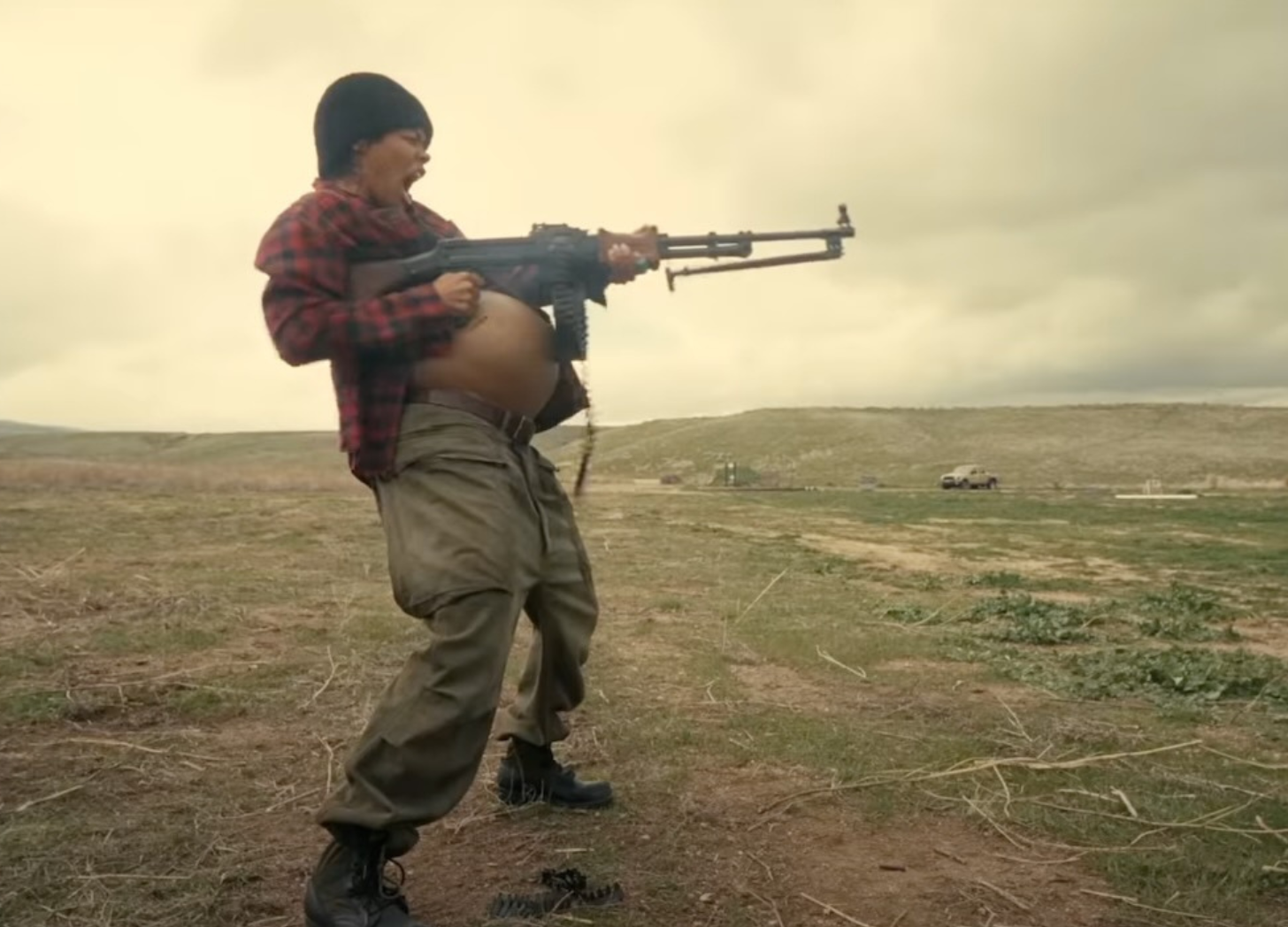
    As she fires off a machine gun with an engorged belly, Pat complains to other 75-ers that Perfidia acts like she’s not even pregnant. When Lockjaw confronts Pat about who loves Black women more, Pat is shopping for baby formula for the newborn—not to show Pat being a present father, but to highlight Perfidia’s absence and lack of nurturing.

    Soon she lives up to her name—Perfidia, “faithlessness, treachery or betrayal” in Spanish. She gets arrested, rats out the other members of the 75, and promises herself to Lockjaw only to abandon him with a Post-It on the door like Berger to Carrie in Sex and the City (“This pussy don’t pop for you!”). It’s wholly unsurprising that she’d slip away into Mexico without her infant daughter, never to be seen again.

    But it’s this lack of nurturing that underscores what Paul Thomas Anderson doesn’t get about Black women or Black revolutionaries.

    Anderson invites a surface-level comparison of Perfidia to the legendary revolutionary Assata Shakur, a Black Liberation Army leader who was convicted of killing a cop, gave birth in prison and escaped to Cuba, leaving her newborn daughter behind. But Perfidia is nothing like Assata. Juxtaposed, the comparison is, again, insidious.

    In the middle of a bank heist to fund their revolution, Perfidia kills a Black security guard who refuses to follow her orders. But Assata was wrongfully convicted of killing a cop. Perfidia ratted out her comrades to escape prison and wound up getting most of her closest comrades killed, including Junglepussy, Laredo and Haim’s character who was graphically shot in the head while trying to escape police capture. But Assata never told who or how her Black Liberation Army comrades spirited her away from a U.S. prison cell into the safety of Cuba for the past 46 years until her death at 78 last week. Perfidia abandoned her daughter before she was even arrested. But while the police state did everything in their power to make her miscarry, Assata actively chose motherhood in prison.

    In Assata: An Autobiography, she wrote about why she made that choice:

    “‘I am about life,’ I said to myself. ‘I’m gonna live as hard as I can and as full as I can until I die. And I’m not letting these parasites, these oppressors, these greedy racist swine make me kill my children in my mind, before they are even born. I’m going to live and I’m going to love Kamau, and, if a child comes from that union, I’m going to rejoice. Because our children are our futures and I believe in the future and in the strength and rightness of our struggle.”

    Assata named her child Kakuya Amaya Olugbala Shakur, which means “hope for the future.”

    She birthed into a hateful world a baby that came from love—of Black people, of liberation, of Kamau, and of herself. Che Guevara once said “At the risk of seeming ridiculous, let me say that the true revolutionary is guided by a great feeling of love. It is impossible to think of a genuine revolutionary lacking this quality.” There is no love in Perfidia Beverly Hills. There is sex. There is power. There is chaos. But there is no love. A loveless revolutionary is just a terrorist.

    I don’t use Assata’s history to say that Anderson should’ve written Perfidia more like Assata; I use Assata to show how far from the mark Anderson’s writing of Perfidia is. It’s lazy and provocative only for the sake of provocativeness, evidence of questions he never bothered to ask about the character, let alone answer. She could be an insatiably horny revolutionary whose downfall is her cowardice and selfishness—all of that is the skeleton of a fascinating character! But Perfidia has no meat, no blood, no sinew in those bones.

    When there’s an embarrassment of riches like Assata’s autobiography to give context on why Black women choose to be in revolutionary struggle, and even why some fell short in their efforts to live up to their ideals, it’s revealing that Anderson simply insisted on failing an open-book test.

    Chase Infiniti is a MacGuffin with a gun as Willa in One Battle After Another

    Instead, he takes a white Marxist group’s actions and puts a Black woman’s face on it with no further study. Bafflingly, in a surveillance state, the only one who ever seemed to wear a mask during their actions is Pat. During the bank heist, Junglepussy, another hypersexualized Black character, proudly proclaims she’s not hiding and wants everyone to know who she is. Perfidia also never masks and apparently lives with her mother, with no regard for bringing the feds to her mother’s doorstep. The sloppiness of the heist and the fall of the French 75 under her leadership resembles the end of the Weathermen in 1981, where members were captured after a botched Brinks’ truck robbery where two policemen and the truck driver were murdered.

    But Black revolutionaries like Fred Hampton specifically spoke out against these kinds of reckless tactics. In an interview with ABC News, Hampton explained why the Black Panther Party would have nothing to do with white leftists movements the Weathermen and the SDS, which he characterized as masquerading as revolutionaries:

    “We stand way back from the SDS and the Weathermen. We think it is anarchistic, opportunistic, individualistic, it’s chauvinistic, it’s custeristic—and that’s the bad part about it. It’s custeristic in that its leaders take people into situations where the people can be massacred and they call it revolution and it’s nothing but child’s play. It’s folly and it’s criminal because people can be hurt. We say that they’re doing exactly what the pigs want them to do. When they take people down and just do nothing, play around, and the pigs are prepared for this and they wipe all of those young people out. We think these people may be sincere but they’re misguided, they’re muddle-heads and they’re scatterbrains. The only way we can show them is to criticize them like we’re doing right now and then leave from here and then go to the federal building and have a demonstration that’s to educate, a demonstration that is disciplined and organized and let them see the examples.”

    In this light, I must say a third time, it’s insidious for Anderson to use a white leftist movement that was heavily criticized in its time by Black revolutionaries and make a Black woman the face of it for the plot alone—a plot in which she doesn’t even get to actively participate!

    Because the plot is a showdown between two white men fighting to hold onto Black and biracial women for reasons that keep them in constant conflict with each other. There’s no choice then but for the film to feel incongruent and exploitative of those thinly written Black women characters.

    I’ve spent the last 2,000 words writing about what happens in the first 40-ish minutes of the film. The plot demands that Perfidia exists only to fuck, blow shit up and disappear so the real movie could begin. So that Pat can be the hero, the good dad, the real principled revolutionary, the present parent who lionizes his deceitful rat of a former partner to their daughter who must learn the truth about both parents the hard way.

    After a cinematic wonder of a car chase that almost excuses the 2 hour and 50 minute runtime, and two separate endings where Lockjaw gets his comeuppance by the white supremacist society that he’d hoped to join, One Fetish After Another finally ends on a good note—for Pat.

    After 16 years of outrunning the law, Deandra goes down trying to save Willa and Bob—who, I assure you, will not be returning that favor or even mention her again. In contrast, Pat and Willa seem absurdly safe and unbothered by the end, back in their home that was just raided by the feds not too long ago. (I guess with Lockjaw out of the picture, no one’s following up on why their house, Willa’s high school, and their entire community were raided by police and everyone’s just back to normal.) Pat gives his daughter an expository letter from Perfidia, which Taylor performs again via voiceover, to somewhat humanize a character who has been nothing but a sexualized, objectified MacGuffin herself. Willa processes the letter and leaves to attend an action in Portland, more committed than ever. The formerly overprotective Pat lets her go, satisfied that she can take care of herself and that he’s done all he can—as a father and for the revolution.

    Chase Infiniti is a wonder in her debut role, and Teyana Taylor does what she can to give heart and purpose where there is none on the page. Regina Hall always deserves more and outside of Honk For Jesus, Save Your Soul, she has yet to receive it. The revolutionaries in the background led by Benicio del Toro’s karate sensei Sergio are endlessly fascinating. But we don’t get to know them or any of the migrants used as props. We don’t get to see the process of how seamlessly Sergio runs his Underground Railroad in a sanctuary city beyond how it intersects with Pat and his mission.

    Because Anderson is not interested in revolution. He’s not interested in vulnerable immigrants. Despite the many jokes about lusting for them, he’s not interested in Black women. He’s only interested in the interiority of white men. Whoever complained about the lack of people of color in his movies that sparked this story should’ve left him alone to write what he knows.

    Stay watchin’,

    Brooke

    Enjoyed this piece? Tip your writer!

    **BGW Book Club is reading Assata: An Autobiography! Sign up here**

    Black Girl Watching is a reader-supported publication. To receive new posts and support my work, consider becoming a free or paid subscriber.

  • For Assata! Radical Lessons For Black Creatives From The Documentaries of Black Feminist Icons

    For Assata! Radical Lessons For Black Creatives From The Documentaries of Black Feminist Icons

    Those who have died have never, never left
    The dead are not under the earth
    They are in the rustling trees
    They are in the groaning woods
    They are in the crying grass,
    They are in the moaning rocks
    The dead are not under the earth.

    —Sweet Honey in the Rock, “Breaths”

    Assata Shakur, our revolutionary Black elder, has transitioned into an ancestor.

    News of her death Friday morning unraveled my best-laid plans and demanded my stillness. This Black woman radical wrote love poems in prisons of hate; brought new life into the world when the U.S. Empire was gunning for her death; and told her own truth as white supremacists and their agents smeared her with lies.

    Black Girl Watching is a reader-supported publication. To receive new posts and support my work, consider becoming a free or paid subscriber.

    Her poem “Youngbloods,” was my earliest awakening that the dead could get new life with the stroke of a pen, and reimagination could bring healing. Her words on a Black woman’s needs (“A revolutionary woman can’t have no reactionary man!”) gave clarity to my deepest relationship woes. And her defiance of the United States Empire and long life in the aftermath made me aware of another possible future.

    She was the first Black woman I ever really thought of as being protected by community. This leader in the Black Liberation Army, imprisoned on fantastical charges, had a battalion of comrades at her behest who broke her out of slavery and Underground Railroaded her to Cuba where Fidel Castro granted her asylum. For 46 years (!!), from 1979 to 2025, the Cuban people and her accomplices kept her safe from harm — even as the first Black face of this white empire had her bounty doubled to $2 million in 2013 and listed the then-66-year-old Shakur as the #1 most wanted “terrorist” in the WORLD. (Thanks, Obama!). Alhamdulillah, Assata Olugbala Shakur died outside of the long arm of the U.S. Empire. They never got their hands on her again! What a joy that she, after a long life, is now truly free.

    When a revolutionary dies, we’re called to be more courageous. In working through my grief that she is no longer in this plane of existence, I’ve been emboldened by her words. Her voice. Her pictures. She gave us SO MUCH and has passed us the baton. My urge to do something is unfocused as of yet, but I do believe that with the lessons she left us, clarity will come, in community.

    My first virtual event for Black Girl Watching was a 3-week reading and discussion group with Black men on bell hooks’ The Will to Change: Men, Masculinity & Love. Our last session was today and I am so energized by the beautiful group of Black men I spent time with in struggle these last three weeks! I want to do it again.

    If you’re interested in reading Assata: An Autobiography with the BGW Book Club, please sign up here and get a free pdf of the book.

    In the meantime, I am reminded that she and so many radical Black icons turned to documentary filmmaking in order to leave us with lasting information and encouragement. Their love for life and insistence upon it is encapsulated in their creation of art. How they made art mattered.

    Often, when Black art and Black artists are shut out of “mainstream” awards, there are two options the Black artist can take. One is to ignore the institutions’ century-long, publicly stated anti-Black purpose (like the Grammys, which was founded to root out and suppress the popularity of Black music, or the Oscars, which was founded to bust up the unions and bend filmmakers’ artistic expression to the Academy’s will) and try again to make something that they’ll value next time. The second option is for Black artists to become radicalized, divesting from their systems of power and creating art from a liberated space.

    Should we choose the radical route, some of our most impactful and iconic Black feminist artists have provided a blueprint in their biographical documentaries for Black creatives. Here are some lessons to glean from their stories and how you can watch their documentaries right now:


    Read more

  • The Best Black Movies at TIFF 2025

    The Best Black Movies at TIFF 2025

    Every August I lose my will to live. And every first week of September, I go to Canada for the Toronto International Film Festival and get it right back! It’s the perfect, crisp autumn air, the city being a clean version of New York, and watching the best movies in the world that do it for me. I’m so grateful to both Rotten Tomatoes and to Critical Minded for their critics grants that allowed me to experience the 50th festival (lovingly nicknamed #TIFFTY) this year.

    Other festivals, for me, have been about the parties and networking, but TIFF? It’s just about the movies. I can watch 5 movies in a day, skipping lunch because the films are feasts. It’s like putting my bare feet on the ground: I’m centered, I’m clear on what I’m supposed to do, and I’m more convinced than ever that movies are powerful. TIFF quite literally gives me life!

    …And then I come back to the shitshow that is America and get depressed again by *gestures broadly.* But, here’s hoping that reliving my favorite life-giving Black films from the festival and sharing when you can watch them will pass some more life over to you! xx

    Black Girl Watching is a reader-supported publication. To receive new posts and support my work, consider becoming a paid subscriber.

    A post shared by @brookeobie

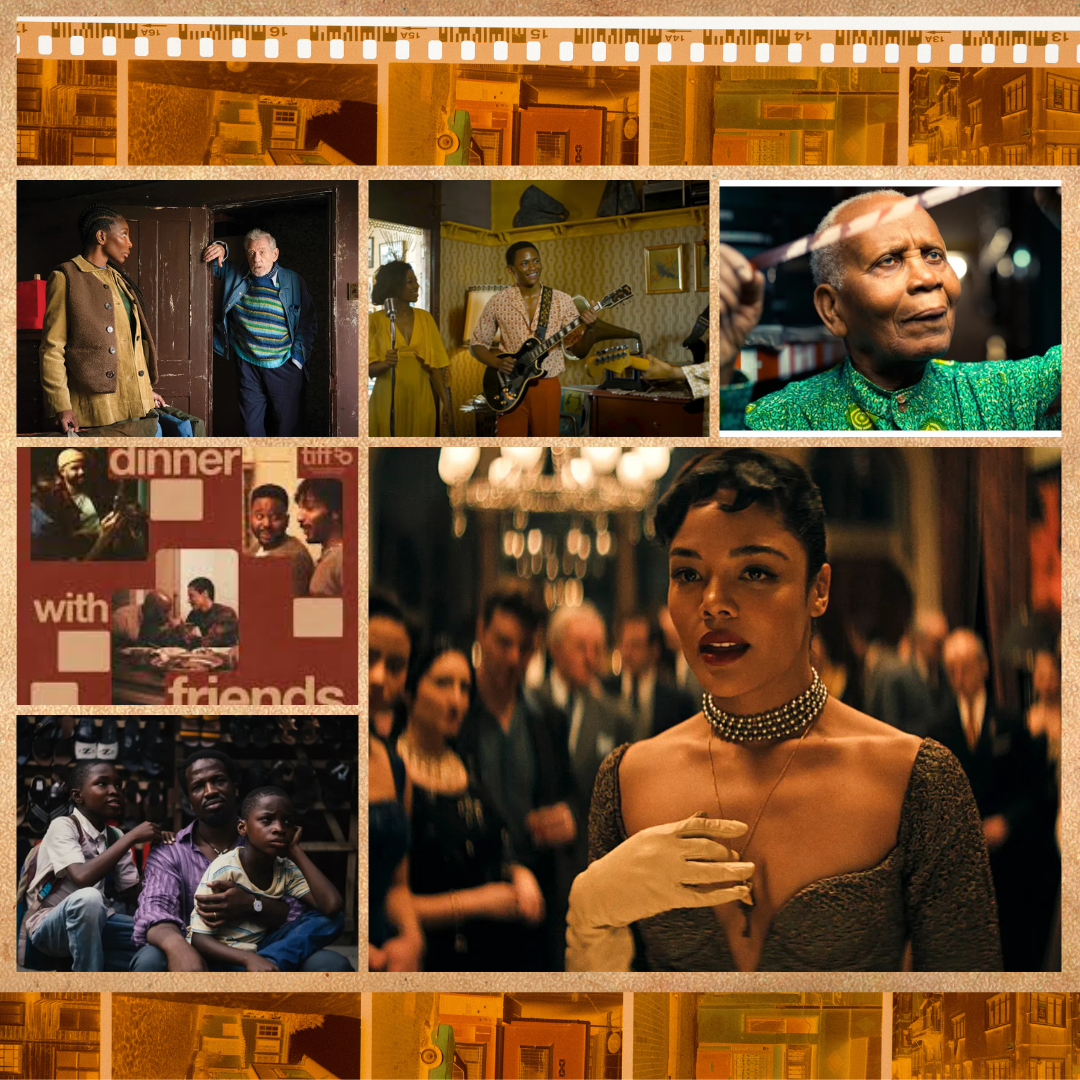
    Tessa Thompson as Hedda Gabler in Hedda

    Hedda
    The buzziest film at TIFF lived up to its hype. A wicked Tessa Thompson stars as the iconic Hedda Gabler in Nia DaCosta’s dazzling adaptation of the 1891 Henrik Ibsen play. DaCosta sets her Hedda in 1950s London and makes her a Black socialite married to Charles, an obsessive, needy white man. The film opens 6 months into their marriage, on the day they’ve chosen to throw a party in their new massive estate that they cannot yet afford. Charles hopes to use the party to secure a professorship that will save them from financial ruin, but all hell breaks loose when Hedda’s former secret lover Eileen (a brilliant Nina Foss) arrives with a new girlfriend and protégé, and also just so happens to be vying for the same professorship as Charles. Hedda isn’t a love story; it’s a power struggle, and Thompson plays the title role like a runaway train. When the weight of racial, gender, and queer oppression collide, one might forgive Hedda for the devilish and quite literally insane things she does. Or not. Either way, Hedda is thrilling, fun, tragic, gorgeously shot and DaCosta’s best film to date. I’ll have a full break-down of the film next month when it comes to theaters, but until then: keep doing all the period pieces Tessa! This is your lane.

    Watch Hedda in theaters on October 22 and on Prime October 29.

    Iconic Ghanaian cinematographer Chris Hesse in The Eyes of Ghana

    The Eyes of Ghana

    The best documentary I saw at TIFF actually opened the festival’s documentary section and centered on Chris Hesse, the 93-year-old cinematographer of revolutionary leader of Ghana, Kwame Nkrumah. Filming Nkrumah everywhere he went through the 1950s and 60s as he became the first president of Ghana, declaring independence from Britain, Hesse captured the liberating history of a new nation that would go on to empower the continent to rise up against its European colonizers. Understanding the power of cinema through Hollywood’s exportation of American propaganda around the world, pan-Africanist Nkrumah was steadfast in believing that the “Africa for Africans” that he envisioned must include Africans telling their own stories on film. Hesse, in his 20s and 30s at the time, was mentored by Nkrumah and encouraged in his cinematography to be Ghana’s eyes for the world. By 1967, however, after a “rumored” CIA-backed coup, Nkrumah was deposed and all of the films he commissioned were ordered to be destroyed. Hesse kept 1,300 reels of film in secret and has spent the last 60 years trying to preserve, repatriate and digitize the never-before-seen footage.

    Now in his 90s, the iconic filmmaker is losing his eyesight to a degenerative disease, but his passion and commitment to the preservation of Ghanaian cinema perseveres. The Eyes of Ghana follows him as he mentors and passes the torch to young Ghanaian filmmaker and absolute delight, Anita Afonu, whom he’s been doing preservation work with since 2011. Hesse shares his memories of Nkrumah and his final battle cry to Hesse as Nkrumah was being deposed: “keep filming.” It’s an inspiring opus of not only Nkrumah’s but Hesse’s life and the urgency of African filmmaking and historical preservation.

    About 15 minutes of Hesse’s rare footage is shown throughout The Eyes of Ghana, which culminates in a screening of some of the footage at the once-iconic Rex Theatre in Accra, which is also being restored on camera. The call to action is clear: Hesse and Afonu need financial assistance to digitize all the reels of film and to keep the history of Ghanaian and African filmmaking alive and accessible. Proceeds from the documentary will go towards that effort. But why?

    Executive produced by The Obamas, The Eyes of Ghana and Hesse and Afonu shouldn’t want for any cash for this worthy project, when the war criminal’s net worth is nearly $100 million, allegedly (re the money; the Obama war criminal stuff is widely available).

    My other gripe with this otherwise deeply moving film is that white Canadian Oscar winner Ben Proudfoot directed the film, yet has spent the majority of the press tour and his time on stage at TIFF practically bragging that he had no idea who Kwame Nkrumah was two years ago when he first visited Ghana, and said as much on that visit to a group of Ghanaians who looked upon him with horror. Naturally, as white men do, he decided he should be the one to direct this film. As a result of his ignorance and overall white Canadianness, he relied heavily on what he called the most collaborative filmmaking he’s ever done, yet of course, his name is the only one with the director credit. Afonu joined not only as co-star and subject, but as a producer. But why couldn’t Proudfoot produce her movie about Hesse instead? Why not make her co-director at minimum, due to the unusual level of collaboration? And what did we miss out on, as a result?

    The 15 minutes of Hesse’s footage that we see throughout The Eyes of Ghana focus on Nkrumah with famous white faces: dancing with Elizabeth, Phillip skulking colonizerly in the background; JFK and Jackie O make appearances too. It seems to serve as a legitimizing element for Nkrumah and by extension Hesse, to show these famous white faces that they were in proximity to. And I wonder what a Ghanaian director would have focused on in the recovered footage—especially in a film that is supposed to be about how filmmaking is a weapon against white colonial forces. That message just can’t hit home with the director they have at the helm.

    Still, I’m thrilled to know more about Nkrumah and Hesse and his work, that there is more Ghanaian film history that we’ll see one day, and that Afona will make more films for Ghana in her bright future.

    Stay tuned for a release date for The Eyes of Ghana.

    Dinner with Friends

    This romantic comedy feature from Black Canadian director and co-writer Sasha Leigh Henry is just as fun as the title suggests. Made on an unbelievable $100,000 budget, Henry captures the joy, intimacy and drama of a coupled-up friend group who schedules regular dinners to make sure they stay a part of each others’ lives. The nuances of the eight characters are revealed over eight dinners spread out over a period of years as they grow together and apart in Toronto, capturing the challenge and necessity of maintaining adult friendships when life is life-ing. As most romantic movies center on sexual partnership, it’s lovely to see a film focus on the work of romance in long-term friendship: the grand gestures, the apologies, the consistencies and the love.

    Stay tuned for info on when you can watch Henry’s Dinner with Friends (2025).

    Sope Dirusu stars in My Father’s Shadow

    My Father’s Shadow

    This stunning, heartbreaking feature film debut of director Akinola Davies, Jr. takes place in Lagos during the day that the 1993 presidential election results were annulled and the military violently shut down civilian protests as a result. Two young brothers, played with such heart by real brothers Godwin Chiemerie Egbo and Chibuike Marvellous Egbo, tag along with their estranged father, a devastating Sope Dirisu (Mr. Malcolm’s List), on that day as he tries to collect his withheld paycheck from his boss and explain to his boys why he must live and work so far away from them. With stunning cinematography and a compelling, semi-autobiographical script, Davies Jr. and his older brother and co-writer Wale Davies set the grief over an absent parent against the backdrop of crumbling hope in a country whose unelected leaders choose power over love. But for the young sons—and perhaps the Davies brothers as well—imagination and reimagination are the keys to processing loss and healing grief.

    Mubi bought the rights to My Father’s Shadow—the first Nigerian film selected for the racist-ass Cannes Film Festival—and will distribute this must-watch film in North America soon. Stay tuned to BGW!

    Ntobeko Sishi (center) stars as Khutala in the South African film Laundry.

    Laundry

    Another heart-breaker, from another brilliant Black woman director, Laundry is a South African film set in 1968 at the height of the apartheid regime. In her feature film directorial debut, Zamo Mkhwanazi tells the story of a Black family who runs a laundry service in the white area of the neighborhood, and how quickly privilege turns to target practice. Though the family patriarch Enoch (Siyabonga Shibe) wants his son Khuthala (Ntobeko Sishi) to takeover the laundry business, Khuthala strikes up a friendship with his father’s long-time mistress, with hopes of joining her band as a musician and leaving South Africa with her for a gig in America. Though Enoch warns his son of the consequences of pursuing music that’s been banned under apartheid—alcoholism, suicide, assassination—Khuthala can’t help but be drawn to the hope of escape through music, both emotionally and physically. Through a devastating turn of events, Laundry spotlights the every day South Africans, once brimming with talent and life, lost to the brutality of the white supremacist machine and gives voice to the stories that rarely reach an international audience. Laundry is a triumphant debut for Mkhwanazi and for Sishi who is a star in the making. Hopefully Laundry will receive international distribution soon.

    Willem Dafoe and Corey Hawkins star in The Man in My Basement

    The Man in My Basement

    This thriller film co-written and directed by Nadia Latif in her feature film debut is an adaptation of Walter Mosely’s book of the same name. Corey Hawkins stars as a down-on-his-luck orphan trying to preserve his family home in Sag Harbor and Willem Dafoe is the titular man in his basement. The film tackles how the system of white supremacy ensnares us all, and even white liberal guilt can become just another weapon, just another burden for Black people to bear. Hawkins and Dafoe are formidable; Latif’s direction is stylish and the cinematography of the historic Black neighborhood is stunning, but the message of the film seems to be that getting revenge against your oppressors makes you just as bad and deserving of punishment. How tragic. Without reading Mosely’s book, I can’t say how that message compares, though Mosely shares co-writing credit of the film with Latif. But with yet another film underutilizing a Black woman (Anna Diop) as a flatly written love interest for an intolerable mess of a man, I’m not inspired to read the book or rewatch it to be sure.

    For those boycotting Disney, The Man in My Basement is streaming now on Hulu, which is a Disney company.

    BLKNWS: Terms & Conditions:

    This was probably my least favorite movie from TIFF, only because it’s not really a movie. Part archive, part Afro-future, part anthology, part narrative, and part bombastic reckoning, the experimental BLK NWS: Terms & Conditions is a journey through W.E.B. DuBois’ history and culture book, Encyclopedia Africana. Some parts are true re-enactments of Black historical events; others are fictional imaginings inspired by the history in DuBois’ encyclopedia. What we see on screen is as if we the audience are flipping through the book as awestruck children would, like writer-director Khalil Joseph did, and allowing the pages and ideas to come to life around us. Its African, nonlinear layering of time can make for a bit of a challenging watch to the average viewer, but would make a stunning museum exhibit.

    Michaela Coel and Ian McKellan in The Christophers

    Bonus: The Christophers

    Calling The Christophers a Black movie might be a stretch—the only Black cast member in Steven Soderbergh’s new comedy film is Michaela Coel. But she is the second lead to Sir Ian McKellan, who owns this movie and is its driving force. Coel plays a talented painter and forger hired by McKellan’s greedy children ( a hilariously obnoxious Jessica Gunning (Baby Reindeer) and James Corden) to forge the final paintings in their legendary father’s unfinished series so they can cash them out as originals when he dies. Coel’s Lori is the straight man to McKellan’s surly and canceled painter Julian, so she basically just serves face the whole movie while McKellan is turnt up to a thousand, having the time of his life playing a kooky, bitter man whose best years are behind him. When Julian discovers his children’s betrayal, he is both exasperated and intrigued by the prospect that Lori could finish paintings that he couldn’t bear to. What follows is a heart-warming story of a man in the twilight of his life who finds hope and renewed energy for one last hurrah in a pupil and teacher he never saw coming.

    Major recession indicator: The Christophers is also still seeking distribution and does not yet have a premiere date. Stay tuned for more.

    I’ll be back next with the incredible Palestinian films that I saw at TIFF and how that history connects to America’s fascist past and present.

    Stay watchin,’

    Brooke

    Enjoyed this piece? Tip your writer!

    Black Girl Watching is a reader-supported publication. To receive new posts and support my work, consider becoming a free or paid subscriber.

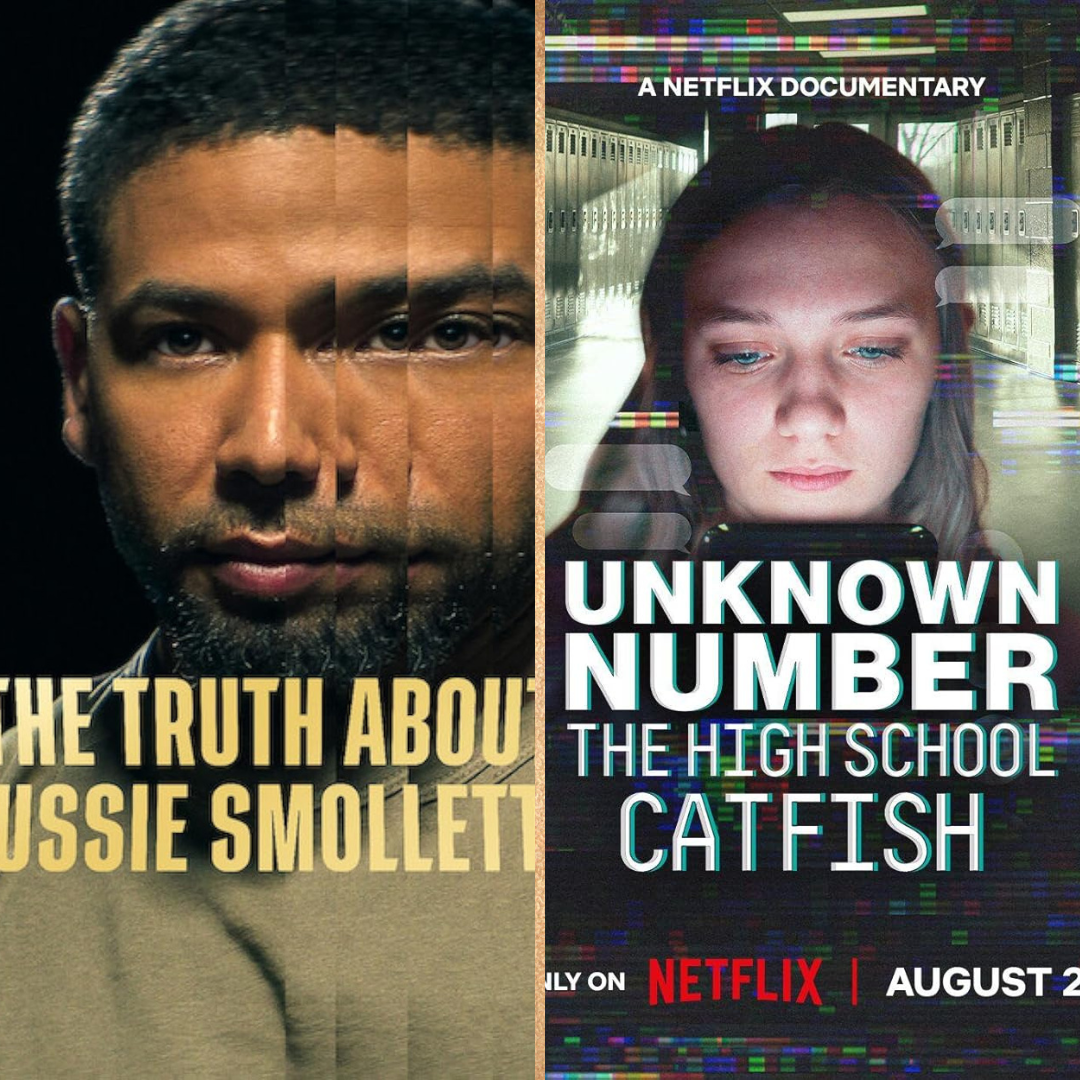
  • Netflix Reveals ‘The Truth About Jussie Smollett,’ and Exploits Teens in ‘Unknown Number’

    Netflix Reveals ‘The Truth About Jussie Smollett,’ and Exploits Teens in ‘Unknown Number’

    I made it to Canada for the 50th Toronto International Film Festival!! Stay tuned for more from the best fest in the biz, but in the meantime, on this week’s Your Weekly Watch, Sept. 5 edition, I’m watching “The Truth About Jussie Smollett” that has an annoying question mark at the end of the title, which I’ll just ignore because yes, duh, obviously, we been knew. And “Unknown Number: The High School Catfish” which is about something way worse than the documentarians seem to realize or care about.

    Black Girl Watching is a reader-supported publication. To receive new posts and support my work, consider becoming a free or paid subscriber.

    The Truth About Jussie Smollett

    I didn’t need a documentary to tell me Jussie Smollett was innocent—but here we are, anyway!

    For those out of the loop, back in 2019, Jussie was assaulted by two men who put a rope around his neck and called him racial and homophobic slurs. He reported to the police that the man whose face he saw was a white man. The notorious Chicago Police Department turned Jussie from a victim into a perpetrator by accusing him of paying two Black Nigerian brothers to assault him in order to gain public sympathy and put pressure on his bosses at Fox, where he was starring in the TV musical drama Empire.

    One problem: the Chicago PD are known for lying, criminal cover-ups, and harming Black people specifically. In fact, they were actively in the middle of the cover-up of the murder of Black teen Laquan McDonald when they made themselves the victim of Jussie’s “hoax” of being assaulted. The math has never added up and this documentary shows previously unreleased exculpatory evidence and key witnesses that were ignored and highlights that Jussie Smollett’s conviction was overturned on appeal. Smollett also participated in the documentary, telling the same story he’s been saying from the jump—along with the corrupt Chicago Police Superintendent Eddie Johnson who led the case against Jussie and was fired for lying later in 2019. You can’t make this stuff up.

    Missing surveillance footage winds up like a Rorschach inkblot test for the audience, and still shows how Smollett could’ve been telling the truth the whole time before his promising career and mental health were destroyed by the CPD and a scandal-hungry media. Journalism is the real winner of this doc, and I hope we see more of it.

    Unknown Number: The High School Catfish

    This documentary about a small-town high school freshmen couple Owen and Lauryn, who receive harassing and obscene text messages from an anonymous, unblockable number for a year and a half has set the internet ablaze. It’s salacious and the culprit behind the unknown number is a gag. It quickly hit number one on Netflix’s most watched list. But what seems lost in these kinds of documentaries is that there are traumatized children involved, and perhaps this shouldn’t be entertainment. The Owen and Lauryn are still teenagers today, though the harassment led to the abrupt end of their love story. The crimes against them were so close to home and recent enough that healing is a long way off. There were no mental health professionals interviewed in the documentary to put the obvious yet downplayed pyscho-sexual issues that the culprit displayed into a medical context for the audience, let alone the culprit themselves. I hate to say spoiler-alert about real-life events, but I will at least say trigger warning: this is a documentary about pedophilia and not even the documentarians seem to realize that. Anyway, the story is harrowing and —I hate to say this even more, considering the source, but—you’ll find a more compelling story about this tragedy in The Cut, which includes much of the missing context from this low-rent documentary.

    Stay watchin’,

    Brooke

    Black Girl Watching is a reader-supported publication. To receive new posts and support my work, consider becoming a free or paid subscriber.

  • ‘Demascus’ Gives Us The Afro-Future, ‘Songs from the Hole’ Gives Us Hope

    ‘Demascus’ Gives Us The Afro-Future, ‘Songs from the Hole’ Gives Us Hope

    It’s time for another edition of Your Weekly Watch! This week, I’ve got docs, I’ve got Black sci-fi, I’ve got Black travel, and if you’re an LA local, I’ve got the best way to watch a movie. Here we go:

    Black Girl Watching is a reader-supported publication. To receive new posts and support my work, consider becoming a free or paid subscriber.

    Demascus

    In this Tubi original series, the Afro-Future comes to life as a Black man in his 30s, Demascus, tries to heal from the grief of his mother’s death. A true dramedy, Demascus allows a Black man’s mental health crisis to launch him into other possible worlds through immersive virtual reality therapy. Think Black Mirror for Black people. Guest stars like Martin Lawrence and Janet Hubert bring the comedy, and the pilot is one of the funniest I’ve seen in awhile. The laughs wane as the season continues and the finale ends with a bit of a bait-and-switch that seems obvious in retrospect considering the low-stakes way that the pilot ends. Because this kind of ending is such a taboo in the sci-fi genre, I’m shocked the writers went there. But the love letter to Black motherhood, the exploration of Black male mental health and the genuine laughs keep you through to the end. Though Tubi rescued this long-shelved AMC series, it’s yet to be seen if the streamer will give them a season 2. AMC made a mistake dumping the series and hopefully Tubi will cash-in on its better judgment.

    Demascus is streaming now on Tubi.

    Songs from the Hole

    One of my most anticipated films of the year is here! I’ve been following abolitionist and artist Richie Reseda, the film’s EP and composer, for years, so I knew that this documentary about how music saved his incarcerated friend would be powerful. I should’ve known that it would be abolition in motion. Directed by Contessa Gayles, who also did the excellent doc on Reseda, The Feminist on Cellblock Y, Songs from the Hole tells the story of artist JJ’88, a Black man who was imprisoned as a teen for murdering another teen and given more than a life sentence. After being put in the “hole,” or solitary confinement, he began writing songs to help him survive his crushing punishment, to forgive and to hope for forgiveness. Part documentary, part narrative, part visual album, Songs from the Hole is a gorgeous meditation on healing toxic masculinity and breaking generational cycles. It’s thoughtful, it’s searing, it’s painful, and, just like abolition itself, well worth the effort.

    Stream Songs from the Hole on Netflix.

    Fit for TV: The Reality of the Biggest Loser

    I was unprepared for the reality of the Biggest Loser. Though it was one of the biggest shows on TV while I was growing up, I never paid any attention to it. But I did know that the world hates fat people, and after watching the new Netflix docuseries exposé, I see why The Biggest Loser was so successful. It’s the perfect outlet for the hatred of fat bodies. Fat people made to punish their bodies, punish themselves for the world’s entertainment. They even had a spinoff for children! People almost died doing this show and as long as people were losing weight (temporarily) or no longer fat (temporarily) that was enough of a foundation upon which to build a financial empire.

    I’m surprised to see all the comments suggesting that the docuseries is boring and nothing “that bad” happened. We really, really, hate fat people as a society. But what I saw in the show was a reckoning, not just for the most awful people involved—Jillian Michaels, Bob Harper, creator David Broome and E.P. David Roth, to name a few—but for a society that has decided that fat people deserve whatever they get for being fat.

    Though the series offers no real solutions, it’s interesting that it ends with a bashing of the GLP-1s people have turned to to quickly lose and keep off weight. Until we fix society’s hatred of fat people, there will always be people willing to do whatever it takes to be free, not just of fatness but of fatphobia.

    Fit for TV is streaming now on Netflix.

    Solo Traveling with Tracee Ellis Ross

    I am a solo travel girl. As a travel writer, most of my trips are solo and for work. Though I enjoy family vacations and girls trips, I really enjoy doing what I want to do, when I want to do it. It’s peaceful. It’s fun. I enjoy my own company. So, when I saw the commercial for Tracee Ellis Ross’s new Tubi docuseries Solo about her traveling the world alone, I was in! My kinda content. Unfortunately, this is more Rich Person in Resorts than Anthony Bourdain: Parts Unknown. Tracee is charming and her confessionals about loneliness in her 50s, being unpartnered and coming to terms with not having children are the best parts of the show. But my appetite for rich people selling their unattainable lifestyle back to the rest of us as inspiration is non-existent.

    I don’t want to see the world through its most luxurious resorts and whatever chauffeurs, desk clerks, shopkeepers and waiters she happens to interact with while there. I want to discover new parts of the world and the people who make it, not watch her sunbathe or take a resort cooking class. The thing about peaceful solo travel is that it can also be boring to watch someone else do it! I don’t want to see her crashing other American tourists’ dinners on camera as a sprinkle of spice either. You’re in Morocco! Meet some Moroccans who aren’t your day-laborers and aren’t trying to sell you something.

    The title was the clue. This is a show about Tracee for Tracee and people who want to be like Tracee (rich with fancy clothes) when they grow up. It was never meant to be more than that. And it’s working! The series was so popular for Tubi that season 2 has already been ordered, so the structure of the show likely is what it is. And if it inspires women to know that life doesn’t end if you never get married or have children (and are also generationally rich and can travel the world), then fine. But I’ll need a more compelling reason to tune into a second season.

    Solo is streaming now on Tubi.

    Greenleaf

    The OWN soap is leaving Netflix in September, so if you like colorism and church mess, hurrup!

    Jurassic Park and Alabama Shakes at The Hollywood Bowl

    If you are an L.A. resident or visitor and you’ve not been to the Bowl yet (or in awhile) what are you waiting for? The outdoor arena and public park just set the stage for two of the most incredible L.A. experiences I’ve ever had in my seven years as an Angeleno.

    The first was watching Jurassic Park on a massive screen with one of the best orchestras in the world, the LA Phil, playing the iconic John Williams score live. Sure, you can stream the film at home on your nice TV, but watching it at the Bowl? I felt like I was eight years old again, seeing it for the first time, but this time sitting enraptured til the credits rolled instead of hiding from the scary parts in the bathroom.

    Yes, it’s a fantastic movie that never gets old, despite how ancient the technology now looks. But it’s the community aspect that heightens the experience. Imagine: 18,000 superfans surrounding you, dressed up like characters from one of the best films of all time. As a Covid Competent girlie, I wear my mask in these kinds of crowds so I don’t miss a thing (except viral airbone diseases!). The shared vibration was palpable and made everything funnier, everything scarier, and gave every win more reason to cheer. We’re clapping when Sam Neil, Laura Dern, Samuel L. Jackson, B.D. Wong or Jeff Goldblum make their entrances or say an iconic line; we’re cheering when the T. Rex eats the right ones. And it reminds me why I love movies; why I love watching movies in a crowd of movie-lovers.

    But the technical aspects of the Bowl make it an experience never to forget. I can only describe the sound in the Bowl as an explosion. Thanks to the acoustics of the shell-shaped stage and the perfection of the LA Phil, I felt like I was in the movie. It was only when I looked down from the screen at Dudamel’s invigorating conducting that I remembered the orchestra was playing live—it was that immersive of an experience. Reader, I wept. It was one of the most perfect summer nights I’ve had in this town.

    Then came Alabama Shakes!

    Brittany Howard of Alabama Shakes performing at the Hollywood Bowl, 8/13 Courtesy of The Hollywood Bowl

    The next Wednesday, I went back to the Bowl to see Brittany Howard, lead singer of the Alabama Shakes, sing the song that got me through the Great Lockdown of 2020. Like everyone else in the world at that time, I was crashing out and catching up on shows like Fleabag (brilliant show!) which ended on a heart-wrenching yet hopeful note, thanks to the Alabama Shakes song “This Feeling.” I immediately made a playlist that I named Pandemix (ha) and put “This Feeling” at the top and played it on repeat for literal years.

    Last Wednesday, let me tell you: Brittany’s mic was on, and she sounded exactly the same as her records. The clarity. The character. The depth. The range. Ms. Mamas has it all, and looked fantabulous in a metallic silver dress that announced her southern divatry before she even opened her mouth. Throughout the show, she masterfully switched between guitars while holding the crowd in her hand and never missing a beat. Standout performances were of course “This Feeling,” and her popular jam “Don’t Wanna Fight,” but I may have a new favorite song in “Over My Head.” She’s gonna give you a show and make you beg for an encore, as only the best divas can do.

    Coming up at the Bowl!

    If you’re ready to see some magic, there’s some more John Williams score performances with clips from Star Wars, Hook, E.T., Jaws, and more all weekend. You can bring your own food and alcohol too, so don’t worry about going broke!

    Plus next week Charlie Wilson & Babyface next week. African artist Angèlique Kidjo & legendary cellist Yo-Yo-Ma; Cyndi Lauper’s farewell tour and the Black Movie Soundtrack coming in September. Special thanks to the LA Phil & Hollywood Bowl for the press tickets and I’ll see y’all at the Bowl!

    Stay watchin’

    Brooke

    Black Girl Watching is a reader-supported publication. To receive new posts and support my work, consider becoming a free or paid subscriber.

  • ‘Highest 2 Lowest’ & The Extent of Spike Lee’s Feminism

    ‘Highest 2 Lowest’ & The Extent of Spike Lee’s Feminism

    *SPOILERS FOR THE PLOT OF HIGHEST 2 LOWEST*

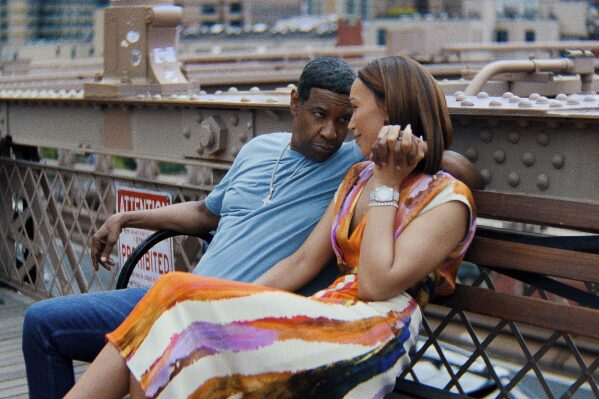
    There’s an electrifying scene in Spike Lee’s latest film Highest 2 Lowest where Denzel Washington is facing off with A$AP Rocky in a recording studio. In this remake of the Akira Kurosawa 1963 classic High and Low, Rocky plays a rapper named Yung Felon who has kidnapped and ransomed a child in music mogul David King’s life for $17.5 million dollars. Denzel plays the mogul King, who’s out for revenge. When Felon finds out his baby mama told King some embarrassing information about him, Felon calls his old lady a “bitch” under his breath. King pipes up:

    “Why she gotta be a bitch?”

    “Why she gotta be a bitch?”

    “Why she gotta be a bitch?”

    We don’t know if King actually repeats the question three times; it’s a Spike Lee tic where lines of dialogue or action repeat in quick and sometimes overlapping succession. And Felon neither answers nor acknowledges the question(s). But this extra emphasis in the final edit is practically begging for the audience to acknowledge that at least he asked!

    This is the extent of Spike Lee’s feminism.

    Black Girl Watching is a reader-supported publication. To receive new posts and support my work, consider upgrading to a paid subscriber.

    Though I reviewed the film more fully for Contraband Camp where I didn’t mention this scene, I might’ve let Lee’s refusal to engage with past critique about his portrayal of women go if not for this one, repeated, infuriating line of faux depth.

    Incredibly—in a film centered around the toxicity of the music industry in late stage capitalism, and an aging, out-of-touch patriarch who’s nicknamed King David — Spike Lee doesn’t swim a drop deeper than that.

    At the beginning of the film, when King shares that he’s lost his passion for the music business, it’s because of the rise of A.I. and the “attention economy” that’s obscuring the “real music” he longs for. He’s certainly not crying or reflecting over his role as a pusher of the rampant misogyny in hip-hop. Seriously, how many times was King in the studio, on the other side of that producer’s glass, listening to his artists spout misogyny without blinking? We can safely bet King’s interaction with Yung Felon where he’s trying to son and one-up the man who took everything from him was King’s first and last time objecting to the word “bitch” coming out of a rapper’s mouth.

    In fact, instead of any analysis on colorism, sexism and ageism in the music industry in this post-#MeToo era, Lee simply perpetuates all of these things with his paper-bag test visual language.

    As I mentioned on Contraband Camp, every woman who is supposed to be viewed positively—as beautiful, as talented, as desirable—is biracial or Latina. Light-skinned women surround King at home, at the gates of his office and even inside it. Faceless, G-stringed, BBL’d asses bounce up and down beside and behind Yung Felon in an imaginative rap performance for the King.

    Where brown men from King to his son Trey to his main opp Yung Felon abound on screen, Lee fills out scenes with light-skinned background women like real-life celebrities Ice Spice and Princess Nokia to solidify King and his record label as the center of culture. The only dark-skinned woman character in the film is a cop who unironically touts Spelman College and “Black woman excellence” while working for the loathsome NYPD.

    But Lee gets the colorism, ageism, sexism trifecta in his casting of the main woman “lead.”

    Want Gina from Martin to play Denzel’s wife? Don’t call the original and age-appropriate Tisha Campbell, who would’ve looked just as gorgeous and had better chemistry with the star; cast the lookalike who is 30 years younger than Denzel, give them a 17-year-old son, and pray the audience can’t add or subtract.

    If Ilfenesh Hadera who plays Pam King could act, I would’ve still talked shit might have let this slide too. Instead, when her character gets the news that Yung Felon has kidnapped their son Trey, she reacts like her card just declined at Tiffany’s. Maybe it’s for the best, then, that Lee and screenwriter Alan Fox stripped her character of her role as the emotional core of the Kurosawa original.

    Denzel Washington and Ilfenesh Hadera as David and Pam King in Highest 2 Lowest

    In High and Low, when a poor man kidnaps a wealthy man’s chauffeur’s son by mistake, the wealthy man’s wife begged her husband to pay the ransom anyway and save the chauffeur’s son, even if it meant a life of poverty that she had never known. In Highest 2 Lowest, however, when Mrs. King finds out that it wasn’t her son after all but the chauffeur’s son that’s been kidnapped, her response to potential poverty is essentially “fuck that kid.” That could have been an interesting twist on the character—not your typical, soft-hearted wife, but the ruthless, capitalist, #BlackExcellence queen who feels entitled to her throne, even if it costs a child his life.

    But Lee refuses to tell us anything substantive about her character or commit to making the rich people the real villains, even as they contemplate letting their “godson” die. Lee is, after all, a very rich person. An anti-capitalist manifesto this is not. And thinly written light-skinned women are par for the course in a Spike Lee Joint.

    The epilogue of the film sees King leave his long-time, toxic, corporatized, soulless, capitalistic music label behind and start something new, something authentic. And which artist does he use as the launching pad for his revolutionary new start? An up-and-coming Doechii? The next Lauryn Hill? An undiscovered Amber Riley? An emerging Jill Scott? Surprise! It’s the same kind of Ice Spice and Princess Nokia artist that surrounded him at his old label: young, skinny, extremely light-skinned, and scantily clad. His son Trey literally touts the new artist to King by describing her as “a more-light-skinneded-ed Zendaya.” Be so fucking for real.

    I refuse to believe this is unintentional.

    During the production of Lee’s 1988 film School Daze, which didn’t “tackle” colorism as much as it perpetuated its existence on screen, the aforementioned diva and star of the film Tisha Campbell recently shared that Lee also treated the light-skinned actresses better than the dark-skinned actresses behind the scenes. Beyond giving the light-skinned girls the name “wannabes” and the dark-skinned girls the actual racial slur “jiggaboos” in the script, behind the scenes, Lee put the male actors up in a nice hotel with the light-skinned actresses like Campbell and the dark-skinned actresses in a worse hotel. “It was to create real method chaos, right? It was a social [experiment], absolutely, to create the true tension,” Campell said. “And it worked.” This was colorist violence then and it is now. Lee’s continued unwillingness to differentiate between analyzing colorism and perpetuating it in his filmmaking is a shame.

    And Lee has been shamed before.

    In 1986, Spike Lee premiered his first film She’s Gotta Have It. Nola Darling is the titular “she,” a Black woman in New York who loves having sex with multiple partners. But the film is told not from her perspective, but from the men’s with whom she has sex. Black feminist icon bell hooks castigated Lee for this in one of the most iconic and necessary reviews of any film, “Whose Pussy Is This?” She writes:

    It is the men who speak in She’s Gotta Have It. While Nola appears one-dimensional in perspective and focus, seemingly more concerned about her sexual relationships than about any other aspect of her life, the male characters are multidimensional. They have personalities. Nola has no personality. She is shallow, vacuous, empty. …[Lee’s] imaginative exploration of the [B]lack male psyche is far more probing, far more expansive, and finally much more interesting than his exploration of [B]lack femaleness.

    The film is one year younger than I am. This review was published in hooks’ book Reel to Real: Race, Sex and Class at the Movies in 1996. Lee has been pulling these shenanigans for basically the entirety of my life! hooks, God rest her, could’ve written that same review today about Highest 2 Lowest. Imagine how tired we are.

    Though Alan Fox’s script is the weakest part, Denzel and Rocky still make a lush playground of their characters while the women don’t exist beyond their roles as accessories for them. Lee is simply uninterested in exploring the Black women characters in this film with any depth. At least this time there’s no pretense: Highest 2 Lowest is after all, a story by men, about men, for men.

    But Lee still remembers hooks’ critique decades later.

    In 2018, at the press junket for his Oscar-winning copaganda film Blackkklansman, I interviewed Lee about critics—Boots Riley had just come down on him about making a cop the protagonist in a story about the fight against anti-Black racism—and Lee dropped hooks’ name and film review unprompted:

    “With every film, it’s something,” Lee told me, not considering Riley’s criticism specifically. “She’s Gotta Have It is ‘misogynist;’ School Daze, I was ‘airing out the dirty laundry;’ Do the Right Thing, ‘Black people are gonna riot;’ Mo’ Better Blues, I’m ‘anti-semitic;’ Jungle Fever, I’m ‘against interracial relationships;’ “bell hooks had an article called, ‘Whose Pussy Is [This]?,’” he laughed, remembering the scathing essay.

    But, he still acknowledged that there could be room for growth:

    “No one’s going to do any art form that long and there’s not going to be criticism that’s legit,” he said. “So, if the stuff’s legit, you try to reconfigure based on what the criticism is and just keep stepping.”

    Lee must’ve found the wide criticism of his past copaganda compelling enough to “reconfigure” Highest 2 Lowest. This is, after all, a remake of one of the most iconic police procedurals. And since it is set all over Lee’s beloved New York City, inevitably, he would feature one of the most loathsome, corrupt and infamous police departments in the country: the NYPD. As I wrote for Contraband Camp, I was nervous about what his portrayal of the NYPD would be going into the film because it was reported in 2018 that Lee was paid over $200,000 for consulting on NYPD community policing ads during the height of the movement for Black lives. But that lambasting Lee got from the Black community in 2018—specifically, from another Black man, Boots Riley—must’ve paid off.

    Highest 2 Lowest subverts the police procedural model of the original by making the NYPD little more than racist, classist, incompetent obstacles to progress. In that regard, it’s practically a documentary. Instead of the police being the brilliant detectives they were in the Kurosawa original, King and his chauffeur Paul (an always great Jeffrey Wright) team up to track down Yung Felon. The film’s theme is King’s refrain (and perhaps a mea culpa from Lee on that $200K): “All money ain’t good money.” That is also the extent of Lee’s criticism of capitalism.

    There is some good stuff in the film. Denzel is at his best and A$AP Rocky rises to the occasion. Lee’s two gorgeous train set pieces rival Kurosawa’s original. And the chorus of Rocky’s much-played song “Trunks,” in the film, is an earworm. I can’t stop saying “Shout out to my felons / boy we caught another felony!” As I wrote in my review for Contraband Camp: “With flash and thin substance, amazing performances and little to say, Highest 2 Lowest runs the gambit and lands firmly in the middle.” But when it comes to Lee’s portrayal of women, 40 years later, not a thing has changed.

    As Bojack Horseman’s grandfather said in one of the best episodes of the eponymous animated Netflix show: “As a modern American man, I am woefully unprepared to manage a woman’s emotions. I was never taught, and I will not learn.”

    That is Spike Lee’s legacy too.

    Stay Watchin’,

    Brooke

    ***BLACK MEN! If you do want to unlearn patriarchy, Black Girl Watching is hosting a Zoom book reading and discussion of bell hooks’ The Will to Change. SIGN UP HERE!***

    Black Girl Watching is a reader-supported publication. To receive new posts and support my work, consider upgrading to a paid subscriber.

    Enjoyed this piece? Tip your writer!

  • My 40th in the Juke & The Conjuring Power of ‘Sinners’

    My 40th in the Juke & The Conjuring Power of ‘Sinners’

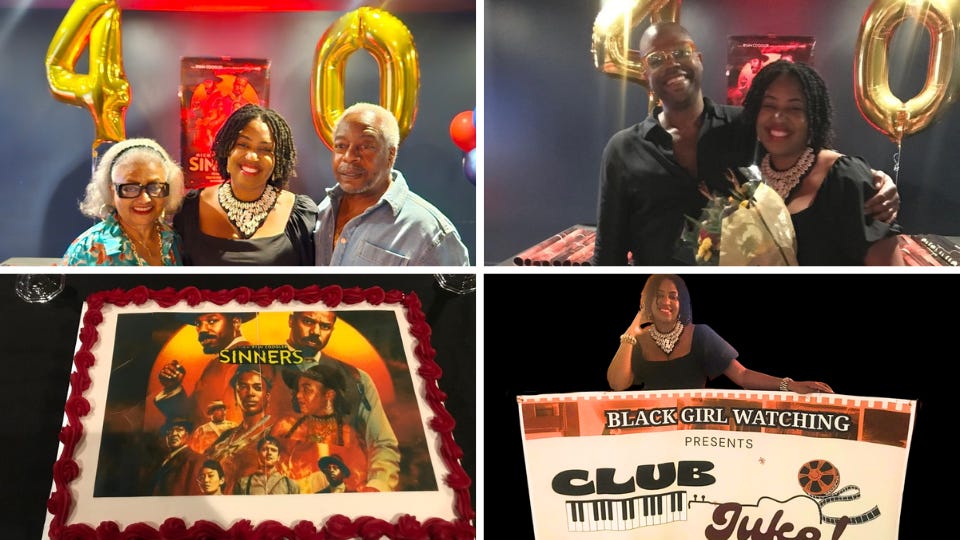
    On July 31, at the Black social club The Gathering Spot in LA, Black Girl Watching had our second Club Juke! A ‘Sinners’ Watch Party & Discussion live event on my 40th birthday. We shut the place down, had valet coming inside to bring us our keys cause they were closedddt! I’m so grateful for every Watcher who came out and enjoyed themselves at the Juke! I’m grateful for every paid subscriber, you help me put on these live community events! You made my year! Watch the recap video here:

    Black Girl Watching is a reader-supported publication. To receive new posts and support my work, consider becoming a free or paid subscriber.

    This was the 12th time I’d seen the film and the 8th time I’d introduced it to people I love. My godparents, who don’t really watch movies like that and had never been to a screening and discussion before, drove down from northern California to celebrate with me. Old friends, new friends and Sorors, joined us at The Gathering Spot, which had free popcorn for guests and a full dinner menu and bar; Warner Bros. provided movie posters and church fans of the characters; Clean Air Club LA provided air filters for the space and face masks; and I photoshopped myself onto the movie poster for the cake. It was my (and Wunmi Mosaku’s!) birthday, after all! And we watched the film that has been transfixing me since April and had another incredible discussion about the themes, the characters, the music, the subtext.

    People ask me why I love this film so much that I would name it the best film of all time on my Top Ten Black Films list for the Black Movie Hall of Fame:

    And I’ve written about the themes, the metaphors, the ending:

    I’ve written about the urgency of Black history films like Sinners:

    I’ve written about the film’s significance in the industry:

    With ‘Sinners,’ White Hollywood Is Moving the Goalposts Again (Industry Critique)

    And I’ve curated an entire syllabus to help people go deeper on the film’s themes:

    GET 20% OFF AN ANNUAL SUBSCRIPTION TO BLACK GIRL WATCHING

    But I haven’t yet written about why Sinners feels so personal to me. Why I keep watching it like Coogler put roots on me or something. It took me three watches to understand its pull, myself. It was that final shot of Sammie that got me. He’s smiling wide, riding in a shiny car in the country with his big cousins, the whole world laid out before him, on the path to freedom. Then it all came rushing back.

    TRIGGER WARNING: ALCOHOLISM.

    Eddie & Brooke, 2003 & 2009

    I had a big cousin named Eddie. He was tall and beautiful. A man of few words and a protector like Smoke. And also the life of the party and everyone’s favorite, like Stack. The two pics I can find that’s just me and him were from my graduations. He was at all of them, gassing me up. He encouraged my gifts. He was kind. Five years older and five inches taller than me, he wouldn’t let nobody mess with me. He knew everything about hip-hop and I would sit enraptured as he argued our cousin Coty down about why Jay-Z was still a better rapper than Nas, even after Ether. He was brilliant. He had a masters in science and worked at NASA for awhile, before things got bad.

    Riding in his black Ford F-150 pick up truck on country roads growing up—that was freedom! So high off the ground I swore we were flying in that thing.

    On the 4th of July, after the family reunion, when I had turned 16 and got my license, Eddie let me drive his truck. I was terrified and thrilled. The truck was the biggest thing I’d driven and there weren’t street lights on those country roads. But I wasn’t about to pass up that honor. I drove him down pitch-black roads, over gravel and through woods to the high school where we met up with his friends and watched the fireworks all night. I didn’t realize I was the designated driver, and he never made me feel that way—only like I belonged wherever he was. I was his lil cuz and his friends had to watch their mouths when they spoke to me. I had never felt so grown and safe and happy.

    The last time I saw him was also on the 4th of July at another Obie family reunion, 9 years later. But there were no fireworks warning me that a shift was taking place. His leaving was quiet, or maybe I just didn’t want to hear it. I’d gone out with my uncle on a hayride tour of our family farm and by the time we got back, Eddie had left the reunion early. I didn’t get to hug him. I didn’t get to say goodbye. He died two weeks later. I didn’t even know he was sick. I mean, I knew he had alcoholism. But I’d seen so many Delta Slims in my life, old-heads who’d numb the pain with drink for decades on end. Why would I think it could take out my 30-year-old cousin?

    He was a football player. He was a boxer. He was young. Eddie had time. In 2006, the summer I turned 21 and lived with him and his big sister, I now had to drive him everywhere in my little green VW Jetta because his license had been suspended. Driving him around felt more like a gift than a chore because he was still my favorite and I was on a mission to save him. But I was so mad at him too for being sick. At 21, I didn’t understand the disease and at 26, neither did he. He would pat his six-pack abs and say drinking didn’t bother him like other people, and what did I know anyway? It was the first time we’d fought for real and I longed for the childhood arguments over whose turn it was to race on the Nintendo Power Pad or why he chose his sister to win the cousins singing contest when she was clearly rapping. Seeing him that disconnected was the first time I was scared for him. Alcoholism is scary to witness; I can only imagine how scared he must have been to be trapped in it. I didn’t know enough not to push, not to seek control. But he never stopped being kind anyway. Taught me how to fish that summer. Taught me how to run on my tippy-toes instead of flat-footed. Every time I run or hike and adjust my posture, I see him running next to me on that black tar road that summer, teaching me, like a movie playing over in my head. As the years pass, the resolution gets fuzzier around the edges and the image skips, but in my mind, he’s still laughing and smiling and alive.

    ***********************************

    In 2015, while Ryan Coogler was away from home working on Creed, the biggest film of his career at that time, his great uncle passed away. He didn’t get to be with him. He didn’t get to say goodbye. His uncle loved the blues and whiskey, so Coogler would play his uncle’s favorite artist, Buddy Guy, and drink whiskey to remember him. To conjure him. Ten years later, Coogler gave us Sinners, a film about the power of art to wake the dead, and pierce the veil, and fold time in on itself so we can all be together again. Past and present and future all at once. No loved ones lost to time but all around us, filling the empty spaces, catching the same groove. In the end credits scene, when Vampire Stack hugs Buddy Guy as elder Sammie, it was Coogler bringing his uncle back to life for one last hug and bittersweet goodbye. Art, he insists, is the proof: we were never separate; there never was a veil.

    Throughout the film, Smoke and Jedidiah tell Sammie to put the guitar down, do something sensible, do something responsible and stable. Singing the blues only leads to misery, financial instability, drunkenness, sin. But Sammie knew the holiness, the sacredness, the conjuring power of his art. Once he felt that, he couldn’t let it go for the world.

    I am living the risks of the artist’s life. I’ve seen the other ways to be, had access to the quiet choice. And sometimes I wonder why I can’t help but choose the storm. I keep writing and dreaming and creating and watching, despite the chaos—or because of it—because I know that power too. I’ve seen what art can do. I’ve felt it. I chase it.

    People ask me why I keep watching Sinners: Because for 2 hours and 19 minutes, Eddie is alive again, and so am I. We’re in his truck riding towards freedom, floating above gravel and black tar roads, a whole world of adventure before us. And I can say hello again. And I can say goodbye. So, why wouldn’t I?

    Stay watchin’,

    Brooke

    Black Girl Watching is a reader-supported publication. To receive new posts and support my work, consider becoming a free or paid subscriber.

    Liked this piece? Tip your writer!

    If you or someone you know struggles with alcoholism, there is help.

  • ‘Eyes of Wakanda,’ ‘Washington Black’ & My Top 10 Black Films in Your Weekly Watch Aug. 6 Edition

    ‘Eyes of Wakanda,’ ‘Washington Black’ & My Top 10 Black Films in Your Weekly Watch Aug. 6 Edition

    What a time to be alive! On the heels of an AMAZING Club Juke live event last week here in L.A. (recap coming soon, I promise! I’m only one person, become a paid subscriber so I can hire some help!!) we’ve got a very Black, very historic, very Diasporic list of films and TV in this week’s Your Weekly Binge Watch.

    Black Girl Watching is a reader-supported publication. To receive new posts and support my work, consider becoming a free or paid subscriber.

    Yes, I am doing a name change of this BGW regular segment because I believe in the power of words and decolonizing language. ‘Binge’ is a word associated with eating disorders and has been used as a descriptor of TV-watching without breaks as a way to describe our insatiable and unhealthy TV consumption habits. I get it! But I want to be more intentional about not using this word out of its original context and careful not to trigger anyone managing these disorders by using the word casually when it’s just unnecessary and all I wanna do is tell y’all what I’m watching this week and help you decide if you should watch it too! So, let’s go back to Wakanda, take a whimsical trek across the globe in an air balloon, and revisit the man-made horrors in the aftermath of Hurricane Katrina in this week’s Your Weekly Watch:

    Eyes of Wakanda

    Pretend it’s a Saturday morning in the ‘90s and it’s time for one of the best animated series you’ve ever seen. Get into Eyes of Wakanda, Ryan Coogler’s latest foray into the fictional central African nation that he first brought to life in 2018’s live-action Black Panther. It tells the story of the nation’s spies (War Dogs), like Nakia or N’jobu from Black Panther, who have been sent out into the world on secret missions to recover stolen Wakandan artifacts in different time periods, pre-dating the 2018 film by centuries. Each of the four episodes in the limited anthology series follows different spies in different countries, adding exciting twists to tales you might have heard before, like the origins of the Trojan Horse and Achilles’ heel in Greek mythology. The underlying theme is, at any time you can think of, and any lasting story you’ve heard, Africans were there, whether we’d eventually wind up erased from the narrative or not. And that our only hope for survival is to think about what our descendants need, even hundreds of years into the future, and act accordingly. Time is a loop in this gorgeously animated series that deserves more seasons to explore this lush world on screen.

    Watch Eyes of Wakanda on Disney+.

    Freakier Friday

    I know people hate reboots, remakes and sequels, as they often come at the expense of Hollywood greenlighting original stories. And that’s valid! I usually don’t mind them, though—if they exist to fix the sins of the past iteration rather than for just a soulless money grab. Freakier Friday is both. Specifically naming the anti-Asian racism in the 2003 mother-daughter body swap iteration, Indian director Nisha Ganatra set out to address immediately.

    “It was something I brought up right away when I had my first meetings with the producers,” Ganatra told Entertainment Weekly. “I had a moment of the presentation that was like, ‘problematic Asian representation!’”

    She fixed that by bringing back the two magical Asian restaurant owners who cast the body-swap spell in the last version and allowing them to be regular people in this version. Imagine! She also hired the very hot Manny Jacinto (who will always be Jason Mendoza to me), to be Lohan’s love interest and allowed the Filipino-Canadian actor to play in a British accent (take that, colonizers!) and show off his dance moves and physical comedy. He deserves the world and I’m happy he gets to do a little something in this otherwise awful movie. But you fix “problematic Asian representation!” and add anti-Blackness? Okay.

    X Mayo (The Blackening) is the only Black woman character, and she exists to be background in Manny & Lindsay Lohan’s meet-cute, and humiliated in a food fight for comic relief. Jordan Cooper, whom I love, is also reduced to Lohan’s comic relief servant assistant who feeds her green juice as soon as she walks through the door. There weren’t even any Black characters in the 2003 iteration, and maybe that was best if this is as deep as their imagination can go for Black characters.

    Pretty immediately after the body-swap happens in this film, we’re subjected to a barrage of ageism, with Jamie Lee Curtis mocking how horrific her wrinkle-filled old face and body look for laughs. Sure, her character has been swapped with a teen girl’s, but has our timeline also been swapped with 2003? It’s played. It’s tired. They should’ve kept this in the Disney Vault.

    Hurricane Katrina: Race Against Time

    This five-part docuseries on the Black New Orleans victims of the outrageous man-made disaster that started and followed Hurricane Katrina is one of the most harrowing things I’ve watched all year. Produced by Ryan Coogler and his Proximity Media banner, this docuseries centers the survivors telling their stories and highlights the monumental failures of George W. Bush, FEMA director Michael Brown, Governor Kathleen Blanco, the city of Algiers, NOPD Police Chief Eddie Compass and the entire NOPD, Bill O’Reilly and the entirety of the mainstream press, (Soledad O’Brien notwithstanding) and more. This documentary series is a long-overdue reckoning.

    Twenty years later, I admit that my memory had faded. I was a senior at Hampton University in 2005, and president of the Sociology Club when we put on an event to welcome Xavier and Dillard student transfers that September, and to educate Hampton students on what had transpired. The first “film” I ever made was for this program, a simple slideshow of images set to“Hurricane Song” which documented the horrors that Black survivors faced, being left on rooftops as the floodwaters rose. I’d forgotten all the horrors within horrors. What Coogler has done, once again, is create an archive of Black life; a tonic for the wound; a remembrance. This is spirit work that they’re doing over at Proximity Media, so that we will never again forget. It’s devastating. It’s enraging. It gave me nightmares. The images from Katrina side-by-side with the images coming out of the U.S.-Israeli genocide of Palestinians show how hateful and destructive white delusion of superiority is and how all of our struggles are connected. Katrina—caused by oil companies drilling off the Gulf Coast and the U.S. military—is a byproduct of white delusions of supremacy, capitalism, and environmental racism, just as the US-Israeli genocide in Palestine is, making this docuseries both urgent and timely, as we connect our struggles and find ways to heal and fight back. The survival of the world literally depends on it.

    Watch Hurricane Katrina: Race Against Time on Hulu.

    Washington Black

    Sterling K. Brown is on a roll over at Hulu, executive producing and starring in his second series for the platform this year, Washington Black. Based on the novel of the same name, this series departs from Brown’s earlier sci-fi production Paradise, as a historical-fantasy series that celebrates Black genius. Beginning during slavery in Barbados and traveling from the American South to Canada to Antarctica, to Africa, Washington Black tells the story of the titular child prodigy, George Washington Black, whose imagination became the source of his freedom.

    Pay no attention to the uneven accents, or the insistence on yet another white-passing woman character who longs to be Black. Though I did roll my eyes at both in that opening episode (and there’s truly no reason for the insecurity revealed in these ever-changing accents—COMMIT TO THE BIT!), it does eventually become clear why this white-passing woman is so intent on being Black when this feels more like modern-day propaganda rather than a regular occurrence during literal slavery and Jim Crow eras. But anyway! Get past these two annoyances and you’re off to the races on a fantastical, family-friendly adventure around the globe in a hot air balloon with a brilliant Black scientist who will one day learn that whiteness will never be his savior. Only reconnection to his Africanness and the bolstering of his own imagination will set him free.

    Watch Washington Black on Hulu.

    The Woman in the Yard

    Justice for Danielle Deadwyler. She’s starred in two widely overlooked films this year, 40 Acres and now The Woman in the Yard, where she gets to be vulnerable and badass and confront the challenges of motherhood under pressure on a family farm. In the psychological horror film, The Woman in the Yard, Deadwyler plays a mom in grief as she cares—or barely cares—for her teen son and young daughter in the aftermath of her husband’s recent death in a car accident. One day, a woman dressed in funeral attire, a black veil over her face, comes and sits in the yard of their farm. The haunting figure forces buried family truths to come to light. Though the ending is a bit sloppy, the beautifully shot and almost great film is still a worthwhile watch (even for the scaredy cats), as it explores the horrors of grief and mental health when children are depending on a mother’s wholeness. Deadwyler is so close to getting the role that will make this industry stand up and pay attention to this deserving talent.

    Watch The Woman in the Yard on Peacock.

    Side Pieces

    • I and Black Girl Watching received a 2025 Rotten Tomatoes Critics Grant to attend the Toronto International Film Festival next month! Whoo! BGW launched last December with films I saw at TIFF ‘24, so I am thrilled to be going back and to have the support of Rotten Tomatoes, a regular traffic source to this platform, as I build on everything BGW can be. We outchea!

    • Good news! She’s Dead! And Just Like That…has been canceled after three horrible seasons, and just like that, our long, waking nightmare of hatewatching is over and we are free to hate watch something else! Any suggestions? I’m thinking Love Island: Beyond the Villa, because now that I know I was *always right* about that snake Kenny being fake, I can keep watching this boring Love Island season 6 spin-off show with the underlying context of all my fave PPGM gang, JaNa, Serena, Leah and Miguel navigating life not knowing there’s a viper in the mix, and that will give this poorly structured, overly-Connored (seriously, why is Connor there?!) snoozefest a much-needed edge.

    • The list of the 100 Best Black Films of All Time has been released by Shawn Edwards’ Black Hall of Fame, and I was asked to contribute my top 10 list. Though I do not stand by the order or the entrants on the official 100 list, I stand by my top 10! Here’s my list:

      1. Sinners (2025) BEST MOVIE OF ALL TIME IDC IDC IDC!

      2. Moonlight (2016) literally the only other film that made me feel the way Sinners does!

      3. Nope (2022) a masterpiece and Peele’s best work, fight me!

      4. Eve’s Bayou (1997) absolute classic. Foundational filmmaking here.

      5. The Color Purple (1985) note the date!

      6. Daughters of the Dust (1991) free on Tubi go stream it right now!

      7. Sorry to Bother You (2018) our anti-capitalist legend Boots Riley

      8. The Watermelon Woman (1996) Cheryl Dunye is and has always been that girl!

      9. Beyond the Lights (2014) Gina Prince-Bythewood is the way, the truth and the light!

      10. Honk for Jesus: Save Your Soul (2022) stream it now on Peacock and tell me I’m wrong! I’m so jealous I didn’t write this film. Go, Ebo Twins!

    What’s on your top 10 Black movie list? Let me know in the comments!

    Stay watchin’,

    Brooke

    Black Girl Watching is a reader-supported publication. To receive new posts and support my work, consider becoming a free or paid subscriber.

    Liked this piece? Tip your writer!

  • ‘Andor’ Is a Guide to Anti-Fascist Resistance

    ‘Andor’ Is a Guide to Anti-Fascist Resistance

    ***SPOILER ALERT FOR STAR WARS, ANDOR AND ROGUE ONE BELOW*****

    It should come as no surprise that the Star Wars franchise about an alliance of rebels fighting against an evil Empire is anti-fascist. Since the original trilogy (OT) began in 1977, the Rebel Alliance, also known as the Resistance, has had a single goal: to liberate the galaxy from its fascist overlords.

    Across films and planets, we see the storm troopers of Empire invading, colonizing, exploiting, looting and destroying, keeping the people in fear and under tight authoritarian control. Threats to Empire lead to entire cities—entire planets—being annihilated at its leader Emperor Palpatine’s command. What better way to keep people hopeless and compliant than through constant state-sponsored terrorism?

    Black Girl Watching is a reader-supported publication. To receive new posts and support my work, consider becoming a free or paid subscriber.

    But while the OT and its three prequels and sequels focus on the force-sensitive Skywalker family of Jedi knights who can manipulate energy to their will, for either evil (Darth Vader) or good (his children, Luke and Leia), the prequel series Andor gives us something different.

    Starting 5 years before the first Star Wars film, A New Hope, the Andor TV series follows Captain Cassian Jeron Andor, a skilled thief and fighter pilot with a serious vendetta against the Empire. They colonized his home planet of Kenari, hanged his father and genocided his people. But he’s got no deep love for the Rebellion—at least not at first. Throughout its two seasons, Andor features no Jedi knights, no superhuman powers, no force magic or ancestral ghosts pushing everyone forward, just a ragtime bunch of ordinary citizens facing extraordinary enemies and rising to the occasion.

    Where the OT is a campy, family-friendly adventure, Andor is gritty and grounded, exposing not only the Empire’s atrocities but their aftermath on all creatures, the air and the land. In real life, the consequences of fascism couldn’t be higher and Andor takes us deep into the lives of the unsung heroes of the rebellion so we can feel every blow—and feel the bittersweetness of every victory.

    With this visceral writing led by showrunner Tony Gilroy, the two-season story of Andor, complete with its grand finale film Rogue One (also co-written by Gilroy), is not only the best Star Wars story Lucasfilm has ever told, it’s also one of the most important TV shows in history. (Seriously, I’m telling my kids that the OT is Andor, Rogue One and A New Hope, it’s that incredible.)

    Black feminist writer, filmmaker and activist Toni Cade Bambara once said, “As a culture worker who belongs to an oppressed people, my job is to make revolution irresistible.” Gilroy and his team have done just that, crafting a compelling series and film that both awakens the audience to our fascist reality and provides a guide to anti-fascist resistance.

    “I’m writing about how I feel about all the revolutions, about all the insurrections,” Gilroy says of his intentions behind Andor and the obvious parallels critics are drawing between the show and current events, like the Ghorman massacre in season two and Palestinians being genocided by the US-Israelis in real life; and the infamous Empire of Star Wars and the continued rise of fascism in the West. “People legitimately fail to recognize how puny their individualism is. The narcissistic belief that you live in some unique time — it’s shocking. We all do it. I do it. That is not the pattern of history,” Gilroy says.

    Recognizing this pattern of history is the first step in a storied anti-fascist tradition.

    Imperial villain Dedra Meero, girl-bossing too close to the sun.

    Know Your Enemy

    Before Andor ever accepts his destiny as a revolutionary, he was very clear on who his enemy was. In season one, through flashback, we meet him as a young boy called Kassa on his homeplanet of Kenari, taking care of his even younger sister. Their dress and tribal marks suggest an indigenous culture—a sharp contrast to the colonial spaceship that crashes on their planet. With nowhere for his rage for all that the Empire has stolen from him to go, Kassa takes it out on the Imperial ship. With tiny fists and a rod as a weapon, he tears the ship apart. Though he was soon rescued and adopted by rebels Maarva and Clem Andor, renamed Cassian Andor for his own safety and therefore escaped the fate of the rest of his people, Andor never forgot that his enemy was that system of power and every cog in the wheel that kept it turning.

    Knowing Andor’s background of oppression, revolutionary leader Luthen Rael recruits Andor to the Aldhani Heist in season one, promising a bigger blow to the Empire—and a bigger payday than the petty crimes Andor’s been committing on his own. This effort to steal an Imperial sector’s quarterly payroll in order to fund the rebellion would take place on Aldhani, another exploited planet, with another genocided and ethnically cleansed population, the Dhanis. Like Hawaiians, the Dhanis had been pushed into the lowlands as the Empire turned their sacred valleys into military outposts. Just hours before the heist, an imperial soldier brags in front of his soon-to-be assailant that there used to be 15,000 Dhanis who would sojourn that day for the holy ceremony of the Eye that the Heist team is using as a cover for their mission. That small number had been stomped down to 60! The Enemy brags about their terrors, not knowing that their arrogance will soon lead to their downfall.

    Though Andor was only on the planet as a mercenary and not yet a revolutionary, Luthen knew enough to connect the dots Andor wasn’t yet interested in seeing—Kenari yesterday, Aldhani today, and any planet could be tomorrow. To know your enemy, pattern recognition is key.

    “The Empire is a disease that thrives in darkness,” Maarva says via hologram at her funeral in the season one finale. “It is never more alive than when we sleep.” Wake up to the patterns in history that are alive today.

    When the Empire and its propaganda arm, Imperial News Now, spend season two manufacturing consent for the eventual genocide of Ghorman, recognize CNN, BBC, Fox News and state governments in western settler-colonial countries colluding to manufacture consent too. Ghorman wasn’t a threat to the Empire, it had mineral resources under its surface that the Empire needed to build the Death Star. Gaza, like Iraq, has oil. Congo has cobalt.

    When you see Andor kidnapped by Imperial soldiers and arbitrarily imprisoned indefinitely on Narkina 5, and you see immigrants in America kidnapped from the streets and trafficked indefinitely to a concentration camp in El Salvador, think: what is to prevent this Empire from labeling literally any person in America a criminal and trafficking them indefinitely to a labor camp?

    America was built on genocide of Indigenous people of Turtle Island and Africans and our enslavement too. It can only maintain itself with more genocide, more enslavement. Just like the Empire didn’t stop with Kenari, Aldhani or Ghorman, our Empire won’t stop with Turtle Island, Palestine, Congo, Sudan, Hawaii, Puerto Rico, or Haiti. Our Empire won’t stop with “undocumented immigrants,” either. Jedha City’s fate was a practice run for Scarif and Alderaan, just like police brutality against Black Lives Matter protestors was a practice run for the bipartisan police attacks on anti-genocide student protestors. Who’s next?

    Think of this reality as corporations slash jobs in favor of A.I. labor, corporate buy-backs, shareholder profits and CEO bonuses—and our government criminalizes homelessness and triples down on investments in private prisons. Won’t we make a convenient free labor force when the laws adapt to the needs of the prisons’ profits? There’s only one way out.

    Right before the genocide, Ghorman’s senator Dasi Oran wouldn’t stand with secret revolutionary Senator Mon Mothma to end the arbitrary imprisonment of residents, because Oran believed compliance and appeasement with Empire would ease Ghorman’s suffering. He did not know his enemy and, ironically, wound up arrested in the Senate halls of Empire and either indefinitely imprisoned himself or likely executed for treason after all of his compliance.

    In the aftermath, Mon Mothma stood alone in the Imperial Senate to call the genocide of Ghorman a genocide, because it wasn’t just one political party that was corrupt and complicit—it’s named the Imperial Senate, after all. Mon Mothma fled the facade of politics to join the real revolution underground full-time because she knew her enemy was not confined to a party. It’s the system itself that birthed cowardice.

    Black and brown people have long-since peeped the Empire’s lies of “democracy” and “equality.” The fascism we know well has spread so that white Americans can now feel it too, but it’s not new; it’s simply the imperial, colonial, white supremacist boomerang coming home to roost. The Empire has divided us into hierarchies along lines of race, class, gender, sexuality and ability so that we would punch down on each other instead of up at our Enemy’s neck. This is how Empire keeps us under control. But this is not our natural way of being.

    “The imperial need for control is so desperate because it is so unnatural,” says Nemick, the youngest member of the Aldhani Heist team, in a section of his manifesto that bookends both the season one and series finale of Andor. It’s why our Empire is so violent to trans and gender non-conforming people; why it must beat women, Black people and Indigenous people into submission and rob us of our rights and existence. If this submission were our natural state, instead of liberation, the Empire wouldn’t need to exert so much effort to try to enforce their will on us. “Oppression is the mask of fear,” Nemick says. “Remember that.”

    Think of the guards in the Narkina 5 gulag, shivering behind locked doors when the enslaved rebellion of the prisoners led by Andor and Kino Loy begins. The guards know that the numbers aren’t on their side. There’s only one way out: If we know our Enemy—if we are to win—it must be the Empire of the 1% versus the resistance of the 99%.

    Karis Nemick (right) shares his manifesto with Andor before the Aldhani Heist

    Know Your Power

    “We’ve grown reliant on Imperial tech and we’ve made ourselves vulnerable,” Nemick records in his audio manifesto. “There’s a growing list of things we’ve known and forgotten. Things they’ve pushed us to forget,” he says, and I can’t help but think of our tech overlords shoving A.I. down our throats on every platform. Google search is essentially non-functioning, spitting out A.I. slop instead of vetted news results. Students are openly admitting to cheating their way through school, using ChatGPT to think and write for them. They can’t even write their own emails or status updates, let alone essays. The Empire is rewriting its racist history, banning books, firing librarians, co-opting museums, and strong-arming universities because when we have time to think, to learn, and read and share ideas in community, we are a danger to the Empire.

    Knowing this, the principled rebel commits to liberation by not falling into Empire’s obvious traps. Using generative A.I. not only atrophies the minds we need to think and fight back, but also steals the work of artists, destroys the environment—particularly poisoning Black and brown communities in America —and exploits Kenyan workers with $2/hour slave wages to operate it.

    To free ourselves of Empire, we must free ourselves of reliance on Imperial tech. We must see ourselves in all the exploited laborers, all the cut down trees, all the wasted water discarded in its service. The principled revolutionary knows that our futures are inextricably linked.

    Boycotting corporations and tools that fund genocide, destroy the environment and that are otherwise meant for our harm, empowers us to not only bring down Empires like Jim Crow in America in the ‘60s and Apartheid South Africa in the ‘90s, and Apartheid Israel today, but also frees us from the deceptive comfort and ease that these tools and corporations provide, making us principled and thoughtful with where we spend our dollar. As we divest from the complacency of comfort, we invest in an ethic of revolution.

    To become this dangerous collective, we must also understand every aspect of our individual power. As we see in the series pilot episode, Andor’s trauma of leaving his little sister behind on Kenari led him straight into the revolution; it turned him into a dependable warrior who would never again leave a comrade behind. Because he studied his enemy and could successfully infiltrate the Empire, he turned his petty thievery and his survival skills as a pilot into a full-on and relentless assault on Empire, completing mission after mission for the Resistance.

    “One fighter with a sharp stick and nothing left to lose can win the day,” reluctant rebel Jyn Erso quotes her mentor Saw Gerrera in Rogue One, and I can’t help but think of Palestinian professor and poet Refaat Alareer. In October 2023, in the months before his assassination in Gaza by zionist invaders, he said through tears in an interview: “I’m an academic. The toughest thing I have at home is an Expo marker. But if the Israelis invade …I’m going to use that marker to throw it at the Israeli soldiers, even if that is the last thing that I would be able to do.”

    Our pain and trauma can be fuel to change the world. Our skills and gifts can be weapons. Think: what has my life experience prepared me to do for the Resistance?

    The Aldhani Heist crew (L-R) Skeen, Cinta, Taramyn, Andor, and Vel

    Know Your People

    “I have friends everywhere,” is the code phrase for rebels to recognize each other as on the same team. Deeper than code: the phrase epitomizes the Alliance. The team that pulled off the legendary Aldhani Heist was made of a thieving mercenary, a former storm trooper, a current lieutenant of the empire, two badass lesbians, and a prodigious manifesto-writing kid, bankrolled by a rich senator and organized by a former Imperial soldier-turned art collector with an incredible lacefront wig. As my grandma used to say: “It takes all kinds to make a world.”

    Skeen—the 7th Heist member who turns on his team in the end—didn’t understand that. When the former storm trooper asks Skeen to cover him so he could rescue their other team member Vel, Skeen just doesn’t do it, and the former storm trooper gets shot quickly. Earlier, Skeen mentions to Andor how upset another team member was to learn of their comrade’s storm trooper days, but it appears to have been a mask for Skeen’s own feelings. But people come to the revolution when they come to it. If they have skills and knowledge that the revolution needs and are taking steps to be accountable and trustworthy—like risking life and limb to rob an Imperial bank to fund the revolution—then there must be space for defectors to join. In more ways than one, Skeen proved he was no revolutionary in the end and Andor killed him for it.

    Likewise, after the Heist, Luthen sends his rebel assassins to kill Andor, as the only uncommitted loose end who could turn Luthen over to the Empire. But even after Andor realizes that Luthen is trying to kill him, he recognizes that Luthen is not his enemy—only the Empire is. After all he’s seen, survived and given to the rebellion for pay, Andor’s now a believer, ready to be all-in for the cause. “Kill me or take me in,” Andor challenges Luthen who laughs with joy that Andor is joining the revolution at the end of season one. Recruiting Andor ends up being one of the greatest decisions Luthen makes for the Resistance. Andor goes on to help and save so many people and he is also helped and saved many times, in return.

    This is in complete contrast to Syril, the Imperial cog in Ghorman who’s been facilitating the genocide on his girlfriend, Lieutenant Dedra’s behalf, without even knowing what she or the Empire were really up to. He dedicated his life to the so-called law and order of Empire, only to be played and dismissed by the very system that cannot by its nature value its expendable devotees. Empire only tolerates compliance—it has no need for morality or justice, as these threaten its existence. Syril believed himself on a righteous hunt for justice when he pursued Andor to his own peril. He didn’t know his enemy, and in the end, he blames and tries to kill Andor for his own poor choices and lack of foresight. Isolated and alone, hated by the Ghormans for his betrayal of them, Syril is killed out of nowhere by a Ghorman resistance leader in order to save Andor—a decision that ultimately saves the galaxy.

    The Empire wants the revolutionary to feel vulnerable, alone, depressed, outgunned, outmanned and crushed under its boots. But the true revolutionary is never alone; all over the world people are waking up and joining the Resistance. “I have friends everywhere” is both a mantra and a conjuring. It includes people we’ve yet to meet—people we’d never expect. “Rebellions are built on hope,” is a common refrain in Andor. And a community of people down for the cause are what sustain it.

    Jyn Erso and Andor in their final moments in Rogue One

    Know Your Sacrifice

    One of the greatest things about Andor is its refusal to romanticize a revolutionary life. Andor and Bix are so scared and plagued by what they’ve done for the revolution—and what has been done to them—that they can’t necessarily count themselves happy together. Over the course of their two-year rekindled relationship, Bix had been seeing the signs that Andor was compromising the Resistance out of fear of losing her. When Andor is ready to quit the Resistance and go be happy with Bix on a planet far, far away, she knows she must leave him. A force-sensitive healer confirmed for both Bix and Andor that he had a special calling, and Bix knew he would never leave her willingly. So she sacrifices being together so that he can pour his all into the rebellion. “If I’m giving up everything,” she says, “I want to win.”

    Vel and Cinta, Luthen’s top rebels and the badass lesbians from the Aldhani Heist also can’t seem to make a revolution and a romantic relationship work. When Vel tries to get closer to Cinta, Cinta tells Vel she already knew the deal from the jump: “The rebellion comes first. We take what’s left.” Like the Jedi knights that came before them, it seems that fear of losing love is not only a distraction from purpose but also, like we see with Anakin/Darth Vader in Revenge of the Sith, a path to the dark side.

    But their inability to sustain both romance and revolution should not be mistaken for a belief that a revolutionary must sacrifice love. Though hate for Empire may be many a revolutionary’s entry point, it is in no way a sustaining emotion. Indeed, as Che Guevara once said, “At the risk of seeming ridiculous, let me say that the true revolutionary is guided by a great feeling of love. It is impossible to think of a genuine revolutionary lacking this quality.”

    Andor and Bix don’t stop loving each other, nor do Vel and Cinta. What they sacrifice, instead, is the part of themselves that values their own safety, comfort and love above everyone else’s. Their love is not safe from Empire until everyone is safe from Empire.

    Luthen might be the one who gives voice most clearly to what a revolutionary sacrifices:

    “Calm. Kindness. Kinship. Love. I’ve given up all chance at inner peace. I’ve made my mind a sunless space. I share my dreams with ghosts. I wake up every day to an equation I wrote 15 years ago from which there’s only one conclusion: I’m damned for what I do. My anger, my ego, my unwillingness to yield, my eagerness to fight, they’ve set me on a path from which there is no escape. I yearned to be a savior against injustice without contemplating the cost and by the time I looked down there was no longer any ground beneath my feet. What is my sacrifice? I’m condemned to use the tools of my enemy to defeat them. I burn my decency for someone else’s future. I burn my life to make a sunrise that I know I’ll never see. And the ego that started this fight will never have a mirror or an audience or the light of gratitude. So what do I sacrifice? Everything!”

    Finally caught in Lieutenant Dedra’s trap by the end of season two, Luthen stabs himself, his mission of funding an operating rebel base on Yavin 4 and passing information about the existence of a planet-killing weapon to his confidante Kleya now complete. He burned his life building the Resistance and in the end, it’s only Kleya and Andor who show him gratitude and fight to make sure his sacrifice was worth it. There’s just no guarantee.

    In the series finale, Vel—who lost Cinta in a rebellion on Ghorman—urges Andor to reconnect with Bix before it’s too late. She must know that Bix has had his child, even if Andor doesn’t know. He says he’ll do it when there’s time but he’s off to his next mission to pursue Luthen’s intel on the Empire’s potentially nuclear weapon. And he’s out of time. He dies in Rogue One in a blaze of that nuclear weapon just moments after completing his final mission, fueling a sunrise he’ll never see.

    The famous opening crawl of 1977’s A New Hope (which picks up immediately after the events in Rogue One) simply declares that the Rebel Alliance has achieved a big victory against the Empire by stealing the plans for how to destroy its Death Star weapon. It doesn’t even mention Andor or his sacrifice—nor the dozens of other rebels in the fleet who died on Scarif for this bittersweet victory.

    For every Kleya that Andor could rescue, he couldn’t save his own sister. For the child of Galen Erso (who built the Death Star with its fatal flaw) that Andor protected until their bitter end in Rogue One, he would never even be able to meet his and Bix’s own.

    “You think I’m crazy?” Saw Gerrera asks. “Yes, I am. Revolution is not for the sane. Look at us. Unloved. Hunted. Cannon fodder. We’ll all be dead before the Republic is back and yet, here we are.”

    But oh, “If I must die… in a blaze— and bid no one farewell, not even to his flesh, not even to himself—” Refaat Alareer writes in a poem before his murder in Gaza, “let it bring hope. Let it be a tale.”

    You do your part; you run your race and pass that baton forward until the sun rises and the revolution comes.

    Han Solo, Princess Leia and Luke Skywalker in “Star Wars Ep. IV: A New Hope”

    Know Your Endgame

    Before I was bullied by my friend Charles into watching Andor, I had never taken any interest in a non-Skywalker Star Wars story. I hadn’t seen Rogue One until Monday, after I finished my Andor season 2 screeners. I was unprepared for how gutting it would be to see Andor and Galen’s daughter Jyn Erso destroyed on Scarif in the nuclear blast of the Death Star. To see Andor grow from a vengeful thief into a loving revolutionary; to watch him survive two seasons of countless attacks, blaster burns, spaceship crashes, two enslaved uprisings, two genocides, an Imperial bank robbery, and the nuclear blast on Jedha City at the beginning of Rogue One just to die a short while later in a second blast in Scarif, made me feel the way Empire wants us to feel. Emotionally destroyed. Depressed. Defeated. Hopeless. One of the realest revolutionaries in the galaxy was taken out by incompetent unmitigated evil. Is this victory? What was it all for?

    Then I rewatched Episode IV: A New Hope. No, Andor’s name is never mentioned and his and Jyn Erso’s sacrifice to get Leia the plans to destroy the Death Star don’t seem to be known by any of the main players in the OT film. But a whiny farmboy from Tatooine who happened to also be a damn good pilot himself, takes those plans, let’s Jesus take the wheel, and drops two bombs exactly on the target, destroying the Death Star at the end of the movie.

    For all of the many times since college that I’ve seen A New Hope, I have only now on this rewatch actually cry buckets of tears—of sadness and joy. We know the sacrifice it took to win this victory. We know what was lost to win. In that context, everything is more precious; everything has more weight; everything means more.

    When I think of the structure of Star Wars—the original saga starting in the middle at Episode IV, going forward in time, then backing up to the beginning; Andor picking up right after Episode III and Rogue One leading into Episode IV—I think about Toni Morrison’s first novel. In The Bluest Eye, she tells the entire story on the first page and dares the reader to continue. “If he turns the page,” she said in her documentary, The Pieces I Am, “it’s because he wants either to find out how it happened or he loves the language.”

    In these Star Wars sequels and prequels, we already know how the story ends: Darth Vader and his two Death Stars will be destroyed, the Jedis will reemerge, the Force will awaken and return to balance—the endgame is that the Resistance will win. The Empire will fall. The people will be free. Everything else is just the “how” — and a lifetime’s worth of beautiful language.

    “You made this decision long ago,” Andor reminds a young revolutionary who asks him for reassurance as she fears her imminent death. “The Empire cannot win. You’ll never feel right unless you’re doing what you can to stop them. You’re coming home to yourself. You’ve become more than your fear. Let that protect you.”

    I watched this opening scene of the rare but still nameless Black woman revolutionary having this moment with Andor in the season two premiere and I couldn’t help but think of Assata Shakur: “It is our duty to fight for our freedom. It is our duty to win. We must love each other and support each other. We have nothing to lose but our chains.”

    I watch this series and I think of the Tonis—Morrison and Cade Bambara—I think of Assata. I think of Angela. So, if I have any criticism of Andor, it’s the same one I have had for all of the Skywalker-driven Star Wars properties since 1977—where are the revolutionary Black women of consequence in this story???? In real life, Black women are foundational thinkers and creators of revolutionary art. To have not one Black woman revolutionary of any significance in Andor’s story arc seems like a bow to the racist fanbase that has a conniption whenever a Black woman or non-white person gets to do anything significant in fantasy. The principled anti-fascist knows their enemy and doesn’t comply in advance. Despite this glaring oversight, Gilroy gave us something eternal; he ran his race and passed the baton forward with visuals and language—the language!—that will rattle in the brain until it spur is onward in revolutionary love.

    “There will be times when the struggle seems impossible,” Nemick says in his manifesto that’s now been spread around the galaxy by the season two finale, long after his mid-season-one death. “I know this already. Alone unsure, dwarfed by the scale of the enemy, remember this: freedom is a pure idea. It occurs spontaneously and without instruction. Random acts of insurrection are occurring constantly throughout the galaxy. There are whole armies, battalions that have no idea that they’ve already enlisted in the cause.

    “Remember that the frontier of the Rebellion is everywhere and even the smallest act of insurrection pushes our lines forward.…Remember that. And know this: The day will come when all these skirmishes and battles, these moments of defiance will have flooded the banks of the Empire’s authority and then there will be one too many. One single thing will break the siege. Remember this. Try.”

    Never forget that original creator George Lucas set this entire revolutionary franchise not in the future, but “a long time ago.” These stories of anti-fascism take place in the past to spark a guarantee for us that fascism will not be our future. Today, we’re witnessing the dying gasps of Empire and we already know that we will win. The Empire will fall. The people will be free. With every step forward, we write the how.

    Stay watchin’,

    Brooke

    Like this piece? Tip your writer!

    Black Girl Watching is a reader-supported publication. To receive new posts and support my work, consider becoming a free or paid subscriber.

  • Your Weekly Binge (May 12 Edition)

    Your Weekly Binge (May 12 Edition)

    In the two weeks since my seventh watch of Sinners, I’ve been looking around like that meme of John Travolta in Pulp Fiction. What now? While paid subscribers can expect an exclusive, full syllabus on the groundbreaking film this week(!!!), I have managed to pull myself away from it, in order to watch some other stuff. Here’s your weekly binge:

    Andor: The season two finale of the best Star Wars show yet premieres on Tuesday and if you’re not yet caught up, or put on, this is the week to do it. I’ll have a deep-dive on Andor after the finale, but until then, know that it is even more radical than Severance, as Star Wars has always been about anti-fascist resistance. Featuring enslaved rebellions, citizens kidnapped and sent to foreign labor camps indefinitely, and one politician brave enough to call a genocide a genocide on a livestream, Andor hits particularly close to home as fascism continues to rise in the real world. Though it’s not without its flaws, Andor features some of the best antifascist writing on T.V., like this gem of a peptalk that the title character gives a scared rebel who’s losing her nerve as she’s facing certain death: “You made this decision long ago. The empire cannot win. You’ll never feel right unless you’re doing what you can to stop them. You’re coming home to yourself. You’ve become more than your fear. Let that protect you.” Hot damn! And that’s just from episode one. Buckle up for the ride of your life.

    Black Girl Watching is a reader-supported publication. To receive new posts and support my work, consider becoming a free or paid subscriber.

    Andor is streaming now on Disney+.

    Forever: Legendary T.V. showrunner Mara Brock Akil (“Girlfriends,” “The Game,” “Being Mary Jane,”) is back with an all-Black adaptation of Judy Blume’s most-banned book, the Y.A. romance Forever. Starring my favorite girl, Lovie Simone (“Greenleaf,” “Stella and the Spades”) as Keisha and newcomer Michael Cooper, Jr. as Justin, Forever captures the beauty and heartbreak of falling in and out and in love in your teens. Simone’s leading-lady talents have deserved this spotlight for a long time and Cooper is perfect as her sweet, neurodivergent forever-love. Set in 2018 with a fire soundtrack to match, the show balances warm nostalgia with the bitterness of predominantly white institutions built to break Black kids. Simone’s Keisha gets the worst of it. Trigger warning: in a sharp turn from the relatively conflict-free plot of the book, Keisha is the victim of an ex-boyfriend’s revenge porn and is summarily slut-shamed for it by both peers and adults. Though it’s “realistic” that parents can be horrible, if Keisha simply *had* to go through something this traumatic for the sake of the plot, I do wish that Keisha and Justin’s moms had reacted in a less stereotypical and a more healing and loving way. It’s a TV show, after all—why re-trigger when you can heal? The lesson of the show: hire Wood Harris (“The Wire,” “Creed”) to be a wholesome dad in everything and stop sending your Black children to white schools.

    Forever is streaming now on Netflix.

    FYC SEASON

    It’s the most wonderful time of the year and L.A.’s best season: Awards. This is when studios trot out their star shows to hobnob with critics and awards-voters “for your consideration.”

    Severance: At the Severance FYC, I got to chat up Adam Scott about how revolutionary the show is and I got my own Lumon Sever’d Floor employee badge:

    Watch my recap video on IG here, read my Severance pieces here, and stream Severance on AppleTV+.

    A post shared by @brookeobie

    MO: At the MO FYC, I got to meet the man himself in my Mandela Hirbawi keffiyeh and enjoy his INCREDIBLE falafel tacos from the show. I asked Mo if his unrelenting truth about the genocide in Palestine led to the show’s cancellation after a fantastic season two, which I reviewed back in February here. We’ll never know, but one thing is for sure, he left it all on the field and told a true, powerful, heartbreaking and hilarious story of Palestinian resistance and survival and should be so proud.

    Watch my recap of the event on IG:

    A post shared by @brookeobie

    Stream Mo on Netflix.

    Government Cheese FYC: I had the pleasure of moderating AppleTV+’s new show Government Cheese with showrunner Ayesha Carr (“Everybody Hates Chris,” “Brooklyn Nine-Nine) after a screening of the first two episodes. The surrealist comedy follows David Oyelowo’s Hampton Chambers as he leaves prison for fraud and tries to reconnect with his wife and kids in 1970s Simi Valley, CA. Because I hadn’t reviewed the series before being a paid moderator, I’ll refrain from reviewing now, but you can stream the series on AppleTV+!

    Ayesha Carr & Brooke Obie, Government Cheese FYC Q&A

    ABANITU: A story on my directorial debut feature film Abanitu was featured in the May 2025 print and online editions of Inside Nova Magazine! Following five generations of the Obie Family, ABANITU tells our 119-year-history owning land in North Carolina as we heal through the indigenous practice of farming and face heart-breaking challenges when people try to separate us from the land. You can read the story here, and of course, stay tuned to Black Girl Watching for updates on when and where you can watch my debut film!

    Brooke on the Island Fever podcast talking Sinners:

    I took my friend Krit to see Thunderbolts* and it was fine! Immediately after, we hopped theater screens to see Sinners (my 7th time, his first!) which was way better! Then I joined him on his podcast Island Fever to break down the film:

    7th time’s the charm! Brooke & Krit at AMC Burbank

    Fiona Apple(?!) “Pretrial (Let Her Go Home)” – Speaking of revolutionary, new anthem just dropped from Fiona Apple! I’m so sorry, Fiona, I was unfamiliar with your game. But apparently the iconic singer is not new to being woke, she’s true to it. She spent two years as a court watcher where she saw thousands of women be incarcerated before even being convicted of a crime simply because they could not afford bail. She channels the rage of this injustice into her new song, “Pretrial (Let Her Go Home).” The music video features images of real women, mothers and the families and communities destroyed by pre-trial detention. Her rallying cry “Let Her Go Home” doubles as a website to facilitate bail fund donations. Watch and donate here:

    The revolution will be live streamed on YouTube.

    Stay watchin’,

    Brooke

    Black Girl Watching is a reader-supported publication. To receive new posts and support my work, consider becoming a free or paid subscriber.