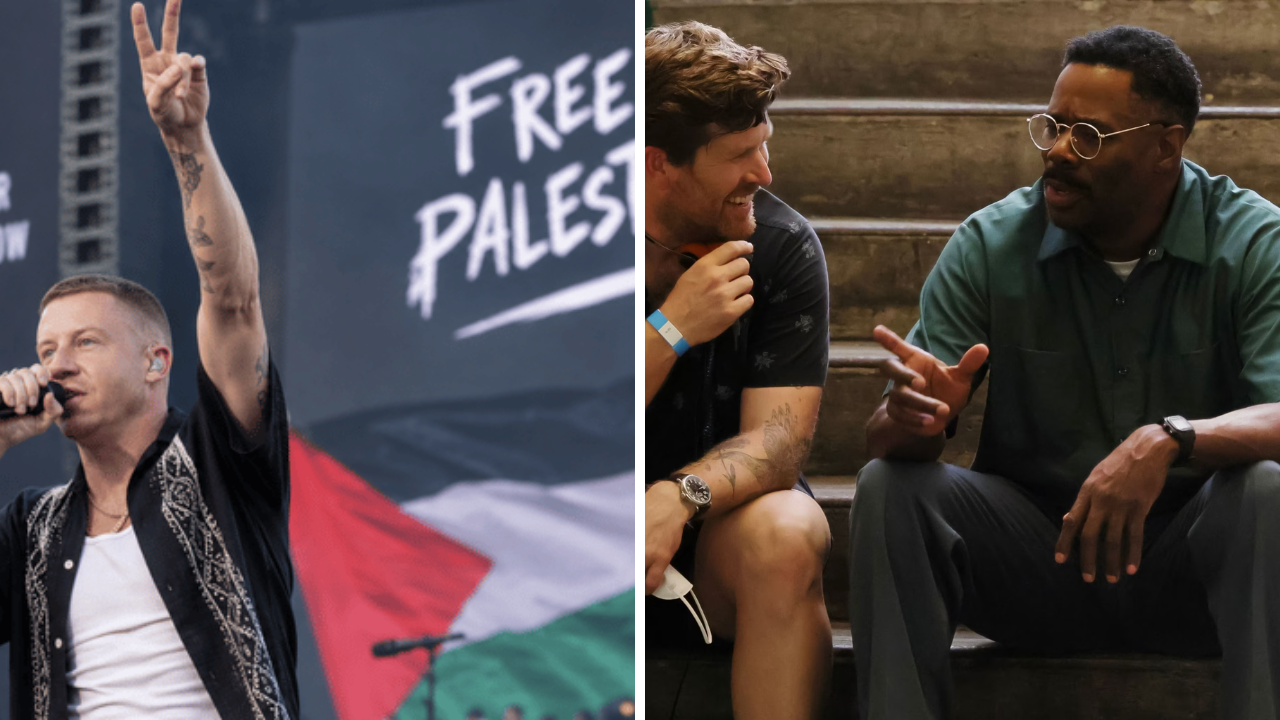
As I was returning from the 51st Toronto International Film Festival this week—my favorite film festival, and my third representing Black Girl Watching—Macklemore got kicked off of Ed Sheeran’s global tour for saying “Free Palestine.” Now, I do not listen to Macklemore or Ed Sheeran. I had no idea they were on tour. And now I am a subject-matter expert on the rousing speech Macklemore gave for Palestinian liberation during his opening act, and on Ed Sheeran’s sniveling cowardice, folding to pressure from zionist billionaire and Epstein Files member Robert Kraft to kick Macklemore off the tour.
Black Girl Watching is a reader-supported publication. To receive new posts and support my work, consider becoming a free or paid subscriber.
As I arrived in Toronto for the festival last week, I had seen former blackfisher Pink crying about how the words “Free Palestine” made her feel unsafe (the darndest things make white women feel “unsafe” and it’s usually Black and brown people who have to suffer for it. I’m sure the slogans of the anti-slavery movement in America would’ve made her clutch her pearls too). And she got her wish to have Macklemore excommunicated from the stadium tour led by stadium owner Kraft and his Epstein Class cronies. But I don’t believe it was the phrase “Free Palestine,” that had them all shook. These two shows that Macklemore opened for Sheeran were played before an audience of 100,000 people per show. And they were all cheering, crying, chanting along with Macklemore that Palestine would be free. The zionist spell that has obscured their injustice of stealing Palestinian land, genociding the Palestinian people and ethnically cleansing Palestine for more than 70 years is lifting.
And now, thanks to the zionist fear, bullying and censorship of art, Ed Sheeran has lost his touring band and every other opening act who quit in solidarity with Palestine, and all credibility. A message that could’ve been contained to a few hundred thousand people over ten shows, has now exploded to millions of people and global news headlines for more than a week talking about the zionist genocide of Palestine and the waning power that zionists wield to silence free speech of the oppressed.
People have seen with their own eyes the IOF destroy Palestinian olive orchards, all Palestinian universities, books, ancient artifacts and architecture in an attempt to erase the evidence of thousands of years of Palestinian culture and life. People have seen Palestinian babies blown from their mothers’ wombs—I have seen these images over the past three years of live-streamed genocide, and I will never get them out of my mind. I will never un-hear the voice of Hind Rajab, the five year old girl whom the IOF slaughtered with 355 bullets. So when Macklemore memorialized Hind and the Columbia University protestors who overtook their genocide funding institution in protest of her murder with the song “Hind’s Hall,” and performed it with images from the genocide in Gaza to 200,000 people over two shows on tour, he reminded me of what Toni Morrison said: “Art is dangerous.”
It’s dangerous because it pierces through the consciousness of an audience and stays with them, impacting their emotions and their actions, consciously and unconsciously. Art is a weapon. How you wield it and who you wield it for matters. Macklemore chose to wield his weapon on behalf of the oppressed, genocided and ethnically cleansed Palestinian people. Ed Sheeran chose to wield his weapon against the oppressed, on behalf of a billionaire in the Epstein files. There is no such thing as apolitical art. All artists must choose, whether we like it or not. And the people will be the judge of it.
The Palestinian poet Refaat Alareer said in his final interview before being targeted and executed by the IOF: “I am an academic, probably the toughest thing I have at home is an Expo marker. But if the Israelis invade, if they charge at us, open door to door to massacre us, I’m going to use that marker, throw it at the Israeli soldiers, even if that is the last thing I will be able to do.” His art was dangerous to Empire and it cost him his life. Their fear of the power of our art is a matter of life and death, not mere comfort. That is the real sacrifice. Macklemore using his white male privilege in an art form he co-opted from Black people is literally the least he can do and it has cost him, but it will not cost him his life. For those of us within the belly of the beast, those of us who sit at the intersection of marginalizations—race, class, gender, ability, sexuality, geography—the cost will always be higher. Yet, that is the artists’ charge: to throw our markers, our films, our songs, our poems, our literature at Empire for the benefit of the people. For our own liberation.
Which brings me back to TIFF. In 2023, Colman Domingo’s film Sing, Sing premiered at the festival and was immediately my favorite of the year. Based on a true story, this film followed incarcerated men at the Sing Sing prison who participate in a performing arts program as a form of therapy in the high-stress conditions of the prison system. Formerly incarcerated men and graduates of the arts program starred as themselves alongside Domingo to tell a beautiful story of what art as a weapon can do, piercing through the cold concrete of our modern-day slavery institutions and giving hope and an outlet to men in chains to be free in their minds.
But what’s most remarkable about Domingo’s film is not just the story they told, but how they told it. Director Greg Kwedar and his producing and writing partner Clint Bentley joined Domingo on stage at this year’s TIFF for a panel on how they paid every single person who contributed to their film Sing, Sing equally—from the production assistant, to their A-list number one on the call sheet, Mr. Colman Domingo himself. Every person who contributed to Sing, Sing also got equity in the film, so when the film makes a profit, they make a profit too. On a usual film set, this would be extraordinary. On a film set with a majority cast of people who have worked for slave wages in prison, this is an extra radical act, a scream in the face of the dehumanizing prison industrial complex. It’s a damning act in an industry that thrives on the exploitation of workers, and the assumption that “stars” should get millions while the people who keep the sets running should just be happy to be there.
A film is never solely the product of the director or the star; it is the result of so many hardworking people who never get the credit for their work and can struggle financially while the films they work on make hundreds of millions around the world. The brainchild of Kwedar and Bentley, The Ethos Model of filmmaking is something they’ve now done successfully on two award-winning films, Jockey and Sing, Sing. And the filmmakers hope it is catching.
Watchers, I bawled my eyes out throughout this beautiful conversation moderated by Domingo, in a packed auditorium of cheering filmmakers. I felt more hope for the survival of human, ethical filmmaking than I ever have before. Their ethos of equal pay and equity in filmmaking is what I long to achieve. I long to meet producers, actors and other filmmakers who want to make this kind of dangerous art, for the people, by the people; for our collective liberation. I want to work with people who believe that it is possible for us all to succeed, and that there is a greater purpose, a dangerous purpose to the art that we make — and a tremendous responsibility.
Sing, Sing was snubbed in the Best Picture category of the Oscars, even though it was absolutely one of the best pictures of the year. I strongly believe the Hollywood Machine found Sing, Sing too dangerous to reward as a production due to the producers’ radical ideology of pay equity. What if other filmmakers and A-listers start banding together for equal pay?! Won’t someone think of the billionaires’ bottom line?! How can they control us if having more money than someone else is no longer a motivating factor?! Making dangerous art on behalf of the people will cost you something. But the reward and the new world the artists will build where we can all create and thrive is well worth the cost.
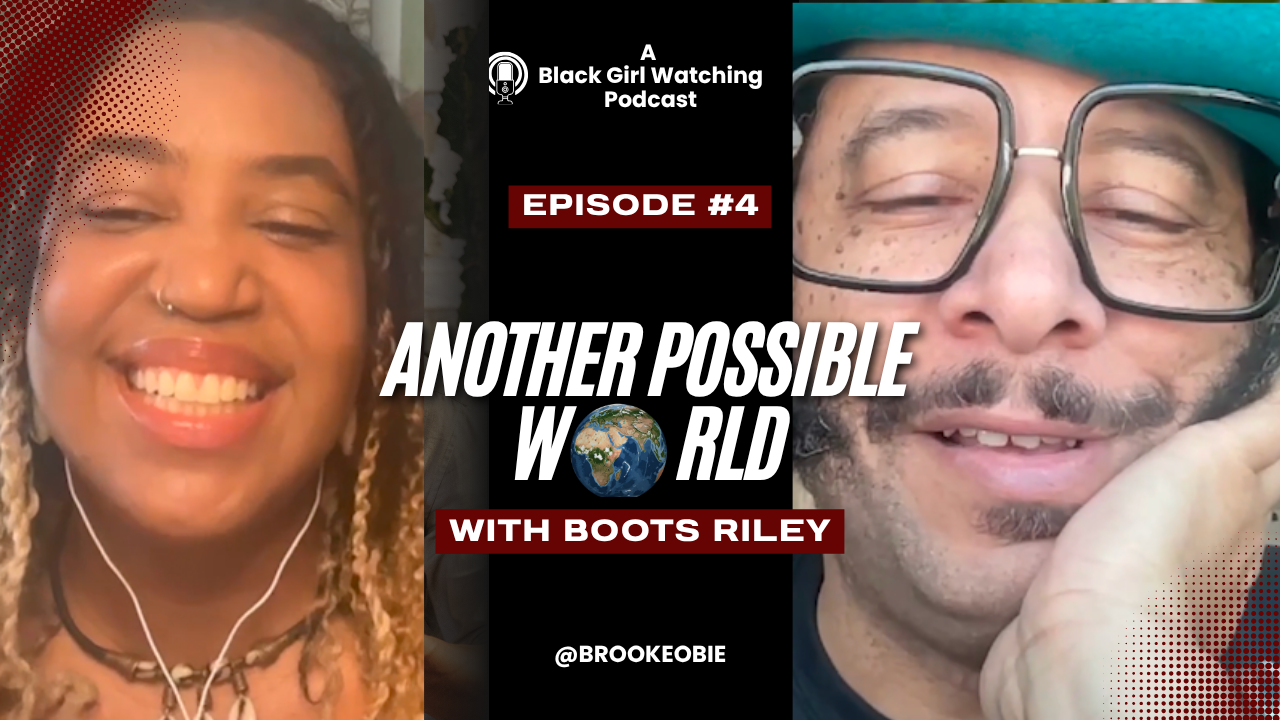
My Black Girl Watching podcast Another Possible World is my way of trying to connect with these kinds of like-minded filmmakers, to talk about the revolutionary ways we can use our art to free people and ourselves, without falling victim to the traps of this industry and the pressures of the Epstein class who seek our capitulation and control. I’ve been trying to get Black woman producer of Sing, Sing, Monique Walton on the podcast since its inception, so fingers crossed that that will happen. Until then, paid subscribers can enjoy this 45 minute video conversation from TIFF between Domingo, Bentley and Kwedar on how they equitably paid their workers to bring this film to life below the paid subscriber line.
Stay tuned for more dispatches from TIFF and stay watchin’!
Happy September! This week’s streaming fare has the internets on fire with folks trying to take down a (serial killer?) pastor; white folks losing their minds over their favorite superhero being labeled racist, but is that enough to make it a Black show? Also, our favorite undeniably Black Scooby-Doo gang gets one step closer to buried treasure—and two steps back. And finally, one new film that portrays a real civil rights leader is being called out by the leader’s widow and son as a “white savior film” that we should boycott. Here’s Your Weekly Watch for September 4th!
Black Girl Watching is a reader-supported publication. To receive new posts and support my work, consider becoming a free or paid subscriber.
The Death of the Pastor’s Wife
Netflix is back with another salacious true crime docuseries, and as usual, I’m noticing the difference between a doc with an interesting subject matter and a doc that is well done. Over three episodes, The Death of the Pastor’s Wife follows the death of Mica Miller, first lady of Solid Rock Church in Myrtle Beach and wife of the pastor John-Paul Miller, two days after she served him with divorce papers. Of course, JP had a history of abuse with multiple women/wives; of course suspicious death also surrounded him prior to Mica’s death. And of course, the church system that should’ve protected Mica and the women before her protected JP instead.
In the docuseries, Mica’s friends and family tell her story, beginning with her leading the praise and worship team at JP Miller’s church, when she was 16 years old. She later became his secretary and her friends and family describe Mica’s relationship with her significantly older male boss and “spiritual” leader as an “affair.” This is the first systemic failure Mica suffered in this church. This was not an “affair” with a married man, this is evidence of grooming since her teen years, sexual coercion and abuse of power over an employee to the highest degree. And no one in the docuseries points that out. Instead, they all reinforce JP’s narrative that this was a shared “sin” that he and Mica participated in. And it would take both of them marrying each other in order to correct the “sin.” This Christian framing of marriage as a way to “wash away” all sin, was the nail in Mica’s coffin—and it is not unique to JP Miller spouting it or Mica believing it.
Growing up in church, I often heard women talk about being “covered” by marriage—that all of their pre-marital sexual sin would be erased the second a man married them and made them valid, cleansed, holy women. The power that men have, to be able to liberate women from sin simply by erasing their old identities and giving them a new one with a new last name. This is patriarchy: the elevation of men to the detriment of women, children and everyone else who isn’t a man. When combined with religiosity—God the Father, not the mother—then we have a system of oppression that cannot be questioned because it is ordained by God and do you know what the consequences are for disobedience to God?
JP used this old hat on Mica often. In fact, he’d use his pulpit time to shame her into submission, quoting from 1 Corinthians 7:5 which talks about spouses not denying each other sex lest temptation lead them astray. JP was a serial cheater, not just on his first wife with Mica, but on Mica as well. Instead of being responsible for this, he would manipulate scripture and blame her for not being interested or able to keep up with his 4-times-a-day sex addiction. And she believed herself to be failing him, writing in her journal about how much she wanted to be a wife who would please God but kept getting it wrong. This level of brainwashing of girls and women to be doormats for men as a sign of our holy devotion starts in childhood. And Mica being 16 when she became a leader in his church and subject to his teachings and control should’ve been contextualized within a framework of patriarchy and misogyny.
This is my problem with these true crime documentaries and docuseries. They love to exploit the depraved details of a crime or series of crimes, but they repeatedly fail to contextualize these details. A documentary isn’t a narrative film; it should inherently have a higher purpose than to titillate or entertain. A woman is dead. And so many more women in abusive marriages to men whose power and control are upheld by the church are in danger right now. There should be an objective expert who can speak to how patriarchy and misogyny in the church work together to create spaces ripe for the abuse of women and children. Otherwise, what’s the point?
Even in 3 episodes, it appears that Netflix didn’t bother telling the full depraved story of JP, touching only on his abusive father and not on his abusive son, showing at least three generations of absolute creeps in this family, as well as the early allegations of sexual assault against JP. Instead of holding JP accountable, his raggedy pastor father moved the family and their church to Myrtle Beach, putting in motion a chain of events that would allow JP to ruin multiple lives and lead to the deaths of his wife and his mistress’ husband. JP is currently facing federal charges unrelated to Mica’s death and has married his mistress. They lead a new church in a new town. Because the grift of religion seems to always make space for these kinds of abusers, and there’s always a congregation for which abuse of women and children is not a deal-breaker.
Watch The Death of the Pastor’s Wife on Netflix.
If you’re interested in more stories about women—and specifically Black women—decolonizing from the church, I’m reading an advanced copy of my friend Deesha Philyaw’s debut novel The True Confessions of First Lady Freeman fictionalizes what many a former church girl knows about purity culture and rampant misogyny in the church. Pre-order from a Black bookstore here.
Lanterns (s1 e3)
I’m strugglingggggg with this new DCU Black-ish superhero show. Three episodes in, and I am simply not compelled, for two main reasons. First, I’m mad. J. Alphonse Nicholson is one of the greatest actors of our generation and he’s continually sidelined for someone lighter, someone British, or in the case of Lanterns, someone both. Nicholson literally looks like Green Lantern comic book-accurate John Stewart. He’s Black American. The character was literally based off of dark-skinned Sidney Poitier. So how did light-skinned, light-eyed Aaron Pierre get in it? Even if it’s to a lesser degree than Black women, colorism absolutely impacts Black men in Hollywood as well.
It doesn’t help that Lanterns showrunner Damon Lindelof has a recently uncovered history of racism and sexism detailed in the explosive Hollywood tell-all book Burn it Down. Though he’s made some of my favorite shows, Lost and The Leftovers, these details of his choices as a writer and showrunner recontextualize the racism on screen— especially in Lost— so the colorism in Lanterns does not surprise me.
Nicholson is instead cast as John Stewart Sr., a Marine who appears in the first episode to be a psychotic, abusive father to his light-skinned son, shooting an apple off of his child’s head in the first five minutes of the premiere. This week’s episode thankfully fleshes out Nicholson’s character—and that shooting habit—a bit more, but the optics of that opening scene were so awful that I was ready to give up on the show. As we learn in episode three, it wasn’t John Stewart Sr.’s idea to shoot the apple, but the child’s idea, with encouragement from the child’s light-skinned Black mother Bernadette. I’m not sure how much better it is that the mom is driving the child abuse to prepare their young child to be the next Green Lantern. Now the whole family looks crazy. (I’ll get back to this in a minute.)
While I’m glad that episode three allows Nicholson more time to flex, comparing the work he’s putting in to what I’m seeing from Pierre just gives me flashbacks of They Cloned Tyrone, where Nicholson must’ve auditioned for the title Black American role, but got cast instead as the foil to John Boyega’s Tyrone. We’re once again seeing the narrative that Black Americans simply aren’t good enough to play the leads of our own stories, even with all evidence to the contrary staring right in our faces.
Second, Lanterns is copaganda.
It appears the original character of John Stewart was meant to be a militant, anti-authority Black Power super hero of the 1970s. But in the 2000s, John was retconned into a former Marine without the militancy. It surprises me none at all that Damon Lindelof—who’s never met a cop main character that he didn’t like—chose to go with the white-washed Winter Soldier version of John Stewart than the actual Black Power superhero of the original. This is why I continue to be baffled by Black people fawning over this show and how “Blackity Black” it is. White people have also begun melting down and review-bombing the show because John’s mentor, Hal Jordan, is being correctly identified by the show as a racist who benefits from white supremacy. Surely, I thought, John Stewart must be burning down a plantation owned by Hal in episode three, the way Black and white audiences were losing their minds over it.
Turns out, John’s mother Bernadette (played by Jasmine Cephas-Jones) simply said Black men have it harder in America than a white man like Hal Jordan. The Green Lantern mantle first came to Nicholson’s John Sr. but when it asked him if he was afraid, he said “yes” and that was a deal-breaker. Green Lanterns are supposed to be fearless. Meanwhile, when the mantle asked white Hal Jordan instead if he was afraid, he said no and was therefore chosen to be the new Green Lantern, ruining the Stewart family’s lives. First of all, I thought it was common knowledge from all the dare-devil, unicycle-on-a-tight-rope-over-the-Grand-Canyon thrill-seeking I see online that the only thing white folks are scared of is Black people. Why was it so controversial for her to say that white men—the hoarders of the most power on the planet—have less to be afraid of in the world than Black men? And why was this simple statement enough to make Black people feel so happy and seen by a show about abusive Black parents who strip their Black child of his humanity so that he might be a superhero in service to the U.S. government and aliens dressed in white people suits? I am so confused.
When the alien (Guardian of the Galaxy? I’m not up to date at all on DCU lore) comes by to apologize to John Sr. for traumatizing him in the Green Lantern selection process and then not choosing him because he was afraid, the alien instead finds his wife with a baby John Jr. in her arms and gives her a huge diamond as reparations. Why wasn’t that enough for this family to retire and find some peace? Why didn’t they take that financial boost and set themselves and their children up to be sheltered from as much danger and inhumanity as possible for a Black family in America? Why instead did they choose to make a Black robot child who would neither fear nor love, who would kill on command and sit still in one place over night just because a white woman told him to “have a seat”? What is Black about any of this?
Writer Vanessa Baden Kelly spoke recently about how the Lanterns writers room originally had looked to Tiger Woods’ father Earl and Serena and Venus’ father Richard as models for John Sr., to make him a character who was obsessed with making his son exceptional at any cost. As if jingling keys to distract Tiger Woods as he golfed or making Venus and Serena play tennis in the rain is comparable to shooting an apple off their head. Kelly also spoke about her insistence on the presence of John’s mother and the choice to make her the one in control of young John’s brutal training, as if it were some ground-breaking feat to make Bernadette a deranged soccer mom.
Making characters bad parents doesn’t inherently make them interesting—especially when negative stereotypes about Black parents already abound. In order for this to be a show that interrogates how Black parents can raise their children to appease white supremacy for their survival, the Black characters are going to have to talk to each other about that specifically or be challenged on it by some other Black people for perspective. As it stands, the only Black people in the show are in this one family, and both parents have gone full abuser. They have no Black community to say “This is some white people sht!” So the parents proceed as if this is normal and logically behavior.
Even a Black woman writer of this episode is not enough for me to call this a Black episode, let alone a Black show. In fact, knowing that a Black parent’s deepest fear in America is their child being gunned down by the police, it makes it a thousand times worse that a Black woman wrote this. In what world does a Black mother encourage her Black husband to shoot an apple off of her Black son’s head or abandon him in a strange part of town to walk home in the dark alone to eliminate fear? It’s absolutely nonsensical, outrageous and poorly written. I’m appalled that this episode has been so widely praised.
The least interesting thing about the hoopla surrounding episode three is white fans melting down over the show “ruining” Hal’s character by making him a racist white man. Hal is so canonically racist against John Stewart in the comics that it’s mentioned in John’s wiki page that the Guardians remark on Hal’s bigotry towards John, which is as deep a dive as I’m going to do on this. A white man being angry about a Black man taking his job is about the least surprising set of events in this superhero fantasy. Contrary to John who is all too willing to follow Hal’s orders and play fetch with obedience, if not to Hal, then to the Guardians who chose him, Hal Jordan is full of disdain for authority. The Guardians don’t like that, which is why they want to replace Hal with the more subservient John. I simply do not understand why white supremacists can’t see when a piece of media is lowkey on their side.
If Hal’s rebelliousness sparks in TV show John the revolutionary, anti-authority spirit of the original comic John, I’m going to have to label this a white savior show. My trust in the team from what they’ve created in these three episodes is zero. Time will tell.
But I’m not holding my breath on the show turning out to be revolutionary or particularly Black because Hal and John are literal Space Cops. And everyone knows all cops are bastards.
Watch Lanterns on HBOMax.
Diarra from Detroit (s2 e7)
This week’s episode of Diarra from Detroit “Guess Who’s Coming to Dinner,”is elite TV. In the penultimate episode, our favorite Ghetto Goonies are closer than ever to finding the buried treasure, but now the head gangster played by Bokeem Woodbine (the good twin of evil Dave Chappelle) is a big obstacle to their success. And for all the Danger-truthers who believe Diarra and Danger should be end-game, the two finally meet again after a whole season where Diarra believed him to be dead and Danger did nothing to dissuade her of that notion. Even his new white girlfriend has questions after the passion flies between Danger and Diarra when they reunite. If she really breaks up with Chris for Danger, she won’t be a bit more safe, since he’s also got a bounty on his head like Chris did. But Diarra is a messy bih who lives for drama, so she might just be here for it. The line of the episode belongs to Shoniqua Shandai who plays Diarra’s cousin (and Moni’s replacement this season?) Raqueeba: “There are niggas with guns. Please emotionally regulate.” I will be using that one for sure.
The season two finale is next week and it ends with a very big bang and a cliffhanger that begs for a season three. Get to greenlighting, Paramount!
Watch Diarra from Detroit on Paramount+.
By Any Means
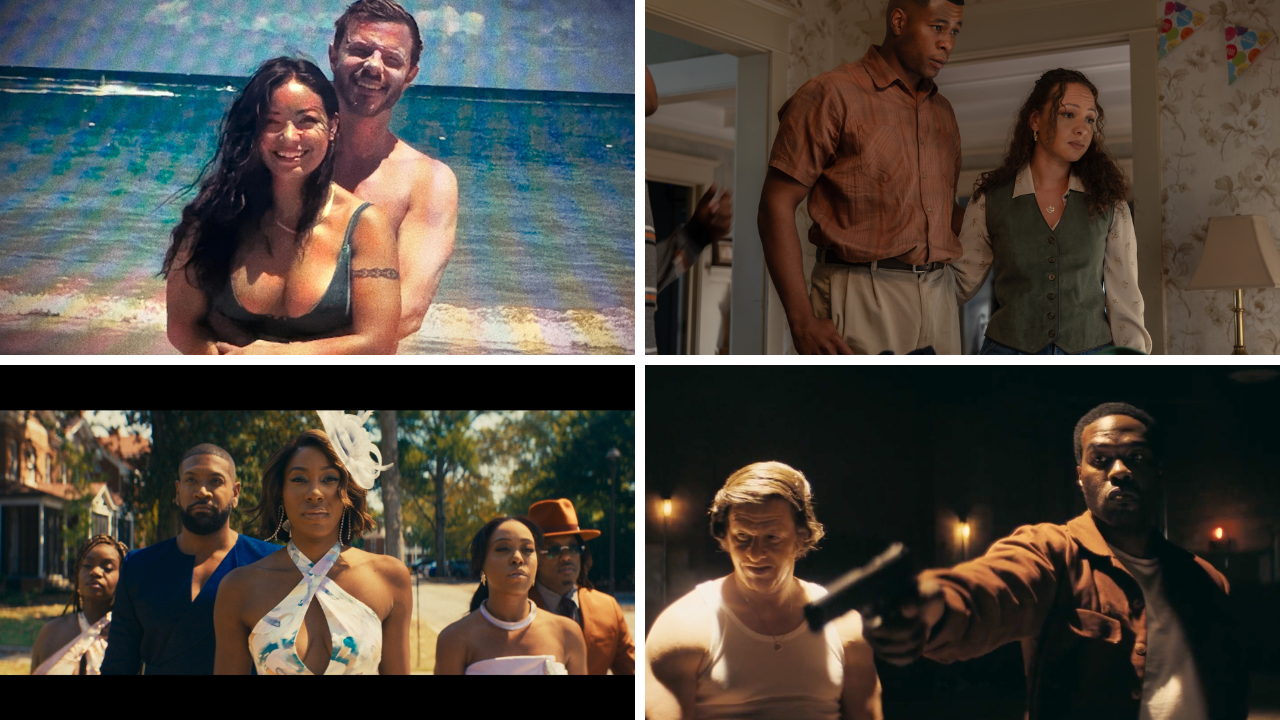
As soon as I see a film with the words “starring Mark Wahlberg,” I’m out. So I was never the audience for the new film By Any Means. He has multiple violent attacks against Black and Asian people on his record that he’s tried to have expunged or pardoned over the years, but I will never forget his disgusting racism and I will never support anything he does. Since he’s been trying so hard to redeem his public image, doing things like presenting the SAG Award to the Asian cast of Everything Everywhere All at Once, it’s no wonder he’s now starring in what’s being called a white savior film where he can paint himself an ally to the very people he brutalized.
By Any Means follows Wahlberg as a mafia boss who teams up with a fictional Black FBI agent (Yahya Abdul-Mateen) to solve Klan murders of real Black civil rights leaders. Irony of ironies. One of the murdered leaders fictionalized in the film is Vernon F. Dahmer, Sr. Apparently, his widow Ellie Dahmer believed the film would be a true retelling of what happened to her husband and initially participated. Instead, it became something the family objects to and is asking people to boycott. Hear the family in their own words and of course make your own call:
****Paid subscribers can watch a Q&A with the cast of Widow’s Bay below****
I’ve done it!
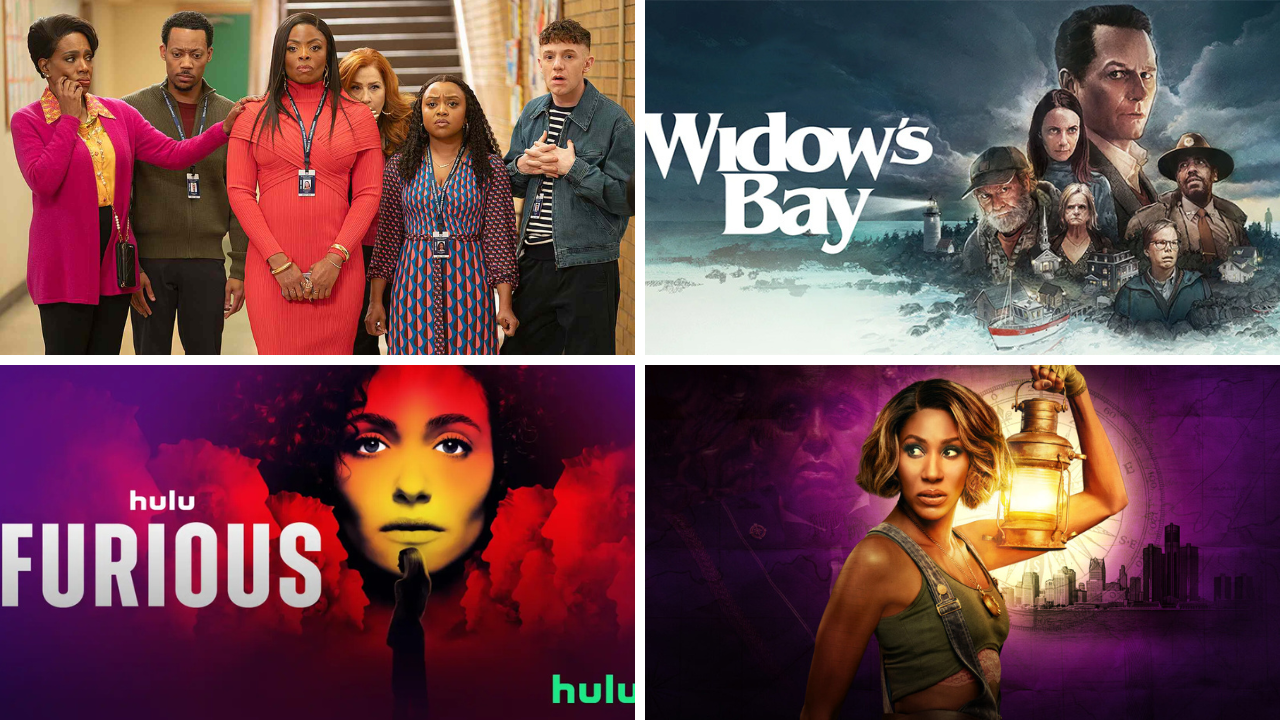
I’ve watched all the TV there is to watch (not really, but I have watched a LOT of TV), and found the 10 best shows on TV right now. While I’m all for giving a show an opportunity to grow and find its footing, the best TV draws me in right away with an excellent pilot episode. Great pilots are incredibly difficult pull off: you have to introduce the world, the characters, and significant obstacles that will keep the audience tuned in for an entire season—and that is very hard to do well. Or, for the shows on this list that are beyond season one, they have an even harder job, having to be consistently compelling over seasons. Consistency, quality, dialogue, theme, and cinema are all the qualities I look for in the best of the best, and these 10 shows have them in spades.
Black Girl Watching is a reader-supported publication. To receive new posts and support my work, consider becoming a paid subscriber.
Abbott Elementary
It’s hard to make an excellent pilot—harder still to make an excellent season. But five straight seasons of banger episodes? Nearly impossible. Abbott Elementary is up there with the best of the best in its fifth season: still laugh-out-loud funny; still tackling issues that matter with humor and heart. It follows optimistic-to-a-fault second-grade teacher Janine Teagues (Quinta Brunson) and her co-workers in a majority-Black and underserved elementary school as they try to give their students the best education possible despite their circumstances. Hijinks always ensue when their good intentions meet resistance from the system, each other and sometimes the kids themselves. Nevertheless they persist, showing what’s possible when you’re passionate about giving children lives and futures they deserve.
Growing with these characters over five seasons has been an absolute joy, an emotion that seems to be driving creator and star Quinta Brunson both in front of and behind the camera. To have a Black-led sitcom whose comedy punches up at power and shows working-class people building real love and community on network TV is a rare feat. Now do that for twenty-two episodes a season for five seasons! Abbott Elementary is a boundary-pushing balm and I want to watch this team of goofy teachers find new ways to fight the power with joy and love forever.
Watch Abbott Elementary on ABC / Hulu.
Beef
Even after the deepest of deep dives on why Beef season one resonated with me more than season two of the anthology feud series, I just can’t quit thinking about season two. There’s something about capturing the very specific American millennial malaise of life not turning out the way we were promised that sticks in the gut. Starring Oscar Isaac and Carey Mulligan as the millennial married couple Josh and Lindsay who manage a California country club for billionaires while drowning in debt themselves, Beef season two follows a feud between them and a Gen Z couple that also works at the club, Charles Melton and Cailee Spaeny’s Austin and Ashley.
Their true enemies, of course, are the billionaires that the couples serve, and it takes them all season to recognize that, though what they do with that information leads to the most dramatic climax of all. Both seasons of Beef ask: can true love exist under capitalism? And both seasons come to different conclusions. Whether that satisfies will wholly depend on your own outlook on life and the possibility of liberation. But for me and my fickle moods, as I watch capitalism torch the myth of the American Dream in real time, I’m glad to have both seasons to cycle through and thrilled that showrunner Lee Sung Jin created such a deeply thoughtful show to wrestle with the question.
Watch season two of Beef on Netflix.
Diarra From Detroit
I’ve never been to Detroit in real life, but after two seasons of Diarra from Detroit, I feel closer than ever to its delicious specificity. From the food, to the history to the fashion and the comedy, this series transports you into a beacon of Black American culture and won’t let you go. In its second season, people are finally waking up to the brilliance of Diarra from Detroit, probably because the villains at Paramount dissolved BET+ and now the show is streaming to a wider audience on Paramount+ instead. Created by and starring Diarra Kilpatrick, the series follows a fictional Diarra who has returned to her eponymous hometown after a heartbreaking divorce. In season one, she had a great first date with a stranger named Chris who promptly disappears before they can have a second one. Thankfully for Chris, Diarra is too neurotic, bored and nosy to accept that he might just be ghosting her, sending her and her friends on a dangerous and hilarious adventure to find out what happened to Chris.
Season two deftly blends comedy and mystery as Diarra and Chris grapple with the fallout of season one and see if they can actually make a relationship work in the midst of Chris’ extreme trauma and Diarra’s self-destructive desire for chaos. The Black Nancy Drew can’t help but get herself, her friends and Chris wrapped up in yet another murder mystery and kidnapping, but this time with the promise of buried treasure if the mystery is solved. There’s a reason Diarra and her friends are dubbed the Ghetto Goonies, and I hope it sticks! The comedy is so sharp and surprising this season too—wait til you see Diarra in drag trying to infiltrate the Freemasons Lodge in order to find another clue in the puzzle! Real tears. This love letter to Detroit and its iconic Black history is more than the backdrop, it’s the heart of this latest mystery and the show in general, proving that only a hometown girl can save the day.
Watch Diarra from Detroit on Paramount+.
Furious
The Epstein Files are streaming every week on Hulu and it is aptly called Furious. Starring Emmy Rossum as FBI agent Alice, Furious appears to be your run-of-the-mill cat-and-mouse thriller, as Alice chases a rare woman serial killer (played by Lola Pettigrew) to stop her before she can kill again. But soon we learn that the Killer is simply a victim of child rape trafficking who has grown up to exact the justice that she has long been systematically denied, complicating Alice’s feelings about what justice means for girls like the Killer. Known by many names (and many wigs!), the Killer has found her outlet for her fury in violent vengeance. It’s Alice—a domestic violence victim herself, whose ex-boyfriend is still on the rise at the NYPD precinct that she quit instead of reporting his abuse—that’s been stewing in her rage. Over the series, Alice and the killer’s lives and furies collide, offering a compelling portrait of female rage and the systems that create and stifle it.
Though Alice and the Killer are the main foils, it’s Alice’s boss Nora (Quincy Tyler Bernstein) that steals every scene she’s in. An older Black woman stuck in the basement of the FBI hunting child predators and numbing the psychic pain with alcohol, Nora provides a view of Black female rage that’s generations deep. It’s complicated by her participation as an agent in the system and, as Steve Way’s character Alden says in the best line of the series: “What did you say? Did you say All Cops Are Bastards?” Yes, Furious is copaganda, because despite the “bad apples” in the bunch, there’s always a few “good” ones upholding the system as a valid way to create justice, despite their own lived experiences and all evidence in history to the contrary.
Significant trigger warnings for talk of child sex abuse and its consequences. But if you’ve ever fantasized about taking down a cabal of predators in a world that makes them royalty, global corporate overlords and even president of the United States, Furious is a brilliant, cathartic series that challenges ideas of how we as a society create healing and wholeness in victims.
Furious is streaming on FX/Hulu with the finale airing on August 31.
House of the Dragon
At the beginning of season three, I wrote my deep dive on House of the Dragon and why its progressive efforts to present Black and other marginalized characters in a more liberating way than its predecessor Game of Thrones were still hampered by the white male imagination of the source material. Still, there’s simply no other show on TV like this one for Black people in fantasy, that also puts women front and center (I tried Lord of the Rings but I couldn’t get through season one). Starring Emma D’Arcy as Queen Rhaenyra Targaryen, the “rightful heir” to the Iron Throne of Westeros, House of the Dragon tells the story of the incestuous, dragon-riding Targaryen family and how the hatred of women and deadly allegiance to patriarchy led to their downfall and the annihilation of the beautiful dragons.
The CGI and practical effects are so stunning; the dragons feel incredibly real and individually unique in their majesty. When they hurt, we hurt, not only because of their ingenious design but because of the actors’ dedication. If you’re at all interested in the art of filmmaking with CGI (or simply annoyed that the show takes two years to finish one season of television) watch the companion series on HBO, The House That Dragons Built, which is a gift to the audience, breaking down exactly how the actors film with puppeteers wearing dragon heads to capture real emotion between the characters and their dragons, or how many times the show broke the Guinness World Record for number of stunt doubles set on fire for a production. What I’d do to be a shadow on this set!
While the show has toiled to unveil the misogynistic culture of Westeros, what it’s really done is pull back the curtain on our own. The amount of people in the fandom who are fed up with Rhaenyra for crying over her dead children and being “weak” in her desire to make peace in the kingdom is staggering. Once her rapist, child abusing usurper brother Aegon got his dragon back and said “I’m aliiiiiive!” in a funny way, people were switching from Rhaenyra’s Team Black to the usurper’s Team Green, thinking he, or blood-thirsty Daemon or even the literal child Daeron would be better suited to rule than Rhaenyra. It’s simply misogyny, and the heel-turn toward supporting Aegon is even more evidence of how America got Trump. Let’s forget about the raping, child abusing, corruption and stealing of power because he said something in a funny way. What an unintentional case study of our society the fandom of this show has turned out to be!
I left season three fully satisfied and ready for the series finale in 2028. D’Arcy and Matt Smith are doing some of the best acting on TV right now and while I have no faith in the Hollywood machine, I hope the season gives them their things. It’s high drama, it’s fantasy, it’s (almost) my kind of romance. Smith’s Daemon Targaryen is the most competent husband on TV, cutting down Rhaenyra’s enemies and clearing the path to her throne. It would be incredibly sexy, if not for the fact that he is her uncle and he groomed her as a child, even though they did not marry until she was a widowed mother. I wonder if the grossness of the incest of it all is why Rhaenyra and Daemon do not kiss at all this entire season? If intentional, that would be even more evidence that the writers are trying their best to overcome the limits of the white male imagination that this story sprung from, and to that, I tip my hat.
Industry
Since season one of Industry, or Gen-Z Succession, as I call it, each dilemma has led its characters to confront who they must become in order to succeed amongst the Epstein class of billionaires and if it’s worth the cost. It follows a group of interns at a cutthroat investment bank battling racism, sexism, classism and greed to succeed. Some fell off early, unable to manage the substance abuse and dissociation required to survive their jobs, or too morally pure to continue on in good conscience. Others shocked themselves and each other with how well they were able to compartmentalize. While their relationship to the investment bank evolves over the seasons, those left standing still vie for power through the market, any way they can. Speaking of Epstein, in a terrifying twist, an Industry character goes full Ghislane Maxwell this season in a show of how the victimized can become victimizers, and how all the qualities necessary to succeed investment banker not-coincidentally correlate to being good at human trafficking. With one season left, there are only so many futures ahead for our original intern frenemies, simply because Capitalism has an extremely limited imagination for what human beings can become under its tyranny. I’m fascinated to see who gets chewed up by the machine and who gets to walk away whole in the end.
Watch Industry on HBOMax.
Paradise
So many things about Paradise season two made it a huge improvement over season one for me, and at the top of the list: Xavier is no longer a cop. This season gets our hero out of the bunker that he and his children have spent the first five years of the apocalypse inside, and back into the real world to find his wife Teri (Played by Enuka Okuma, watch our interview below!). Season two borrows from my all-time favorite sci-fi dramas: Lost and The Leftovers, slowing down long enough for each episode to be real character-driven story-telling with just enough action and adventure to keep us going week-to-week. Season two is in fact so good at deepening the characters we met in season one, that upon rewatch, season one now ranks higher on my list, making the series a must-watch. This is what makes a great TV show: rewatch value. The subsequent seasons should be so compelling that they enrich and recontextualize the experience of a show.
Just a few weeks ago, I had the incredible opportunity to visit the set of Paradise season 3 and talk to its star and EP Sterling K. Brown about what’s to come in the third and final season. I’ll share more details closer to its premiere in 2027, but I can assure you, it is worth the wait and the rewatch.
Paradise is streaming on Hulu.
Shrinking
Another show that’s still killing it and reinventing itself in its third season is Apple TV’s Shrinking. Starring Jason Segal, Harrison Ford and Jessica Williams as therapists in an LA practice, this heartwarming dramedy shows how people united in grief can build a loving community. With healing at its core, Shrinking offers its messy, incredibly human characters the ego deaths they need to forgive the worst in each other, and themselves. The season one inciting incident that reverberates throughout the show is the death of the wife of Segal’s character Jimmy and how his community rally to help him and his teen daughter heal. If there are any missteps in the show, it’s that creator Brett Goldstein also plays the depressed man who accidentally killed Jimmy’s wife and subsequently takes up a lot of airtime so the audience can empathize with him and then force Jimmy to do the same.
In real life, restorative justice is the practice of centering victims of harm and what they need to heal and involving the entire community in making that happen and preventing the harm from ever happening again. Last season, the show seemed to suggest that forgiving and helping his wife’s depressed accidental killer is what Jimmy and his daughter need to heal and I find that kinda gross. So trigger warning for that as it continues into season three! But otherwise this season, Williams finally has a boyfriend that’s as hot as she is instead of pining after the hot mess that is Jimmy; Jimmy’s neighbors continue to be a hilarious delight; his former patient Sean (Luke Tennie) has a real breakthrough; his daughter grows into her own; and Ford’s Paul handles the progressive deterioration of Parkinson’s disease with the support of the community he’s built. It’s Restorative Justice: The Show, and it’s almost perfect.
Shrinking is streaming on Apple TV+.
The Other Bennet Sister
Finally, a rom-com for smart neurodivergent girls who were called ugly their whole childhoods and pivoted to developing a personality! The Other Bennet Sister is an adaptation of sorts of the well-trodden Pride & Prejudice novel—except instead of following Elizabeth Bennet and Mr. Darcy’s enemies-to-lovers fare, it follows the middle sister Mary, who is plain and wears spectacles so she can prioritize seeing and reading. A girl whom Toni Morrison might describe as “the third beer.” Through circumstance and (mis)fortune, Mary winds up getting away from the family she doesn’t fit into and finding new life, love and joy in the bustling city of London. I warn you, this is a romantic comedy series, and there will be cheesy romantic moments. But the best quote of the show—“I’ve spent my life on the outside of things, but with you, I’m right in the middle of it all”—makes it worth it.
The Other Bennett Sister is streaming now on BritBox and Prime.
Widow’s Bay
Brooke and the homie Malcolm at the Widow’s Bay Hollywood Forever Cemetery screening event
Saving the best for last, this AppleTV hit is my favorite new show of the year. As a certified scaredy cat who watches horror between my fingers with the the other hand on the pause button, Widows Bay is the rare show with an incredible pilot episode that will be studied in film schools, and a flawless season one, where, just as you’re bracing for the horror that’s coming, you wind up cracking up first. It’s the most perfect mix of horror and comedy I’ve ever seen, with genuine jump-scares and serious laughter every episode. Starring Matthew Rhys as Tom Loftis, the anxiety-riddled mayor of Widow’s Bay, the show follows the widowed Tom as he raises his rebellious teen son and tries to attract tourism to the haunted Massachusetts island. But once people start disappearing and dying, Tom will have to start believing in the superstitions of the island in order to save them all.
If you love horror, there are so many easter eggs from favorites like Jaws, Halloween, Friday the 13th, It and more. If you’re not into the genre, you’ll still love this show. In celebration of an absolutely perfect season one, I was able to party with the cast and crew a few weeks ago in Hollywood at the Culver Hotel and then again at the Hollywood Forever Cemetery where they screened two episodes and did a Q&A.
PAID SUBSCRIBERS CAN WATCH THE WIDOW’S BAY Q&A FROM HOLLYWOOD CEMETERY SCREENING BELOW:
This is my top 10 to watch, which shows did I miss? Let me know in the comments.
****Spoilers for the plot of Spider-Man: Brand New Day below****
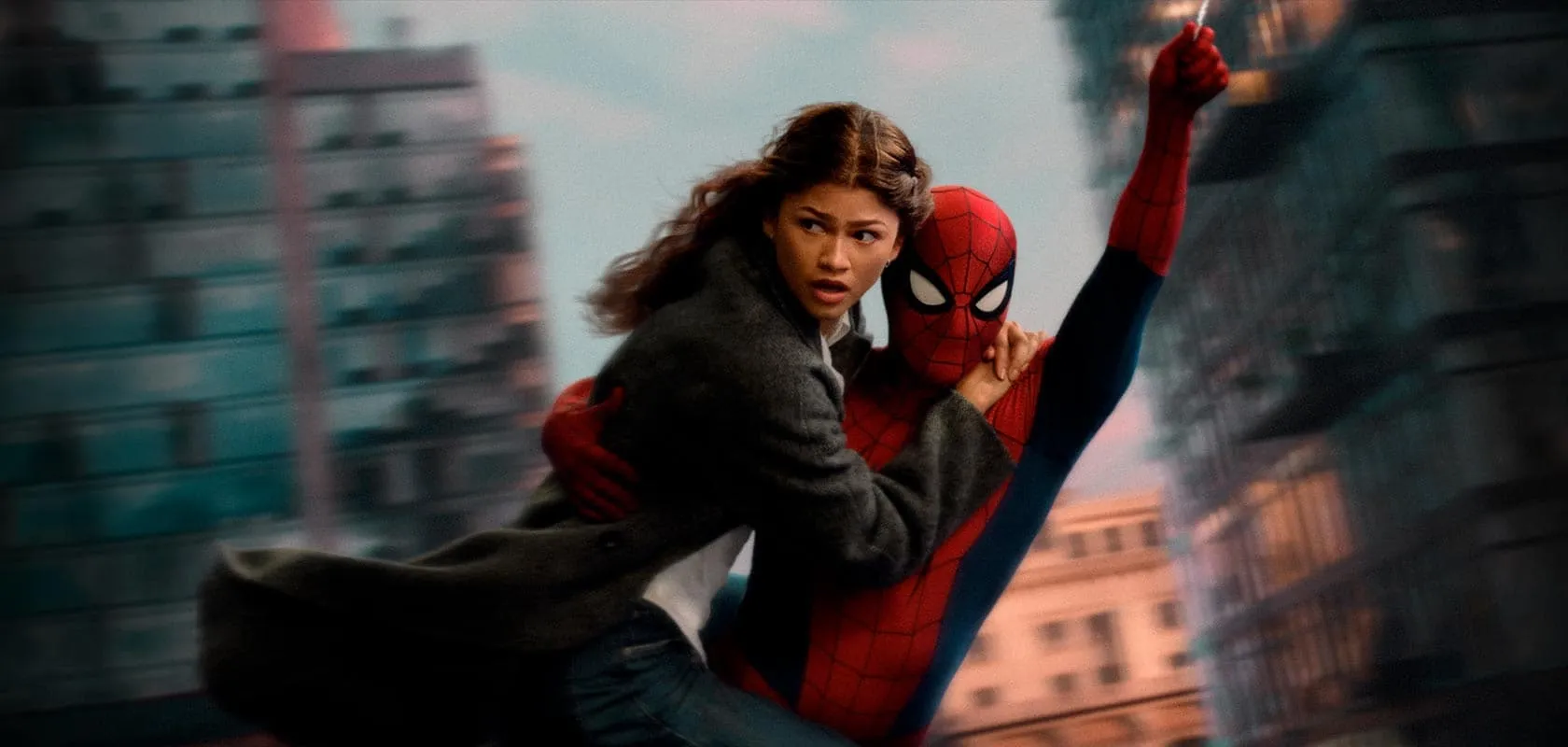
You’ll have to forgive me. After James Gunn’s Superman(basically) said “Free Palestine,” last year, I thought it might be catching in the superhero world, and that Spider-Man: Brand New Day might usher in some political bravery to the MCU too. Alas, it was the same-old-day in the neighborhood, where superheroes are the intergalactic police and work in tandem with fascists to normalize fascism.
On the surface, it’s a heart-warming story about a lovable kid with a good heart, overcoming the isolation of grief and depression and reconnecting with love, life and friendship. And also, right there on the surface, we have our hero partnering with the most infamously racist police force in the country while relying on A.I., facial recognition software and mass surveillance to save the day. Spider-Man: A Technofascist’s Wet Dream.
Based on Homer’s epic poem whose story of the warrior-king Odysseus was ancient oral mythology even before Homer put pen to paper in the early 8th century BC, Nolan’s version came with a twist. Though set in Ancient Greece, Nolan’s The Odyssey stars Matt Damon as Odysseus with an American accent, alongside British stars Himesh Patel, Robert Pattinson and Jovan Adepo, who also deployed their American accents for the film. Though this is often a Hollywood trick to white-Americanize history, it seemed clear from the outset that Nolan, a British-American filmmaker himself, chose to white-Americanize the myth of Odysseus—architect of the Trojan Horse that exploited Zeus’ law of hospitality to the stranger and caused civilization’s fall—to make a statement about the global consequences of white American imperialism specifically.
King Agamemnon’s war with Troy was fought under the pretense that Troy’s prince Paris had stolen away Agamemnon’s brother’s wife, Helen, the most beautiful woman in the world. Of course, as Luptia Nyong’o’s Helen explains in the film, the Trojan War was never about getting her back to her husband, Menelaus, but was always about Agamemnon’s desire to conquer Troy for its control over shipping lanes, thereby increasing Agamemnon’s empire and power. If anyone knows about starting a fake-righteous war over control of shipping routes and natural resources, it’s the United States of America.
The Odyssey picks up in the aftermath of Agamemnon’s victory over Troy, which was only won because of Odysseus’ idea to hide soldiers inside of a giant hollow horse and present it as a peace offering of surrender to the Trojans and a gift for their temple to Athena. Trusting in Zeus’ law, the Trojans accepted the horse, brought it into their impenetrable city walls, giving the Greeks the ability to destroy the city from within.
In the aftermath, rumors abounded that a lawless “people from the sea” have taken to raping, pillaging and looting their neighbors, the bonds of civilization and humanity forever broken. Like Odysseus, many Americans who watch the film might be shocked to discover that, despite the propaganda of white supremacy and American exceptionalism that we’ve been fed for centuries, Americans and its 800 military bases in more than 70 countries, are in fact the dreaded “people from the sea.”
Ask Black America. Ask Palestine. Ask Hawaii, Iran, Puerto Rico. Ask Mexico. Ask Libya, Cuba and Guam. Ask Korea, Japan and Yemen. Ask the sailors in the Atlantic that America bombed like a game of Battleship. Ask the people of Venezuela and their kidnapped president Maduro. Ask the entire continents of Africa and South America. Ask the Indigenous people of Turtle Island upon whose land and graves stolen Black people were forced to build this illegitimate country to solidify white American hegemony in the first place. Ask the immigrants getting ripped away from their families or shot dead in the streets by American gestapo ICE. The white American Odyssey is meant to be a mirror, if one would only look.
Though racists abhorred the presence of non-white cast members in the film about gods, cyclopses, rock monsters, and sorcerers, I appreciated the “woke” casting. Of course Nyong’o should play Helen, the most beautiful woman in the world; she’s ethereal enough to have been hatched from an egg. And trans actor Elliot Page playing a new character to the story, Sinon, “the bravest man” Odysseus has ever known, is a powerful touch. If the racists could read, they’d lose whatever’s left of their minds to find that Odysseus is described several times in the source material as “dark-skinned.” They’d also faint to learn that no one was white in Ancient Greece. These facts aside, Nolan’s diverse casting also makes a larger point about white American patriarchal supremacy in recent centuries.
Patel as Odysseus’ right-hand-man in battle Eurylochus, alongside Adepo’s soldier Elpenor and Korean American actor Will Yun Lee as Anchialus was, to me, an excellent reminder that white supremacist patriarchy cannot run without the aid and enthusiastic participation of men of color. Even the most noble and earnest soldier character that Nolan created for his adaptation, Sinon, played by Page, shows how marginalized people contribute even unknowingly to the imperialist project.
Much like our U.S. military and Trump’s cabinet, these soldiers played by actors of all races and marginalized identities followed Odysseus into battle, under the call of Agamemnon, raping, murdering, pillaging, and destroying with hellfire, the kingdom—and the people—of Troy. The Odyssey recounts the soldiers’ downfall even more than Agamemnon’s and Odysseus’. Catch that message.
This is why I wanted to love The Odyssey. I set myself up for success by sitting in the perfect seat at an IMAX 70MM film screening at AMC CityWalk: the fourth row. (I’d learned from my many IMAX 70MM screenings of Sinners last year that fourth row makes you feel like you’re actually in the movie). Still, I left feeling empty.
***SPOILERS FOR HOUSE OF THE DRAGON AND GAME OF THRONES***
Every time I think I’m out, they pull me back in! That incestuous white-haired family with the dragons is back on my TV and as I much as I would like to quit them—you know, because of the incest, and because I already know how the story ends from the books and from that little twerp Joffrey in Game of Thrones—I simply cannot quit them. I am a fire-breathing Leo and I deserve dragons. I love lore and ancient histories and misinterpreted prophecies. I love Black people in fantasy and a story finally centered around women.
Black Girl Watching is a reader-supported publication. To receive new posts and support my work, consider becoming a free or paid subscriber.
House of the Dragon delivers on all fronts, but season three, episode two, “Queen’s Landing,” where Queen Rhaenyra takes her Iron Throne, offered the highest reward yet for my steadfastness. This episode is the best of House of the Dragon and ranks with the best of the Game of Thrones franchise, and now I’m locked back in.
The revolutionary nature of House of the Dragon both for Black people and different races of women—and its inherently problematic nature—are made most clear in this episode. It’s not until “Queen’s Landing,” that we get a scene of only Black characters in a group. Lord Corlys Velaryon, The Master of Ships, and his two illegitimate sons, Addam, a dragonrider and Alyn, a warring seaman like his father, and Corlys’ granddaughter, the Lady Baela, a dragonrider who was next in line to be queen of Westeros. A team full of a hittas!
#TeamBlack
Yes, we’ve seen two Black characters speaking to each other alone before on this show: Alyn and Addam; Alyn and Baela; Baela’s mother Lady Laena and her sister Rhaena; Corlys and Alyn. But the Black audience lost our shit this week just seeing a group of the four of them alone together, without their white spouses/ betrothed/ counterparts. They’re regrouping after surviving last week’s sea “Battle of the Gullet,” with Lord Corlys at the helm, expertly driving the boat like an unc with a ‘78 Coup de Ville. Though they’ve won the battle, Baela has just lost her betrothed prince and her future as the queen, Corlys has lost his entire estate. But they have each other; they are officially all a family, with Corlys granting Addam and Alyn the gift of his high-born last name, Velaryon.
For a fantasy series, and for one in the GOT universe specifically, the presence and significance of these Black characters is revolutionary. I didn’t finish the books (but neither did the author! So, it’s fine!), but as a huge fan of the OG series (seasons 1-6 only), I can definitively say that the white male showrunners of GOT, David Benioff and D.B. Weiss, did not care about Black people or women. Enjoying GOT as a Black woman was like enjoying hip-hop: pay no attention to the rampant misogyny and anti-Blackness and just listen to the beat and clever turn of phrase. If you don’t get hype when the GOT theme music starts playing and the animation starts going, are you even alive? And who didn’t love the dragon queen Daenerys Targaryen who could birth dragons, be consumed in fire and remain unburnt, who was riding dragons bareback and setting all of her enemies aflame with one word: dracarys! Of course, they had to constantly remind their Black and female audience that we don’t really belong in their fantasies beyond props.
Daenerys, the only main character who kept Black and brown people around her, did so because she “freed” the Black and brown “slaves” who then dedicated their lives to her protection. In one of the nastiest scenes of Game of Thrones, the Black and brown people literally lift her lily-white ass up to crowd surf on them like the white savior she was.
I pretend I do not see it.
The brilliant Jacob Anderson who is now killing it as Louis de Pointe du Lac in Interview with the Vampire/The Vampire Lestat was simply wasted playing one of those freed enslaved soldiers for Daenerys in what could’ve been an interesting role if the D&D showrunners cared anything about Black characters having depth or being anything other than enslaved people “freed” by white people and eternally grateful to the point of death.
It’s because of how Game of Thrones used (or didn’t use) Black characters that this week’s episode of House of the Dragon was so striking. Because Black fantasy lovers are starved for such images and scenes of us together, on the same side. Yet even from the premiere episode of the series in Summer 2022, Black people have existed not just as lords, ladies and dragon riders through Lord Corlys and his family, but also as a maester and adviser to the king in Kings Landing, and as regular folks doing this and that in the background. In fact, Black people are so prevalent in HOTD that I’m actually worried about what happened to them all between the time period of this show and Game of Thrones which takes place about 200 years later. I guess white folks are committed to doing 200 years of Black enslavement in every lifetime, including in their wildest fantasies. It’s true, skin color doesn’t divide the way having wealth and dragon-riding blood does in HOTD, but Black characters being a free and regular part of the biggest fantasy franchise, represented in all classes of nobility, while also having a moment on screen where we can just be Black together is rare and beautiful to see—regardless of how race might work in their world.
Just as rare on screen is the exploration of patriarchy through the lens of women of different races in fantasy. Even white women main characters in Game of Thrones were constantly punished on screen through the male gaze. Though Game of Thrones had some fascinating women characters—Cersei, Arya, and of course, Rhaenyra’s descendant Daenerys among them—itwas largely a man’s game told from a male point of view, with women characters filtered through a man’s lens. From Dany to Cersei to Sansa Stark, the central white women characters on Game of Thrones and even random background women characters were all brutally and violently raped on screen throughout the long-running series, and gratuitously nude. It’s “realistic”; it’s “period accurate,” all the incel boys cried at any pushback from Black and women viewers for why Game of Thrones just had to treat all manner of women and Black people this way. Never mind the dragons and zombies and magic. It’s realism and period accuracy we’re going for here.
And then came House of the Dragon.
Three years after Game of Throne’s disastrous final season in 2019, the prequel series about the Targaryen civil war with dragons premiered. Even with male showrunner Ryan Condal on this series, House of the Dragon is decidedly female and therefore a fundamentally different show.
It’s still a man’s world, but in House of the Dragon, we see the patriarchy through the female gaze. When women are centered, we learn as an audience to focus and sympathize with women as the most important people in a story—something blatantly against what patriarchy conditions us to believe.
At its core are two women, Rhaenyra and her childhood best friend and lady-in-waiting Alicent. Both navigate patriarchy with wildly different ideas of what it takes to win the game. As a dragon-rider, the heir to the Targaryen dynasty and the future queen of Westeros, Rhaenyra was born into ultimate power. Her life’s motto is “who gon check me, boo?” The first woman pledged to sit the Iron Throne, Rhaenyra sees no difference between herself and her male ancestors, and exercises total agency over her body and her pleasure, as men are trained to do. She has no concept of not getting her way, as long as her father can drag his decrepit ass out of bed and remove her enemies for her. She is patriarchy’s princess, and her biggest weakness is not understanding that she can only be queen if the men around her allow it.
Alicent, by contrast, is the daughter of Otto Hightower, a high-born second son who ascends to power by scheming and pimping out his daughter to Rhaenyra’s widowed father, King Viserys. Alicent is socialized to believe that if she is a good girl for the patriarchy, she will be rewarded and happy. In a betrayal to Rhaenyra, she becomes queen to Viserys and serves men well: her father, her king husband, and then the sons that she bears for him. And she is miserable, sleeping with a decaying old man who calls her by Rhaenyra’s dead mother’s name. Alicent grows to resent Rhaenyra’s sexual freedom and agency over her own body and the way Rhaenyra flaunts her disregard for the respectable role women are supposed to play in society. Once Viserys dies, Alicent and her father plot and install Alicent’s son Aegon II on the throne instead.
Nonbinary actor Emma D’Arcy as Rhaenyra will go down in history for their performance in this week’s episode, and the quote “Bring Aegon—the YOU-ZUR-PAH—to me!” is one of those epic line readings that’s gonna ring in our head for weeks. What a stroke of genius and luck, having a non-binary actor playing the role of Rhaenyra who seeks to destroy the boundaries placed around her womanhood (if not all women), who simply wants to live freely—not as a man, but as men do. With D’Arcy as Rhaenyra, existing as non-binary, the audience is opened to a world beyond the gender binary and can view Rhaenyra’s story (and perhaps even our own) through the lens of gender-free possibility—and what’s lost when too many men, and Alicent as their humble servant, won’t allow it.
“You toil still in service to men. Your father, your husband, your son. You desire not to be free, but to make a window in the wall of your prison,” Princess Rhaenys (Rhaenyra’s cousin) reads Alicent for filth as she’s usurping Rhaenyra’s throne. Alicent plays her favorite game, playing ignorant to the truth and then acting shocked when her betrayals have deadly consequences.
Through Alicent, House of the Dragon shows the audience how utterly unfulfilling being a foot soldier of the patriarchy is for women. Through Rhaenyra, it reveals how unwilling we are for a (perceived) woman to be free, let alone to rule.
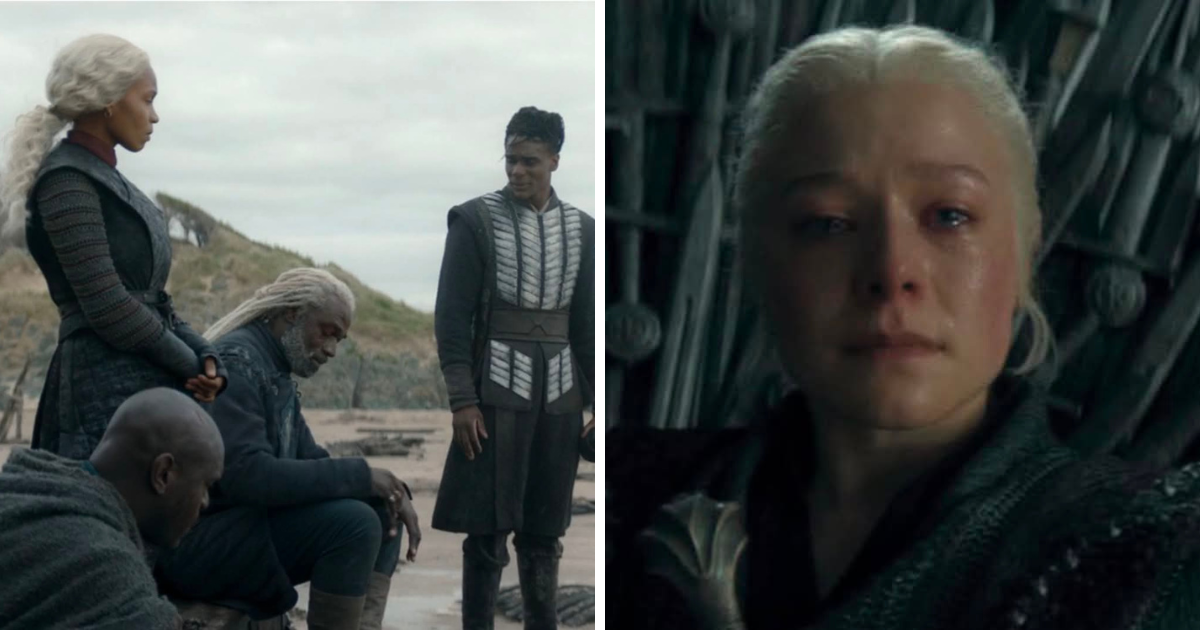
After this epic “Queen’s Landing” episode, where a grieving Rhaenyra takes her long and labored walk up to the throne, snot-crying as she goes, sitting awkwardly upon it, unsure if it was worth all that she has sacrificed, the audience called her “weak”.
Countless posts wished Rhaenyra would’ve been more of a “badass” in her ascent to the throne, like her descendant Daenerys. When taking what was rightfully hers, the audience said she should’ve been filled with rage and determination instead of crying with grief and walking slowly up to her new royal perch. It revealed the truth that this country has long-since proclaimed in real life: we do not actually want women to lead unless they perform strength like men do.
Because as much as this show is about women under patriarchy, it’s specifically about motherhood, and Rhaenyra is a grieving mother who behaves as a grieving mother does.
We’re with Rhaenyra as she births a stillborn daughter Visenya upon hearing that her king father has passed and Alicent’s son has usurped her throne. Just as her mother Aemma told Rhaenyra before dying in childbirth, the pregnancy bed is a woman’s battlefield. It’s violent, bloody, tortuous and lonely. Rhaenyra pulls her stillborn daughter out herself, as her now-husband-uncle Daemon and the men on her council ignore her screams of agony and plot the next course of action without her. But because Rhaenyra has been through this battlefield of pregnancy loss and has felt the consequences of it first-hand, she is measured in her response and slow to go to war. She knows what war costs.
Everyone around her doubts her leadership and her choice to try and avoid war as a womanly weakness without the stomach necessary to lead. Never mind that her father, a man, was a peace-time king and instilled in her the importance of peace in the realm above all. Never mind that she would be waging war against the other half of her family—people whom her beloved father also loved—not to mention the suffering of the rest of the kingdom. Every decision she makes is doubted because she is a woman. It’s only after Alicent’s second son Aemond kills Rhaenyra’s young son Lucerys that she knows peace is impossible and is therefore ready to go to war at the end of season one.
Season three opens with the epic Battle of the Gullet between Team Black (which literally includes the Black characters on the show) for Rhaenyra and Team Green, which is Alicent’s Hightower usurper branch of the Targaryen family. I wish I knew Rhaenyra’s eldest son and heir Jacerys better as a character so that his death alone would gut me like I know it’s supposed to. Like I know his little brother Lucerys’ death was supposed to gut me at the end of season one. My second-major complaint about the show is its rushed and awkward pacing, leaving us little time to know secondary characters like Luke and Jace. But I know Rhaenyra, and Emma D’Arcy acted their ass off as Rhaenyra seeing Jace dead for the first time. Rhaenyra yells at him as a mother would their rebellious teenager, as though he were alive and would answer her as commanded. That gutted me. Watching Rhaenyra move through denial to sheer agony, I was bawling along with her. D’Arcy is so powerful in this role that I started asking why my son had to disobey me and go get himself killed in a war. Watchers, I have no children.
But it’s with this context, wielding her dead son’s sword, grieving the loss of now three of her six children to this war, that she cries as she chops the head off of her biggest op, Alicent’s father and the mastermind of her usurpation, Otto Hightower. She walks heavy-footed through his pool of blood, leaving behind red footsteps as she ascends to her throne, mirroring her bloody walk through the Red Keep in season one after giving birth to her son Joffrey. The first shot we see of Rhaenyra on the throne is not head-on, but through her reflection in Otto’s pool of blood.
Iconic shot by Director Clare Kilner and DP Alejandro Martínez
Her children are what it costs for the Queen to land.
“The boys who clung to me, who hid their little faces in my skirts, dead. So that I could sit upon the throne of swords,” she cries to Daemon earlier in the episode. Rhaenyra isn’t “weak,” she’s alive and feeling. She still handles business, yet doesn’t delight in the death and destruction. Men like Daemon would rush headlong into the “glory” of war without a second thought to what it would cost. A matriarchy, however, must consider the children.
Motherhood is central not only to Rhaenyra as a character but to the overall HOTD story. Rhaenyra is a kind and loving mother who raised sweet boys—a huge contrast to Alicent who, in her bitterness over being forced to marry her best friend’s dad and bear his children without pleasure, has raised entitled, bitter little demon sons who rape and pillage. But, like Alicent, Rhaenyra also set her sons up for failure.
Because Rhaenyra’s first husband, Lord Corlys’ son Laenor, a silver-haired Black man, was gay, and Rhaenyra wanted sex for pleasure, not just duty, they made an arrangement to keep up appearances but sleep with whom they wanted. As a result, Rhaenyra had her first three children with a guard from the City Watch, Ser Harwin Strong, which resulted in all of her sons being white with noticeably black hair. For the silver-haired, interracial couple, that was obviously a sign that Rhaenyra and her children’s legitimate claim to her father’s Iron Throne could be easily challenged, against her father’s wishes. At least cheat with a Black man, Rhaenyra, damn!!
“I could father a dozen bastards if I were a man and no one would blink an eye,” young Rhaenyra tells her father when he first approaches her about the possibility she had “lost her virture,” (to her uncle Daemon, no less!) before marriage —again, a conversation that would never exist if Rhaenyra were Raemond. Her father agrees with her and yet tells her that she’s a woman and this is a patriarchy and Rhaenyra doesn’t get a special “but I’m the Queen-to-Be” pass. Rhaenyra tries her luck at acting like a man anyhow.
Despite Alicent’s best efforts, including forcing Rhaenyra’s bloody walk through the Red Keep after giving birth, Rhaenyra refuses to be shamed for exercising agency over her own body. Alicent can only dream of such power over oneself and bitterly resents Rhaenyra for it (so much so that Alicent starts her own self-righteous affair with Rhaenyra’s old work, the incel edgelord Drake of Westeros, Ser Criston Cole). And Laenor’s father, Lord Corlys, always stood by Rhaenyra’s children as his own grandchildren, even though we can all see with our eyes that they are not Black! It’s hilarious and I love it.
It’s not simply out of the goodness of Corlys’ heart that he defends his legal grandchildren as his own blood. He also married off his daughter Laena to the king’s younger brother Daemon. The Master of Ships is an extremely ambitious man, and if his son’s legal children ascend the throne, or if Daemon usurps Rhaenyra as the male heir to his brother’s throne, either way Velaryons will be kings and queens of Westeros moving forward. “History remembers names, not blood,” he tells his white Targaryen wife Rhaenys, who is over the bullshit of Corlys’ ambition. It’s a fascinating racial dynamic that they’ve set up, making Corlys Black when he is not in the book. Because of Corlys’ ambition, tangling his children up with Targaryens, both Laenor and Laena die, causing even more friction between the houses when Rhaenyra marries Daemon immediately after Laenor and Laena’s deaths.
But in “Queen’s Landing,” we see exactly why no one but Daemon could be by Rhaenyra’s side in her moment of grief and triumph. Besides D’Arcy breaking out their best acting, what really made this episode so special was how much it catered to the female gaze. When I found out that this episode was written by Sarah Hess and directed by Clare Kilner, I understood immediately why it was so effective. Women behind the scenes can make a world of difference.
The episode begins with Rhaenyra, sick with a mother’s grief, unable to move from her bed. Only Daemon can reach her. He whispers to her in their ancient language, High Valyrian, reminds her of who she is and the greater cause they’re fighting for. He’s seen a vision of Daenerys Targaryen in the long-off future, and knows that Rhaenyra sitting the throne is the only way to make that world-saving future possible. (Let’s pretend we don’t know how Game of Thrones ends so it hurts less!) He encourages her not to let her sons die in vain. And she’s up, ready to go reclaim her throne. Her small council finds it a terrible plan to fly to King’s Landing with four dragons and no army but Daemon shuts them up with “she has me.” HOT.
Then, they do in fact fly to King’s Landing on dragonback, and Daemon proceeds to kill everybody in their path, and then looks back at Rhaenyra like Did you like that? and she gives him the same look we all have at home: YES! THAT WAS HOT!
“Who else dares rise up against us in our house?” He yells after slitting the last soldier’s throat. I hate violence, but my god. This clip of Daemon handling big business set to Usher’s “Daddy’s Home” has been playing on a loop in my house for several days. Thus raising the bar for men to actually be of service. Because if you’re not clearing a path to my throne with the blood of my enemies, why are you even bothering me? This is ROMANCE. This is DEVOTION. This is MALE COMPETENCY. Annnnd it’s also problematic as hell.
Allow me to be woke for one minute.
Rhaenyra and Daemon are very hot together; truly, they are twin flames. When they barge into the Red Keep, they do so in lock-step. When he clears a path for her to the throne, she takes his hand. When they’re surrounded on all sides inside the throne room, it’s his Que Dawg fraternity brothers in the gold capes that bend the knee to her, defeating the Kingsguard. And we love to see it. He is giving his all for his queen, the love of his life. But that is her uncle! She is his niece! We are salivating over incest! WE’RE UNDER SPELLS!! There’s literally no more appropriate song to play over Daemon hotly cutting down Rhaenyra’s enemies than “Daddy’s Home.” It works on every level because that man is literally a half-step away from being a father to her. CRAZY.
These hot people are propaganda!!!!!!!!!!!!!!
When Rhaenyra begs her uncle to marry her at the end of season one, we’ve already seen him groom her for this when she was a child, giving her wine, kissing and undressing her in a brothel. JAIL. ELECTRIC CHAIR. DRACARYS! But, no. By the time she’s begging her uncle to marry her, we cheer because they’ve been in love for years and their marriage literally saves Rhaenyra and her children from speculation over their legitimacy. We’re supposed to be relieved for these incestuous fan-favorites under these circumstances, which is a huge leap from the feelings we were meant to have during Game of Thrones.
In that series, Cersei and her twin-brother-lover Jaime were the literal villains of the show, and their incestuous bond was a trait of their depravity. This week some loser on Threads was lamenting about how he was ridiculed for shipping Cersei and Jaime back then but now everybody loves Husbuncle Daemon with his niece and it’s okay. All that tells me is that, after eight years of Game of Thrones, incest has become more mainstream and normalized. That’s bad!
Just last year, Durham University published an article about the rise and popularity of incest porn, growing from 1% of porn content in 2006 to one of the most popular categories on pornography websites by 2014, with no sign of slowing down.
“The prevalence of incest-themed content matters, as it normalizes and legitimizes ideas of sexual activity between family members – particularly involving young girls. When these messages are consumed by millions every day, the influence extends beyond individual users and filters into broader cultural attitudes,” Professor Clare McGlynn writes.
“In time, we may become desensitized, less likely to understand the prevalence of child sexual abuse, or its seriousness. The claim that incest porn is fantasy without real-world effects assumes incest is rare, abhorrent. But it’s not.”
Thanks to the rise in consumer DNA testing, we now know that 1 in 7,000 people are born to “first-degree relatives,” meaning a parent raped a child or sibling rape has likely occurred. Women rape boys and men; yet statistically, the largest group of rapists are men. Fathers. Uncles. Brothers. And that’s just what we know from the number of girls and women who produced children who lived. We can safely assume the prevalence of incest in our society to be much higher.
We know that images are powerful and help shape in our minds what is possible in the world. As we celebrate women-centered stories that reframe how we value women and Black characters revolutionizing what we think is possible for Black people, we must also consider what it means to normalize incest in fantasy.
And we are normalizing it. “The only incest I approve of!” read a post with thousands of likes on Threads. “Best Husbuncle ever!” was the caption of a trending video of Daemon at work. Social media was flooded with these “jokes” after “Queen’s Landing.” And as much as I loved this episode and what this show is doing overall for fantasy-loving Black Girl Watchers everywhere, I have to sit in this and my own discomforting response to it.
Because this episode also revealed something deeper about the show that is akin to Rhaenyra’s own dilemma within it: trying to be queen of a patriarchy. A show can be progressive and powerful, breaking ground for Black people and women of different races in fantasy. It can be full of queer characters and queer people in front of and behind the camera. But at the end of the day, we are adapting to and operating within a white man’s fantasy. This is George R.R. Martin’s wet dream. The source material of both their world and our current reality, is white male patriarchy. Of course incest would thrive. Of course rape of women and children thrives. Of course white supremacy and class hierarchy thrive. We have seen the Epstein Files. This is the status quo. And here we are, an Alicent, carving a window in our prison cell. Whatever joy, power and progress we claw out for ourselves within this system, inevitably, we will be made to bend the knee at the boundaries of the white male imagination. Our victory will be as short-lived as Rhaenyra on the throne, with death and destruction of the soul as the cost to ascend.
Of the entire Game of Thrones franchise, the one with the most power and the most sense was Daenerys’ dragon Drogon. After all it cost him, he let loose his fire on the Iron Throne, melting the swords into the worthless pool of metal it always was. Because real freedom won’t come in the form of Black people, queer people or any race of woman in the seat of power crafted for and by white men. It will only come when we burn it all down.
***Spoilers for Interview with the Vampire season 1&2 and The Vampire Lestat***
His momma named him Interview with the Vampire, I’m gonna call him Interview with the Vampire! Though the show’s first two seasons are superior—I maintain that IWTV’s premiere episode is one of the best pilot episodes of all time!—the newly-titled third season The Vampire Lestat has finally won me over in its third episode. And let me just say, it took a lot.
Black Girl Watching is a reader-supported publication. To receive new posts and support my work, consider becoming a free or paid subscriber.
After two brilliant seasons starring Jacob Anderson as a Black creole Louis de Point du Lac (genius choice to make him and Claudia Black. Genius!!) I was pissed to find that the third season would be an adaptation of Anne Rice’s very unpleasant book The Vampire Lestat, and would center on him, with the actor Sam Reid as number one on the call sheet as the titular vampire.
Suddenly, the AMC channel, which couldn’t muster a fuck to promote the brilliant Jacob Anderson for two seasons, can now put Reid on the cover of Rolling Stone, do a live promo concert for Reid for the season premiere and do almost a year’s worth of promo leading up to the season three premiere. Needless to say, I’ve been salty. It smells racist AF and follows a long-held tradition of Black actors and characters in genre being sidelined for their white co-stars (i.e. Abbie Mills and Ichabod Crane in Sleepy Hollow). While promoting season three, AMC executives also had the nerve to tell audiences they could “skip” seasons one and two if they wanted because TVL would stand on its own. First of all, absolutely not. The show makes zero sense without the context of its first two unsurpassed seasons. Second of all, go to hell, I knew y’all were racist and I wasn’t trippin!!
Also, and I understand I’m in the minority here, but I absolutely hate Lestat. He abused two Black vampires in the Jim Crow South, and The Vampire Lestat is his redemption arc. Hearing Lestat’s side of the story is like submitting myself to hear about slavery from George Washington’s perspective. Does anyone want to know how hard desegregation was on the Klan? Hard fucking pass. And it’s no shade to Reid, he is the best Lestat we’ve seen on screen and the fact that he happens to be an amazing singer too, as Lestat reemerges this season as a wannabe rock star, is fantastic luck. Reid was, perhaps, born for this role. I would just love to see him…less.
“Let the tale seduce you,” Louis told journalist Daniel Molloy (who is sadly not played by Anthony Bourdain) during the titular interview in season one. And I was seduced. Louis is artful, contemplative, smooth, self-reflective, near-meditative at times in his storytelling. He’s performing without being performative, and as authentic as he can be while still maintaining a façade of control. He clearly had an agenda in both his telling and re-telling of his life through the interview with Molloy. His is a beautiful, captivating style that, yes, is all Anne Rice and showrunner Rolin Jones, but is immensely deepened by Jacob’s embodiment of Louis. Making him a Creole pimp in New Orleans instead of a racist white enslaver as Rice envisioned him was inspired! But that choice complicates Lestat’s come-back story, which was bad enough when Lestat was abusing two fellow white vampires and draining enslaved Black people in the background for fun. Now Lestat is a racial abuser of the main characters and there are zero Black writers in the writer’s room for season three. Let the redemption begin.
Angry about Molloy’s book Interview with the Vampire coming out and being a huge success, Lestat decides to reclaim the narrative by writing songs and touring to combat Louis’ version of events. He also hires Molloy to film a documentary about the tour. But Lestat’s storytelling is the opposite of seductive. It’s manic. It’s scattershot. It’s sometimes black and white and then color, as the first three episodes mix Lestat’s retelling of his life on vinyl records with Molloy’s documentary footage of his (modest) world tour. It’s over the top. It’s too much. It’s annoying—just like Lestat.
But Jacob as Louis and Delainey Hayles (who replaced Bailey Bass as Claudia in season two—damn you James Cameron, and that cursed Avatar franchise!) both return for season three, so I decided to stick it out. And episode three got me.
Unlike the first two seasons, where each episode title is fantastically poetic (the pilot episode is “In Throes of Increasing Wonder,” pour example), Lestat’s are simply the names of cities detailing where his band is playing that episode. The third one is “Toronto,” where Lestat is forced to confront his past abuse when Molloy hammers him about what the lyrics to his songs mean.
For Lestat, these songs reframe some of his most harrowing experiences. When Lestat was alive, he was a star on stage at the theater with many fans. His maker, Magnus, became obsessed with him, stalking him, until one night, he kidnapped him through the open window of Lestat’s apartment, kept him in a dungeon tower for a week with blonde-haired rotting corpses who all looked like him. In his song “Biggest Fan,” Lestat regains control over the abuse by putting himself in Magnus’ shoes, singing the song from Magnus’ perspective and turning something horrific into a tame, Fabio-esque music video about an adoring fan. But it’s not until Lestat is broken down in Molloy’s relentless questioning and the real memories of that week of torture are juxtaposed with Louis reading Claudia’s diary to her rapist, Bruce, before Louis kills him, that we understand the full horror of what Lestat went through with Magnus. Like Claudia, Lestat was kidnapped, raped, and tortured. We see Lestat’s cPTSD take over as he crashes his car to get away from the visions of Magnus sitting next to him in the car, taunting him. Hundreds of years later, he cannot escape the memories of monstrous abuse. And we feel bad for Lestat. And that sucks! Because fuck Lestat!!!
Using rape as a trope for an awful character’s redemption is usually something reserved for women characters on screen. Think Sansa Stark on Game of Thrones or Charlotte King on Private Practice. Lestat being a man might have been a spin on this despicable trope, except as a bisexual man, the use of this trope seems to be one of the many ways homophobia and misogyny are fruit of the same patriarchal tree. Yet, it doesn’t feel cheap like Sansa’s or Charlotte’s storylines. It’s not merely a plot device, it’s a window into Lestat’s self-reckoning.
There are people in the world who go through bad things and say, “Well, I went through it, so you will too,” and then there are people that say, “I went through it, so I want to make sure nobody else ever goes through it.” Lestat is the worst kind. He tortured and abused Louis and Claudia. He threatened Claudia with rape, whether he wants to believe that about himself or not, it was true. He knew she was already Bruce’s victim and he used that to threaten and control her. And then he participated in her murder. And Lestat was a victim of his makers, several times over. Lestat’s father was horribly abusive. Magnus was horribly abusive, and his first fledgling, his own mother, Gabriella, began an incestuous sexual relationship with him that’s continued for centuries. His one supporter became yet another abuser. He only knows a maker as an abuser; he only knows love that is perverted, controlling, manipulative and deadly. That explains why he treated Louis and Claudia the way that he did, giving them illusions of choice, illusions of love, at different turns while still fighting to maintain his control over them. But it doesn’t excuse it.
The songs he writes are self-aware, to a degree, and wrestle with the reality of who he is and who he has been. “Unlike your last vampire, there are no delusions here,” Lestat tells Molloy, and it’s again partly true.
His final song of the episode—and the best of the show so far— “The Loneliness,” is Lestat’s version of Solange’s “Cranes in the Sky.” It’s him coming to terms with the undead life that was created for him and what he’s allowed his trauma to shape him into: a lonely monster who does monstrous things to connect with others and still winds up alone, just like his makers.
“You can’t fuck away the loneliness / it’ll wait til you’re done / til you come like a vampire…Don’t hide it away / Don’t bury those feelings / Don’t worship that grave / Dug on your own / Don’t burn alone.”
As he performs this song, his abusers appear in the crowd, first Magnus, then Gabriella. But as he sings, and addresses his pain head on, instead of ignoring it, they leave him, one by one—the haunted apparition of the long-dead Magnus and the very-real Gabriella too. He sings and he heals from them a little more each time.
“Perfection,” he says, the moment the song ends. It’s done his good work in and through him.
Molloy and other characters mock Lestat for his songs being “bad,” or simplistic, but unfortunately, I really like Lestat’s songs! And Reid has a gorgeous voice, best displayed on “The Loneliness.”
“You’re confused about the pursuit, Dan,” Lestat tells a bullying Molloy. “It is not about asses in seats or streams on Pandora. It is about pure expression!” And, like all artists trying to make a living, it’s fine if he’s only being half-truthful. The spirit of what he’s saying is correct and would be the only motivator in a world built on soul-connection instead of the soul-death of white supremacist, capitalist, cishetero-patriarchy.
“I loved the music,” Lestat said of why he got on that stage even after his mental breakdown, flipping his car, haunted by Magnus, Claudia, and his first love, the tragic Nicky. “It was compelling me forward, pulling me through the perennial walls of my psyche. And I thought, ‘why not ride it to blindness?’ Cause it seemed possible that this was the muddy bottom, and on the other side, a marble floor, polished to the horizon. Music, in its purest expression, would make me worse, and then make me better.”
This is what resonates most about Lestat’s journey as an underground rockstar: that music, art itself is what connects our souls. And not just for humans—many non-human animals also make music and art. That, I think, is the biggest point of author Anne Rice and showrunner Rolin Jones making Lestat a rockstar and Louis an oral historian in the first two seasons. Humans have believed for far too long in the modern era that there is a hierarchy of life atop which they sit. Vampires then, in humanity’s undead, basest form, have placed themselves even higher, with living humans reduced to mere food, pets or entertainment. Music and art remind Lestat and Louis and therefore the audience that being alive to each other is the point. Feeling alive with each other is the point. And sure, we all want to survive, but there are ways to survive that don’t require us to treat our fellow alive beings—even our food—as less deserving of life than we are.
Through music, Lestat is reconnecting to the part of himself that is alive (if still undead). In episode two, “Toledo,” we see Lestat surrendering his ego to his human bandmates. His soullessness was getting in the way of the music he wanted to create and perfect. It’s only when he allows what remains of his soul to connect with the souls of his bandmates, and relinquishes control of the narrative, and performative humanity that they can create impactful art together.
This is why I love vampire stories, and Interview with the Vampire (and fine, The Vampire Lestat) is at the top of the list. Vampires are one of the greatest literary and philosophical vehicles for contemplating what it means to wrestle with death, destruct, grief—what it means to be alive.
After the death of her young daughter from a disease, Anne Rice wrote a grieving Louis de Point du Lac and gave him an immortal child, Claudia. She modeled the Brat Prince Lestat after her charming husband. She wrestled in the mud with God over the loss of her daughter and her own mental health struggles throughout The Vampire Chronicles. This is what we were meant to do.
In Toni Morrison’s 2015 essay for The Nation “No Place for Self Pity, No Room for Fear,” she writes of something her friend told her after George W. Bush’s re-election in 2004: “This is precisely the time when artists go to work. There is no time for despair, no place for self-pity, no need for silence, no room for fear. We speak, we write, we do language. That is how civilizations heal.”
Louis and Lestat, in their oral histories and lyrics to love songs, have turned to art as healing. Just as their maker, Anne Rice did. Just as Toni Morrison did. Just as we are all called to do. This is the power of cinema and TV at its absolute best. And in episode three, The Vampire Lestat lives up to the calling.
****Spoilers for the plot of Obsession and Get Out*****
Hollywood has crowned a new favorite white boy, Curry Barker, who impressively wrote, directed and edited a $750,000 horror film, Obsession and sold it out of TIFF for more than $15 million. Released by Focus Features in May, the film has gone on to make $250 million at the box office in just a few weeks.
Starring Michael Johnston (who looks like the boy from Hereditary) and Inde Navarette (who looks like Natalie Portman), Obsession looks a whole lot like white Get Out. Needless to say, it’s derivative. The similarities are beyond its low-budget genre fare and massive global box office return from a first-time filmmaker. Obsession takes “homage” to Jordan Peele’s horror masterpiece to the extreme, yet this poor man’s rip off fails to achieve the pinnacle of social commentary that Get Out achieved.
Using a man dating a perverted version of his “dream girl” as a premise, Barker has nothing substantive to say about dating and relationships, just a whole lot of editing actors walking in reverse to set a freaky tone. With Obsession, Barker has fulfilled the old adage that “imitation is the sincerest form of flattery that mediocrity can pay to greatness.”
Black Girl Watching is a reader-supported publication. To receive new posts and support my work, consider becoming a free or paid subscriber.
The film begins with a cowardly “nice guy” named Bear (Johnston) who wishes his friend Nikki (Navarette) who has no romantic interest in him, would “love him more than anyone else in the world.” All of the horrible consequences of the film stem from that narcissistic, life-ruining wish. Instead of “love,” Nikki becomes obsessed with Bear to the point of murder.
But like Andre (Lakeith Stanfield) in Get Out, Nikki isn’t really Nikki; she has been possessed by an alternate personality controlling Nikki’s brain and body, while the real Nikki is in the corners of her own mind (a sunken place, if you will!), aware of everything that’s happening to her, but in control of nothing. Unlike Get Out, where there are rules for what triggers someone in the sunken place to escape the prison of their mind and re-take control of their bodies, in Obsession, Nikki pops out occasionally with no rhyme or reason to let Bear know that something is wrong.
Just like the brilliant Betty Gabriel who plays Georgina in Get Out and made saying “no, no, no,” in quick succession iconic, Navarette’s Nikki copies Gabriel’s Georgina with a glassy-eyed smile and repetitive pattern while saying “no,” to let Bear know that Nikki isn’t being herself. (Watch for yourself below.)
A quintessential “nice guy,” Bear knows the real Nikki isn’t interested in him but wants to believe that he can treat her so well it shouldn’t matter. He knows something is off when she comes on to him and kisses him for the first time, but it’s only when the real Nikki pops out to say “what the fuck?!” that Bear expresses that she makes him “feel like a rapist” doing something wrong — which, of course, he is.
Like the white couple who bought Andre’s body off the auction block in Get Out, possessed him and has sex with his body, Bear is a rapist who has sex with Nikki knowing it’s not the real her. He dies for it all, but it’s unsatisfying, because the real Nikki is left with a pile of bodies in her wake while he, like the coward he is, gets to escape without being accountable for the crimes that have taken place and will ruin the rest of Nikki’s life.
So what was the point? What was the message? Why did I sit through this movie?
On second thought, to call Obsession derivative is far too mild and doesn’t quite capture what’s really going on at the root of this film’s success. Obsession isn’t smart. It isn’t layered. It isn’t nuanced. It isn’t commenting on centuries of oppression in an inventive way. It’s a straight forward “be careful what you wish for” film. There’s nothing inherently wrong with a straight-forward, crowd-pleasing film. This one, however, is ripping off one of the smartest, most layered, nuanced social commentary horror films of all time.
The brain transplant surgery Peele invents in Get Out satirizes white neo-colonization and enslavement of Black people. Mixing sci-fi with horror, Peele also comments on the long history of white scientists, surgeons and mental health professionals experimenting on and exploiting Black people to advance medicine and technology for their benefit at Black people’s expense. Peele’s film put 21st century racism on full display, taking direct shots at white women who prey on wealthy Black athletes and the Obama-liberal white people who still hold tight to their anti-Blackness with a few exceptions. This genius racial body horror story is so original, so thoughtful in its creation of lore, in establishing the rules of the world, in creating the technologies necessary for the satire of America’s racist history to work, that Barker’s laziness and lack of effort on all fronts in comparison with Obsession seem like a slap in the face.
The gag is, Obsession could’ve had something smart to say about patriarchy; about the ways that men are socialized to devalue women as autonomous people and how that can lead to pedestaling women without actually caring to see and know and love them as people. Bear didn’t “love” Nikki—he barely knew her. The “love” that he wished from her ended up being sick and twisted because it mirrored his own “love” for her: sick, twisted, self-serving, inconsiderate, narcissistic, fake, unconscious and deadly.
This idea connected to the larger system of patriarchy, of the ways that men systematically devalue women’s personhood for their own gain, could’ve been a worthwhile use of ripping off Get Out. Instead, Obsession is simply one boy’s silly wish gone awry, a story in a vacuum, outside of any social inference or analysis, with nothing to say beyond, “Oops! Did I do that?”
It reminds me, I’m rarely mad at bad films themselves—people make bad films all the time, they come and go and have zero impact on society. But the response to this film is yet another infuriating reminder that white filmmakers can afford to be cheap. They can be lazy in their storytelling. They can rip off Black brilliance, dilute it to its most simplistic form and outpace it in a matter of weeks. Whereas Get Out made $255 million at the global box office over a year’s time (it was in theaters around the world from February 2017-February 2018), Obsession has made a record-breaking $224 million in just over a month. Deadline also compares the films in its report on how Obsession’s faring overseas: “UK & Ireland grossed $2.6M this weekend to reach $13.8M cume, above Get Out at the same point.”
This poor-man’s rip-off has indeed made Barker very rich. He’s already secured an 8-figure offer for his next film before it’s even been pitched. But there’s simply no accounting for taste.
At the end of Get Out, Chris (Daniel Kaluuya) has survived the attacks of the white Armitage family that meant to enslave him, burning down most of the evidence and killing every one of his would-be enslavers. But Chris is a Black man in a wealthy white American world. Things look incredibly bleak for him at this point of the film, even after surviving such horrors. As he uses his remaining strength to choke the life out of his murderous girlfriend Rose (Allison Williams), flashing lights appear in the driveway of the Armitage home. The hearts of the audience immediately sink, especially the Black viewers: everyone knows the reality of Black people and police in this country, whether they’ll admit to it or not. But in a twist of love for Chris—for the Black audience—the police lights are really from Chris’s TSA agent friend Rod (Lil Rel Howery)’s car. It’s not the police coming for Chris, it’s his friend coming to rescue him. Chris has fought white supremacy and won. He is safe! And so, for about five minutes, were Black people as a whole.
I watched Get Out on opening weekend at the AMC Magic Johnson Theater in Harlem, surrounded by Black people (and some of the men’s white girlfriends) during Black History Month 2017. I have never had an audience experience like that in my life. I will never forget the uproarious cheers when Rod stepped out of that police car. It was damn near the first Juneteenth in that theater! It was catharsis. It was relief.
In the age of 12 Years a Slave, where torturing Black people on screen could win you Oscars; in the midst of the Black Lives Matter movement, where videos of police murdering Black people flooded our timelines, Chris got to be okay. In Peele’s reality, we would be safe. We would be saved. It was perhaps the first time that I remember watching a movie and thinking out loud oh, this filmmaker LOVES us!
There is no love in Obsession. Despite the rampant femicide in America, where women are often killed by their male partners, fathers, sons or complete strangers for failing to behave the way that men want, there is no catharsis for Nikki or women like her. Despite the likelihood that Bear would statistically be the one to kill Nikki and then go on a mass shooting spree, it’s Nikki who is possessed with murderous intent.
Unlike Chris, who has a good friend in Rod, who is concerned for Chris’ well-being and searching for answers on his behalf, Barker has created no girlfriends for Nikki—only competition. Sarah, who is supposed to be Nikki’s friend, has an obvious crush on Bear and she lures Bear outside, away from a sleeping Nikki to confess her crush to him, saying that Nikki is only using him to get back at their co-worker whom Nikki has been secretly dating for years. Sarah has no concern that Nikki has been acting wildly out of character. She doesn’t see Nikki as endangered or at the point of mental breakdown. She sees Nikki as a threat to dilute and winds up getting diluted herself.
Men are the center of Barker’s world, and the real tragedy of Obsession, Barker would have us believe, is that Bear can’t just like the woman who likes him back. A pitiful, weak warning for men that their “dream girl” could turn into a nightmare—for them. By the end, Bear’s suicide puts Nikki back into her right mind, only to be left literally covered in the blood of everyone she’s murdered, their bodies strewn about her. The ending is a scream. No words, just loud air with no point. Just like the film itself.
We’re back with another episode of the Another Possible World! A Black Girl Watching paid subscriber exclusive podcast where we explore revolutionary new ways of creating art and spotlight the radical creatives behind it.
This month’s guest is Oakland filmmaker and musician Boots Riley, the creative mind behind the ground-breaking surrealist and anti-capitalist films and series Sorry to Bother You, I’m a Virgo and his latest I Love Boosters.
Boots is one of my absolute favorite filmmakers due to his bold creative vision and unapologetic insistence on being overtly and radically political in his work. When I was creating my dream guest list for the Another Possible World podcast, Boots was at the top of the list and in the next hour, as we talk about art and revolution, you’ll see exactly why.
In this episode we talk about the twenty-year-old roots of Boots’s new film. In 2006, he and his Oakland hip-hop band The Coup released their fifth studio album Pick a Bigger Weapon. The 13th track of the revolution-minded production is a little song called “I Love Boosters.” The song is Riley’s ode to the (usually) Black women in the Bay who steal clothes from department stores and “And sells it in the hood for dirt-cheap resale”:
“For some of y’all folks, this stuff might phase ya / This ain’t the way the society raised ya / But most of it was made by children in Asia / The stores make money off of very low wages /
“The next time you see two women running out The Gap / With arms full of clothes still strapped to the rack / Once they jump in the car, hit the gas and scat / If you have to say something, just stand and clap.”
Now, Riley has turned the song and its central thesis of corporate exploitation of labor as the real thief and burden on society into the genius new film of the same name, I Love Boosters.
Keke Palmer stars as Corvette, the head of an all-Black women booster crew called the Velvet Gang. The opening of the film mirrors the first verse of Riley’s song, where a man goes into what he thinks is a woman’s apartment looking for a hook-up, but it turns out, the place is full of boosted clothes and shoes in all sizes that she’s selling on the low. Naomi Ackie and Taylour Paige round out the gang who have become a thorn in fashion mogul Christie Smith’s side, whose department stores they’ve been robbing blind.
My new favorite, God’s Strongest Soldier and a frequent Boots Riley collaborator Kara Young also makes an appearance in a memorable role as “Crying Black Mother,” a supposed Concerned Community Member and in our podcast episode, Boots talks about the wild origin story of this character.
We also talk about his definition of surrealism as an exaggeration of contradictions, and how the bright bold colors of I Love Boosters conceals the seedy underbelly of the fashion world and the ways these corporations build their wealth on the backs of a desperate labor force, risking their workers’ health and livelihood for profit.
Played by Demi Moore in her kookiest role yet, Christie Smith is as crooked as they come, building an empire off of Chinese enslaved labor, and living at the top of a literal leaning tower that most people have to hilariously struggle to navigate. In a clever bit of production design by Christopher Glass, this slanted building that she lives in both externalizes Christie’s twisted morals and character and also, in that Boots Riley, anti-nihilistic way, shows that the empire she’s built isn’t as solid as it appears and can be toppled with one big push.
Surrealism merges with science fiction when one of those Chinese laborers, played by Poppy Liu, steals a teleportation device meant for corporate evil and uses it to get to Oakland and help get the word out about the conditions of people in the factories that make Christie’s clothes. People are getting cancer and dying from the chemicals they use to make the clothes as cheaply and quickly as possible. But Corvette can’t see beyond the abandoned Chicken Shack that she’s squatting in. With bills due and overdue, Corvette is literally chased around town by a giant ball of her anxiety. This, Riley argues through the film, is how our corporate overlords keep us from being able to effectively organize for all of our basic rights and needs to be met. When we can barely see above water ourselves, it’s hard to see the people drowning right next to us.
Lakeith Stanfield plays a charming man with a deadly secret whom Corvette can’t help but be mesmerized by. He pops up throughout the story to tempt her off of her mission, an easy out through love and romance than the dangerous life of a squatter and a booster with the law already on her tail. But of course, every choice has a consequence, and there’s no such thing as a free ride.
Whereas evil tech billionaires are destroying our land, air and water to build A.I. data centers to better surveil and replace us, Riley uses technology as a form of liberation, literally connecting our struggles to those across the world whom we may never see and know. In Riley’s world, the Afro-Future is communist, and not even a handsome, charming literal soul-sucking demon should be able to tempt us to try and “change things from the inside.” (That’s a little bit of a spoiler but you still will not be prepared for how that actually manifests on screen!) A general labor strike is our only path forward to end capitalism.
I don’t want to spoil the many surprises coming your way in I Love Boosters (yes, out of nowhere, there is claymation). But if you’ve seen a Boots Riley production—Sorry to Bother You features enslaved half-man, half-horse laborers; I’m a Virgo features a 13-foot-tall teenager in a world where superheroes are real—you already know to expect the wildest ride you’ve ever been on. If you haven’t, think of the man in the opening scene: go in for a hook-up, leave with the fliest pair of shoes in your size for the low price of a movie ticket instead. The laugh-out-loud I Love Boosters will literally go off the rails. Think B.A.P.S. with the girl-gang comedy, plus Blade Runner and the collage art of Mickalene Thomas. And claymation! If you’re up for a vicious tear-down of the world of high-fashion, the billionaire class and capitalism, just hang on and enjoy the riotous, liberating ride.
Thanks to all of the Watchers who submitted their questions for this episode! Boots answers quite a few of them, sharing updates on I’m a Virgo season two, when another The Coup album might be coming, and also his favorite rom-com—only the most cinephile of cinephiles will be able to guess it!
Catch all of the behind the scenes stories, his process for writing music versus screenplays, how to build a communist revolution through art, only on the Black Girl Watching podcast Another Possible World.
Anaia (Mallori Johnson) says this to her older twin sister Racine (Kara Young) in the new revenge thriller Is God Is. There’s judgment in Anaia’s voice, sadness—fear even.
“Aint you?” Racine retorts with tears in her eyes and Anaia doesn’t answer. Anaia might be angry about their father, the Monster (Sterling K. Brown) for abusing their mother Ruby/God (Vivica A. Fox) to the point of restraining order. She might be angry about him breaking into their home, choking their mother out and setting her on fire in front of them when they were three years old. She might be angry that the flames from the fire disfigured her face forever; that no one can even look her in the eye without horror and discomfort. She might be angry that, day and night, the twins take turns rubbing ice on each other’s still-burning scars (Anaia’s are the most visible on her face, while only Racine’s left arm is fully burned, her fingers melting into something claw-like). But Anaia is still not as angry as Racine.
Paid subscribers can watch my interview with writer-director Aleshea Harris below.
It’s the main source of conflict between the twins throughout playwright Aleshea Harris’s fiery directorial debut—what’s the acceptable amount of angry to be over what’s been done to you? To Black women? Adapted by Harris from her Obie (no relation) Award-winning play of the same name, Is God Is follows “burning twins” Racine and Anaia who have been charged by their mother Ruby whom they call God to “make [their] daddy dead. Real dead.”
“We ain’t killers,” Anaia says. “Ain’t we been killed?” Racine answers.
Growing up in foster homes, the twins were subjected to physical and sexual abuse and denied the truth about their parentage or how they got their disfiguring scars. What’s the appropriate amount of rage a Black girl should have for all of that?
Now, God has written Racine (not Anaia) a letter telling her that she’s not dead like their many foster parents had told them—but she is dying. And she needs her girls to come and see her before she goes. Not to give them the love they’ve been craving, but to send them on this deadly mission of patricide and revenge.
It’s such a contrast within the most striking scene in the film, of God in bed, clothed in brown and green like a tree, surrounded by her Greek chorus of nurses who wear red and pink like blooms, who braid God’s hair and speak in unison. Even Racine and Anaia wear matching flower dresses as they sit on God’s bed like the fruit of her branches. In death and dying, the Black Mother of all is revered, not just by her children, but her nurse attendants, anointing her head with elaborate braids. Unlike in the courtroom—where the Monster was acquitted of the horrors he inflicted on his family—in God’s room she is believed. She is supported. She is cared for. And she is defended.
When the Greek chorus removes the blankets covering the lower half of God’s burnt body and steam rises up from God’s skin, Anaia is horrified. Racine is angry enough for war. “Just tell us where to find him.”
The title, Is God Is, Harris told me in our interview (paid subscribers can watch it below), is simultaneously a statement of fact for Racine and a question for Anaia. She is God ‘cause “she made us, didn’t she?” But would God abandon us for decades and send for us only on her death bed to give us a deadly mission that would damn our souls?
With this tension at the center, I thought this story was Harris’ way of deconstructing Christianity, examining with a harsh light the ways the religion has kept Black people and Black women in particular from the full range of our humanity and emotions. There’s no turning the other cheek in the face of abhorrent violence against us.
By nature of the spaghetti western/Blaxploitation/Southern gothic/mythic adventure film, we spend very little time with the source of their scars, the Monster, seeing him only from the mouth down or his menacing feet in Sperry Top-siders. Brown plays the Monster with a disarming mildness, a soft-spoken gentleness that explains how easy it’s been for him to circumvent justice. A Monster could be beautiful, unassuming, and double-cheeked-up on a Tuesday. He decides when you get to see his real face.
In a redux of the reaction to 1985’s The Color Purple, some Black men are already up in arms about the “negative portrayal of Black men” in Brown’s character. Funny. Exactly a year ago, Black men flooded the theaters celebrating a different set of Black daddy-killing twins in Sinners. I wonder what the difference could be. Nevertheless, Is God Is’s story of a Black patriarch who attempts to murder his Black wife and children, exists in the context where this happens regularly in real life.
Just last month, a Black man murdered eight children (7 of his own) and tried to kill his wife as well as a former partner who mothered 3 of his children. Literally yesterday, a rapper murdered the mother of his children and shot himself on livestream to escape justice. Black men killing their Black wives and children is a crisis that has persisted for decades, and Is God Is merely shines a light on the aftermath, and the culture that created this crisis in the first place. If only that reality were as enraging to these men as the portrayal. If only justice were something within reach for these Black women and babies. So, we turn to film.
How will they feel once they kill their father, Anaia asks. “Better,” Racine answers. “This is purpose. This is destiny type shit.” It seemed that Black women’s righteous anger for the harms we’ve suffered was holy evidence that we have selves worthy of defense. And when we render justice, we won’t be “all sad-sacky,” as Racine calls Anaia. We will feel better.
But this interpretation is immediately undermined by the imagery. Anaia doesn’t buy into the truth of feeling better after revenge, and Racine, the shorter twin, is positioned on screen behind Anaia, talking over her shoulder like a perched devil trying to convince Anaia to do something bad and wrong.
Kara Young as Racine and Mallori Johnson as Anaia
Still, it’s easy to think that this film might have a message of deconstructing Christianity and its role in oppressing Black women because immediately after Racine convinces Anaia to come along for the ride to find their Monster father, the first person the twins meet on their journey is a Southern cult preacher by the name of Divine the Healer. Played with the perfect combination of absurdity and sincerity by Erika Alexander, Divine the Healer is the woman the Monster took up with during his trial for attempted family annihilation.
She either believed in the Monster’s innocence, or, like the real-life defenders of wife-murderer Lt. Gov. Justin Fairfax (and let’s face it: the defenders of most famous Black men who harm women) she simply didn’t care about what he was accused of. Presumably, this “woman of God,” saw the scars on the Monster’s wife and children and dismissed them, excused them. She “healed” the Monster with her bosom, like Iyanla VanZant squeezing Jonathan Majors to her chest and Meagan Good marrying him after his domestic violence conviction.
Her god was the Monster. Divine shirked her own divinity as a mother when she bore the Monster a son, Ezekiel (Josiah Cross), and raised him to deify the Monster—a father he’d never met before, because the Monster abandoned them the second he was acquitted of his crimes, changing his name and fleeing town to start a new life without all of them.
Still, Divine built an altar to the Monster from his left-behind items: a can of Barbasol shaving cream, a razor, a shirt, a tie. He left this pregnant woman behind like so many toiletries. Yet Divine stomps around her pulpit in boots as silver as the coins Judas earned when he betrayed Christ, just as she betrayed God and her children to side with their oppressor. She even built the Monster a church, and grew him a cult congregation that speaks and moves in unison, that wears all white like the bride of Christ, waiting diligently for his return.
But he’s not coming. Racine tells Divine how pathetic her decades of waiting and willing submission to the Monster are when she realizes the role Divine played in supporting their Monster in the immediate aftermath of his crimes against them. This earns Racine Divine’s wrath. “You are septic with rage!” Divine chastises her for simply telling Divine the truth. The truth-tellers are often dismissed as demonic and angry. Even Anaia chastises Racine for her inability to stay quiet in the face of Divine’s foolishness, fearing an inability to get the information that they need. Racine proves Anaia wrong: you can tell the truth, shame the devil and still accomplish your mission.
I thought this was all evidence of Is God Is being a treatise on patriarchal women and the ways they uphold men and the violent system of patriarchy to the detriment of themselves and other women and children.
Janelle Monáe’s character Angie was, I thought, the culmination of this message. Just as guilty as Divine, if not more so, Angie married the Monster after he was acquitted and changed his name. She had two twin boys with him, Scotch and Soda Riley, and she was aware that he had had other children with his first wife. Her only concern, however, was with whether they would have to pay child support. He told her that the girls were dead with their mother. Angie thought she was different, the exception to his monstrous violence. Until she wasn’t.
“She should’ve left!” Angie screams about God when confronted by the twins for her part in their misery. Angie was in the process of leaving the Monster—and her two boys—behind. She’d been planning this for some time after more than a decade of his abuse. She was smarter than God was and therefore “deserved” to get free, unlike God, who deserved her fate, she says. Up until that point, maybe Angie was yelling at herself for staying with the Monster far longer than God ever did. Women who suffer abuse can internalize that shame and lash out at other women and girls who remind them of their own shame. But then Angie curses God. Says the Monster’s violence was God’s fault for being “ghetto trash.” That kind of victim-blaming of women and white-washing of violent men has to die. So Racine made sure Angie did.
And then that ending changed what I thought I knew about this movie’s message.
Until I interviewed Harris, I didn’t know that Is God Is was meant to be a Greek tragedy —epic in scope yet tragic in its ending. Perhaps I would’ve been better prepared than thinking it would be a rah-rah revenge film à la Kill Bill where the Bride gets to kill Bill and live happily ever after, but for Black women, for once.
That’s not what happens.
After Racine kills Scotch and Anaia kills Riley, they have their showdown with the Monster. They tag-team beat him into submission just the way God told them: “destroy the spirit first, then the body, like he did me.” The Monster staggers away from his girls into a poetic dead-end: the bathtub. Just as he had doused God in alcohol and lit her on fire in the tub, they do the same to him. The literal definition of revenge. But it doesn’t satisfy. Racine, the closest to him physically—and, the movie argues, spiritually—gets pulled into the tub by the Monster and burns alive as Anaia escapes.
The foreshadowing of Racine’s elimination and the justification for it had already begun much earlier. Divine had cursed her. The attorney Chuck Hall (Mykelti Williamson) who defended the Monster in court and got his tongue ripped out by the Monster as gratitude deems Racine just like her father “in the eyes.” Angie called her an animal. But it was Anaia’s disgust with Racine that revealed her fate from the beginning.
“You gon’ get struck down,” Anaia says to Racine when Racine calls their mother God for the first time. In a patriarchy, where women and children exist primarily for the benefit of men, that kinda thinking will get you killed.
“What if he grabs one of us on the way down?” Anaia asks and predicts Racine’s demise as Racine brainstorms ways to kill the Monster, including pushing him off of a building.
“You’re enjoying this too much!” Anaia yells at Racine before Racine had even killed anyone yet. Can’t a girl hype herself up to “Guillotine” by Death Grips with the windows down and a blunt in hand while on a retributive road trip without judgment?! Damn.
Anaia’s reaction to Racine’s killing of the “bougie bitch” Angie let us know how the film feels about it too. Racine’s anger is out of control. Scotch (Xavier Mills), who humiliates Anaia in front of all of his friends by calling her ugly, doesn’t deserve for Racine to kill him in Anaia’s eyes. “But I am though!” Anaia says, revealing how she feels about herself and moreso how she’s treated in the world.
In our patriarchal society where beauty is currency, being ugly means being unworthy of love, care, humanity. Because Racine was “pretty,” she could be mean and fight back against their oppressors; she had a right to. Anaia, as she said in the beginning of the film, was “too ugly to be mean,” so Racine had “both of their mean.” Even the framing of Racine as “mean,” when really she didn’t bother anyone who didn’t bother them first, already created the image of Racine as unreasonable, unruly. Racine kills Scotch for calling Anaia ugly because he was complicit in the world in which ugly meant a loss of humanity. Not only was he complicit and a direct beneficiary of that world with his wealth and handsomeness and closeness to their father, he had the nerve to delight in the inequality at Anaia’s expense.
When “ugly” means “unworthy,” and Anaia shouts back “But I am though!” All of her behavior throughout the film makes sense.
Ol’ Dude, the unknown man Anaia has unprotected sex with, only allows her to have sex with him if her back is turned and he doesn’t have to look at her face. This is the father of the baby she’s secretly pregnant with. When Racine asks Anaia to think of what her life would be like if the Monster hadn’t burned them up, Anaia fantasizes about facing Ol’ Dude, sitting in his lap in the backseat of a car (presumably where they have sex) and him telling her how pretty she is. (GIRL. Aim higher!)
It is no wonder, then, that when the opportunity arises, Anaia chooses her half-brother Riley (Justen Ross), with whom she’s had only a five-minute conversation, over Racine who has protected her their whole lives and warned her that Riley was dangerous. Of course, it takes Riley 10 seconds to try and murder Anaia, and Racine has to swoop in and save her and almost gets killed herself in the process.
By the time it’s time to kill their Monster, all it takes is some tender-talking for the desperate Anaia to believe the Monster’s lie that it was God who grabbed ahold of Anaia while she was burning and that’s why Anaia is so badly burned. It took literally nothing but a soft man’s voice whispering literal sweet nothings for her to doubt her mother. We know his story that Anaia’s burns are her mother’s fault isn’t true because, 1) he literally lit the fire. Everything that came after that was his fault. And 2) Though the scene is a black-and-white close-up of the Monster’s face—the main tool Harris uses to let the audience know that we’re watching a flashback—there is no actual scene of God grabbing Anaia or the Monster trying to stop her. Because it didn’t happen.
When God tells her story, on the contrary, we are there in the scene with God. We know the Monster is lying in his sick justification for setting God on fire (“she wouldn’t let me hold her”) because we see God let him touch her and hear her explain why she let her guard down for a deadly split second (“men like your Daddy always got a tender side).” And then we see him choke her unconscious immediately. One would think that a man capable of the evident depravity engraved in Anaia’s own face could easily tell a soft-spoken lie.
But not Anaia. She’s immediately skeptical of her mother’s story, if not completely trusting of the man called Monster. “Just her,” the Monster tells Anaia of his evil intentions with the fire he set close enough to burn his children regardless of his excuses. “Not you.” Well then! Let me put down my weapon and have a seat with dear old dad! Let me desperately grasp at his promise to bounce my unborn baby on his knee—in a grandfatherly way, not the I tried to murder my whole family and you’re next kind of way!
I’m so glad Racine was unconscious during her sister’s dumbassery and didn’t have to witness it. Between this, Anaia’s immediate trust of Riley and the fact that she’s pregnant by a man who only has sex with her from the back so he doesn’t have to look at her scarred face—it’s easy to conclude that Anaia is as male-centered a pick-me as Divine and Angie. Of course, it took the Monster seconds to go from caressing to slapping the spit out of Anaia’s face on the side that is the most scarred from burns. He says her unborn baby is the only thing stopping him from cutting her eyes out and making her eat them. I don’t know that I believe him. If he could kill his living child, what’s an unborn baby?
This betrayal of her trust is what inspires Anaia to stay on her mission to kill him. Unlike Racine, Anaia’s kills of Riley and the Monster count as self-defense because she was in imminent danger of death. Racine’s “self-defense” has passed the statute of limitations and is simply cold-blooded murder. Even as their flesh still burns from the crimes against them daily. Even as steam still rises off the flesh of God more than twenty years later, the time for retribution in many people’s minds is still never.
Instead of a deconstruction, Is God Is couldn’t be more Christian in its assessment that seeking justice against and consequences for the people who harmed you makes you “just as bad” as them. “We come from a man who tried to kill our mama and a mama who wants to kill that man,” Racine says to reject Anaia’s claim that they aren’t killers. “It’s in the blood.”
That blood, Harris argues, has to die.
In our interview, Harris describes Racine’s death as “poetic,” having been birthed in a way, by fire and dying in the same way. I would argue a far more “poetic” end for Racine would’ve been to survive both fires, twin bookends for a new life that she could have, that was a bit more joyful, a bit more free. What could her path towards healing with these evils behind her have meant for her character? What could it have meant for all the Angry Black Girls in the world who are constantly told that the problem isn’t the injustice waged against them but their reactions toward it?
In my 2019 review of Queen & Slim, which I called “an artful wound with no medicine,” I coined the Hurston-Walker Test. Quoting from Alice Walker’s brilliant introduction to Zora Neale Hurston’s book Barracoon, the Hurston-Walker Test is how I engage with Black art that depicts our difficult history and reality: “Those who love us never leave us alone with our grief. At the moment they show us our wound, they reveal they have the medicine.”
We know well the wounds that makes us angry. But there is no medicine in this ending for the Angry Black Girl. There’s no healing. There’s only a continued message that even the ones closest to you—the ones you’ve spent your life fighting for—will see you and your anger as the problem, and will be happier without you.
In the end, Anaia stands alone, herself reborn a God, holding her newborn creation: another daughter. Is God Is, indeed. But what kind of God is she going to be? Her sense of shock at Racine’s demise seems to melt into what I can only describe as relief. Racine, it seems, was the one holding her back all this time, and now she and her baby can go be happy and live in peace without Racine’s angry energy.
The Angry Black Girl gets sacrificed in favor of the softer, quieter, patriarchal woman who can benefit and borrow from the Angry Black Girl’s fire when it suits them—just long enough to survive til the end—then blame the Angry Black Girl for stirring up the fire that saved them in the first place.
“I think there’s something kind of complete about cutting off that energy [of the Monster in the killing of Racine] because Anaia doesn’t carry that energy,” Harris told me in our interview below. “And for the story, I don’t think that Anaia could go off and rock that baby and live a semblance of a normal life with Racine at her side. I really think Racine would have continued to escalate.”
But this is a fictional film, and Racine neither had to die nor escalate her violence in the unwritten future. With all respect to the God of these characters, that idea of Racine is also not supported by the text of the film.
As Racine and Anaia set the Monster on fire and watch him burn, Racine’s first thought isn’t glee and rejoicing or even blood thirst, it’s conviction over what she’s said to her sister when they were fighting over Riley earlier. Racine apologizes to her sister for saying mean things to her, and holds her hand. At no point was she ever a physical threat to her sister, putting down her rock-in-a-sock murder weapon to prove as much. When Anaia turns her back on Racine to save Riley, Racine never touches her. She’s too hurt by her sister’s judgment. The only thing worse than anger is being alone in the anger you thought was shared. She’s devastated when Anaia runs away with Riley, not violent. She lets them go until Anaia’s life is in danger and then she saves Anaia and her unborn baby from Riley.
Yes, Racine is angry. And she’s also full of love and devotion.
The most devastating moment of the film comes at its midpoint, when the twins begin their walk to the Monster’s home. While trudging through open fields, they find a water fountain oasis. They laugh and gulp the water from the fountain, Racine the most drenched and quenched. “Twin, do you feel like this is too good to be true?” It turns out, it was just a dream. There is no water oasis for these burning twins; only Anaia alone.
What a cruel thing to tease that the angry Black girl’s fire might get to be quenched with justice that rolls down like a waterfall and righteousness that flows like a mighty stream, only to snatch it away in the final moments of the film. What a choice to make her destiny be one of eternal burning, too angry for the world and therefore too malignant to exist. It simply did not have to be that way.
At least in Harris’ original play, Anaia does not feel relief at Racine’s death. She goes back to God to tell her about the Monster and Racine and God is indifferent to Racine’s demise. It upsets Anaia. This was at least some evidence that Racine deserved to live and that her death was unjust, and that, most of all, Anaia did not think she was better off in the world without her sister.
In my reading of the play, Anaia hears God’s indifference and does what Racine would do: brings that rock-in-a-sock down on God’s head. This was the deconstruction of religion that I thought was happening, that uncaring Gods who “don’t want nothing but blood” are not our makers, or at least don’t have to be. We could choose our loving selves.
But Harris told me in our interview that my interpretation of the play’s ending was incorrect. Anaia doesn’t actually kill her mother in the play and she rewrote the ending in later versions to clear up that common confusion. Anaia simply puts down the sock and walks away from the violence for good, showing that the Monster’s energy would not continue with her or (fingers crossed) her baby. While both endings are disappointing in light of this new information, I still much prefer the play’s ending and Anaia’s confrontation with God over Racine’s death rather than this damn-near gleeful Sound of Music ending where the wicked witch is dead and Anaia is free.
Racine, the one who worshipped at the feet of the Matriarchy; who was pretty enough to abandon her sister for the burden of a man’s affections, but smart enough not to trust “pretty” or men, and aimed for a higher calling; who defended her mother and sister to the death—this was the one fit to be sacrificed in order for happiness and peace to be restored. It’s cruel.
Aleshea Harris has written a compelling world and characters that I loved and rooted for and has given fantastic debut direction to this film. Kara Young is a star, Mallori Johnson is one to watch, Erika and Vivica make everything better. Sterling K. Brown is exactly who he thinks he is. Alexander Dynan’s cinematography is incredible. The music from Moses Sumney is haunting.
But damn. That ending.
Is God Is could’ve been iconic, offering Black women the fullness of their righteous rage, satisfaction in their revenge and a salve for their burning scars. Instead, it offers final judgment, giving fire and brimstone to the Angry Black Girl who is simply too angry and unhealable to let live.
WATCH: Writer-Director Aleshea Harris on all the details of ‘Is God Is,’ why she chose that major death and how her film differs from her play (and read the play below!):