There’s nothing like a film festival and crisp air to remind me exactly how much I love what I do! Thanks to Sundance’s Press Inclusion Initiative, I received a grant for Black Girl Watching and an All-Access Press Pass to attend this year’s last Dance in the festival’s long-time home, Park City, Utah, before it moves to Boulder, Co. next year. I saw 15 feature films and documentaries, 5 shorts, and attended several panels and parties over my six days on the Mountain and through last week’s online access portal. I met up with and ran into beloved friends I haven’t seen in six years (my last in-person Sundance was January 2020, just before we knew that the Covid pandemic had already begun), met SO MANY Black Girl Watching readers(!!) and had the most beautiful time running in the snow to catch the bus from theater to theater.

Still, I’m grateful to never return to Park City. A harbinger of the coming Climate Apocalypse, the mountains were far too green for an end-of-January winter on my drive up from Salt Lake City—a frightening sight compared to how snow-covered the place was on my last visit six years ago. Also, on top of the new fascist laws that Utah has enacted to police alcohol consumption, queer people and women, I’ve always had some kind of racist encounter while I’m there. Beyond being surveilled for potential retail theft when just browsing a store on Main Street of the fest, the worst of my three encounters this time involved a volunteer usher accusing me—in the middle of a film—of being a volunteer usher taking a seat from a “real patron”. Mind you, I’m the only Black person in the whole row, and I have my notepad and pen out, taking notes for my job because the movie had already begun. But she just knew I was the culprit.
I almost had a final run in on the morning of my last day, I squeezed in one more film before heading to the airport. I was the last person to arrive and had to sit in the only available seat—one usually reserved for companions of disabled guests. A white woman in the row in front of me called over a volunteer usher because she was told before I’d arrived that she couldn’t sit in my seat because it was reserved for disabled companions, but she needed it because her eyes get strained sitting too close to the front. The volunteer whispered a response to her and started walking towards me. Now, this is my last day at Sundance, I’ve had it up to here with the racist encounters and I’d made up my mind that if this volunteer tells me that I have to give up my seat for a white woman one week after Martin Luther King Day, I’m going off! The volunteer walked over to me, removed the wheelchair sign from my seat’s arm rest and walked away as the movie began. At least one of them knew better.
Yes, being Black at Sundance meant experiencing compounded ignorance that I take great pains to shield myself from in my regular life by working remotely and staying in my house. But it also meant celebrating some incredible films and sitting in the audience with some of my favorite filmmakers; watching Ava DuVernay give flowers to If I Go Will They Miss Me cinematographer Michael Fernandez at the movie’s premiere, and Barry Jenkins speak in total awe of the documentary Once Upon a Time in Harlem (and the moderator not recognizing the Oscar-winner and therefore cutting him off! Black at Sundance, I tell ya! Video below for paid subscribers). It meant crying at the tributes to Sundance founder Robert Redford and communications director Tammie Rosen who both passed away last year and both influenced my career as a critic and filmmaker through Sundance. It meant watching Ava be one of the few high-profile filmmakers at the festival to use her platform to speak up for Palestine and against ICE and American-grown fascism; it’s Baratunde Thurston dropping bars about how to connect and build agency and power with community on a panel at Solidarity House; it’s hugging necks with friends I haven’t seen in six years and dancing all night at after parties and still waking up early to watch as much as I can because I friggin’ LOVE movies. I love a dark theater and scribbling notes that I can barely read because I wrote them without being able to see the page. I love a crowd of people from all over the world, sharing life on one accord for (ideally) 90 minutes at a time, for days in a row. Film festivals are magical places and Sundance is one of the best.
Here’s my list of the best films I saw at Sundance 2026!
Paid subscribers can watch a panel Q&A with Barry’s remarks below.
If I Go Will They Miss Me?

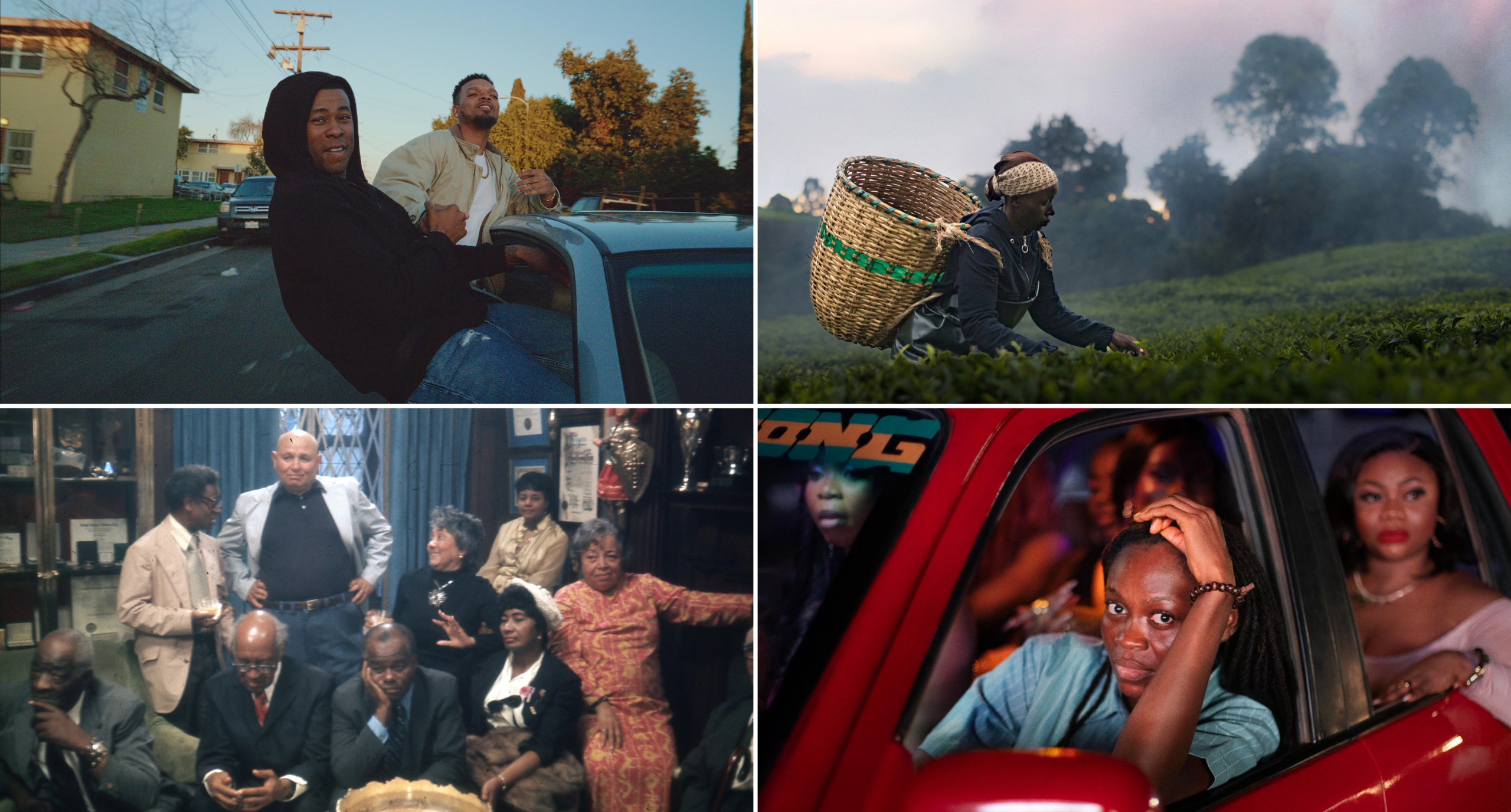
My absolute favorite film of the festival is the gorgeous slice of Black South LA life, If I Go, Will They Miss Me? Anthony, a father recently released from prison (J. Alphonse Nicholson) struggles to connect with his young son who bears his name. In Lil Ant (Bodhi Dell)’s imagination, his father is like the Greek god Zeus that he’s learning about in school and he draws Big Ant in all of his majesty. But Big Ant’s self-loathing and the burden of patriarchy make it difficult for him to accept his son or his son’s image of him, and contributes to his struggles with his long-suffering wife (a radiant Danielle Brooks).
Mixing in magical realism and documentary-style cinematography originating in Zora Neale Hurston’s films and popularized in Barry Jenkins’ works, If I Go, Will They Miss Me? is a promising debut from writer-director Walter Thompson-Hernández, and a stunning realization with cinematographer Michael Fernandez. I watched it twice and bawled my eyes out both times. Nicholson is magic on the screen, wrestling with what toxic masculinity costs a man and his family; and the sweet-faced Dell in his debut role as Lil Ant will break and heal your heart.
Kikuyu Land

This is the most urgent documentary I saw at Sundance from an incredibly brave journalist in her directorial debut, Bea Wangondu, and her co-director Andrew H. Brown. Wangondu and generations of her family hail from Kikuyu Land, a luscious region of Kenya where land ownership can mean status and safety, or make one a target for theft and murder. Like all of Kenya, the Kikuyu people and its lands were colonized by Britain and when the people won Kenyan independence in 1963, oppressors merely changed forms. African middle men took the place of British lords and British corporations took over the role of the crown, controlling the land and working its rightful stewards on tea plantations as essentially sharecroppers who can never make enough money from their back-breaking work to leave.
The modern-day owner of many tea plantations there was Lipton tea owner, the UK corporation Unilever, and Kikuyu Land shows the cost to the people who harvest the tea leaves for our global enjoyment. The film follows Wangondu as she tries to get justice for the workers and the alleged atrocities so many have faced on the plantations. She also interviews a man fighting to get his family’s stolen land back from the government; a “tea child” who ends up quitting school when he’s old enough to work the plantations full-time and help out his struggling family; and her own family for their land-owning ties.
I could talk about Brown’s gorgeous cinematography and how rich Kikuyu Land looks through Wangondu’s loving lens. But journalists in Kenya have been killed after being critical of the Kenyan government and exposing land-owning corporations. Wangondu, Brown, and the participants in their documentary have risked their lives to tell us this story and to use this lens to get justice for the people. This was, therefore, the only other film that I was compelled to watch twice, and Wangondu is my next guest on the BGW podcast for paid subscribers, Another Possible World. Look out for that episode in March!
Once Upon a Time in Harlem

We’ve heard the stories of the Harlem Renaissance, of the most brilliant writers, thinkers and artists in the country living and creating in Harlem in the 1920s and ‘30s. We’ve read of the love and camaraderie of the artists of the day, and we’ve read the dueling essays of the greats and their debates and full-on fights about what the “right path” for Black America should be. But the documentary film Once Upon a Time in Harlem actually shows us the Renaissance in real time and why, 100 years later, the history and the lessons of the era still resonate and are more urgent than ever. Filmed by legendary filmmaker William Greaves in 1972, Once Upon a Time in Harlem is a time capsule of a dinner party Greaves assembled of those great artists still living and available to attend and recount what the Renaissance was really like, with the benefit of hindsight. The same love, the same disagreements spring to life in this pure gift of a documentary that allows us to sit for awhile amongst legends long after their deaths, and Greaves’ as well. His son David, who was a young cameraman at the party, kept his promise to his father who died ten years ago, and took up the mantle of assembling and editing this treasure trove of film into a documentary and a living history I won’t soon forget. Paid subscribers can watch Barry Jenkins’ reaction to the film and the Q&A with David and his daughter Liani below.
Lady

I’ve never seen Lagos look so beautiful on screen as it does in Lady. Though her screenplay is critical of the Nigerian government and the crooks at the top who profit at the expense of the people, writer-director Olive Nwosu’s lens is so loving and tender, even as her cinematographer Alana Mejia Gonzalez photographs the slums where the title character, Lady, (Jessica Gabriel’s Ujah) lives. Lady is a taxi driver who has a dream to make it out of the slums and move to Freetown in Sierra Leone. While her fellow drivers want to organize against the government’s rising gas prices, Lady believes it’s her own hard work and hustle that will get her where she needs to be. But when her childhood best friend returns and hooks her into driving sex workers for a powerful and dangerous pimp for extra cash, she’ll soon learn that there are traumas in life and systems in place that you simply can’t out-hustle. This film is almost perfect, with standout performances from Ujah, and the actresses who play the sex workers, Amanda Oruh, Tinuade Jemiseye, and Binta Ayo Mogaji. That third-act shift would’ve been flawless if the mostly stone-faced Lady was given one moment in the end to breakdown and feel her losses before she makes her final choice. Still, a fantastic debut from a promising filmmaker.
Aanikoobijigan [ancestor/great-grandparent/great-grandchild]

This film is a reminder of what this country has taken from so many, and what it will take for us to reclaim what’s ours. Following an alliance of Michigan Indigenous tribes as they fight to repatriate the bones of their indigenous ancestors stolen and kept in private and state museums and archives, Aanikoobijigan shows how much American institutions have in common with grave robbers. What an enraging reminder of the generational violence of colonization. Colonizers will kill you and steal your bones as trophies, and their descendants will fight your descendants for their right to keep and study your remains. While there was a group of Black Indians present at repatriation ceremonies, my only criticism is their silence in the film. I would’ve been interested to hear from them directly on their joint struggle for repatriation and reparations as Black Indians—particularly considering how arduous Black recognition in Indigenous tribal communities has been for Black members. Nevertheless, this poignant film’s focus on the alliance of the Michigan tribes, is a brilliant reminder of how we win by banding together.
All About the Money

This roller-coaster of a documentary follows Fergie Cox Chambers, a Marxist-Leninist billionaire heir to the Cox family fortune—one of the richest families in America. On one hand, he’s dedicated to his communist principles, setting up and funding an all-expenses paid commune in Massachusetts, where people can live in homes he owns for free, be politically engaged and work the land together. He also co-founded the American branch of Palestine Action, the organization disrupting the U.S.-Israeli genocide in Palestine. On the other hand, he’s also a born-wealthy white male billionaire, so! The contradictions in his actions and treatment of others often moves between comical and concerning, underscoring the reality that a “good billionaire” doesn’t exist and will not save us—only the people banding together to build a society we all deserve can do that. But as a portrait of the distorting power of whiteness, maleness and extreme wealth? All About the Money is devastating in its clarity and one of my favorites of the festival.
Frank & Louis
The cruelty of the American prison system knows no bounds. Frank & Louis shows us a little-known truth about what happens to prisoners who get Alzheimer’s while incarcerated. Frank (Kingsley Ben-Adir) is serving a life sentence for murder and takes a job as a caregiver to dementia patients in an effort to gain his freedom at an upcoming parole hearing. Louis (an always-incredible Rob Morgan) is also a lifer who’s raised enough hell during his long stints in prison that even when the stress of survival triggers early-onset Alzheimer’s, he’s still not safe from his victims who see his vulnerability as an opportunity for revenge. Where’s the line between punishment and crimes against humanity when the people being punished can’t even remember what they’ve done? And who is healed when others are punished? Frank’s journey to empathy for Louis will hopefully inspire the same in the audience as we grapple with what our government does to incarcerated people in order for us at home to feel a false sense of “safety” and order.
TheyDream
The best films of Sundance were about memory and remembering, and TheyDream is no exception. This mixed-format documentary follows director William David Caballero as he grapples with unexpected loss and compounded grief through reenacting and animating scenes from his loved ones’ lives. After documenting 20 years of his Puerto Rican family’s lives, he stitches film, old tape recordings and voicemails of the departed together to bring peace, comfort, and understanding to those who have been lost and those who are left behind. My deepest held belief about the power of film is that it can bring healing. With this film, Caballero has done just that, not only for himself and his family, but for the viewers who need it.
Josephine
This is probably the most well-acted, well-shot film that I’m not sure should exist. Josephine (Mason Reeves) is a happy, 8-year-old kid who loves to play with her dad (Channing Tatum) in the park. TW:SA—One day, while hiding from her dad in the bushes, she witnesses a man brutally rape a young woman and it upends her whole world. We watch a child’s mental health totally unravel and her sense of safety evaporate. It’s devastating and Reeves plays the role incredibly well. And I want to know why we needed this movie. I can’t imagine what’s worse—that the film might be based on true events or born from the imagination of the writer-director. While I’m sure Reeves was not actually on set for the horrible rape scene, I’m still not sure what would justify putting a child actor through these devastating experiences for the sake of a movie—particularly the difficult mental health scenes. It made me consider where the line was in filmmaking with child actors; should all difficult material be off-limits? Or only the particularly heinous? I don’t have an answer. But my worry for the child actor consistently took me out of the film. Watching the young actress processing and reenacting what her character saw to a child psychologist was simply too devastating, as were her breakdowns. With love in my heart and peace to all involved, I’ll never watch it again.
I Want Your Sex
I know Olivia Wilde didn’t write or direct this film where she stars as a girlboss artist who has an unethical affair with her employee and causes a stir in the news that impacts her career, but, come on. A little on the nose, eh? Still, I Want Your Sex is a dark comedy that was funny, but I dare not call sexy, as the BDSM relationship between Wilde’s narcissistic artist Erika Tracy and her employee Elliott (Cooper Hoffman) is hardly consensual. Though Elliott is happy to have sex with his boss, Erika constantly undermines his choice by introducing elements that make him uncomfortable and reinforce their power dynamic. She laughs at Elliott’s need for a safe word; she emotionally and sexually manipulates him and his female roommate; and she films and shares their encounters without his consent. I’m pretty sure the crux of BDSM is consent, so, fair warning, the film is a lot of sexual abuse played for laughs with kitschy music and glossy cinematography reminiscent of a Dick Tracy comic book. In that light, it’s difficult to call the movie “fun,” but I did chuckle.
I hate it when movies don’t know how to end, and this movie had about three endings. But, people did laugh at the final finale, so, I’ll let them have it.
Extra Geography
I love a slightly sapphic high school buddy dramedy. In Extra Geography, we follow two best friends at a Catholic all-girls boarding school who have nothing but each other and lacrosse. When the girls make it their mission to fall in love with the first person they see—simply to say they’ve been in love—instead of competing together as they’ve always done, they wind up competing against each other in a game that jeopardizes their friendship and their future. The fragilities of girlhood are on full display in Molly Manners’ funny and heartbreaking feature film debut.
Soul Patrol
During the U.S. invasion of Vietnam, an all-Black special operations team was assembled. Dubbed the Soul Patrol by white soldiers, this team fought in the trenches for American interests while also suffering its racism. This documentary follows former member Ed Emanuel, who was excited to join up and see the world as a teenager, but quickly learned how devastating this war would be. Now in his old age, he’s reassembled the surviving members of the Soul Patrol to document this hidden history and try to get some joint healing after the decades-long toll of trauma they suffered during and after their tour.
At times, the former soldiers speak of their tour in Vietnam like something to be proud of. They speak of the Vietcong defending their own lands and people from U.S. invaders as enemies upon whom the soldiers needed to get revenge for their lost relatives and friends. While the men reference Muhammad Ali and Malcolm X’s protests against Black men enlisted and being drafted to invade Vietnam when the war for civil rights was going on at home, their criticisms of the invasion are dismissed by some of the surviving soldiers, as if it were the activists who did not understand what was at stake. Director J.M. Harper’s Soul Patrol is a complicated portrait of Black men who were exploited by their racist government and manipulated in their youth, and a detailed account of the fallout over their lifetimes and what mythology is necessary to cope.
Saccharine

Saccharine is the wildest film I saw at Sundance. This body horror film follows Hana, a medical student with body dysmorphia, who learns that eating the ashes of dead people can help her lose weight without trying. Unfortunately, cannibalism has physical and spiritual drawbacks, and Hana becomes haunted by a hungry ghost. The hungry ghost is a Chinese and Buddhist idea about animalistic desires and I wish the movie had explained that context explicitly; it would’ve added an interesting layer for those of us outside of that culture. Overall, I had a hard time knowing whether Hana was fatphobic or the movie itself was, during its deeply uncomfortable runtime.
The manifestation of the hungry ghost of a woman was a grotesque being who looked like Fester Adams—an intentionally disturbing specter. But the film takes time to show us the woman when she was alive, to remind us of her humanity and that she was loved. Hana also has a classmate/best friend who is happy with her weight and confident, supporting Hana throughout her journey but cautioning her against dangerous fatphobia and self-loathing. These at least signal that the filmmaker considered the optics and didn’t intend to make a fatphobic film, though I’m not sure if she was successful. While my initial reaction to the film’s ending was negative, I did think more about it long after I’d left, which, I guess, is something. The message that no quick fix to weight-loss will heal your soul of fatphobia and disordered eating (cough, ozempic, cough) certainly resonates.
Paid subscribers can watch the Once Upon a Time in Harlem Filmmaker Q&A below:


Leave a Reply