*Spoilers for the plot of Heated Rivalry below *
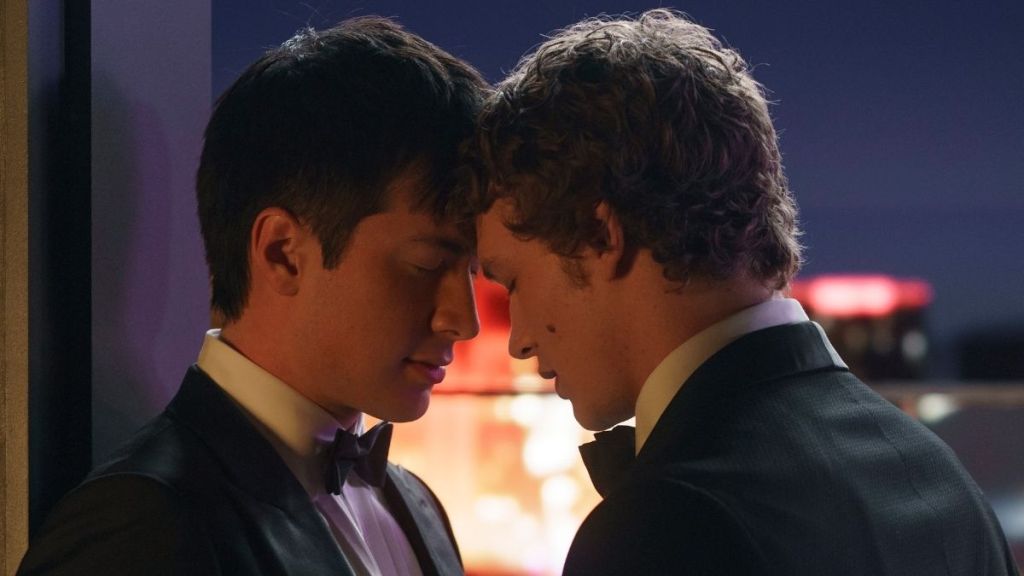
Let me start this first piece of the new year by reaffirming my belief in the power of cinema. By imagining other possible futures and turning them into art, we create space for their manifestation in reality. The hit Canadian TV series Heated Rivalry is already proving that excellent art can spark worlds to change. Created, written and directed by Jacob Tierney based on the Game Changers book series by Rachel Reid, this male-male love story of two rival professional hockey players, Shane Hollander (Hudson Williams) and Ilya Rozanov (Connor Storrie)— one an autistic Canadian lover-boy with his heart on his sleeve and the other an emotionally unavailable bisexual Russian playboy with abandonment issues — has completely taken over the culture.
And by “the culture,” I mean me. I’m obsessed with the show. I’ve reheated the rivalry at least 8 times already. It’s all I want to talk about. It’s the most perfect distraction during an unexpected strike of grief this new year and I keep going door to door like an evangelist, asking everyone I see if they have a few minutes to hear the good news about the Gay Hockey Show. And with good reason!
Full of smut and wholesomeness, Heated Rivalry will re-spark your flamed-out belief in romantic love and the possibility of meeting someone who can match your excellence (and your freak). Tierney’s incisive writing; the incredible cinematography; the dynamite performances of Williams, Storrie, and the whole cast; the editing; the addictive soundtrack; and two groundbreaking Happily-Ever-After endings for queer men make this one of the best seasons of television ever.
Though it centers on gay men’s relationships, with women very much in the periphery, much ado has been made of the large straight women audience, who, just like the women characters in the show, have been supporting it fiercely and driving this show to #1 around the world. Sure, we’re all absolutely feral for the two hot men with beautiful faces, great butts and steamy sex scenes. And yes, it’s about yearning, longing, desire, falling in love and much-delayed gratification. For me, it’s also nice to have a break from women’s bodies being gratuitously leered at and exploited the way misogynist filmmakers often do in steamy shows (see: Euphoria). On the contrary, Tierney’s lens shows Ilya and Shane’s bodies as desired, loved, reverent—almost worshipped—because we see them through the eye of the lover. (Sorry, Shane, I had to say it!)
We also see men being passionate and intentional, acting with that necessary bit of urgency about their love, rather than the nonchalance that plagues these stunted losers in real life. As opposed to common beliefs that women have too-high standards and want “perfection” from a potential partner, women’s love for Heated Rivalry shows that couldn’t be further from the truth. These characters are not perfect; they hurt each other, they miscommunicate, they are stubborn and oblivious to the needs of the other. But they’re also accountable for their own behaviors and apologize to repair harm. They address issues and change behavior for the better. What a concept!
But, a major draw for many is also seeing an emotionally unavailable man finally come around, open up and declare his love. To see Ilya’s incredible transformation from being emotionally closed off at their 2008 meet cute in episode one, to crying and baring his soul to Shane in the 2017 finale episode, it’s easy to get caught up in the rapture of love and hope and possibility. You’ll think of that ex…maybe I was too hasty! Let me just text that unavailable person and see if anything has changed…
And my love, I’m going to hold your hand when I say this: Heated Rivalry is a complete fantasy. It is Avoidant Man Propaganda. And in that regard, it is dangerous. Carrie Bradshaw didn’t suffer through more than a decade of ritual humiliation with Mr. Big over six seasons and two hideous movies for us to learn nothing from it! Emotionally unavailable men don’t become emotionally available in romantic relationships until they’re 60 years old with a heart condition and in need of a dutiful free nurse.

Stand up, girls (gender neutral). You don’t have nine years to waste! Don’t text that one. Leave ‘em where you left ‘em. (If you need more help, this incredible Thread breaks down the psychology of why people settle for less in love and how to stop!)
This game-changing show is calling us to something much deeper than rekindling an insecure anxious attachment to a dead end. The promise and hope that this show inspires shouldn’t be that someone else might change after all these years; Heated Rivalry is showing us how we could change ourselves—if we choose to.

(Paid subscribers and fellow HR obsessives can see my list of my favorite Heated Rivalry fan edits, video explainers, interviews and my HR Apple Music playlist at the end of the piece.)
Deconstructing Toxic Masculinity
Heated Rivalry may be better known for its sex and love stories, but the world of hockey couldn’t be a more brilliant setting to unfold multiple queer male romances.
The stakes are inherently extremely high for queer hockey captains Ilya and Shane (and the secondary couple, hockey captain Scott Hunter and smoothie barista Kip), as ice hockey is one of the most violent, toxic masculine, patriarchal sports in popular culture, with physical fighting listed as an “integral” part of the game. That aggression can also spill out of the rink, with National Hockey League players in real life being accused of domestic violence and sexual assault, and the NHL being the only professional sport of the top four n North America (NFL, NBA, MBL) with no standard domestic violence and sexual assault policy.
And despite the NHL’s efforts at “pinkwashing” (or using gay aesthetics to erase a history of homophobia, culturally and institutionally), the NHL is also the only sport of the top four with zero out gay players to this day. As Scott Hunter (François Arnaud) explains in his MVP speech for the fictional MLH in the finale episode, with millions on the line and a hypermasculine institution setting the tone, it is not safe to be openly gay in this sport.
Add to that real life culture fictional Ilya’s Russian homeland where anti-LGBTQ laws are rampant and even positive depictions of queer people—especially a show like Heated Rivalry— can lead to imprisonment or expulsion from the country. Unlike Shane, whose Canadian homeland has just the standard-grade homophobia where Shane could lose his job (considering, again that there are ZERO out players in the league), Ilya could lose his job and wind up a refugee if he were outed.
In that regard, being queer is inherently a challenge to the patriarchal structure that puts masculinity into a narrow box of aggression and domination. But on its own, queer representation is not enough. Look no further than the Log Cabin Republicans or Caitlin Jenner.
Showrunner Tierney, on the other hand, has done something crucial: he made a show that is both politically and culturally queer, in community with queer people. Harrison Browne—who made history by being the first transgender man to play professional hockey—has a guest starring role in episode 4 of Heated Rivalry as Ilya’s teammate. And trans actress Miss Niki Nikita appears briefly in episode 5 as Rose’s make-up artist.
Tierney has also taken the representation of queer love so much farther than we typically see on screen, by making sex scenes that aren’t gratuitous but reveal character, reveal story, reveal emotional growth. Take the (NSFW!) “frotting” scene in episode four, for example, an act that Shane does for himself and Ilya that is so intimate that Ilya calls him “Shane” for the first time, instead of Hollander. Shane reciprocates, saying “Ilya,” and it’s clear to both of them, by this sexual act, that they are more than a casual, years-long fling, but something deeper. Something terrifying. Which causes Shane to run away immediately afterwards.
But the tenderness, vulnerability and romance isn’t limited to the intimate spaces, like with Shane and Ilya. Tierney has also included Scott Hunter and Kip for the series’ most romantic grand gesture in episode 5, one of the greatest episodes of television ever made. Hunter calls his secret boyfriend of three years Kip, down to the ice to kiss on live international television as he celebrates his first Stanley Cup win. This inspires Ilya to believe in a future with Shane and accept Shane’s invitation to his cottage for the summer.
But Tierney doesn’t stop there. Knowing our level of anticipation to see Shane and Ilya at the cottage, Tierney edges us by opening the finale episode with Scott’s MVP acceptance speech instead. It’s a narrative beat that I found annoying at first because we literally just saw him declare his love publicly for Kip and we don’t need it again. Scott also gives two big speeches in the show, so my first instinct was that this one was overkill. But by the end, it’s clear: Scott is Heated Rivalry calling out the NHL. The institution that teases Pride nights and then cancels them when homophobic players protest; the league that pretends to care about queer fans only to let them down; and has an environment so hostile that—again, this is major—in 2025-2026, there are still no out gay players in the league.
Queerness and queer romance aren’t enough of a game-changer for Tierney. He’s using this show to make space for queer people and spark institutional change in real life. This is what the best cinema and TV can do and we can do it IRL too! Do some research. Ask yourself, what can I do to make queer people safer around me as an individual and within the institutions we share? And then do that!
Transforming Trauma into Love
Fans don’t call Ilya the King of Consent for nothing. Ilya and Shane’s first encounter aside — Ilya mistakes Shane’s erection in the shower for consent and an erection is not consent! — Ilya explicitly asks for permission to engage sexually with Shane at almost every turn. “Is this okay? Still okay?” He asks throughout. “What do you want to do? Would you like to [try this]? Did you like [doing that]?” King shit. Ilya’s paying attention to Shane’s body language when introducing the idea of anal sex for the first time and he sees that Shane is scared, even though Shane says he isn’t. Ilya immediately backs off and makes a future plan with Shane when he’ll be more ready. Even when he’s being a complete menace in the finale episode, teasing oral sex while Shane is on the phone with his best friend, Ilya makes sure to give Shane plenty of time and space to stop, and shows how sexy consent can be.
Considering Ilya’s history of being emotionally and physically abused by his police officer father and older brother, and living under oppression as a closeted bisexual in Russia, it’s not hard to believe that Ilya did not have an experience of being asked his consent often, if ever. Even the trauma of finding his mother dead after her suicide was not something he consented to. As a hockey player, as well, his job is to sell his body in service of a corporation and at the direction of a coach. It’s no wonder that Ilya’s frequent sexual encounters began as a rebellion and middle finger, not just to his father, but also hockey itself, represented by him having a forbidden fling with his coach’s son. Throughout all of his inability to consent in his life, Ilya has chosen to make consent front and center, transforming his trauma into the ultimate thoughtfulness and love for his partner, and himself. And we can too!
Flipping Toxic Tropes
One of the most devastating questions I’ve seen queer people ask before watching Heated Rivalry is, “Does one of them die at the end?” There’s good reason to fear that Ilya and Shane’s love story would somehow end in trauma. If there’s one thing Hollywood is committed to it’s the toxic Kill Your Gays trope. Even my favorite show of 2025, Andor, kills off its only brown lesbian badass. What this reinforces—not only for queer audiences, but everyone—is that tragedy is the assumed and normal end for queerness in real life. That is incredibly damaging to the psyche.
But this is not a Hollywood production. Heated Rivalry was made in Canada by small streamer Crave using public access funds. Most importantly, to ease any fears or nervous hearts: this is a true romance. Shane and Ilya are getting their Happily Ever After (or, more likely, Happy For Now) ending, as is characteristic of the genre, not only for those two, affectionately dubbed Hollanov, but also for Scott and Kip. This is still, sadly, groundbreaking, considering the few representations of happy queer life available on screen. With the success of this show, let’s hope that Thrill Your Gays is the new wave.
Another tired Hollywood trope Heated Rivalry attempts to subvert is the GBF, or, Gay Best Friend. This sassy friend is there for the hetero main character’s emotional support and growth, while having no life or interests of their own. Because gay characters are the center of the universe, with hetero best friends in the typical supporting roles, Heated Rivalry almost achieves it. Unfortunately, many of the best friend supporting characters are women of color. If I have any criticism of the show, this would be my biggest. Because the Black/Brown Best Friend is also a tired trope, and there’s no subversion by simply replacing a GBF with a BBF.
Svetlana (Ksenia Kharlamova), who is both Ilya’s Black Russian lover and childhood friend takes on the role of his emotional support system. She conveniently lives in both Moscow when he’s there in the summers and in Boston where they both work. She’s also an American citizen whom Ilya considers marrying for citizenship. She swoops in to save him from his father’s criticism at the Olympics gala and again from his brother’s wrath at their father’s funeral. She helps coax him into accepting his feelings for “Jane,” whom she knows is a man by episode 4 and probably even knows is Shane. What do we know about her, besides her father was a famous Russian goalie and she sells luxury cars? She loves Ilya, but besides being good at sex and willing to beat his brother’s ass for insulting her, what does he do for her?
And then there’s Elena. This queen, played by Nadine Bhabha, is Kip’s best friend who bursts Skip’s bubble by telling Scott that keeping Kip in the closet is killing him. She pushes them both to look at the reality of their situation, and reminds them both of the love—and sunshine!—that they deserve. And that’s why she exists. And finally, there’s Maria, Kip’s co-worker at the smoothie shop. A fan favorite, she exists affirm to Kip that Scott is flirting with him and say “girl!” in ever-increasing tones.
Tierney deserves credit for fleshing Svetlana out more than the books. And still the BBF trope is alive and well. It’s tricky because, while making these women white would successfully flip the GBF trope on its head as intended, the show would be a lot less diverse. And I love these characters and the actresses who play them. Hopefully we’ll get more depth for them in season two.
But what’s beautiful about these women characters, and Shane’s A-list celebrity lover-turned BFF Rose Landry (Sophie Nélisse), is the space they give the characters to accept themselves fully. When sex goes disastrously with Shane, Rose isn’t cruel or dishonest about it. She doesn’t fake it or pretend like it’s working when it’s not. Fully secure in herself and what she deserves, she doesn’t take Shane’s disinterest in her personally and actually launches a conversation that helps Shane come out as gay for the first time. It’s one of the most beautiful scenes, acted luminously by Nélisse and Williams, in the epic 5th episode, and is a blueprint on how securely attached people can be a loving, safe landing space for people to live in their truth and for real friendships to blossom.
My Threads feed and group chats have shown me countless people sharing that they’ve been inspired to seek hormone replacement therapy, accept their sexuality and/or gender orientation, or get tested for autism because of Heated Rivalry. That alone is an achievement that Tierney and the entire cast and crew can be proud of. And that means even more opportunities to build community with people who need support and love. When the opportunity arises to be someone’s Rose Landry—take it!
Dismantling the Patriarchy
Systemic patriarchy perpetuated by literal fathers is at the root of both homophobia and liberation experienced by the characters. Ilya’s stoic, cruel Russian father can only demean Ilya when he speaks to him. On the day Ilya is the #1 draft pick for the MLH, his father tells his new coach that Ilya is “lazy” and “lacks discipline.” Nothing is ever enough. (Bowlsha, Ilya, bowlsha, bowlsha, bowlsha, bowlsha!).
“I wish he could know me,” Ilya says of his father, but his father never created the space to know Ilya and never will. Ilya’s father won’t know that Ilya is bisexual; nor that Ilya is sweet and thoughtful and incredibly funny; a great leader, a great teammate, a great son—because Ilya’s father didn’t even know himself.
This is what patriarchy does. It teaches men to cut off emotions that aren’t aggression, making them distrust their own emotions, deny themselves, and be strangers to themselves.
This adds another layer to why showrunner Tierney was so genius to include Scott Hunter and Kip from Game Changer, the first book in the series, to the show. Like Hollanov, Hunter is closeted due to the aggressively toxic culture of their sport and the world writ large. Kip, however, is proudly open and secure in his sexuality with his loving family and friends as a generic, art-loving smoothie maker at Hunter’s favorite juice shop. And a major part of why Kip is so comfortable with himself is because of his loving father. Throughout episode 3, which is Scott and Kip’s standalone episode, Kip’s father tells him he loves him and even gets on him for not saying it back. When Kip lies to his father for two months when he first starts dating Scott, it’s not because he’s afraid of his father, it’s because he’s trying to be fiercely loyal to Scott’s need to remain closeted. But when being put into the closet by Scott is too much for Kip, Kip finally goes home to his father.
Noticing Kip’s distress, his father immediately opens up his arms to his son and lets him sob. He rubs his son’s back and comforts him and tells him it’s okay to cry—validation of emotions; physical touch; and audible crying, is a veritable checklist of what not to do under the rules of patriarchy. And yet here Kip and his father are, flourishing, even through a heart-break. By throwing out these patriarchal ideas of manhood, Kip’s father gets a chance to know his son and become even closer to him, sitting right next to him on the day Scott finally declares his love for Kip in public. Ilya’s father could never.
There was a good chance that Ilya would never know himself or know love either. Ilya’s father was probably once a boy full of as much love as Ilya is, and it was likely abused out of him too and he succumbed to it. In episode 5, though, Ilya takes that first step to open up to Shane about his traumatic past. Shane gives him space to speak freely in Russian simply for Ilya’s release, since Shane can’t understand, and it’s such a loving gesture that gives Ilya the safety to share his heart (and give us this pitch perfect monologue in Russian by Storrie who is not at all Russian but a West Texas boy. Storrie, the actor you are!). Later, after the All-Star game, Ilya chose vulnerability again, to be seen and to be loved by someone safe. This moment, where he cries and lets Shane hold him is immediately preceded by Shane coming out as strictly gay to Ilya. Shane’s vulnerability opens up the doorway for them to have this moment where they can no longer brush off their years-long sexual encounters as merely physical, emotionless flings (and therefore still in line with a toxic concept of masculinity). They’re in it, now: real, true love. And that love begets bravery.
Shane can be brave and come out to his parents because Ilya was brave enough to accept his invitation to the cottage. And Ilya’s brave because Scott was brave, and Scott was brave because Kip was brave and Kip was brave because Kip’s father was brave first, raising a healthy and loved gay kid. This is what liberty in community looks like. And they can only access it when they liberate themselves from toxic masculinity.
I look at Ilya and Shane’s actors, Connor Storrie and Hudson Williams, and how playful and loving they are with each other on the press tour for this show. Though they have not publicly shared their sexuality, there is already an (ignorant) assumption as to their identities because of the characters they play on the show. This assumption of “not straight” actually liberates them to be who they are and not hold back their apparent love for each other in public. They have nothing to lose, and everything to gain, as fans of the show fall more infatuated with them with every interview.
I think about the outcry from homophobes when Michael B. Jordan cradled the head of Ryan Coogler in a photoshoot for Vanity Fair. How frail cultural masculinity is when you can’t embrace your brother without backlash. To be so deprived of physically touching your male friends that you have to invent violent sports like football and hockey just for it to be excusable to have a man hold you for awhile. To invent a whole competition to win just to make it finally acceptable to kiss another man in public or slap each other’s asses. To think: men could’ve just been cuddling and holding each other and slapping ass with their men friends platonically all along, just because they love each other. This is what patriarchy stole from you!
We know too well the violence patriarchy enacts upon women and other non-men. But patriarchy kills men too and it starts in the soul.
Ilya could’ve had a soul-death and become the same empty, angry vessel his father was, until he forgot his own self and died, disconnected, without knowing and without being known. Instead, he was brave. He chose love. And we can too.
Healed Parenting
And that brings us to “The Cottage!”
I’ll just say it: the Heated Rivalry finale episode “The Cottage” should be required viewing for all parents, hopeful parents, and anyone with children in their lives whom they love. In the finale, we see Shane’s deep secrets—being gay and being in love with Ilya—accidentally revealed when Shane’s father David makes an unexpected trip to Shane’s cottage to recover a lost phone charger. (Dude, just buy a new one!) Panicked by the revelation and his own invasion of Shane’s privacy, David leaves without a word.
When Shane and Ilya come to David and Shane’s mom Yuna’s home to explain, David immediately apologizes for the intrusion (and the implied outing of his sexuality). Ilya, a child of abuse, is bracing for the worst. But David and Yuna, even in their confusion and shock, are warm. David pours Ilya a shot of Russian vodka even as he asks Shane if there weren’t any nice men in Montreal instead of dating his arch-rival. David notices Ilya chowing down on spaghetti and passes him the pot for a refill and hands him the parmesan, immediately accepting him as a son. Shane is clearly a well-loved son. And still, he didn’t feel comfortable telling them the truth about his sexuality sooner.
Overwhelmed and regretful, Yuna goes outside to think and Shane mistakes that for disappointment. He follows her and immediately apologizes to her for disappointing her. He’s always tried to be the perfect son and he tried to not be gay but couldn’t help it. She shuts him down and tells him he has nothing to apologize for, but it’s she who must apologize for not making him feel safe enough to tell her the truth.
THIS is the energy parents need to bring when a child of any age tells you their truth in a way that feels belated. The problem isn’t that they waited so long to say anything. The problem is the environment you created not feeling safe. Yuna gives her full and unconditional apology and asks for Shane’s forgiveness. He forgives her, and something deep-rooted is heals. Now, from this place of truth, Yuna can know her son fully, and gets a bonus son in Ilya that (spoiler alert for season two!) she calls her “favorite son.” (For two longtime rivals, it’s the sweetest, cutest scene when Shane melts at the realization that Ilya gets to have a mother again!)
The Trevor Project reported in 2024 that anti-trans laws in America have increased youth suicide attempts by 72%. These are our children. ALL OF OUR CHILDREN! And they deserve to live. Be the kind of parents—whether biological or as a community member—that makes environments safe for these children to live.
Stay watchin’,
Brooke
Enjoyed this piece? Tip your writer!
Paid subscribers and fellow HR obsessives can see my list of my favorite Heated Rivalry fan edits, video explainers, interviews and my HR Apple Music playlist below:


Leave a Reply