It’s Sundance week! As I head out today to snowy Park City, Utah for the Dance’s one last hurrah in its city of origin before moving to Colorado next year, I had to get this weekly watch off my chest. Honestly, after the feast that is Heated Rivalry, everything else tastes like ashes in my mouth, so keep that in mind as I review (and try not to mention how much better Heated Rivalry is than everything that’s out right now. Or maybe ever). I’ve also got a great paid subscriber exclusive for the second episode of BGW’s Another Possible World podcast coming (paid subscribers can watch the first episode here), and I hope to get that out this week, but if I get bogged down on the mountain, charge my limited capacity and not my heart, and know it’s coming next week, along with all my Sundance coverage. Let’s get into it!
The People We Meet on Vacation
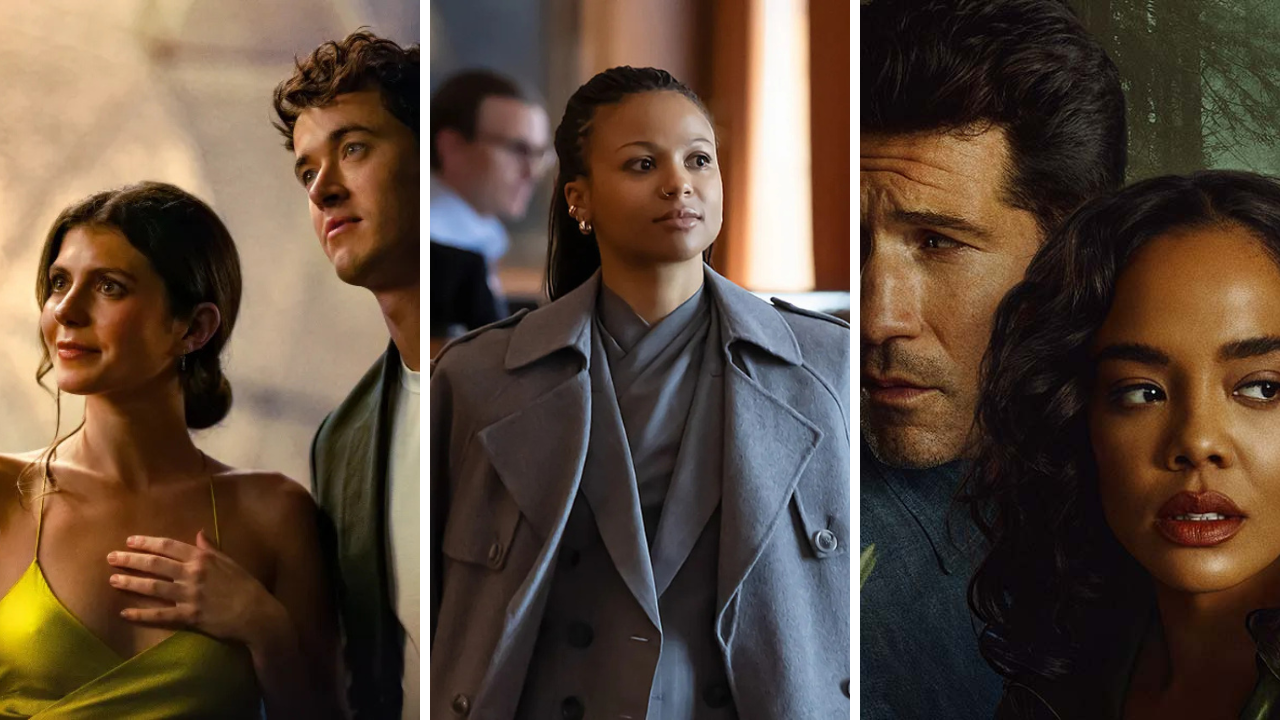
They tried so hard! Through the screen, I could feel the actors trying to make this “love” story about a “restless” woman travel writer who can’t commit and a sturdy Ohio boy (who only has a personality when he borrows hers) work. But, alas. Seriously, the boring boy, Alex, only breaks loose and “gets weird” on his annual summer trip with “best friend” Poppy, whose endearing quirks and spontaneous energy he adores—until, of course, he doesn’t. As soon as Alex wants to “settle down” immediately, Poppy’s quirks and spontaneity get reframed as Poppy being selfish, uncompromising and unserious. And she believes that about herself—that she “ruins” relationships with her “too much” personality. And sure! I found her personality grating, but girl, stand up! Don’t let some boring Linfield, Ohio man emotionally manipulate you into a commitment! Though, I admit, I laughed out loud twice, this tired rom-com represents the worst of the genre that reinforces for women that their lives have no meaning or depth unless they commit to a man. Everything else is a shallow and empty wandering through life, but not living. Everything else is vacation! But there’s no place like (a boring man in my) home.
Spoiler alert Poppy fully quits a job she begged to get—a travel writer who explores the world on the company’s dime and writes about it—on the off-chance that this boring bozo might want to stay in Ohio, a place that traumatized her in childhood. I literally yelled WHAT THE F%#@! at my television screen as Poppy quite literally chases her man down the streets of Linfield to get him back. Never mind that she hates Ohio. Never mind that she hates running! Doing all the stuff you hate the most in order to win a relationship is the proof of love. Yes, ladies, give up your dream job and return to the site of your trauma, so he knows it’s real. We’ve seen this eye-roll-inducing story over and over and over in the romantic comedy genre, but the joke’s on me for thinking we would never see such blatant patriarchal propaganda or such lukewarm chemistry in the year of our Lord Heated Rivalry 2026. Return to sender. Let’s never meet again.
People We Meet on Vacation is streaming on Netflix. But I’d skip it and reheat the Rivalry instead.
Industry
My Harpsichord is back, baby! Harper Stern (My’ha’la) the chaos demon of stock trading has returned for season 4 of the hit HBO show. Reuniting with her former mentor Eric (Kenneth Leung), Harper is set to raise hell on these white people in ways I will never understand because genuinely, after four seasons, I have no idea what investment banking or shorting stocks is all about, but I feel the tension and the drama, and truly that is enough. I’d be remiss, though, if I didn’t mention how empty, gratuitous and leering the sex scenes seem now compared to—I’m just gonna say it—Heated Rivalry. These scenes aren’t about pleasure, they’re about power, and perhaps that reveals something about Harper’s mental state—we know she’s a (metaphorical) killer. But it’s probably never going to sit right with me again, knowing how sex scenes can be done, and seeing the male show creators and directors Mickey Down and Konrad Kay direct their cameras over women’s bodies the way men typically do. Instant ick.
And while the premiere episode gets us off to the races by mixing in some new characters with our familiar team of traders, it’s expecting a lot of us to care about these newcomers in such a short time period. Kal Penn has a guest starring role and meets an end that should feel more gut wrenching than it actually is, for his fate to be the crescendo of the premiere. And episode two proves that Kit Harrington’s Henry from season 3 will continue to play a major role in this season as the billionaire royal-adjacent nepo failson that’s married to original team member Yasmin (Marisa Abela) and I promise you, I could not care less about his sob story childhood (though, trigger warning for suicide and suicide ideation).
I’ve always said that Industry is Gen-Z Succession, but Henry’s Kendall Roy-adjacent character is not the anchor of the show in the same way Kendall and his siblings were. Harper Stern is our center. And, like Succession, we’re supposed to know better than to sympathize with any of them, but to sit back and enjoy the train-wreck that is obscene wealth corrupt the human soul. Maybe giggle at their inevitable comeuppance. But Industry seems hell-bent on having us pity Henry, and, no, absolutely not. But, perhaps, as a demonstration of what depression looks and feels like, the episode is worthwhile. I’m down to see where the rest of the season goes. Just don’t make season 3’s mistake of shelving Harper! Keep her and Eric at the center, and I’ll enjoy the ride.
His & Hers
Deep Ancestral Sigh. Where do I begin with this Netflix miniseries of trauma and murder? Starring Tessa Thompson and Jon Bernthal as the titular his and hers, this thriller centers on a news anchor and a police detective who’ve been separated for a year in the wake of their infant daughter’s death. Now back at home in Georgia after disappearing without a trace, Thompson’s Anna uses the gruesome murder of her former high school classmate as a chance to get her job back at the news station. But when its revealed that her husband, Jack, had been with the victim the night of her murder, both spouses wind up being suspects as bodies start to pile up. Every episode presents a new twist and points to a new suspect, but the finale reveal of the killer(s) is anything but satisfying.
*Spoiler alert for the killers*
And, fine! I did wish I was watching Heated Rivalry the whole way through, I admit it! The opening scene of this show features a naked, twitching dead woman’s body! In fact, the number of times this naked woman’s mutilated body is shown in episode one is so gratuitous as to be enraging. And that’s just the first episode. Several women’s naked bodies are mutilated and the ending seems to suggest that the audience should be grateful for the graphic ways we witness these women’s bodies and/or deaths. In a move reminiscent of one of the worst, fake-feminist films I’ve ever seen, Promising Young Woman, the bad-guy men rapists somehow get off scot-free while the bystander or complicit women all meet their violent dooms. Cause this is feminism.
But worst of all, a story about white motherhood carelessly becomes a story about Black motherhood in this book-to-screen adaptation. Thompson, who also serves as the show’s producer, inherently shifts the conversation by being a biracial Black woman in the lead role. While the actress who plays her mother could’ve been white like the book character, the mother in the series is Black, but not present enough to be a full character to preserve the twist. The final twist relies on an expository confession, which works fine in a Knives Out mystery because the whodunit is always less important than the why. But His & Hers relies on solving the mystery of who without letting the killer cook. There’s no richness, no layers to the reveal, because the audience is just supposed to accept that experiencing racism or fatphobia, violence and grief is enough to mold a person into a murderer or, a prolific, grisly, serial killer of women only.
To be clear, I’m not against the final killer reveal—though, again, I think it’s just wack storytelling to focus on murdering women and not the actual male rapists who did all the raping. I just think you can’t take a white character and cast a Black actress in the role and leave it at that. Black motherhood onscreen doesn’t exist in a vacuum, but in a long, ugly, bastardized Hollywood context of stereotypes that pervert Black mothers out of being sources of life into vessels of death and destruction. Considering this context, more care should’ve been put into crafting this character and making them human so that when the reveal hits, we have reason to feel this path for the character was inevitable. In an award season that is hell-bent on awarding Teyana Taylor’s perversion of Black motherhood in One Battle After Another, it’s no wonder that His & Hers is #1 on Netflix. These stories told in these shallow ways will always find their audience.
28 Years Later: The Bone Temple
In a partnership with Sony Pictures last week, I wrote about this excellent film and its underrated Black woman director Nia DaCosta. Because I worked with the marketing team, I’ll refrain from an official review, but I had so much fun watching 28 Years Later: The Bone Temple in theaters and you can read my piece on Nia, ICYMYI last week, here, and watch the short video I made on IG:

And we’re ending where we began! I make no apologies. It’s so rare to be impacted by a show as much as I have been by Heated Rivalry, and I tried to explain why in my piece. I just want to embrace the way it’s taken over my life and all my conversations. I’ll be talking and thinking about the show for a long time. If you’ve been lucky enough to hear my in-person ravings about the show, you’re welcome!! I’ve been so inspired by the filmmaking in the Heated Rivalry, that I even made an explainer video about an editing technique I saw them use in episode 3, one of my favorite techniques, the J-Cut. Check out my explainer on this technique and why it proves that showrunner/writer/director Jacob Tierney and team were locked tf in when they made this perfect show:

I want to promise I’ll get over it soon, but I may never leave the Cottage of Loons. Drop a comment if you’re right there with me!
Stay watchin’,
Brooke


Leave a Reply