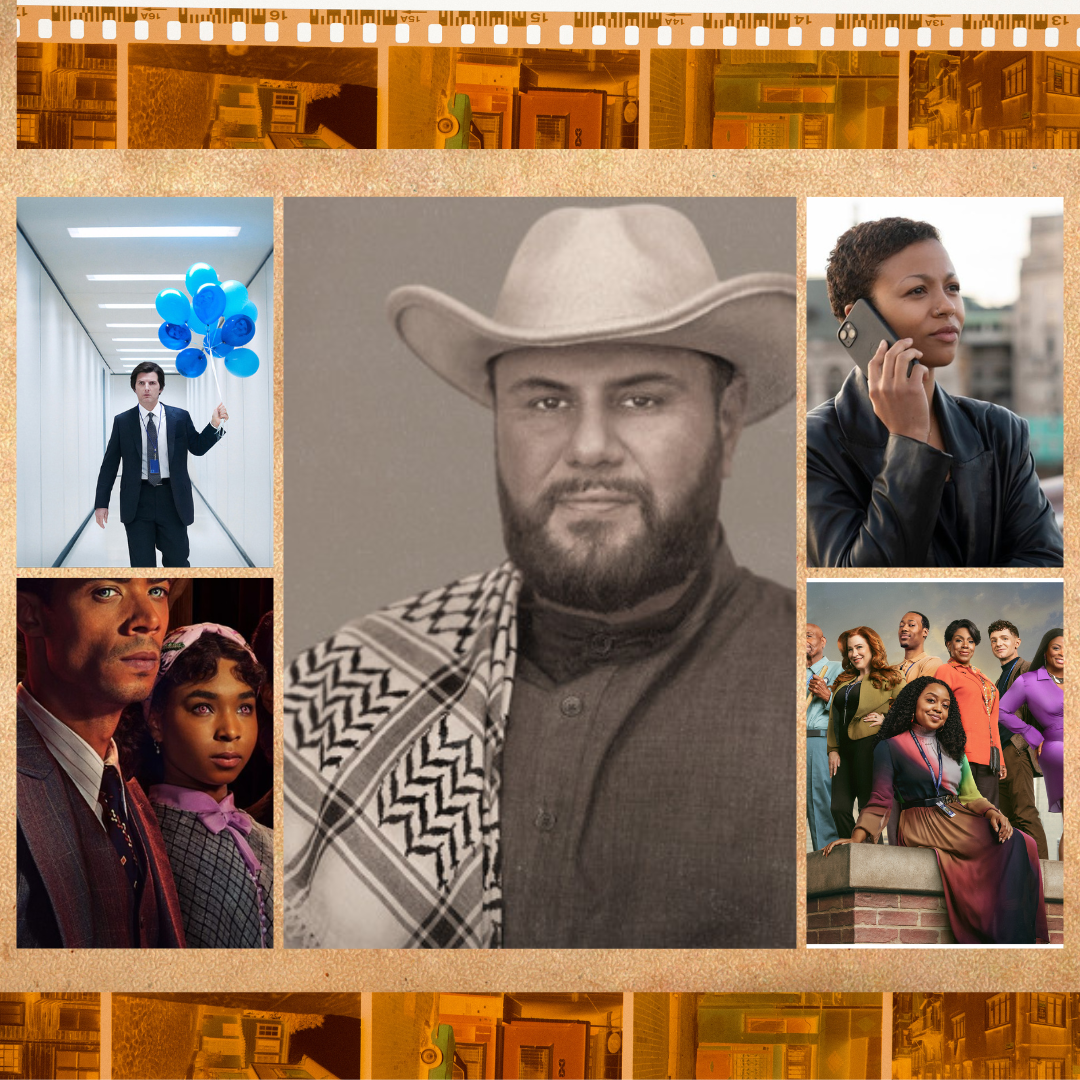
In the best of times, in the worst of times, we do language, as Toni Morrison says, and we make art. And these 10 incredible shows are nothing less than soul-stirring, heart-warming, fire-sparking art. Here are my picks for the best shows to watch on TV right now:
Abbott Elementary
This Black woman-led show about a group of passionate, under-resourced elementary school teachers is in its fourth season on network TV with a majority-Black cast and POC writers’ room. Throughout season four, Abbott has explored the impact of gentrification, labor strikes, and the ever-present racist education system —all while giving us goofy Black love and being laugh-out-loud funny in its, I REPEAT, fourth season! Already renewed for a fifth season, Abbott Elementary is a rare gift of a show that has only improved as the series goes on—giving us plenty of opportunities to tear up over its sweetness and cackle at the absurdity of the lovable cast of characters and their daily adventures at school. And we love when a series touches the heart both on and off screen—showrunner Quinta Brunson (whose mother is a retired teacher) and her team have been celebrated for the ways they have fiercely protected the cast of children on set and the staff during the writer’s strike of ‘23. And we’ve also seen Brunson use the show’s marketing budget to help teachers in Philly elementary schools get the funds they need for their classrooms. THIS is what great TV is all about: imagining another possible world and bringing it into reality.
Watch Abbott Elementary on Wednesdays on ABC and next day on Hulu.
Severance
If you haven’t yet read my deep-dive on Severance as a metaphor for how capitalism disassociates us from our bodies and our humanity to better control our labor, what are you waiting for? (There’s only mild spoilers in it for seasons one and two.) It is the best show on TV right now and I have not been this excited for a weekly drop of a show since Succession aired its final season in 2023. The show follows Mark Scout (Adam Scott) a grieving widower who has decided to undergo the severance procedure to work on the Severed floor of the mysterious corporation Lumon Industries. This is a brain surgery that severs his brain in two: his regular outside-of-work self (the “outie”) and his at-work self (the “innie”). He has no knowledge of what he does at work all day and his innie has no knowledge or memories of life outside of the Severed Floor of Lumon Industries, making the severed a corporation’s dream employees who can focus a full 8 hours solely on productivity and not breach corporate trust when they leave. What makes Mark and his co-workers choose something as drastic as severance is absolutely fascinating, and the answers continue to deepen and unfold over these first two seasons, along with what Lumon is up to and why they require their employees to undergo literal brain surgery to protect their nefarious secrets. Join me in existential crisis as the show makes us ponder such questions as: “who are we without our memories?” and “What does it mean to be human?” and “Who decides?” But my favorite lesson of the show so far is: Capitalism’s a b-tch, and then you revolt.
Watch Severance on AppleTV+.
Mo
In the season two premiere of Mo, now streaming on Netflix, the titular Mo is in a jam. Played by the stand-up comedian Mo Amer, who also created the show that’s loosely based on his life, Mo is a Kuwaiti-born Palestinian refugee in Houston, TX who’s been trying to get asylum for 22 years. Just months before his asylum hearing, he’s essentially kidnapped by the Mexican cartel and brought across the border into Mexico with no way to legally get back into America in time for his asylum hearing. When he has a chance meeting with the U.S. ambassador, Mo’s problems could disappear with the flick of the ambassador’s wrist— if Mo will just accept that there is an “Israel-Palestine conflict” instead of the truth: it’s an illegal Israeli occupation of Palestine. Mo refuses. This is the spirit of Mo and Mo: damn a career, damn the money, damn the platforms: it’s #FreePalestine and the truth or nothing at all. Extra points that Mo is actually hilarious in this scene that is also truly infuriating.
This is the beautiful balance the show creates. “We are more than just our pain,” Mo’s sister Nadia tells their mother who can’t stop doomscrolling through updates about the genocide in another episode. It’s a scene that takes you from crying to crying laughing when Nadia tells their mom to watch The Great British Bake-Off to unplug, and their mom starts back up again, reminding Nadia and the audience that Britain literally started this whole ugly occupation in the first place. No Bake-Offs for them!
I have not seen this level of integrity in a show centered on Palestinian characters since Hulu’s Ramy—probably because Mo and Ramy are the only two Palestinian-led shows I’ve seen on American TV. Executive produced and co-created by Ramy star Ramy Youseff, Mo is also the only Palestinian show on TV currently (Ramy is on a long hiatus before an eventual fourth and final season). And despite (or perhaps because of) its heavy themes, Mo is even stronger, funnier and more heartfelt in its second season as Mo grapples with the consequences of the draconian U.S. immigration system, the ongoing U.S.-Israeli genocide in Palestine, and his own poor choices in a world that gives him no good choices in the first place.
Being so close to the Mexican border in Houston, Mo incorporates the struggles of not only Mexican and other Hispanic immigrants, but also other Arab immigrants and West African immigrants as well, with supporting character Tobe Nwigwe’s Nick playing a first-gen Nigerian-American. If I have one complaint about this otherwise perfect show about global solidarity of oppressed people in struggle, it’s Nick’s (or Tobe’s) use of “nigga” to refer to Mo and his other non-Black friends. Thankfully, Mo doesn’t use the word nor do any other non-Black people in the show, but I cringed every single time Nick/Tobe did this. Just…why??
It’s corny, wack and anti-Black when Black Americans do this with non-Black folk too, but there’s an extra layer here of disrespect that’s specific to Black American culture when a word we flipped and reclaimed for ourselves is co-opted for use with non-Black people. Season 2 is rumored to be the final season, so they can’t address this in a season 3 (but there’s still time to let me in the edit bay! I’ll fix it!). But because this show is so good at highlighting a diverse group of intersecting struggles—including a really touching storyline about how disability is handled in the Palestinian community when his older brother finally gets diagnosed with autism in mid-adulthood—it really sucks that they dropped the ball when it comes to respecting Black American culture.
Otherwise, the entire Mo team has made one of the most important shows on TV under an extreme amount of pressure to address genocide and apartheid while still being funny and showing Palestinian joy as revolutionary. I dare y’all not to cry in the finale! And major kudos to Youseff and now Amer for taking every opportunity to make major studios pay for your trips back home to Palestine!! Run those Netflix and Hulu pockets for freedom and the right of return, IKTR!
Watch Mo season 2 on Netflix.
How to Die Alone
Well, this one sucks—not the show, of course, but the news that just came out that Natasha Rothwell’s How to Die Alone has been canceled after only one season at Hulu. The comedy series followed creator and star Rothwell as a dysfunctional airport worker who has a near-death experience while abandoned and alone on her birthday and decides to totally change her life—for better and for worse. In the 30-minute sitcom, Rothwell tackled issues of Black women’s loneliness, navigating the world in a fat body and finding purpose and self-love after 40. The only other show like this might be Survival of the Thickest, whose season 2 premieres on Netflix soon. But Rothwell’s witty, funny, heartbreaking show deserved more seasons to find its footing.
Watch How to Die Alone on Hulu before they take it off the platform!
Industry
If you miss Succession like I miss Succession (I’ve now mentioned Succession like 3 times in this one newsletter—I miss Succession!!!) then you’ll love its Gen Z fail-daughter, Industry. Another Sunday night HBO show that’s finally getting its due in its third season, Industry follows Harper Stern (a deliciously villainous Myhal’a) an investment banking prodigy (read: sociopath) and her entanglements with an industry that punishes weakness and rewards ruthlessness. “You’re not a killer,” Succession’s Logan Roy tells his son Kendall as to why he’ll never lead the family business, and let me tell you: Harper Stern has no such problems. What’s hilarious is that Succession actually explained hostile takeovers so well over the show’s four seasons that I understood exactly what was going on when Elon was forced into upholding his pledge to buy Twitter. But after three seasons of Industry, I have zero clue about investment banking and what it entails other than it’s absolutely evil, soul-rotting work—and that’s all I need to know. They say so much financial jargon and I don’t understand a word—sorry to that industry! But the audience doesn’t need to understand investment banking to enjoy the series because the actors’ faces tell us everything we need to know to either be in rapture or total suspense as the numbers on the stock market ticker tape go up and down. Season three focused less on Harper in the beginning to its detriment—we need our Harpsichord front and center!!—but it’s still a thrilling ride. She is the moment. Harper’s absolutely unhinged behavior makes this show a rollercoaster that will have you screaming at the TV and biting your nails for the next episode.
Watch Industry streaming on Max.
Interview with the Vampire
If I could describe my favorite vampire adaptation in one word it would be: genius. Though as a child, I loved the campy, homoerotic ‘90s film with Brad Pitt, Tom Cruise and a (way too young!) Kirsten Dunst, that movie was more than a little bit racist. Brad’s Louis was an offensively “good” enslaver of Thandi Newton (et. al) on a Louisiana plantation in the 1700s. And the film actually toned down Louis’s racism—it’s nothing compared to how blatantly racist he is in the Anne Rice’s novel of the same name. So when the showrunner Rolin Jones was adapting Rice’s Vampire Chronicles series, he or someone on his team, had the, once again, genius, idea to make Louis Black, change the time period to the early 1900s, age up Claudia from 5 to a teenager so she could be played by an adult (who is also Black!!!!). Lestat, the infamous vampire devil, is still a centuries-old Frenchman, but instead of the blatantly homoerotic subtext of both the novel and the movie, the series is blatantly homoerotic text: an all-out interracial, interspecies (for an episode) “romance” —which I use loosely because trigger warning: domestic violence!
Instead of an enslaver, 19th century Black creole Louis de Pointe du Lac (played with such depth and longing by Jacob Anderson) is a pimp in New Orleans’ red light district. (Again, genius!) The grandson of an enslaved creole son of an enslaver, Louis comes from a Black family that inherited money and land. Unable to find “respectable” work for a negro in the quarter, he turns to the city’s underbelly and sets himself up as a capitalist on the rise. Rejected from society by race and from his deeply religious family because of his suppressed sexuality, Louis is an easy target for the charismatic Lestat’s promise of ultimate power, self-acceptance, eternal life and eternal love through vampirism.
“Come with me,” Lestat (a terrifyingly seductive Sam Reid) coos to Louis in the pilot episode. “Be all the beautiful things you are, and be them without apology for all eternity,” Lestat promises, and who wouldn’t be tempted with romance like this?? Of course, this moment takes place in the middle of a Lestat-induced bloodbath (in a church, no less!), if that’s any indication how Lestat’s “love” will be. The racial and sexual implications of an interracial gay couple with a HUGE power imbalance and an adopted biracial Black daughter in the early 1900s adds so many intersecting layers that a boring, all-white remake would never have touched.
After a stellar season one, which covered the events of the first half of the novel, season two finishes book one of the series and focuses on (my favorite topic) grief, the malleability of memory, and—as all vampire lore does—what it means to be human. The actress who plays Claudia in season one (Bailey Bass) is replaced by British actress Delainey Hales for season two due to scheduling conflicts, and though unsettling at first, the cast change also ends up being perfect for the storyline. Louis is narrating both seasons via the title’s premise: an interview with the aging journalist Daniel Malloy (a scene-stealing Eric Bogosian) whom Louis once tried to confess his sins to back in the 1970s.
Now in the covid-pandemic-riddled 2020s, Louis tries again to get a now-sober-yet-dying Daniel to write his story. But his memories of Claudia are so clouded by time and grief that of course how he remembers her in the early part of her life in season one greatly differs from how he remembers her during the events in the past in season two as a grown woman trapped forever in a child’s body. Though both of actresses’ New Orleans accents are hilarious (Bailey’s is more camp, Hales’ gives up by the end of the series) they both do such an incredible job with the version of Claudia they play that I can’t imagine either of them playing the other’s version, even for consistency’s sake.
Though season one has a more in-depth focus on race— having fledgling Black vampires under the thumb of a white one with a centuries-long head start—season two could’ve done with more racial and gender analysis. (Hire a Black woman writer in your writers’ room, Rolin Jones!) Our favorite vamps may have escaped Jim Crow by fleeing to Europe, but there’s no way the violence Louis and Claudia face aren’t rooted in both race and for Claudia, being a Black girl. But that’s my only quibble.
Another anti-capitalist banger, this series shows that, even when you sell your soul to the devil, there’s no such thing is equality for Black people under white supremacy and capitalism. I’m not *quite* sure Louis gets that message, but I can’t wait to see how it all shakes out in season three, which covers the second Rice book in the series, The Vampire Lestat.
Watch Interview with the Vampire on AMC+ with this 30-Day Free Trial code: AMC30FT.
Shrinking
Who misses Schitt’s Creek? This AppleTV+ dramedy series about a group of therapists and their wacky clients might be just the fix you’re looking for. Admittedly, the premise is far less funny than Schitts, which centered on a once-wealthy family that has to slum it in a motel of a town they bought as a joke once. The main character of Shrinking is a grieving widower therapist (Jason Segel) whose alcoholism and drug use has made him an absolutely terrible father to his high school aged daughter. As he vows to get his life back on track for her sake, he winds up doing some incredibly unconventional therapy to help his ailing clients and himself. Rounding out the cast of therapists is a fantastic Harrison Ford as the grumpy but wise head of the practice, and the always charming Jessica Williams (if you were worried about her being too hot to be hooking up with Jason Segel’s character in season one, don’t worry, they rectify this in season two!).
How on earth is this show like Schitt’s Creek? I’ll just say you’ll feel good after watching it. As much as it’s a show about grief, it’s also at its heart about healing. You’ll see a path to another way we humans can be with each other and build community, even in the most depressing of times. And if you could make a show like that, why not make that show?
Trigger warning: there is a plot line about extorting a loved one into forgiving someone who has harmed them that I did not love! But it does open up an interesting abolitionist premise for season three about what we as a society do with people who cause harm and what harm-doers can do to repair harm, which is well-worth a watch.
Somebody Somewhere
In keeping with my favorite theme, Somebody Somewhere follows Sam (phenomenal star and show creator Bridget Everett), a 40-something who moved back home to Manhattan, Kansas, to care for her cancer-striken sister, and is now stuck there in her house in the wake of her sister’s death, trying to figure out her life. To call Sam’s relationship with her remaining sister Tricia (a fantastic Mary Catherine Garrison) “difficult,” is to understate their level of ire towards each other. And with an alcoholic mom and a weary father, Sam finds comfort and true friendship with her old high school classmate Joel (a heartbreaking Jeff Hiller). This lovely little show—small in scope but with a huge heart—might be way more Schitt’s Creek than Shrinking, as it similarly centers on queer characters in a rural town who find the community, love and acceptance that they never thought possible before. This is such a character-driven show that there isn’t much to say about the plot over its three (and sadly final) seasons. It’s a slice of the lovely kind of new life that proves you’re never too old to open your heart and start again.
Watch Somebody Somewhere on streaming on Max.
Squid Game 2
I am a total wuss when it comes to on screen violence and especially gun violence. I close my eyes and plug my ears until its over. I hate it. And yet I cannot get enough of Squid Game. After a blockbuster season one, which followed a goofy, deeply in-debt father, Gi-Hun, as he unknowingly signs up to play deadly childhood games for a chance to win a fortune, the Korean series is back for a second season. This time, on this edge-of-your-seat thriller, there’s a team effort to dismantle the games that exploit the working poor and mimic a society that’s artificially constructed by capitalists to kill and oppress the majority of people while rewarding the smallest possible number with a chance to escape poverty. Though haggard and weary from his season one exploits, Gi-Hun is not that much wiser and still makes the goofiest most naive mistakes possible, leading to the second season also ending on a cliffhanger, like the first. The main cast of season two try their best to rebel against their capitalist overlords but show what can happen to the revolution when you’re outgunned, outmanned and out-planned. Though substantively more than a bridge-season, it’s clear there’s much more story left to be told and the third and final season which was shot simultaneously, will air later this year, so you have plenty of time to catch up on the mega-hit before the series finale drops.
Like Severance, Squid Game the series (and its grotesque, yet unfortunately entertaining reality show spin-off) is another anti-capitalist saga that just so happens to be making its streamer A LOT OF MONEY. Unlike Severance, Netflix bought the rights from the show’s sole creator, writer and director, Hwang Dong-yuk, and made $900 million, of which Hwang received zero royalties and lost six teeth from the stress of making season one. How’s that for life imitating art? Hopefully, he negotiated the hell out of the contract for the second and third seasons that Netflix begged him to do, and got some good tooth implants. But it does beg the question: is consuming anti-capitalist art pushing us to uproot the system or placating us with the idea of watching TV with good politics as our sole act of resistance while the studios and streamers make obscene amounts of money that the most exploited laborers never see? I guess that’s up to us.
Watch Squid Game season 2 on Netflix.
We Are Lady Parts
You are simply not ready for the JOY that We Are Lady Parts will bring. Centered on a fledgling British muslim college womens’ punk rock band of the same name, this 30-minute comedy wrestles with Islamophobia and anti-Black racism in London, sexism in the music industry, and female rage. My favorite hijabis on TV are back for a second season where their band’s newfound virality challenges them to define who they are and what they stand for, as the struggling musicians are faced with an opportunity to sell out for a (much-needed) check. I love everything about this show, from the specificity of a diverse group of Muslimas’ lives in London to the absolute bops the women sing on the show. Give me 10 seasons and 10 albums, now! Though there’s no word yet on if a third season is coming, you can listen to their bangers on YouTube.
Watch We Are Lady Parts on Peacock.


Leave a Reply