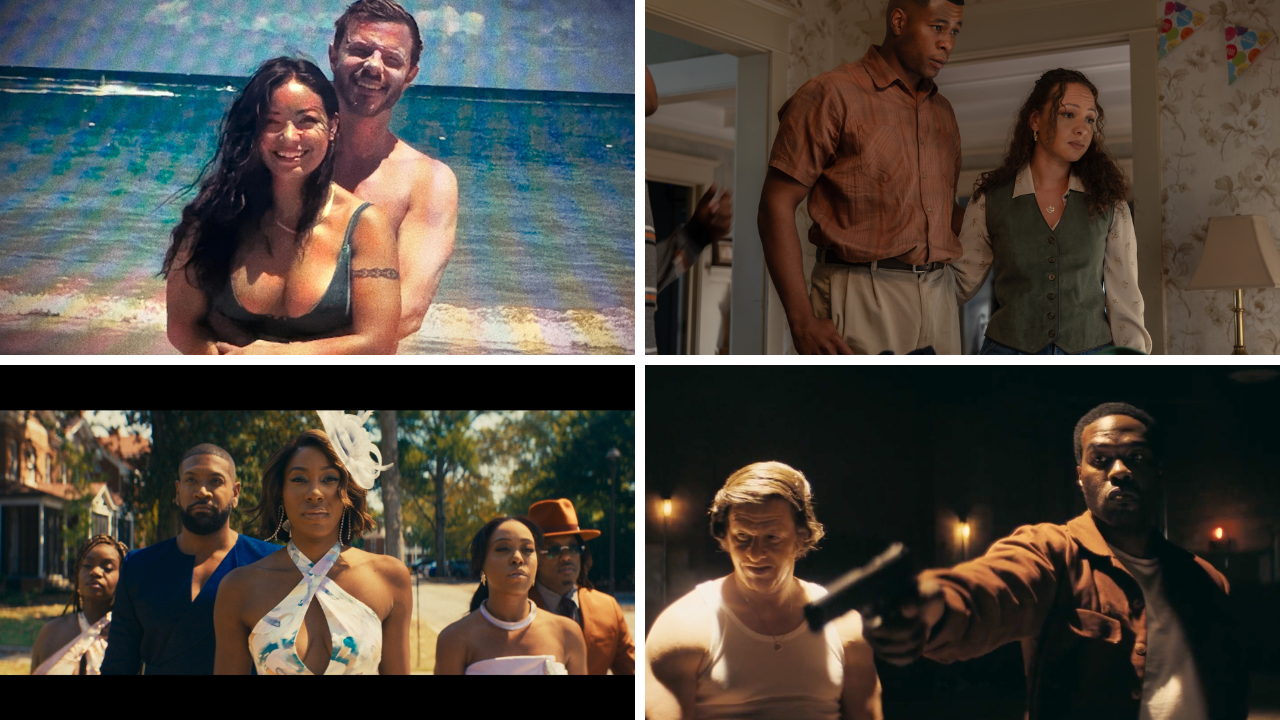
Happy September! This week’s streaming fare has the internets on fire with folks trying to take down a (serial killer?) pastor; white folks losing their minds over their favorite superhero being labeled racist, but is that enough to make it a Black show? Also, our favorite undeniably Black Scooby-Doo gang gets one step closer to buried treasure—and two steps back. And finally, one new film that portrays a real civil rights leader is being called out by the leader’s widow and son as a “white savior film” that we should boycott. Here’s Your Weekly Watch for September 4th!
The Death of the Pastor’s Wife

Netflix is back with another salacious true crime docuseries, and as usual, I’m noticing the difference between a doc with an interesting subject matter and a doc that is well done. Over three episodes, The Death of the Pastor’s Wife follows the death of Mica Miller, first lady of Solid Rock Church in Myrtle Beach and wife of the pastor John-Paul Miller, two days after she served him with divorce papers. Of course, JP had a history of abuse with multiple women/wives; of course suspicious death also surrounded him prior to Mica’s death. And of course, the church system that should’ve protected Mica and the women before her protected JP instead.
In the docuseries, Mica’s friends and family tell her story, beginning with her leading the praise and worship team at JP Miller’s church, when she was 16 years old. She later became his secretary and her friends and family describe Mica’s relationship with her significantly older male boss and “spiritual” leader as an “affair.” This is the first systemic failure Mica suffered in this church. This was not an “affair” with a married man, this is evidence of grooming since her teen years, sexual coercion and abuse of power over an employee to the highest degree. And no one in the docuseries points that out. Instead, they all reinforce JP’s narrative that this was a shared “sin” that he and Mica participated in. And it would take both of them marrying each other in order to correct the “sin.” This Christian framing of marriage as a way to “wash away” all sin, was the nail in Mica’s coffin—and it is not unique to JP Miller spouting it or Mica believing it.
Growing up in church, I often heard women talk about being “covered” by marriage—that all of their pre-marital sexual sin would be erased the second a man married them and made them valid, cleansed, holy women. The power that men have, to be able to liberate women from sin simply by erasing their old identities and giving them a new one with a new last name. This is patriarchy: the elevation of men to the detriment of women, children and everyone else who isn’t a man. When combined with religiosity—God the Father, not the mother—then we have a system of oppression that cannot be questioned because it is ordained by God and do you know what the consequences are for disobedience to God?
JP used this old hat on Mica often. In fact, he’d use his pulpit time to shame her into submission, quoting from 1 Corinthians 7:5 which talks about spouses not denying each other sex lest temptation lead them astray. JP was a serial cheater, not just on his first wife with Mica, but on Mica as well. Instead of being responsible for this, he would manipulate scripture and blame her for not being interested or able to keep up with his 4-times-a-day sex addiction. And she believed herself to be failing him, writing in her journal about how much she wanted to be a wife who would please God but kept getting it wrong. This level of brainwashing of girls and women to be doormats for men as a sign of our holy devotion starts in childhood. And Mica being 16 when she became a leader in his church and subject to his teachings and control should’ve been contextualized within a framework of patriarchy and misogyny.
This is my problem with these true crime documentaries and docuseries. They love to exploit the depraved details of a crime or series of crimes, but they repeatedly fail to contextualize these details. A documentary isn’t a narrative film; it should inherently have a higher purpose than to titillate or entertain. A woman is dead. And so many more women in abusive marriages to men whose power and control are upheld by the church are in danger right now. There should be an objective expert who can speak to how patriarchy and misogyny in the church work together to create spaces ripe for the abuse of women and children. Otherwise, what’s the point?
Even in 3 episodes, it appears that Netflix didn’t bother telling the full depraved story of JP, touching only on his abusive father and not on his abusive son, showing at least three generations of absolute creeps in this family, as well as the early allegations of sexual assault against JP. Instead of holding JP accountable, his raggedy pastor father moved the family and their church to Myrtle Beach, putting in motion a chain of events that would allow JP to ruin multiple lives and lead to the deaths of his wife and his mistress’ husband. JP is currently facing federal charges unrelated to Mica’s death and has married his mistress. They lead a new church in a new town. Because the grift of religion seems to always make space for these kinds of abusers, and there’s always a congregation for which abuse of women and children is not a deal-breaker.
Watch The Death of the Pastor’s Wife on Netflix.

If you’re interested in more stories about women—and specifically Black women—decolonizing from the church, I’m reading an advanced copy of my friend Deesha Philyaw’s debut novel The True Confessions of First Lady Freeman fictionalizes what many a former church girl knows about purity culture and rampant misogyny in the church. Pre-order from a Black bookstore here.
Lanterns (s1 e3)

I’m strugglingggggg with this new DCU Black-ish superhero show. Three episodes in, and I am simply not compelled, for two main reasons. First, I’m mad. J. Alphonse Nicholson is one of the greatest actors of our generation and he’s continually sidelined for someone lighter, someone British, or in the case of Lanterns, someone both. Nicholson literally looks like Green Lantern comic book-accurate John Stewart. He’s Black American. The character was literally based off of dark-skinned Sidney Poitier. So how did light-skinned, light-eyed Aaron Pierre get in it? Even if it’s to a lesser degree than Black women, colorism absolutely impacts Black men in Hollywood as well.
It doesn’t help that Lanterns showrunner Damon Lindelof has a recently uncovered history of racism and sexism detailed in the explosive Hollywood tell-all book Burn it Down. Though he’s made some of my favorite shows, Lost and The Leftovers, these details of his choices as a writer and showrunner recontextualize the racism on screen— especially in Lost— so the colorism in Lanterns does not surprise me.
Nicholson is instead cast as John Stewart Sr., a Marine who appears in the first episode to be a psychotic, abusive father to his light-skinned son, shooting an apple off of his child’s head in the first five minutes of the premiere. This week’s episode thankfully fleshes out Nicholson’s character—and that shooting habit—a bit more, but the optics of that opening scene were so awful that I was ready to give up on the show. As we learn in episode three, it wasn’t John Stewart Sr.’s idea to shoot the apple, but the child’s idea, with encouragement from the child’s light-skinned Black mother Bernadette. I’m not sure how much better it is that the mom is driving the child abuse to prepare their young child to be the next Green Lantern. Now the whole family looks crazy. (I’ll get back to this in a minute.)
While I’m glad that episode three allows Nicholson more time to flex, comparing the work he’s putting in to what I’m seeing from Pierre just gives me flashbacks of They Cloned Tyrone, where Nicholson must’ve auditioned for the title Black American role, but got cast instead as the foil to John Boyega’s Tyrone. We’re once again seeing the narrative that Black Americans simply aren’t good enough to play the leads of our own stories, even with all evidence to the contrary staring right in our faces.
Second, Lanterns is copaganda.
It appears the original character of John Stewart was meant to be a militant, anti-authority Black Power super hero of the 1970s. But in the 2000s, John was retconned into a former Marine without the militancy. It surprises me none at all that Damon Lindelof—who’s never met a cop main character that he didn’t like—chose to go with the white-washed Winter Soldier version of John Stewart than the actual Black Power superhero of the original. This is why I continue to be baffled by Black people fawning over this show and how “Blackity Black” it is. White people have also begun melting down and review-bombing the show because John’s mentor, Hal Jordan, is being correctly identified by the show as a racist who benefits from white supremacy. Surely, I thought, John Stewart must be burning down a plantation owned by Hal in episode three, the way Black and white audiences were losing their minds over it.
Turns out, John’s mother Bernadette (played by Jasmine Cephas-Jones) simply said Black men have it harder in America than a white man like Hal Jordan. The Green Lantern mantle first came to Nicholson’s John Sr. but when it asked him if he was afraid, he said “yes” and that was a deal-breaker. Green Lanterns are supposed to be fearless. Meanwhile, when the mantle asked white Hal Jordan instead if he was afraid, he said no and was therefore chosen to be the new Green Lantern, ruining the Stewart family’s lives. First of all, I thought it was common knowledge from all the dare-devil, unicycle-on-a-tight-rope-over-the-Grand-Canyon thrill-seeking I see online that the only thing white folks are scared of is Black people. Why was it so controversial for her to say that white men—the hoarders of the most power on the planet—have less to be afraid of in the world than Black men? And why was this simple statement enough to make Black people feel so happy and seen by a show about abusive Black parents who strip their Black child of his humanity so that he might be a superhero in service to the U.S. government and aliens dressed in white people suits? I am so confused.
When the alien (Guardian of the Galaxy? I’m not up to date at all on DCU lore) comes by to apologize to John Sr. for traumatizing him in the Green Lantern selection process and then not choosing him because he was afraid, the alien instead finds his wife with a baby John Jr. in her arms and gives her a huge diamond as reparations. Why wasn’t that enough for this family to retire and find some peace? Why didn’t they take that financial boost and set themselves and their children up to be sheltered from as much danger and inhumanity as possible for a Black family in America? Why instead did they choose to make a Black robot child who would neither fear nor love, who would kill on command and sit still in one place over night just because a white woman told him to “have a seat”? What is Black about any of this?
Writer Vanessa Baden Kelly spoke recently about how the Lanterns writers room originally had looked to Tiger Woods’ father Earl and Serena and Venus’ father Richard as models for John Sr., to make him a character who was obsessed with making his son exceptional at any cost. As if jingling keys to distract Tiger Woods as he golfed or making Venus and Serena play tennis in the rain is comparable to shooting an apple off their head. Kelly also spoke about her insistence on the presence of John’s mother and the choice to make her the one in control of young John’s brutal training, as if it were some ground-breaking feat to make Bernadette a deranged soccer mom.
Making characters bad parents doesn’t inherently make them interesting—especially when negative stereotypes about Black parents already abound. In order for this to be a show that interrogates how Black parents can raise their children to appease white supremacy for their survival, the Black characters are going to have to talk to each other about that specifically or be challenged on it by some other Black people for perspective. As it stands, the only Black people in the show are in this one family, and both parents have gone full abuser. They have no Black community to say “This is some white people sht!” So the parents proceed as if this is normal and logically behavior.
Even a Black woman writer of this episode is not enough for me to call this a Black episode, let alone a Black show. In fact, knowing that a Black parent’s deepest fear in America is their child being gunned down by the police, it makes it a thousand times worse that a Black woman wrote this. In what world does a Black mother encourage her Black husband to shoot an apple off of her Black son’s head or abandon him in a strange part of town to walk home in the dark alone to eliminate fear? It’s absolutely nonsensical, outrageous and poorly written. I’m appalled that this episode has been so widely praised.
The least interesting thing about the hoopla surrounding episode three is white fans melting down over the show “ruining” Hal’s character by making him a racist white man. Hal is so canonically racist against John Stewart in the comics that it’s mentioned in John’s wiki page that the Guardians remark on Hal’s bigotry towards John, which is as deep a dive as I’m going to do on this. A white man being angry about a Black man taking his job is about the least surprising set of events in this superhero fantasy. Contrary to John who is all too willing to follow Hal’s orders and play fetch with obedience, if not to Hal, then to the Guardians who chose him, Hal Jordan is full of disdain for authority. The Guardians don’t like that, which is why they want to replace Hal with the more subservient John. I simply do not understand why white supremacists can’t see when a piece of media is lowkey on their side.
If Hal’s rebelliousness sparks in TV show John the revolutionary, anti-authority spirit of the original comic John, I’m going to have to label this a white savior show. My trust in the team from what they’ve created in these three episodes is zero. Time will tell.
But I’m not holding my breath on the show turning out to be revolutionary or particularly Black because Hal and John are literal Space Cops. And everyone knows all cops are bastards.
Watch Lanterns on HBOMax.
Diarra from Detroit (s2 e7)

This week’s episode of Diarra from Detroit “Guess Who’s Coming to Dinner,” is elite TV. In the penultimate episode, our favorite Ghetto Goonies are closer than ever to finding the buried treasure, but now the head gangster played by Bokeem Woodbine (the good twin of evil Dave Chappelle) is a big obstacle to their success. And for all the Danger-truthers who believe Diarra and Danger should be end-game, the two finally meet again after a whole season where Diarra believed him to be dead and Danger did nothing to dissuade her of that notion. Even his new white girlfriend has questions after the passion flies between Danger and Diarra when they reunite. If she really breaks up with Chris for Danger, she won’t be a bit more safe, since he’s also got a bounty on his head like Chris did. But Diarra is a messy bih who lives for drama, so she might just be here for it. The line of the episode belongs to Shoniqua Shandai who plays Diarra’s cousin (and Moni’s replacement this season?) Raqueeba: “There are niggas with guns. Please emotionally regulate.” I will be using that one for sure.
The season two finale is next week and it ends with a very big bang and a cliffhanger that begs for a season three. Get to greenlighting, Paramount!
Watch Diarra from Detroit on Paramount+.
By Any Means
As soon as I see a film with the words “starring Mark Wahlberg,” I’m out. So I was never the audience for the new film By Any Means. He has multiple violent attacks against Black and Asian people on his record that he’s tried to have expunged or pardoned over the years, but I will never forget his disgusting racism and I will never support anything he does. Since he’s been trying so hard to redeem his public image, doing things like presenting the SAG Award to the Asian cast of Everything Everywhere All at Once, it’s no wonder he’s now starring in what’s being called a white savior film where he can paint himself an ally to the very people he brutalized.
By Any Means follows Wahlberg as a mafia boss who teams up with a fictional Black FBI agent (Yahya Abdul-Mateen) to solve Klan murders of real Black civil rights leaders. Irony of ironies. One of the murdered leaders fictionalized in the film is Vernon F. Dahmer, Sr. Apparently, his widow Ellie Dahmer believed the film would be a true retelling of what happened to her husband and initially participated. Instead, it became something the family objects to and is asking people to boycott. Hear the family in their own words and of course make your own call:
Stay watchin’,
Brooke


Leave a Reply