****Trigger Warning: child sexual assault allegations****
Paid subscribers can watch more Michael Jackson videos below the fold.
In early February 2026, a new batch of the Jeffrey Epstein files was released to the public (too late for the December 2025 deadline, and without full compliance under the law) by the Department of Justice. Through all of the new horrific details released, instead of the masses realizing the ubiquitousness of child rape by people with power in this country, a different narrative kept popping up on Threads: Michael Jackson wasn’t in the Epstein Files, therefore proving that he was always innocent of the many allegations of child molestation against him.
One: Michael Jackson is in the Epstein files. There is at least one picture of them together in front of a painting of a naked lady at an unspecified date from the December batch of files, but there’s no correspondence between the two suggesting Michael had any business or personal or nefarious involvement with Epstein’s pedophile ring.

And two: the Files are not a complete recounting of every famous pedophile’s actions; it was a registry of Epstein’s network of rich, powerful and blatantly white supremacist pedophiles.
The allegations against Michael, which date back to 1979 (as far as the public knows) continue to this day, with four new accusers from the Cascio family filing a lawsuit against the Jackson Estate just this month, and a long-awaited trial in November 2026, when Jackson’s companies will face off with two of his accusers, Wade Robson and James Safechuck, who detailed their accusations against Jackson in the HBO documentary Leaving Neverland. (The Cascio siblings credit that documentary with “deprogramming” them from their own alleged brainwashing and abuse by Jackson. They’d originally reached a settlement with the Estate in 2020 and after the payments stopped in 2025, they’ve now sought a public lawsuit.)
But I saw this Epstein argument for Jackson’s innocence so much in February that I wondered if it was some kind of collective stan delusion or an army of bots programmed with a mission: clear Michael’s name, no matter how ridiculous the defense.
After watching Michael, the new biopic from director Antoine Fuqua in partnership with the Estate of Michael Jackson, it seems that this film had a similar mission. Because it’s bizarre to even consider a Michael Jackson movie without dealing with the many allegations against him, originally, Michael was to begin with the police raiding his infamous California ranch Neverland, in the wake of the 1993 allegations of child molestation. Then, it would flash back to the beginning of Michael’s childhood career with the Jackson 5 and show his ascension, potential downfall, and perhaps culminate in victory. Allegedly, the film was supposed to dispel 13-year-old Jordan Chandler’s 1993 allegations— something Jackson did not do in court himself. Instead, Jackson paid the Chandlers a $23 million settlement in 1994. Yet the original script, according to Puck News, went “to great lengths to minimize and downplay the actual claims and eviscerate the Chandlers,” Matthew Belloni writes. “The clear message: Michael was the actual victim here.”
An inconvenient part of Jackson’s settlement, however, was that Jackson agreed to never dramatize the child accuser or his family in any way. The Estate of Michael Jackson very expensively missed that little detail, and the film had to be reshot for $15 million more, leaving us with the empty glove that is the Michael biopic that premiered in theaters this weekend. Fans cried “conspiracy!” over the film’s 38% Rotten score on Rotten Tomatoes, but, there’s no conspiracy here: it’s barely a movie—a collection of scenes is a more accurate description—and it’s simply not good.
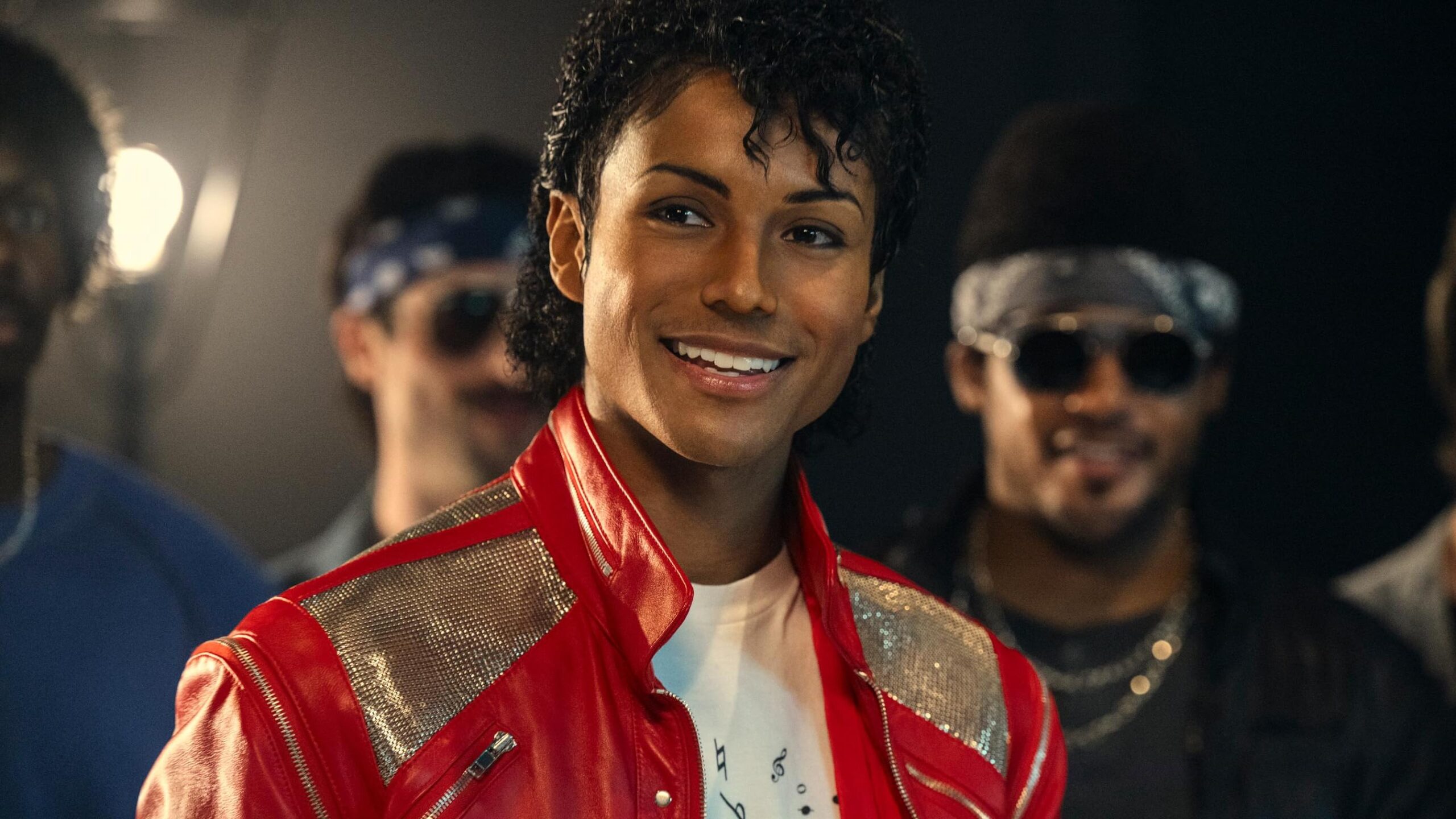
Jackson’s nephew, 29-year-old Jaafar Jackson, stars as the pop icon in his young adult years, and is the best thing about this production. I’ve heard people call his performance ancestor veneration, the way he channels his late uncle, and I would agree. There were moments he really did look, sound and feel like Michael. That, of course, makes the many recreations of Jackson’s famous music videos and stage performances the strongest parts of the film. But the character development—even the connective tissue between scenes!—is non-existent. Beyond the music and the dancing, it’s unfortunate that Jaafar had no real, substantive material in the script to really make his performance worthwhile.
Let this film tell it, Michael is only a sweet, lonely, childlike innocent with animals for friends. He only suffers abuse and harassment from his father, and never perpetuates it against others. He manages to grow into a musical superstar, yet we never see the process or the person. He cries but is never angry; he laughs but is never funny himself; he’s loyal to his family but never resentful enough of them to be vindictive (with older and most contentious brother Jermaine Jackson as an executive producer of the film, that last part is especially laughable.)
Only the core 5 Jackson brothers and LaToya appear in the film. Sisters Rebbie and Janet and brother Randy do not appear by choice, though none have commented publicly on why. Jaafar is Jermaine’s child with Alejandra Genevieve Oaziaza, who was first Randy’s longtime girlfriend and children’s mother before she married his older brother Jermaine instead. I might skip this affair too, if I were him. The other four brothers barely register beyond background singers in the film, anyway.
The same flatness of character befalls Colman Domingo in monstrous make-up as the brutal patriarch Joe Jackson and Nia Long as Michael’s mother Katherine. They do their best, but you simply can’t fix a cobbled-together script in post. Domingo’s Joe has one speed: angry, violent, and threatening—departing only once to chuckle at Michael bringing home the (grotesque CGI) monkey, Bubbles. Long’s Katherine does nothing but eat ice cream and popcorn while comforting Michael after someone’s been mean or unfair to him. I wonder if these acting dynamos rewatched the iconic ‘90s miniseries The Jacksons: An American Dream and simply seethed over what could’ve been.
The American Dream miniseries starts with Lawrence Hilton-Jacobs’ legendary portrayal of Joseph Jackson. He’s courting and marrying Angela Bassett’s iconic Katherine, and showing how much they really did love each other and the dreams they had for themselves before having nine surviving children. We watch Joe working in the steel mills in Indiana and getting laid off. We watch him struggle and tell his pregnant wife about his job loss. We watch Katherine challenge Joe on his physical abuse of their children (LaToya’s accusations that Joe sexually abused both her and Rebbie growing up and that Katherine knew about it have never been dramatized or corroborated by Joe or Katherine).
In An American Dream Joe answers Katherine’s challenges to his abuse with some context: he’s trying to make sure the boys stay out of the gangs that are prevalent in their neighborhood! It’s the way he and every other man around him was raised! It’s all he’s ever seen or known! And the one he can’t say out loud: he’s deeply jealous of his children—especially Michael—and that they get to have the musical career he always longed for.
Of course, these excuses are insufficient relics of slavery; they do not soften or erase Joe’s rampant child abuse. But at least the horrific Joe Jackson of An American Dream gets to be a real person whose anger stems from somewhere rather than a born-angry caricature in Michael.
Likewise, Bassett’s Katherine had plenty to do in comparison. “Joe Jackson, you a liar! And a cheat! And I don’t wontcha—noooooo—I don’t wontcha, I don’t wontcha, I don’t wontcha no mo’!” Bassett got to scream in one of the most memorable scenes of the series where she catches Joe cheating on her. Some suggest that the real Katherine was more soft-spoken, like Long’s muted performance while discovering Domingo’s Joe cheating, but I’ve seen her fiery interviews, taking on Phil Donahue and other talk show hosts when she felt something was unfair. She had that Angela Bassett version in her too.
Whereas Long’s Katherine was only a victim of Joe Jackson, Bassett’s Katherine got to be complicit. After the infamous Pepsi commercial that Joe forced Michael to do with his brothers that ended up burning Michael’s scalp and causing him pain—and addiction to pain killers that would eventually end his life—Michael wanted to quit The Jacksons Tour. An American Dream shows that it was Katherine who stepped in and made sure her husband and her other children didn’t lose out on money by Michael canceling the tour. She played her trump card and he obeyed her, going on to finish the tour when he had healed enough to perform again.
One place that Michael succeeds over An American Dream is in portraying the ending of that tour. Where An American Dream ties up the tour with Michael praising Joe and Katherine for achieving their American dream through their children, Michael shows the truth of the moment. In a shock to everyone, Michael actually announced his departure from The Jacksons and that this would be his last performance with them. It’s supposed to be a major moment of growth for Michael, but we haven’t sat with this iteration of Michael long enough—and his brothers don’t seem gagged enough in the background—for this major milestone in Michael’s life to fully register. Let Michael tell it, it’s simply a battle between Michael and Joe; no one else has any strong feelings about it at all. This stripping away of complexity plagues the film from beginning to its abrupt end.
An American Dream lets us sit with Michael at every stage, and we feel how terrifying it is for him and all of the boys to be chased through hotels and down flights of stairs by rabid fans. That pandemonium feels real and palpable in a way that a couple close-up shots of fainting fans in fake audiences in Michael simply cannot capture.
But at least one major fail of An American Dream was its downplaying of Michael hearing his older brothers having sex with girls in the same room as him on tour when he was a child. “I had to share a bedroom with one of my brothers on the tours, and there was some action going on in my room every night. I could hear it,” Michael told BBC interviewer Martin Bashir in the infamous 2003 documentary Living with Michael Jackson. “I heard everything,” Jackson said. An American Dream plays the scene out more like a joke, but the events as Michael recounts them to Bashir seem scarring and present for him, even at 44 years old, and had to contribute to his warped-at-best understanding of what is sexually appropriate for children. Michael doesn’t bother with this scene at all.
Like Joe Jackson’s slavery-minded abuses of his children, these experiences of abuse and distortion of healthy sexuality in a developing child are not excuses for anyone to go on to abuse. But an abolitionist mind always wonders: how did we get here? And how can we stop this from ever happening again? These details about the sexual violation and corruption of Michael in childhood are integral to understanding why a grown adult man would go on to have so many inappropriate-at-best relationships with young children who weren’t related to him.
At this point, I’ve watched countless hours of Michael Jackson lore (from An American Dream to Bashir’s documentary, to Michael’s rebuttal to the Bashir documentary, Michael Jackson’s Private Home Movies which aired on Fox in 2003, and more).
I’ve read Michael’s own words from the August 1979 edition of Blues & Soul magazine, where his thoughts on 30-year-old men marrying 10-year-old girls in India with no social stigma were telling:
“Our way is not the only way,” he said in the interview. “You realise [sic] that there are other cultures than your own and it makes you feel small and insignificant. Like in India, I was amazed to find out a thirty year old man could marry a ten year old girl. We weren’t raised that way so we look at it weirdly. But there, it’s been happening for centuries and the parents are quite willing to give up their child.”

What a thing to say.
Finding parents who were “quite willing to give up their child” to Jackson wouldn’t prove that difficult in the West either. Leaving Neverland reckoned with the alleged grooming of Safechuck and Robson’s parents by Michael, as well, and what was said and done for them to feel comfortable letting their sons spend unsupervised time with him. We see how that irretrievably broke the parents’ relationship with their sons, as well.
But they weren’t the only parents, and Safechuck and Robson weren’t the only accusers.
Terry George alleged that he was 13 years old in 1979 when Jackson tried to have phone sex with him and essentially stopped their long-distance phone relationship once Terry got too old. A 1986 female “tomboy” accuser was 12 years old when she alleges abuse began; Jordan Chandler was 13 years old; Safechuck and Robson were 7 and 10 years old; Aldo Cascio alleges he was 7 when Jackson started abusing him in 1998; his brother Dominic was 8; their sister Marie was 12; their brother Eddie said he had sexual encounters with Michael from childhood into adulthood; Gavin Alvarizo was a 12-year-old cancer survivor when he alleged sexual abuse by Michael, for which Michael was acquitted in a 2005 trial. But you can watch a clip of the creepy-at-best interview Bashir did with Jackson and Gavin that sparked the criminal investigation in the first place here:
Of course, each accuser has been dismissed by Jackson (in his lifetime) and into today by his family and his Estate, as a “desperate money grab.” But nothing could be more of a soulless money-grab than Michael, which offers nothing new to say about Jackson —and even less than what we’ve already seen in The Jacksons: An American Dream — and now only exists to remind people of how much they love Michael’s singing and dancing so they’ll leave the theater and stream more of his music.
“You are going to miss this wave,” Jermaine Jackson allegedly told his little sister Janet after she allegedly voiced her disapproval of the film at a private family screening. “You are so jealous — just get on the wave.” Unlike the others, Janet, as the second-most iconic pop star in the family, is the least likely to need to ride this “wave.”
In the newly whitewashed, reshot film (for which Fuqua and producer Graham King reportedly got paid an extra $25 million to complete), there are no allegations against Michael to address.
Colman Domingo defended the film against this criticism of whitewashing, saying: “The film takes place from the ’60s to 1988, so it does not go into the first allegations in, what, 2005? So basically we center it on the makings of Michael, so it’s an intimate portrait of who Michael is.” Of course, that infamous first trial of Jackson took place not in 2005 but in 1993 before Jackson settled the civil case for $23 million leading the criminal case to be dropped by the state. And some of the child accusers allege sexual misconduct in the ‘70s and ‘80s, even if their accusations weren’t publicly known til 1993, so, settlement clauses notwithstanding, it wouldn’t have been impossible for a film with this timeline to address. Domingo either misspoke or doesn’t know the lore the way he probably should.

The costume department didn’t seem to know the lore either. The costumes looked like Temu knockoffs compared to the extravagant, decadent fabrics Jackson donned in real life. In a pivotal concert performance scene towards the end of the film, Jaafar’s pants looked like they split from the crotch down. In another scene, he’s performing on stage in a white shirt and in a close-up shot, we see the inside of his shirt collar is covered in brown make-up. Did I feel represented as a girlie who gets make-up everywhere often? Sure. But I’ve never seen Michael look that sloppy on stage, and someone should’ve caught these wardrobe malfunctions and gotten another take.
But the worst technical offense of the $155 million production is the horrendous generative A.I. crowds for Michael’s concerts. These scenes are as sloppy and soulless as that CGI monkey. But the emptiness and uncanny valley that these fake images invoke speak volumes for the life that’s missing from this film. A Tyler Perry wig looks less cheap and thrown together. But much like Perry’s audience, fans of Michael who have garnered a $200 million opening weekend for the film—a record-shattering figure for biopics—don’t seem to be insulted by this or the cheaping out on costumes or story, for that matter. An icon rendered flesh and blood is of no appeal to a crowd that simply wants to worship.
Jackson’s only daughter, Paris, said as much in a series of videos in 2025 on why she is not in alignment with most of her family on this biopic off her father.
“I read one of the first drafts of the script and gave my notes about what was dishonest / didn’t sit right with me, and when they didn’t address it, I moved on with my life,” she said. “I just prefer honesty over sales and monetary gain. That’s it. I don’t want anything to do with that.”
“A big reason why I haven’t said anything up until this point is because I know a lot of you guys are gonna be happy with it,” she said on Instagram Stories. “A big section of the film panders to a very specific section of my dad’s fandom that still lives in the fantasy [of him], and they’re gonna be happy with it.”
In other words: “Y’all don’t wanna hear me, you just wanna dance.”
With such a stellar cast and a real interest in wrestling with who he was, Michael could’ve been a nuanced portrayal of a man and a great movie. It could’ve shown us the human behind the idol. It seems a bit insulting of Michael to reduce him to so flat a portrait. Particularly for a family whom he felt at times did not see or understand him, it feels egregious that they’ll make so much profit without ever having to contend with the person he was in any real way.
I also wonder what it’s like for the accusers and their families to continue to watch the world celebrate Michael. It almost feels worse that the movie sucks and still gets so much praise from fans. It feels like a harsh reminder: there’s literally nothing Michael could’ve done—or the production, for that matter—to turn fans off to the party, as long as the music and the dancing are good.
“People just don’t care,” the director of Leaving Neverland Dan Reed said of Michael’s huge box office success. The film is obviously still propaganda, but, without addressing the allegations, it’s at least empty propaganda.
Leaving Neverland is no longer streaming, as the Estate sued HBO for breaching a non-disparagement clause in an old contract HBO signed with Michael Jackson to air his Budapest concert on their channel in 1992. It won’t be available again until HBO’s license is up in 2029. Their follow-up film Leaving Neverland II: Surviving Michael Jackson which details their fight leading up to the November 2026 trial is available on YouTube and is worth a watch.
Ironically, Leaving Neverland provided a way more nuanced portrait of Michael than his biopic. Sitting in the agony of cognitive dissonance, the accusers allow Michael his full humanity, and as a result, reclaim their own. They accepted that someone whom they loved and was so important and wonderful to them in many ways also, they allege, abused them terribly and damaged them in ways they’ll be healing from forever. How much easier should it be for us to say that someone whom we don’t know at all, but whose music and iconography deeply impacted and shaped our cultural imaginations, might be more than just an icon, but a real and fallible human being?
Because people can be incredibly gifted and abuse people. They can make music that touches our hearts and dance like the spirit of God is running through them, and abuse people. They can be the biggest pop star in the world and abuse people. They can have an incredible way about them that makes you feel seen and understood, and abuse people. They can be sweet and fun and loving and abuse people. They can bring joy to the entire world for decades and abuse people. They can be abused themselves and still abuse people.
Real people aren’t ever just one thing, despite how hard Michael wants to pretend that he was.
Stay watchin’,
Brooke
Enjoyed this piece? Tip your writer!
Watch The Jacksons: An American Dream and Living with Michael Jackson below for paid subscribers:


Leave a Reply