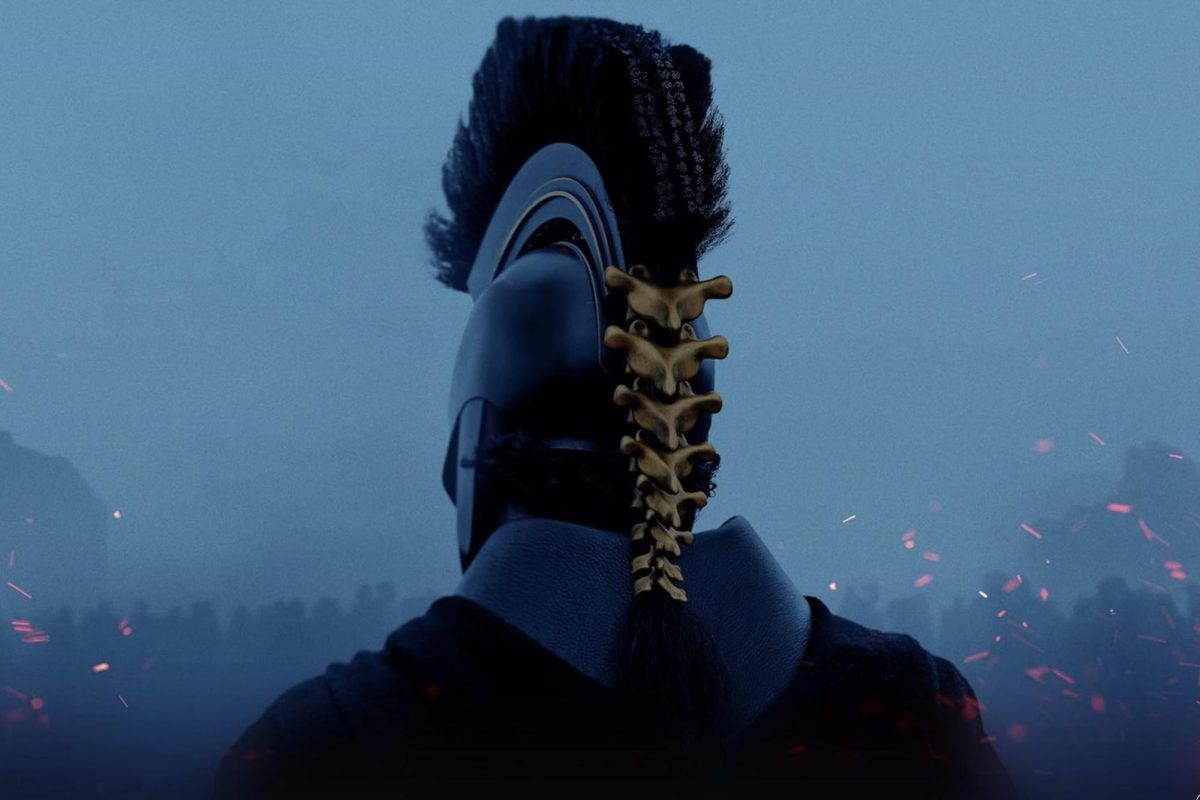
***Spoilers for The Odyssey***
I wanted to love Christopher Nolan’s The Odyssey.
Based on Homer’s epic poem whose story of the warrior-king Odysseus was ancient oral mythology even before Homer put pen to paper in the early 8th century BC, Nolan’s version came with a twist. Though set in Ancient Greece, Nolan’s The Odyssey stars Matt Damon as Odysseus with an American accent, alongside British stars Himesh Patel, Robert Pattinson and Jovan Adepo, who also deployed their American accents for the film. Though this is often a Hollywood trick to white-Americanize history, it seemed clear from the outset that Nolan, a British-American filmmaker himself, chose to white-Americanize the myth of Odysseus—architect of the Trojan Horse that exploited Zeus’ law of hospitality to the stranger and caused civilization’s fall—to make a statement about the global consequences of white American imperialism specifically.
King Agamemnon’s war with Troy was fought under the pretense that Troy’s prince Paris had stolen away Agamemnon’s brother’s wife, Helen, the most beautiful woman in the world. Of course, as Luptia Nyong’o’s Helen explains in the film, the Trojan War was never about getting her back to her husband, Menelaus, but was always about Agamemnon’s desire to conquer Troy for its control over shipping lanes, thereby increasing Agamemnon’s empire and power. If anyone knows about starting a fake-righteous war over control of shipping routes and natural resources, it’s the United States of America.
The Odyssey picks up in the aftermath of Agamemnon’s victory over Troy, which was only won because of Odysseus’ idea to hide soldiers inside of a giant hollow horse and present it as a peace offering of surrender to the Trojans and a gift for their temple to Athena. Trusting in Zeus’ law, the Trojans accepted the horse, brought it into their impenetrable city walls, giving the Greeks the ability to destroy the city from within.
In the aftermath, rumors abounded that a lawless “people from the sea” have taken to raping, pillaging and looting their neighbors, the bonds of civilization and humanity forever broken. Like Odysseus, many Americans who watch the film might be shocked to discover that, despite the propaganda of white supremacy and American exceptionalism that we’ve been fed for centuries, Americans and its 800 military bases in more than 70 countries, are in fact the dreaded “people from the sea.”
Ask Black America. Ask Palestine. Ask Hawaii, Iran, Puerto Rico. Ask Mexico. Ask Libya, Cuba and Guam. Ask Korea, Japan and Yemen. Ask the sailors in the Atlantic that America bombed like a game of Battleship. Ask the people of Venezuela and their kidnapped president Maduro. Ask the entire continents of Africa and South America. Ask the Indigenous people of Turtle Island upon whose land and graves stolen Black people were forced to build this illegitimate country to solidify white American hegemony in the first place. Ask the immigrants getting ripped away from their families or shot dead in the streets by American gestapo ICE. The white American Odyssey is meant to be a mirror, if one would only look.
Though racists abhorred the presence of non-white cast members in the film about gods, cyclopses, rock monsters, and sorcerers, I appreciated the “woke” casting. Of course Nyong’o should play Helen, the most beautiful woman in the world; she’s ethereal enough to have been hatched from an egg. And trans actor Elliot Page playing a new character to the story, Sinon, “the bravest man” Odysseus has ever known, is a powerful touch. If the racists could read, they’d lose whatever’s left of their minds to find that Odysseus is described several times in the source material as “dark-skinned.” They’d also faint to learn that no one was white in Ancient Greece. These facts aside, Nolan’s diverse casting also makes a larger point about white American patriarchal supremacy in recent centuries.
Patel as Odysseus’ right-hand-man in battle Eurylochus, alongside Adepo’s soldier Elpenor and Korean American actor Will Yun Lee as Anchialus was, to me, an excellent reminder that white supremacist patriarchy cannot run without the aid and enthusiastic participation of men of color. Even the most noble and earnest soldier character that Nolan created for his adaptation, Sinon, played by Page, shows how marginalized people contribute even unknowingly to the imperialist project.
Much like our U.S. military and Trump’s cabinet, these soldiers played by actors of all races and marginalized identities followed Odysseus into battle, under the call of Agamemnon, raping, murdering, pillaging, and destroying with hellfire, the kingdom—and the people—of Troy. The Odyssey recounts the soldiers’ downfall even more than Agamemnon’s and Odysseus’. Catch that message.
This is why I wanted to love The Odyssey. I set myself up for success by sitting in the perfect seat at an IMAX 70MM film screening at AMC CityWalk: the fourth row. (I’d learned from my many IMAX 70MM screenings of Sinners last year that fourth row makes you feel like you’re actually in the movie). Still, I left feeling empty.


Leave a Reply