Author: Brooke Obie

  • ‘The Drama’ Laughs at Our Pain

    ‘The Drama’ Laughs at Our Pain

    **** SPOILER ALERT FOR THE PLOT OF THE DRAMA****

    I often put spoilers in my reviews because the lawyer in me likes to make my case and back it up with evidence. But sometimes, like in the case of my review of Queen & Slim, I spoil to warn people in advance. So, in case the “plot twist” of Robert Pattinson’s The Drama hasn’t already been spoiled for you, trigger warning (literally! yikes!) this is a romantic comedy about potentially marrying someone who planned a school shooting in her youth.

    You might be asking: who would think marrying a failed school shooter is a great premise for a rom-com? The answer is: Kristoffer Borgli, the Norwegian writer and director of this film. Borgli was born in the same year as I was, according to Wikipedia, so, I wonder: was his childhood also shattered by the Columbine shooting in 1999? Did he learn how to run in a zigzag from the school to the parking lot? Did he do school shooter drills as a kid? Nearly 30 years later, do his nieces and nephews have bullet-proof backpacks instead of gun control? What does he know about school shootings besides what he consumes of American media? Nothing. He is a Norwegian white man from Norway making light of American tragedy.

    Black Girl Watching is a reader-supported publication. To receive new posts and support my work, consider becoming a paid subscriber.

    In this navel-gazing thought experiment of a movie, Borgli wonders: What if you were an original white man from Europe marrying a [generic] American woman and you find out the week before the wedding that she had planned a school shooting as kid and didn’t go through with it—not because she felt bad, she just never did it—would you still marry her? And wouldn’t the drama of it all be a laugh?!

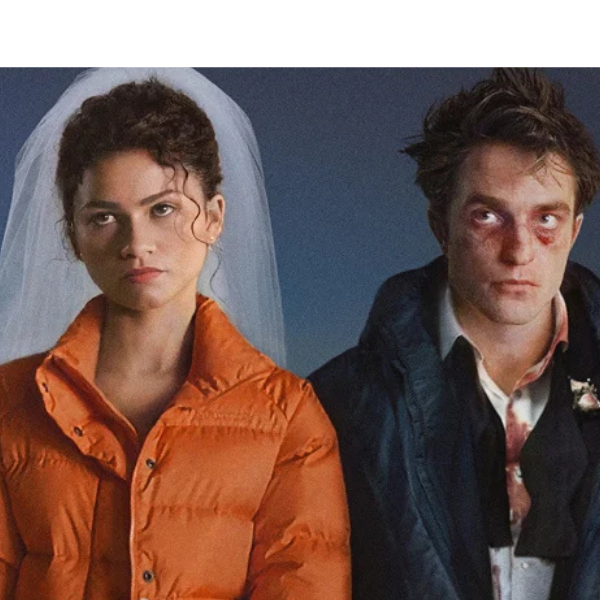
    This confession of Emma (Zendaya) to her British fiancé Charlie (Pattinson) sends him spiraling in comedic ways. Who is this stranger he’s marrying? How could he love someone who could think to do something so heinous?

    Make no mistake: this is Charlie’s story. Despite the marketing and the red carpet fashion pushing Zendaya to the forefront, Emma is not an equal character in this white male fantasy. She is an empty shell for Pattinson’s Charlie to rage against, stretching the depths of his own humanity, love and compassion. He’s the only one in this story with an arc, whose emotions are fully realized, who gets to be a human. As is typical for her at this point in her film career, Zendaya is a blank canvas for a white man’s projections and emotional growth.

    In Challengers, Zendaya’s character was the human embodiment of the tennis net and ball that both separated and bounced between two white men who each had much more interesting things to do and characters to be, on their own and together. In the Dune franchise, as well, her character exists to show the emotional progress of Timothée Chalamet’s main character. Zendaya recently mentioned her desire to work with Ryan Coogler, but why not find the Nia DaCosta to her Tessa Thompson, someone who can center a Black biracial woman’s story and render her a full character on the screen for once?

    Zendaya’s character is not the only woman who suffers from thin writing in The Drama. Alana Haim’s awful maid of honor character Rachel revels in her own moral superiority over Emma, but a better actress would’ve played this one-note villainous Karen with more depth, and a better writer than Borgli would’ve written this character with more than one note.

    But Borgli isn’t interested in anyone else but Charlie, a foreign-born, self-insert character. And while casting the A-list Zendaya as Emma might’ve seemed like a boon for the film’s marketing, it simply brings Borgli’s painfully limited range and lack of foresight into full focus.

    It was already absurd that Borgli wrote a white woman character who planned a school shooting in her youth. Make no mistake, despite the casting of Zendaya, Emma was written as a white woman and Zendaya plays Emma as generically as possible. Though a few white women and girls have committed mass shootings before, everyone knows the vast majority of school shooters—and mass shooters in general—are white boys and white men. This is a white problem and a male problem. Exploring the white male Charlie as the potential mass shooter and the terrifying depths of white male rage while having Emma run around town melting down at the thought of marrying a sleeper-cell psycopath, apparently, would’ve been less funny to Borgli. The twist is that it’s a girl! I can almost hear him patting himself on the back.

    How funny that a seemingly kind, sweet, innocent, beautiful white woman with a cute hearing impairment—Charlie found Emma being deaf in one ear endearing!—could plan something so heinous as mass murder of children. And like real-life white woman shooter Audrey Hale, Emma had no real motive for the plan that she could share with Charlie to help him understand why. Some popular girls called Emma stinky and pushed her into a puddle on the sidewalk, making her drop her iPod or Zune or whatever music player it was. Emma shares that she had been wrapped up in incel chatrooms where being a girl who was into school shootings made her stand out and feel special and accepted—by a bunch of white incels. Why this was attractive to her as a Black biracial girl? We’ll never know, cause she’s not a developed character. Emma just “liked the aesthetic” of being a girl with a gun, and that was enough for her to plan a school shooting and record a manifesto until her computer randomly dies right in the middle of it. After someone else commits a mass murder that same day, Emma decides not to go through with it.

    To put it bluntly: this is some white people shit. Just, all the way around, this is white nonsense.

    Not only does Zendaya have a paper-thin character to work with, her casting also pushes this premise beyond the brink of believability, underscoring the racism of the other characters, while absolutely no one addresses it in the film. No one calls Rachel a Karen, though there is a clear racist undertone and aesthetic to Rachel delighting in publicly humiliating a Black woman. No one calls out the racism of Emma’s white husband-to-be for being terrified of his secretly Angry Black Woman. “Race-blind” casting isn’t a thing when everyone is written as white and we’re all watching white people gang up on a Black woman as if there are no racial power dynamics at play. Whether he noticed or even cared, it’s obvious that a Norwegian white man was not up to the task of tackling the impact of the racial imagery he was creating in the production of this film.

    The biggest elephant in the room, of course, makes the entire premise of the film fall apart: Black girls don’t do school shootings. It’s not a thing. Anywhere!

    But what would make a Black girl plan a school shooting and then never follow through because this is some white boy shit? would have been a fascinating undertaking. And if Borgli wasn’t interested in that undertaking, or doing the work in the script to make Emma a biracial Black woman beyond casting a Black man as her father for 90 seconds of screen time, then Borgli should’ve just cast someone white.

    Inclusivity in filmmaking is beyond casting; it’s about creating characters with depth who are rooted in reality. The little sketch of a character that we have as Emma is actually interesting and ripe for a more curious writer-director’s exploration. As is often the case in a Zendaya project, her character Emma is the only Black girl in a white world. Sure, there are some Black boys sprinkled in, including the teen boy in Emma’s high school who takes a liking to Emma and ironically nominates her to lead their school anti-gun violence campaign. And then there’s the wasted talent of Mamoudou Athie, who plays Charlie’s best man Mike, but is equally racially unspecific, other than in a throw away line where his wife Rachel shares her false belief that her Black husband must’ve grown up “around guns.” Because the audience can see he is Black, she doesn’t have to say it, and we know to gasp or laugh at such a wild thing to say. But Emma doesn’t react to Rachel’s claims about Mike’s upbringing at all, though certainly it’s more evidence that, with her white mom, white girl frenemies, and white fiancé, she is the only Black girl in the space, from childhood to womanhood. Would that not inspire some rage?

    With all of the injustice and the institutional colliding of racism and sexism and the adultification that Black girls face, Black girls would be hella justified to have rage. According to a 2024 study from the U.S. Government Accountability Office, Black girls “receive more frequent and more severe discipline in school than other girls.” This is a systemic, institutional failure of protection—from teachers to principals to school administrators. This is not to mention the disproportionate rates of domestic violence and sexual abuse Black girls face at home and in their communities. The most unprotected people on the planet would have a right to rage. But we simply don’t process our anger in mass shootings. We are much more statistically likely to be victims of violence rather than perpetrators of it. Yet the stereotypes of Black women and girls—as unrighteously angry, as violent, as hypermasculine, as “strong” enough not to need or deserve protection—persist.

    With a few tweaks, this film could’ve highlighted both the systemic failures that lead to the erasure of Black girls’ humanity at the crucial age of development, and the root cause of mass shootings: Congress and the gun lobby, and our healthcare and (mis)education systems. This film could’ve shown that mass shootings don’t happen in a vacuum and are not solely an individual choice of individual bad actors but are the rotten fruit of a society built on and sustained by violence. That’s a film whose comedy would punch up at power, punch up at systems, and challenge the people who have actively chosen to uphold them or to passively look the other way.

    Real-life family members of victims and survivors of school shootings have expressed similar concerns about the lack of intention in this film beyond laughs and hypotheticals and have spoken out against it. Tom Mauser, whose son Daniel was killed in Columbine in 1999 told TMZ in March that he thought the film “normalizes” school shootings. He also took issue with the flippant way Zendaya laughed off the “twist” in a Jimmy Kimmel Live! interview.

    March for Our Lives, an organization created by child survivors of school shootings, spoke out against The Drama and its film studio A24 for its failure to alert the public that this rom-com contains extremely sensitive subject matter that the audience wouldn’t suspect. “The way this film has been marketed is deeply misaligned with the reality it engages,” they posted on Instagram. “We expect better from A24 and the artists behind it.”

    March For Our Lives on Instagram: “The way this film has been m…

    Jackie Corin, a Parkland school shooting survivor and co-founder of March for Our Lives, told the Hollywood Reporter that “Gun violence, particularly in schools, is not just another dramatic device. Art has the capacity to deepen public understanding and create emotional clarity and awareness, but it can also flatten and distort reality, especially when it leans on shorthand or tries to make something more palatable than it actually is. With something like a near school shooting, even small tonal choices can shift whether a story feels productive or dismissive.”

    But, Borgli has no interest in understanding why school shootings happen. He doesn’t care about American survivors of mass shootings or the relatives of the victims. It’s as if they’re preemptively being mocked for being upset with the film’s comic tone through the character of Rachel, whose cousin was paralyzed in a mass shooting and therefore reacts to Emma’s confession in such an outlandish and cruel way that it’s played for laughs. He’s certainly not interested in Black girlhood or womanhood for that matter. Emma isn’t rendered as a real person (Black or white) because she’s not based in any reality; she’s a premise. This film isn’t personal; this is comedy for him. He just wants to laugh at our pain.

    Borgli isn’t trying to be “productive.” The Drama is the movie version of a social media troll trying to provoke and ending the post with “Thoughts?”

    And we’ve seen what’s in Borgli’s “thoughts” before. He’s also the filmmaker behind the Nicolas Cage-starring film Dream Scenario, where a white man is castigated for thought crimes that he didn’t even think. A film that warns of the dangers and harms of “cancel culture” for white men is quite the preface to a newly resurfaced essay Borgli wrote in 2012 where he bragged about the “May-December relationship” he had at 27 years old with a teenaged high school girl while her parents were out of town. Knowing that the “relationship” was, at minimum, “socially unacceptable,” he went looking in movies for evidence that he wasn’t some old weirdo creep. He literally researched “May-December romances on film” on Wikipedia and found hope in Woody Allen’s movie about an old weirdo creep grooming a high school student in the infamous 1979 film Manhattan.

    “If a film made in 1979, in which Woody Allen’s 42-year-old character has a public relationship with a 17-year-old girl, is portrayed exclusively in a positive way and causes no controversy in its own time, then why shouldn’t my relationship – with a considerably smaller age difference – in 2012 be “within bounds”? I chose to listen to Woody over my friends,” Borgli wrote, sans irony or shame.

    Citing Woody Allen—who married his girlfriend’s daughter in 1997 and was credibly accused of child molestation by another daughter in 1992—as a guide for ethical dating habits in 2012 is a choice. It’s that unthinkable white man shit again.

    So, why wouldn’t the guy who wonders “what would Woody Allen do?” when dating, cast Zendaya in her twenties to play a love interest to Robert Pattinson who’s pushing 40? Gross age gaps are par for the course in a pedophilic Hollywood, and so are school shootings in America. Perhaps Borgli figured Americans wouldn’t mind, and hey, it’s not like Americans have stormed the Capitol and White Man’s House over murdered elementary school children in Uvalde or Sandy Hook, or over the allegations in the Epstein files of cannibalism and raped children by the people who run this country and the President of the United States. For all of Borgli’s misguidedness in this film, perhaps he assumed correctly about American audiences on those two counts.

    The ending of this film is meant to be sweet, a testament to the power of true love to overcome any obstacle—even if it puts you through the ringer first. The final image of Charlie’s smiling yet battered face drives that point home. But in truth, Borgli made a horror film where a biracial Black woman is now trapped in a marriage with a white man who harassed a woman in a wheelchair in the middle of the sidewalk; who cyberbullied a kid until the kid had to move schools; who fetishized his Black wife’s disability until he learned the ugly truth about it; who cheated on her at the first opportunity; who began their relationship on the lie that he shared her interests; and, when she needed it most, showed none of the grace and empathy for her that she’d shown him throughout their relationship. They can’t start fresh when she asks for forgiveness; only when Charlie cheats and is also in need of forgiveness is he ready to wipe the slate clean—people make mistakes, after all!

    But like all of Borgli’s films and his gross essay, his latest thought experiment is unintentionally revealing. In The Drama, we see the emotional violence of white women, the terror of self-pitying, petulant white men, real-life tragedy reduced to wild hypotheticals and insensitive to actual victims, and the erasure of Black woman- and girlhood. How quintessentially American.

    Stay watchin’,

    Brooke

    Share

    Enjoyed this piece? Tip your writer!

  • INTERVIEW: ‘Paradise’ Star Enuka Okuma on Overcoming Tropes & that Explosive S2 Finale

    ***Spoilers for Paradise seasons 1&2***

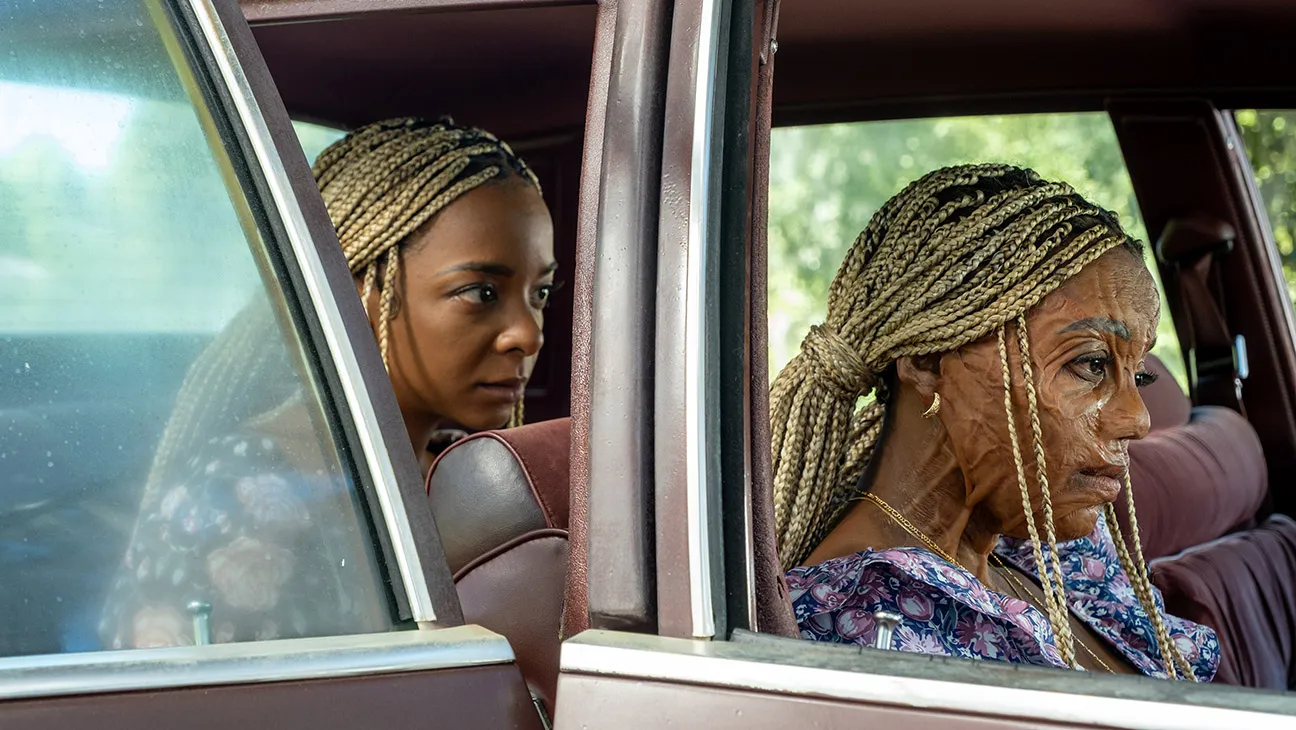
    Through most of season one of the hit sci-fi Hulu series Paradise we believe our hero Xavier (Sterling K. Brown)’s wife Teri (Enuka Okuma) is dead. She’s the empty space in the bed in the opening scenes of the pilot; the chasm between Xavier, a secret service officer, and his boss, the U.S. president Cal (James Marsden). An apocalyptic event has occurred, the president and a select group of billionaires and 25,000 of their closest friends and family have escaped to a bunker, and Teri, a mycologist who was away at work in Atlanta during The Event, didn’t make it to the bunker.

    In other hands, Teri could’ve been a MacGuffin, the holy grail who exists only to give Xavier’s character depth and meaning. But this is a Dan Fogelman show. In the This Is Us creator’s world, even the mailman will have a backstory—and play a pivotal role in main character Teri’s survival arc. Because, yes! spoiler alert Teri is alive! And season 2 delves into where Teri has been for the past three years since the Apocalypse, and how she, (and mailman Gary) have been surviving.

    I caught up with Enuka Okuma to talk about the ground-breaking character of Teri—a brown-skinned, chronically disabled, badass genius mushroom doctor, who is both mother and age-appropriate lover, both desired and empowered on screen.

    “I believe Sterling is on a bit of a mission,” Okuma told me about the intentionality of not only casting dark-skinned women in the show but also the even more-rare casting of a dark-skinned daughter to play Presley (the gorgeous Aliyah Mastin). “I saw a quote last year when he was doing some press about his commitment to casting dark skinned Black women whenever he’s in a position to and it made me cry. I texted him right away and I was just like: ‘You see us,’” she said. “That’s a testament to who he is.”

    Series creator Fogelman also supports Brown’s mission, Okuma said. “He sees all and he’s very conscious. We haven’t had conversations about it, but I know that he is careful and he is conscious of the messages that he is putting out in the world. And that just makes him…one of the best that we have in the industry right now, for sure.”

    There’s also the trope of Black characters sacrificing themselves for the good of white characters that this series actively subverts. When Teri stands in front of a bullet meant for Gary, it’s a completion of a cycle where Gary first saved her life; when an injured Nicole Robinson (Khrys Marshall) sacrifices herself for Cal’s son Jeremy, he doesn’t leave her behind, he makes sure she makes it out of the collapsing bunker alive. And when Xavier stands in front of a bullet for Cal in Season 1, and Sinatra in season 2, both repay him by saving his life immediately after. These are not one-sided relationships that reinforce a narrative of Black thankless sacrifice; these are reciprocal, loving relationships that reaffirm Black life and characters matter.

    Season 2 is masterful storytelling that borrows from the best of Lost and The Leftovers to create a compelling and thrilling narrative through deep character study, a lush playground for any actor thrive. Watch the full BGW conversation with Enuka about how the series is upending Hollywood tropes, whether Xavier cheated on Teri with Dr. Torabi, WHO BROKE TERI’S RADIO?! and her favorite scene of the season above.

    Special thanks to the Watchers who submitted questions for Enuka! Shout-outs in the video above: JaetheFade, Cathusmax, AlleyRemelle, LouisianaGirl91, and Capricorn_Won!

    Stay watchin’,

    Brooke

    Share

    Enjoyed this piece? Tip your writer!

  • Hollywood Is Gaslighting Black Folks Again

    Hollywood Is Gaslighting Black Folks Again

    Every year, there’s one big studio film with a Black cast that we’re told will be the make-or-break film for the future of Black Hollywood. This one film, we’re told, is our opportunity to show up to the theater and prove to Hollywood that Black films can be profitable. This mission, should we fail to accept it, will not only determine the career of those involved with that one film. Oh, no. This one film will also give studio executives permission to either greenlight more Black films or turn them down. And either way, their choice will be our fault.

    Black Girl Watching is a reader-supported publication. To receive new posts and support my work, consider becoming a paid subscriber.

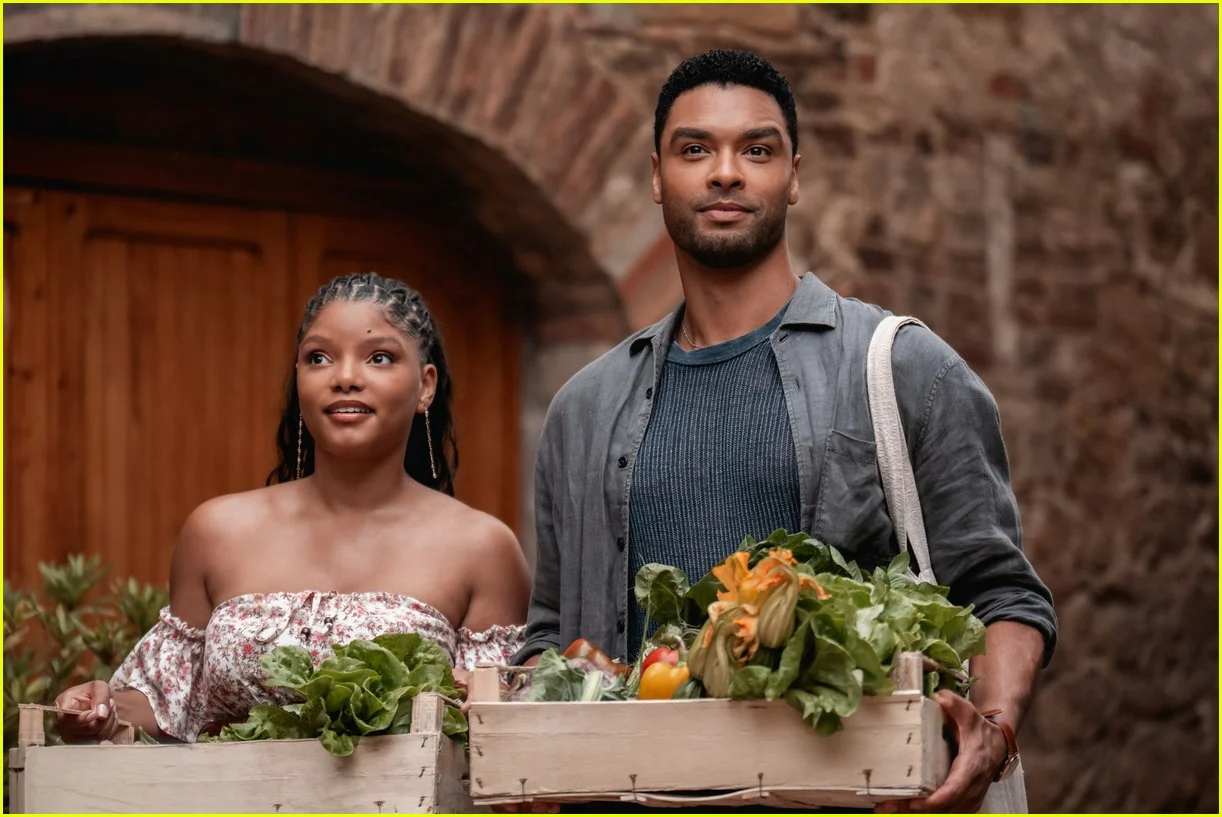
    This year’s film appears to be the Halle Bailey and Regé-Jean Page rom-com You, Me & Tuscany, coming to theaters on April 10. From Universal Pictures, this Italian-set love story will be the first Black rom-com with a studio release since American Fiction grossed $23 million at the box office on a $10 million budget and garnered 5 Oscar nominations for its cast and crew in 2023. But 2026 is a new year! So we must “show and prove” again.

    As soon as the film was announced, social media was flooded with (well-meaning) demands of the Black audiences: “Y’all understand the assignment, right?!” We have our marching orders, we must make this movie a success. Not because we love rom-coms, or Italian getaways or Halle and Regé as actors, but because it is our Black duty to support Black films in theaters— otherwise they won’t “let us” have another one. The “they” of course, being Hollywood studio executives. It’s an annoying call-and-response I see often as a hyper-online person and I’m not sure how much the average, less-online Black viewer is bombarded with this. But it absolutely gives the impression of a relentless, tired holy charge that’s been foisted upon us and can never be removed.

    You, Me & Tuscany looks cute. I like Regé-Jean and Halle and I’m going to an early screening next week. I hope it’s good! And I resent that, if it’s not, or people don’t show up to watch it, the studios will use the response to a film that’s written and directed by white people to pretend to determine the future of Black studio films. We’re not making that up. It’s not just in our heads. This is what Hollywood explicitly tells us.

    “1. Met with a studio about my already shot romcom and they won’t buy it until they see how You, Me & Tuscany does [sic],” tweeted award-winning Black filmmaker Nina Lee yesterday. The rom-com in question, That’s Her, stars Bel-Air’s Grammy-award winning lead Coco Jones and comedian Kountry Wayne. The film is produced by They Cloned Tyrone producer Stephen “Dr.” Love and wrapped production in December 2025, according to Black Film & TV.

    “2. Met with an exec about a romance script I have, they won’t buy it until they see how You, Me & Tuscany does. 3. Go see this film! [sic]” She followed up: “A film that has nothing to do with me could quite literally change my life.”

    I hope it’s true. I hope we see all of Nina Lee’s films on screen soon and that all Black filmmakers have a chance to make their art and share it with the world. I also have an incredible Black rom-com script with a dream-team package behind it that I hope you’ll get to see soon!

    The gag is: Hollywood is lying to us. Hollywood is gaslighting us.

    For decades, we’ve heard that Hollywood only wants to make money, so if Black movies don’t make money because white people don’t want to see them and Black audiences don’t show up in droves, then the fault is ours. And then a Black movie will make a huge amount of money at the box office, and they’ll call it a fluke.

    In 2013, when another Universal picture The Best Man Holiday raked in $30 million over the pre-Thanksgiving weekend, going toe-to-toe with the Marvel film Thor, breathless headlines from the trades could not believe its luck. They tracked the film much lower, therefore the film was labeled as “over-performing.” In an infamous headline from USA Today, they labeled the rom-com “race-themed,” whatever that means. Steve Harvey’s Think Like a Man had made $91 million at the box office the year before, but The Best Man Holiday’s success was still a head-scratcher for them. And guess what? There was no grand influx of Black rom-coms in theaters after these successes. The Black rom-com Baggage Claim did flop that year, too, so! That counted more.

    More than a decade after the backlash to the backlash of The Best Man Holiday’s success, what’s changed? Just last year, Ryan Coogler’s Black vampire epic Sinners rose past projected box office placement and earnings to open at No. 1 with $48 million domestically and $63 million worldwide in ticket sales. While this was the biggest opening weekend for an original film since the pandemic began in 2020 — an encouraging sign that audiences will show up to the movies for an original story if it’s a cinematic event — white Hollywood media just couldn’t let a Black director have his well-deserved flowers.

    Sinners Overperformed at the Box Office, But Only Made $60 million,” said Business Insider.

    Sinners Is a Box Office Success (with a Big Asterisk),” wrote the New York Times.

    “The Warner Bros. release has a $90 million price tag before global marketing expenses, so profitability remains a ways away,” tweeted Variety. The outcry from Black audiences — and Ben Stiller — was swift.

    “In what universe does a 60 million dollar opening for an original studio movie warrant this headline?” Stiller quote-tweeted Variety, which earned more than 300,000 likes.

    Everyone in Hollywood knows this is not usually how the media discusses these achievements — particularly for a film that garnered a 98% Rotten Tomatoes Tomatometer score and a 97% audience score and the first-ever A CinemaScore for a horror film. If there’s any doubt about the fact that this framing of “non-profitability” on opening weekend is blatantly anti-Black racism, compare it to the headlines for Quentin Tarantino’s Once Upon a Time in Hollywood. That 2019 film also had a $90 million budget (which, adjusted for 2025 inflation would be well over $112 million), pulled in less than Sinners’ $48 million domestic haul with a $41 million domestic opening, and it didn’t even hit No. 1 at the box office, falling behind its Disney live-action remake competitor, The Lion King.

    “Disney’s The Lion King might still rule everything the light touches, but Quentin Tarantino‘s Once Upon a Time in Hollywood certainly held its own this weekend at the domestic box office,” wrote Variety’s Rebecca Rubin, the same author of the Sinners piece. Rubin went on to praise the second-place, B CinemaScore film as a “win for original content.” Though the film’s $90 million budget is mentioned, there’s neither a hem nor a haw about how far away the film was from being “profitable” in its opening weekend — just celebration for setting a personal opening weekend record for Tarantino. Qwhite the difference.

    White media — from its Hollywood studios to its propaganda journalism arm — have always conspired to spin the narrative about Black films, Black filmmakers, undermining their financial wins or painting them as unrepeatable anomalies that should be individually studied. We are defined by our flops, and our successes are flukes. How can we win, when they keep moving the goalposts?

    “What does it take for people in Hollywood to realize Black audiences will come out to see a movie?” Lee Daniels asked in a 2013 interview with The Los Angeles Times. “Does ‘The Butler’ need to make $100 million?” The film went on to win a worldwide box office total of $177.3 million. It has not changed a thing for how Black films and filmmakers have been received or championed as a whole.

    In response to white folks underestimating the Sinners box office last year, Black folks (who make up 13% of the U.S. population) showed up at 49% on opening night, leading to the film’s incredible success. As soon as white media played in Coogler’s face after his success, countless Black folk on social media declared that we must go back to the theaters and “prove them wrong again!” Again.

    As someone who literally saw Sinners 15 times in the theater: Aren’t we tired?

    But, we did it, bros! Sinners grossed $370 million on a $90 million budget. Where’s the influx of studios greenlighting original Black horror films? In 2018, Black Panther grossed $1.8 BILLION. Though 2022’s The Woman King and 2027’s Children of Blood & Bone were both said to benefit from Black Panther’s success (both films by only one amazing director, Gina Prince-Bythewood, by the way!), where’s the influx of Black sci-fi/fantasy epic tentpoles? Two films for one filmmaker and a sequel and an original film for Coogler in a decade is all $1 BILLION can buy? Oh.

    So, what’s the number that would make You, Me & Tuscany a success? Cause it’s not making a billion dollars, no matter how much Black folks pack the theaters. We’re all writing these scripts; there’s plenty of Black filmmakers and actors who want to star in them, so what’s the number that gets us a regular influx of Black romantic comedies in theaters? Inquiring minds want to know!

    But here’s a damning number, $10 billion.

    In 2024, conservative consulting firm McKinsey released a report that Hollywood studio executives leave $10 billion on the table every year by not investing in Black stories. That’s right, the same studios that cry about “profitability” and enact mass layoffs as their executives pocket tens of millions in salaries and bonuses, shrug off the near-assured additional profit of $10 billion. Why? Because they’re racist.

    There will never be a high-enough opening weekend or a diverse enough audience or enough history-making achievements to change their mind about us. As Toni Morrison forewarned: there will always be one more thing. It’s time to accept their anti-Black racism for what it is: a distraction.

    Let’s lock in on what matters: creating art that we like and supporting art because we like it — not because we believe one Black person’s success will equal Black success in general or that Hollywood will let it trickle down to the rest of us. It won’t. This industry must be dismantled, not begged.

    Stay watchin’,

    Brooke

    Share

    Enjoyed this piece? Tip your writer!

    My debut feature film ABANITU: A FAMILY DOCUMENTARY is having its international premiere at the Coal City Film Festival in Lagos, Nigeria today! Check out my interview with Carolyn Talks on my filmmaking journey:

  • ‘Sinners’ Has Already Won

    ‘Sinners’ Has Already Won

    Paid subscribers! Below is a video of a Q&A with Ryan Coogler, Autumn Durald Arkpaw, Ruth E. Carter and Hannah Beachler from a private screening of Sinners I’ve been saving just for you!

    Tonight, ‘Sinners’ is nominated for a record-breaking 16 Oscars by the film Academy considered in this town to be the most significant possible acknowledgement of artist mastery. In its 98th awards ceremony, this Academy could make history by honoring Black genius—literally, they haven’t done it significantly or with any regularity in 98 years, but maybe tonight will be the night! Maybe the brilliance is so undeniable that a 98-year-old historically white supremacist institution will have to concede the truth!

    Black Girl Watching is a reader-supported publication. To receive new posts and support my work, consider becoming a free or paid subscriber.

    My film-loving Black people, I don’t want you to prepare your hearts “for the worst” if the cast and crew don’t win what they should; I want us to divest our hearts entirely.

    When we watched this film multiple times in the theater, Sinners won.

    When we sought out stories from our elders after watching it, Sinners won.

    When we read books on Hoodoo and reached for our ancestors, Sinners won.

    When we shared this film in community and still talk and write and think about it a year after its release, Sinners won.

    We are the Oscars, baby. And the Oscars could never be us.

    Writer-director Ryan Coogler and producers Zinzi Coogler and Sev Ohanian, best actors Michael B. Jordan, Delroy Lindo, Wunmi Mosaku, Miles Caton, Jayme Lawson, Saul Williams and Buddy Guy, cinematographer Autumn Durald Arkapaw, musician Raphael Saadiq and composer Ludwig Goranson, costumer (and Hamptonian!) Ruth E. Carter, production designer (and leo!) Hannah Beachler, editor Michael P. Shawver have already won.

    They shifted the culture. They opened a portal. They unlocked creativity and put a balm on a festering wound in Black history. They reaffirmed for us that the answers to the fight against white supremacy’s death culture are connection and community with each other and our ancestors. In a time of rising fascism and imperialist world war, these tools will see us through as they saw our ancestors through and will ensure our collective survival. That’s a level of power that these institutions could only dream of experiencing and therefore fear. Sinners and its cast and crew have been subjected to humiliations meant to undercut them personally and the film as a whole because of that fear. And we undercut the power of the film and Black genius when we couch it in terms of what white supremacist validation trophies they won or should have won. We concede that they are the arbiters of what’s good and right and true. And that has never been the case.

    The Academy is an old and dying institution. It has proven itself again and again to be both irrelevant to Black talent and incapable of awarding it as it deserves. Like Remmick, it seeks to suck the soul and reap the benefits of Black artistry with little but admittance into an eternal death cult in exchange. There’s a reason the biggest onstage performance tonight will be in celebration of Sinners, with Misty Copeland coming out of hip replacement surgery to dance in what will surely be a live recreation of the surreal montage from the film, with Saadiq, Caton, Goranson, Guy and Lawson all performing. They need the fans of Sinners to watch live like all of these awards shows need Black talent and Black audiences to hold onto relevance. But the clips will be online eventually. Imagine if we divested.

    Imagine if we did not concede our cultural power to those who never meant to honor it. They risk their crumbling credibility by not rewarding what is handedly and by miles the best film of the year, if not decades. Let them crumble. I want for these individual filmmakers whatever they want for themselves; they deserve to be honored and celebrated. I don’t begrudge them attending the Oscars, even knowing that the Academy might play in their faces. But Sinners is already bigger than the program. With more than 200 awards collected in the past year, these filmmakers don’t need the Oscars.

    Though it’s not a flawless film (of course, as always, I have notes!) it’s still perfect. I have talked and written about and watched this specific film more than any film ever because it is unlike any film ever. Who knows when we’re going to get something that moves the earth like this again! So, I’m going to celebrate it all week over on my YouTube channel with video breakdowns of some of my favorite themes.

    But this is bigger than Sinners too. This is about culture and how we decolonize our culture by reclaiming our power over it. That is the message of the film! To not be co-opted by benevolent oppressors who want to steal control over our artistry under the guise of “appreciation.” How do we re-root ourselves? How do we reclaim and recontextualize ourselves so that we are not constantly viewing ourselves, our capabilities and our worth through a white supremacist capitalist cis-hetero patriarchal lens? How do we stop contorting ourselves and our creative expression to fit within a box built specifically to exclude us? This is what it means to divest.

    And with the energy we’ve saved, we can reinvest in community. The cast and crew of Sinners are well-rewarded; who are the artists in your community that you can uplift and support? What’s playing in your local theater that you can patronize? If you’re the artist, who around you can you collaborate with to produce a joint vision? Filmmaker Richie Reseda dropped brilliant gems on how to build community-owned film productions on the BGW podcast Another Possible World, if you need inspiration.

    I hope the cast and crew of Sinners hear exactly what Viola Davis told Michael B. Jordan when he won Best Actor at the SAG Awards: “You are shining, Herald Loomis!” Shining like new money! More than that, I hope we all find our shine in our own light, in our own gaze, in our own culture. That’s that new-money shine. That’s how we win too.

    Stay watchin’,

    Brooke

    Share

    Enjoyed this piece? Tip your writer!

    Paid subscribers can watch the Q&A with Ryan Coolger below:


    Read more

  • ‘Bridgerton’ Will Always Have a Class Issue

    ‘Bridgerton’ Will Always Have a Class Issue

    ****Spoilers for Bridgerton season 4****

    Keeping Up with the Regency Era Kardashians just wrapped its fourth and most interesting season to date. Queen Charlotte, of course, remains my most favorite of the Bridgerton universe because there’s at least an attempt to reckon seriously with what it means to be Black in these spaces. But Bridgerton season four is finally about class in a way that all the other seasons have only addressed in the margins. Yes, the Bridgerton family is extremely wealthy compared to other families, but their competitors in the Ton at least could stand in the same rooms, bow before the queen with them and attend their parties. Like the Featheringtons, Bridgerton competitors could also marry into the Bridgerton family, thus increasing their own status and diluting the need to compete.

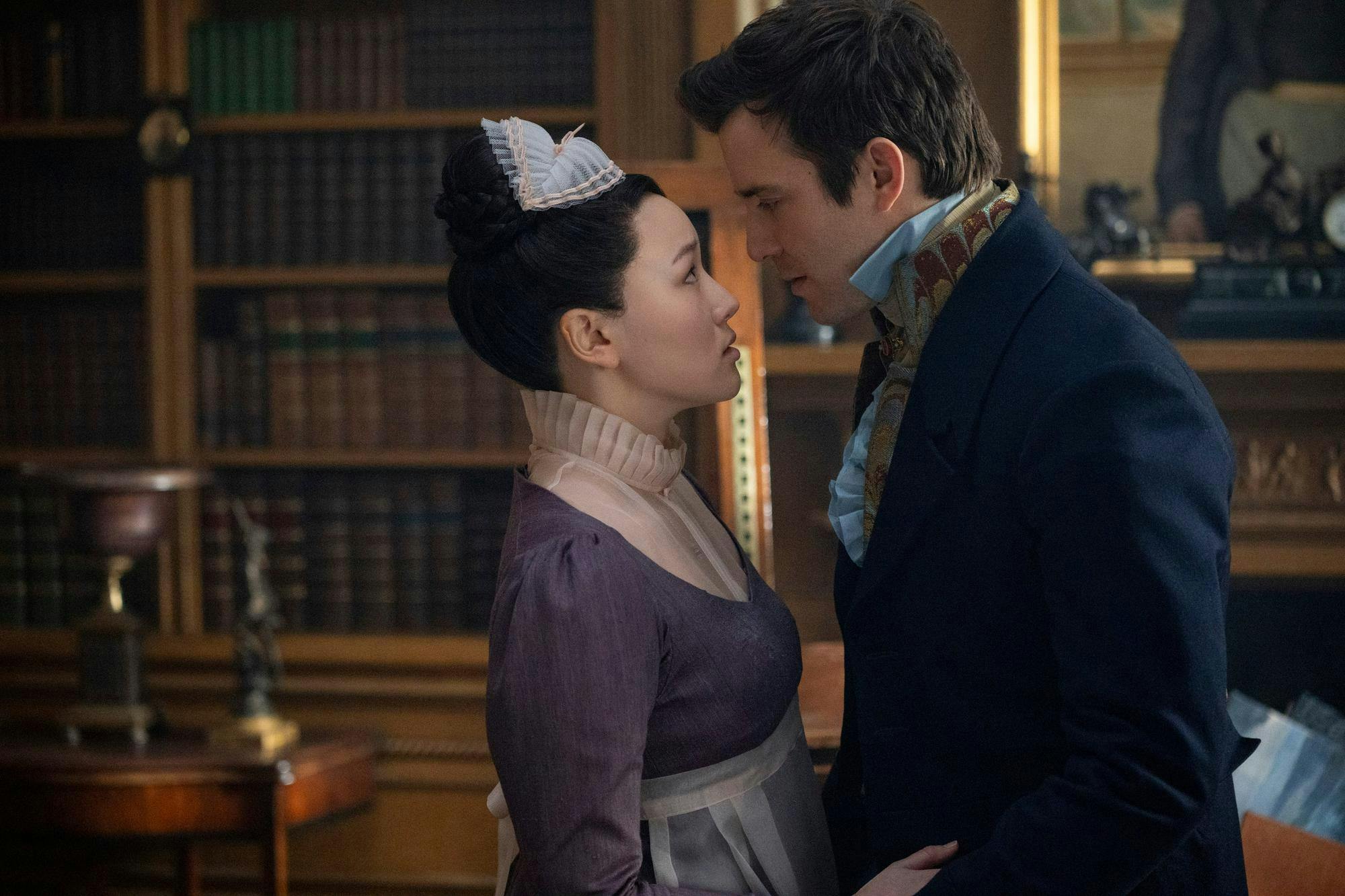
    Then the second son, Benedict, fell in love with a maid.

    Black Girl Watching is a reader-supported publication. Consider becoming a paid subscriber.

    This proves to be an inconvenient scenario not just for Benedict (Luke Thompson) and his maid(en) Sophie (Yerin Ha), who cannot marry without being ostracized from high society in scandal, but also for the audience. It’s capaganda (capitalist propaganda, if you will), this fantasy that Bridgerton offers its significantly poorer audience. It’s an escape into a bygone world of gentlemen, ladies, mansions and balls, and, above all, romance. The Queen (Golda Rosheuvel) is Black! So, never mind that the luxury and leisure of the English court are made possible by its booming Trans-Atlantic Slave Trade. The Featheringtons’ maid, Mrs. Varley, is like a co-conspiring bestie to Mrs. Featherington! So, never mind that the maintenance of the luxury and leisure of the Ton falls on a servant class who work their entire lives for the lords and ladies and will never manage to escape their servitude. That’s too deep for polite conversation.

    But with Sophie as the romantic lead of the season, Bridgerton breaks with form and shows us the brutal, disgusting process of how the sausage is made—and then expects us to want more sausage. In a pair of striking scenes, we first see Benedict and his brothers playing a joyous game of Pin the Shaving Cream on the Brother. Immediately afterwards, we see a maid on her hands and knees cleaning up the mess the brothers made and simply left behind.

    Later in the season, as Mrs. Featherington snaps at her new maid for not being as good as Mrs. Varley, who quit over the Featheringtons’ disrespectful wages, fan-favorite Penelope Bridgerton (Nicola Coughlan) is seen scolding her mother for being rude to the help. They’re meant to be kind to the help, like the benevolent Bridgerton matriarch Violet. Throughout the season, Sophie checks Benedict on his immeasurable privilege and ignorance over how much strife he puts his servants through on a daily basis. And all I can think about is, are we supposed to like these insufferable people now that we’ve gotten to know the human beings who wait on them, hand and foot?

    You have people whose entire lives are about serving you, raising your children, dressing and undressing you, chauffeuring you wherever you want to go, when you want to go there. You have people whose lives consist of cooking your food, serving it you, and cleaning up after you when you’re done. They throw out your chamber pot piss in the morning and draw your curtains when you wake up. And we’re supposed to go back to relating and rooting for the rich people after what we’ve seen?

    But this is the appeal of the show. It’s bigger than “steamy love scenes”— we’re supposed to long just as much for the day when we can live as comfortably as the Bridgertons, at someone else’s expense. This is what makes Sophie’s story a fairytale, in the first place.

    Through Benedict’s insistence on being with Sophie despite the ruin he could bring to his family, or to himself by being cut off from the family, season four offers both an escape from class strife and a prison. Love, the ultimate liberator, has come to set Sophie free. But of course, only Sophie. As much as the white Bridgertons love to collect marginalized spouses, they do so only as much as their wealth, power and status in the Ton are secured — much like their IRL Kardashian counterparts.

    The Sophie-Benedict Cinderella story had the potential to shake up the Ton and to buck the social order, as Benedict declared that he wished he could do. Violet Bridgerton had hatched a plan with Lady Danbury and the Queen’s newest lady in waiting, Alice Mondrich, to make the Queen bless a marriage between the classes, thus upending the social order. But that’s not quite what happens, because that’s not quite what Bridgerton is about.

    Will and Alice Mondrich are the bellwethers of class acceptance in Bridgerton

    Look no further than the Mondriches. The aforementioned lady-in-waiting, Alice, and her husband Will had much humbler beginnings. Will is introduced in season one as the Black friend and counterpoint to the Black duke, Simon. Where Simon was born into title and wealth, Will was born into slavery but escaped to Britain, became a boxer and befriended local rake Simon. When Will wanted to build a gentleman’s club, Simon invested and his Bridgerton brother buddies patronized him, making Will everyone’s new Black friend of a different class. While Simon has never been seen again after season one (thanks, at least in part, I’m sure, to the racist fans of the show and book series), Will and Alice, have persisted.

    And without a regular Black male constant on the show who is on equal footing with the Bridgertons (thanks to the absence of Simon, Lady Danbury’s fine little brother Marcus, and now with the death of Francesca’s husband, John Stirling) Will and his wife have been promoted to the job. The biracial Alice has a white aunt of status with no surviving heirs, so her estate and family titles go to Alice and Will’s son, elevating Alice and Will to members of the Ton. Will’s storyline in season 3 consists of him wrestling with giving up the club he worked so hard for in order to be a member of society. Gentlemen do not work! They enrich themselves off of the labor of others! That is the trade and the formerly enslaved Will reluctantly but ultimately makes it. As a result, this high society loophole allows Alice to be promoted to lady-in-waiting for the Queen in season 4. Find the cracks and crevices and sneak the colored folk in, if you must! But that status quo will be maintained.

    We saw as much in season two, when Eloise Bridgerton, in her search to uncover the person behind town gossip rag Lady Whistledown, fell into a bit of flirtation with a bookshop worker named Theo. He gave her his favorite books to read and introduced her to the political activism brewing underneath the Ton’s polished veneer. Lady Whistledown wrote about Eloise and Theo’s friendship and nearly ruined Eloise and the entire Bridgerton clan’s standing in society. The stakes in this and every season have been about this potential loss of power and status, and how hard the gatekeepers of the family—Violet and Anthony in particular—are willing to work to make sure that never happens.

    So, instead of Benedict marrying a maid, Violet blackmails Sophie’s enslaver into pretending that Sophie is a legitimate daughter of Lord Penwood’s house. Though the Queen knows this is a lie, she’s deeply amused by her favorite Kardashian soap stars’ shenanigans, and lets it all slide with uproariously laughter. Benedict and Sophie marry and the status quo remains in place.

    Capaganda requires the audience to turn off our brains in order to root for and aspire to be like our oppressors. Our heroes, the Bridgertons, are landlords, for crissake! Bridgerton took a serious risk in upending that social contract by making us remember that the servants are people with lives who are deeply impacted, mostly negatively, by their spoiled, pampered, thoughtless enslavers—whether that’s the Queen, the Bridgertons, the Featheringtons, the Penwoods or any of them— and that there’s no such thing as “the good kind” of enslaver. Benedict wields his power over Sophie in the same uncomfortable ways that Mrs. Featherington wielded hers over Mrs. Varley, and the Queen wielded her power over Lady Danbury—at the end of the day, there can’t be equality, true friendship or love when one holds the other’s livelihood and future in their hands.

    Penelope is the only one who recognizes as much this season when she finally lets go of the Lady Whistledown mantle that made her famous and important. She’s a Bridgerton now, and the mother of the new Lord Featherington. The powerlessness from which she created Lady Whistledown no longer exists. In the vacuum Penelope leaves behind in order to pursue other forms of writing, a new Lady Whistledown emerges. People have speculated that it’s Mrs. Varley, someone invisible enough as a maid to get the tea and spill it. Let me dispel that notion right now: the maids have jobs! 24-7! They are too busy to produce a weekly gossip magazine! Lady Whistledown is a bored woman’s job. It’s likely Alice Mondrich who, as a lady-in-waiting, has nothing to do all day but hold dogs, wear wigs, and find gossip for the Queen.

    Disabled actress Gracie McGonigal (R) plays Hazel the maid in S4

    In its focus on class and power this season, the disability representation was incredible, featuring a lord in a wheelchair on the marriage mart; a maid with a limb difference (Gracie McGonigal who plays Hazel) and Francesca and John’s autism-coded characters. All of these disabled characters (and some disable actors) just existed without their disabilities being the center of their storylines. Each were allowed to experience or search for love, unencumbered—if a bit in the background in the case of Hazel the maid and the young lord. It’s remarkable because I’ve yet to see it elsewhere in a fictional narrative on screen—especially not in a period piece!—without a primary focus on disabilities (like in the docuseries “Love on the Spectrum,” for example). The inclusivity in front of the camera is a standard that other shows should follow (even if the show’s insistence that partnering people of color with white people is the revolution gets on my last nerves).

    John’s death this season was also excruciating and well acted, with Francesca’s Hannah Dodd playing a young grieving widow with absolute anguish. And the promise of Francesca and Michaela’s love story—the first queer love story that will take centerstage in a future season of Bridgerton, was laid out well, with respect for Francesca and John’s brief but lovely love story.

    But with every season of Bridgerton as an example, it’s hard to imagine how this gender-swapped sapphic romance between Francesca and Michaela (who was Michael in the books) will turn out in a series that teases revolution but ultimately refuses to ever actually rock the boat.

    Benedict’s bisexuality isn’t invalidated by him ending up in a heterosexual partnership with Sophie. And also, a bisexual character ending up in a heterosexual partnership is notable in a show that is, at its core, about maintaining the status quo.

    All of Sophie’s secret maid friends attend her wedding; new money and status won’t make her forget where she comes from! But, of course, she’ll go on to have maids and servants of her own now. It can’t be helped; that’s just the way things are. We should be happy about Sophie’s turn of good fortune! After all she’s been through, she’ll surely be a kind overseer, like Penelope or Violet before her. Maybe she’ll even have a maid bestie like Mrs. Featherington and Mrs. Varley!

    But the specter of class and slavery can’t help but haunt this show.

    Stay watchin’,

    Brooke

    Enjoyed this piece? Tip your writer!

    Share

  • The 2026 BAFTAs Were Violent

    The 2026 BAFTAs Were Violent

    Anti-Black violence happened at the 2026 British Academy Film and Television Arts awards last night.

    First, I want to hold space for Michael B. Jordan and Delroy Lindo—two extraordinary actors who turned in the best performances of their careers in Sinners. I want to sit with them and their hearts as they traveled to London and graced the BAFTAs stage for the first time as presenters, and Jordan as a nominee, and what that must’ve meant for these Black men to be internationally acclaimed for their craft—finally! I want to cover them in love as they opened their mouths to present an award together and before they could even get started good, they were made to hear a white man in the audience hurl at them the slurs “N____r b___h!” in the silence.

    Black Girl Watching is a reader-supported publication. To receive new posts and support my work, consider becoming a paid subscriber.

    I wonder if, before this, Jordan and Mr. Lindo had gotten their hopes up. I wonder if they’d finally felt seen in an industry that has overlooked their contributions for years. The look on their faces is unbearable. But they took a beat, read that prompter, and gave out that award. They watched their cast mate Wunmi Mosaku win Best Supporting Actress and their writer-director Ryan Coogler win Best Original Screenplay and I wonder if, even in their joy, that degradation stayed with them.

    “You may have noticed some strong language in the background,” BAFTAs host Alan Cumming said on stage of the racial slur hurled by Tourette’s campaigner John Davidson, whose life story with the disability was featured in the movie I Swear which was also awarded that night. Though no other group besides Black people was subjected to slurs, Davidson had also reportedly yelled out “shut the fuck up” to white people on stage. “This can be part of how Tourette’s syndrome shows up for some people as the film [I Swear] explores that experience.”

    It’s true: some people with Tourette’s have the most extreme and rare version, Coprolalia, which causes involuntary use of offensive words and even racial slurs. Apparently, that’s what Davidson has. But that n____r only came out when he saw Black people.

    “Thanks for your understanding and helping create a respectful space for everyone,” Cumming said. Isn’t it something, what white people demand that Black people “understand”?

    Apparently realizing his outrageous statement about “understanding” was inadequate, later in the broadcast, Cumming returned with a weak non-apology: “Tourette’s Syndrome is a disability and the tics you’ve heard tonight are involuntary, which means the person who has Tourette’s Syndrome has no control over their language. We apologize if you are offended tonight.”

    If.

    The BAFTAs said nothing publicly specifically to Jordan or Mr. Lindo. Nothing to the Black members of the audience in the room nor globally. The BBC had plenty of time to edit out the slur, yet chose to air it on television anyway. When Nigerian-British filmmaker Akinola Davies Jr. won Outstanding Debut film for his excellent feature My Father’s Shadow, and he gave a speech acknowledging those experiencing genocide and occupation around the world, and said “Free Palestine,” the BAFTAs and BBC acted quickly to cut that part out of the broadcast. The BBC erased Davies’ calls for liberation of Sudan, Congo, Nigeria and Palestine. But they left in N____r.

    Sit with that.

    The BAFTAs and the BBC made numerous violent choices that night and thanked us for “understanding.” The docile negroes who have to smile and push through and “understand” the layers and levels and generations of white violence collapsed into one evening.

    “A source told Variety earlier that Davidson was an ‘invited guest’ and under no circumstances would he be asked to leave the ceremony,” Variety reported of the incident. “Under no circumstances”?

    It seems the extent of their plan to mitigate any harm was for the floor manager to offer a mild warning before the program began: “I’d like to welcome John Davidson MBE from one of our nominated films ‘I Swear’. John has Tourette’s Syndrome so please be aware you might hear some involuntary noises or movements during the ceremony,” Variety reported the floor manager saying.

    But it wasn’t just noises or movements. It was racism. And it wasn’t just Jordan or Mr. Lindo who were slurred. Sinners production designer Hannah Beachler was also verbally assaulted by Davidson with n____r off-camera. She wrote on Twitter:

    “I keep trying to write about what happened at the BAFTAs, and I can’t find the words. The situation is almost impossible, but it happened 3 times that night, and one of the three times was directed at myself on the way to dinner after the show.”

    This is BAFTAs’ epic failure.

    Where, on an institutional level, was their plan to first prevent as much harm as possible here, and to repair potential harm caused? Disabled people belong in the world and must have appropriate accommodations. In this case, the BAFTAs not only should’ve had a stronger warning for its audience about what could come, but also a plan for how to protect all of its invited guests from harm. If a racial slur is a tic that’s triggered when someone sees Black people and you know Black people are going to be in the room, there is a duty here to plan for this accordingly before harm is caused beyond expecting the victims to “just ignore it” or “understand” it—not only by Davidson and his team but also the BAFTAs. This institution failed its duty to work with Davidson to ensure the safety of Black guests. While I find it unacceptable for the BAFTAs to award the fictionalized I Swear while pushing out the real human who inspired the film, it is also unacceptable to subject Black people to n____r. There is no compromise on that. But the BAFTAs and the BBC don’t seem to understand that. And they’re not alone.

    Early Monday morning, after a night of backlash, BBC issued a similar unspecific milquetoast apology as its host did: “Some viewers may have heard strong and offensive language during the Bafta Film Awards. This arose from involuntary verbal tics associated with Tourette syndrome, and was not intentional. We apologise for any offence caused by the language heard.” No responsibility taken for their choice to air the slur. No apology for the racism. Just passive voice stretched to its absolute limits. As of yet, there have been no reports of an apology from Davidson, nor the BAFTAs—and many white people on social media seem to believe an apology isn’t warranted in the first place. This is a disability! It’s involuntary! Wanting an apology is ableism! They have said, rushing to extend Cumming’s demand for “grace.”

    Yet, “involuntary” is a mitigating circumstance, not a free pass to harm. And what could be more ableist than suggesting disabled people cannot recognize the harm they cause and repair it? Without a doubt, from Beachler’s tweet and Jordan and Mr. Lindo’s faces, harm was done in that room. And harm was done outside of it. There is far more attention on the violence of Davidson’s words and the BAFTAs and BBC’s violent choices in response than there is on celebration of the three awards that the Sinners team collected last night. Their moment was stolen. That’s violence too, and it demands repair. What is stopping Davidson, the BAFTAs or the BBC from apologizing publicly and for real for their anti-Black violence specifically, other than a centuries-old belief that Black people don’t deserve apology?

    UPDATE: BAFTAs has now issued an apology specifically to Jordan and Mr. Lindo almost 24 hours after the event: “Early in the ceremony a loud tic in the form of a profoundly offensive term was heard by many people in the room. Michael B. Jordan and Delroy Lindo were on stage at the time, and we apologise unreservedly to them, and to all those impacted. We would like to thank Michael and Delroy for their incredible dignity and professionalism. … We take full responsibility for putting our guests in a very difficult situation and we apologise to all. We will learn from this, and keep inclusion at the core of all we do, maintaining our belief in film and storytelling as a critical conduit for compassion and empathy.”

    Davidson, on the other hand, issued no apology to any of the Black people he hurled this slur at, releasing instead a statement only acknowledging how mortifying the event was for him. “I can only add that I am, and always have been deeply mortified if anyone considers my involuntary tics to be intentional or to carry any meaning.

    I was in attendance to celebrate the film of my life, I SWEAR, which more than any film or TV documentary, explains the origins, condition, traits and manifestations of Tourette Syndrome. I have spent my life trying to support and empower the Tourette’s community and to teach empathy, kindness and understanding from others and I will continue to do so. I chose to leave the auditorium early into the ceremony as I was aware of the distress my tics were causing.” The end.

    Tourette’s is a terrible disability. I’ll never understand what it must be like to live with it. And white people will never understand being Black and being called N____r by a white person. When racism and ableism collide for Black disabled people, they curiously don’t mobilize to call for “grace” and “understanding”—yet the consequences for being Black and disabled in public are deadly. Sonya Massey. Elijah McClain. Ryan Gainer. All killed by police who see disabled Black people as inhuman, inherent threats to be put down. In this white supremacist system, whose feelings get centered, who requires acts of grace, and who is demanded to be gracious are all political. None of this exists in a vacuum.

    Jordan, Mr. Lindo and Hannah Beachler were called n____r in the context of an 80-year-old institution awarding its first Black winner in Ryan Coogler for Best Original Screenplay last night. In Big 2026. They were called n____r in the context of the BBC constantly running zionist propaganda on its platforms while erasing calls for a liberated Congo, Sudan, Nigeria and Palestine from its broadcasts “for time,” while leaving in the slur against them. They were called n____r in the context of Sinners competing with and losing to the most basic, most anti-Black movie of the year, One Fetish After Another, over and over again, all season. They were called n____r as the most anti-Black writer-director of the season Paul Thomas Anderson took up another award for Best Director last night, using undocumented Hispanic immigrants and Black women as little more than aesthetic background props for his racist ass white-male-centered bullshit movie, and then declining to say anything in his self-aggrandizing speech about ICE violence against immigrants and Black American women like Dr. Linda Davis who was just killed because of ICE last week.

    “I’m not a politician, I’m a filmmaker,” Anderson shrugged through his cowardly answer as to why he wouldn’t speak up for the communities he stepped on to collect his trophies all season. “I try to do it through the work.” The empty work that stated no revolutionary or political vision? The work that caricatured undocumented people and Black women? That used them and threw them away as to not hurt his awards chances with white voters? Oh.

    To watch the unmatched Black brilliance that is Sinners and its cast and crew continuously lose to that objectively inferior, self-masturbatory, stilted, stunted, boring, wack ass slog of a movie is par for the course in a white supremacist system that continuously expects Black people to just be happy to be there at all. You have to be twice as good to get half as far, the Black American adage goes. It’s not a challenge for us to accept, but merely a statement of white supremacist reality. They don’t have to yell the word; in those rooms, it’s always hanging in the air.

    Love and grace to Michael B. Jordan, to Delroy Lindo, to Hannah Beachler. Love to Ryan Coogler and Wunmi Mosaku. Love to Black people with Tourette’s who are sitting at the intersection of racism and ableism and hearing both be excused and dismissed while erasing the fullness of their reality. May the catastrophe of the BAFTAs spark in us an urgency to divest from these white supremacist institutions that were never created to see or honor us, and to build instead a world that’s safe for Black people and disabled people, that centers the most harmed, and works to repair it.

    Stay watchin’,

    Brooke

    Enjoyed this piece? Tip your writer!

    Share

  • ‘Wuthering Heights’ Is Literal Trauma P*rn

    ‘Wuthering Heights’ Is Literal Trauma P*rn

    ***Spoiler alert for the plot of ‘Wuthering Heights’ movie and book***

    As a sex positive, pro-hoe person, I hate using the word “porn” negatively, in the way a phrase like “trauma porn” has inherently negative connotations. Sex work is valid work and I won’t single it out for degradation. For that reason, when speaking of films and filmmakers who seem to metaphorically get off on exploiting pain and depicting gratuitous violence as entertainment, I coined the phrase “eroticized trauma,” instead. But, I’m so sorry, it must be said: Emerald Fennell’s latest film “Wuthering Heights” is literal trauma porn.

    It begins with an L-Cut over a black screen. We hear squeaking and creaking like the sound of a wooden bed in motion. Then, of course, comes the heavy breathing. Fennell wants us to believe that we’re overhearing a sex scene. But when the camera fades into the scene, we learn, instead, that Fennell is simply trolling the audience by offering up the last thing we would expect: a man with a sackcloth over his head, struggling to breathe while being hanged from a noose in the public square. He dies violently, with an erection, as if his public execution were an autoerotic asphyxiation kink gone wrong. It makes the grotesque onlookers horny and some literally have sex or masturbate while the now-dead man swings and children laugh.

    Of course, this scene never appears in Emily Brönte’s classic 1847 novel Wuthering Heights—Fennell just wants us all to applaud her cleverness and ascribe some depth and edginess to her flaccid, rich white woman’s imagination of the debaucherous poor. Yet it’s among the least egregious changes in Fennell’s adaptation, if it can even be called that when she completely ignores or fundamentally misunderstands the source material. Fennell says she’s put the title in quotation marks to stave off the ire of readers of the book who can tell that Fennell didn’t. It hasn’t worked.

    Though the scene doesn’t connect at all to the rest of the plot, it introduces young Cathy, the main character as a child, who witnesses the hanging with Nelly, who, in this version isn’t a maid like in the book, but an unpaid “companion” for Cathy. Beyond that, the scene reveals something insidious about Fennell and her ideas about sex, violence and kink. Unlike violence, the underlying requirement of sex and kink is consent—something she’ll fail to responsibly distinguish throughout the film. Perhaps the bait-and-switch scene was simply confirmation that this entire film will run contrary to its marketing.

    “Inspired by the greatest love story of all time,” the trailer lies, as anyone who has ever read Wuthering Heights knows that, though it is a great book, it is most decidedly not some great romantic love story. Instead, Brönte’s novel tells the story of how abuse, racism, and classism thwart love and breed obsession and how real love and self-acceptance can heal generational trauma.

    Fennell has no interest in any of this, or perhaps no awareness. She wants to make a bodice-ripping period piece where revenge is a non-consensual kink that turns deadly. In Fennell’s mind, dying of grief because the man you didn’t choose married someone else isn’t selfishness, but the ultimate sign of “great love.” Fennell turns this idea of Cathy (Margot Robbie) and Heathcliff (Jacob Elordi)’s deadly cruelty and obsession with each other as some Romeo & Juliet, star-crossed lovers tale to be imitated by the impressionable audience. “Come undone,” the tagline of the film encourages, further solidifying for audiences that having a mental breakdown and dying as Cathy does or living in misery forever after as Heathcliff does is the evidence of great love and a great movie.

    I expected such irresponsible filmmaking from Fennell. She is also the disaster-mind behind Promising Young Woman, where ***spoiler alert*** a young woman seeks revenge on the male rapist of her friend, but only actually harms women who contributed to her friend’s pain and then gets murdered herself by her friend’s rapist. It’s no wonder Hollywood continues to prop up its favorite patriarchal princess; the women in her films somehow always manage to get back in their place or suffer.

    She’s also the born-wealthy woman behind Saltburn, which dares to ask, “What if the poors are obsessed with us and plotting to steal our money out from under us?” And, “What if The Talented Mr. Ripley kept the great cinematography but lost all nuance and depth, and had nothing to say about the perversions of whiteness, maleness, class, and obsession?” In this context, Fennell’s illiterate adaptation of Wuthering Heights makes total sense.

    White Australian actor Jacob Elordi accepted the role of Heathcliff despite the fact that, in the book, Heathcliff is described multiple times as “dark-skinned,” and is often degraded by white characters with the old slur for Romani people. “I wish I had light hair and a fair skin, and was dressed and behaved as well, and had a chance of being as rich as he will be!” Heathcliff says in the book when he realizes that Cathy is going to choose the extremely wealthy, blonde-haired, blue-eyed Edgar Linton over him. “I must wish for Edgar Linton’s great blue eyes and even forehead…I do and that won’t help me to them.”

    This is Heathcliff’s racial and class anguish colliding, and his singular motivation in the book: to become wealthy and whiten his bloodline as both revenge for Cathy choosing Linton and a way to validate himself and become worthy of the kind of man Cathy would love and choose. Fennell strips this crucial racial element out of Heathcliff’s character because Elordi is what she imagined Heathcliff to look like when she read the book as a 14-year-old. Unless this R-rated, BDSM, Harlequin “romance” was made for other 14-year-olds who imagine all characters as white despite their descriptions, I’m not sure why the version of Fennell before her prefrontal cortex fully developed is the one that’s running this show. When there are so few non-white movie leads, it’s simply outrageous to whitewash a POC character.

    Some have suggested that they don’t mind Heathcliff being white in the film because he’s evil in the book, and who needs an evil POC when there are so few POC characters on screen? To that, Ms. Fennell would like to introduce you to whom she has cast as Edgar Linton and Nelly. Pakistani actor Shazad Latif plays Edgar to shield Fennell and Elordi from criticism for whitewashing Heathcliff. And Hong Chau is Nelly and avoids criticism of Catherine for having an Asian maid by making Nelly into Catherine’s unpaid companion, which Fennell thinks is better. Never mind the optics of Fennell stripping Nelly of her position as the narrator of the story and downgrading her to a one-dimensional villain. Alongside Edgar, Nelly is the main antagonist to Heathcliff and Cathy’s love. Look at these meddlesome POC, getting in the way of Fennell’s fantasies of true love!

    As it turns out, 14-year-old Fennell’s dreamboat Heathcliff is actually a violent abuser in the book. His “seduction” of Edgar’s sister Isabella (turned into Edgar’s “ward” in the film to justify casting a white actress in the role after race-swapping Edgar) is not some BDSM kink the way Fennell has rewritten it for the modern audience. Heathcliff is monstrous to Isabella in the book, punishing her for not being Catherine. As soon as they’re married, he hangs her dog (is this where Fennell got the idea for the opening hanging scene?!) to solidify that he does not and will never love her or be kind to her.

    Yet Fennell takes that awful hanging of Isabella’s dog and turns Isabella into a dog as a kink between husband and wife. In the film, she’s consensually chained to the wall by a collar around her neck and crawls on the floor on her hands and knees, barking at Heathcliff’s command. When Nelly comes to save Isabella in the film, she doesn’t want to be saved. This is the exact opposite of what happens in the book.

    “I’ve sometimes relented, from pure lack of invention, in my experiments on what she could endure, and still creep shamefully cringing back!” Heathcliff confesses to Nelly in the book of the abuse he puts Isabella through, blaming his young wife for his actions.

    “He’s a lying fiend! a monster, and not a human being!” Isabella responds to Nelly when Heathcliff says Isabella is free to leave the abuse anytime she wants but she chooses to stay. “I’ve been told I might leave him before; and I’ve made the attempt, but I dare not repeat it!” she says. “The single pleasure I can imagine is to die, or to see him dead!”

    Before Isabella winds up giving birth to their son, she manages to escape Heathcliff’s abusive clutches and lives free and far away from him with their son for the rest of her short life. For Fennell to whitewash not only the characters but a woman’s abuse and survival story and reframe it as some consensual kink instead is astounding. But that’s what must be done when you need Heathcliff to be a romantic hero and not the vengeful devil of a man that his character so evidently was.

    “She abandoned [her principles] under a delusion,” Heathcliff says of Isabella in the book in what could be a word-for-word, bar-for-bar rebuke of Fennell’s “adaptation.” “Picturing in me a hero of romance, and expecting unlimited indulgences from my chivalrous devotion. I can hardly regard her in the light of a rational creature, so obstinately has she persisted in forming a fabulous notion of my character and acting on the false impressions she cherished.”

    Emily Brönte with the prescient third-degree burn for Fennell from beyond the grave!

    The art of adaptation, when done well, is exactly that. They elevate the source material, like Heated Rivalry or The Leftovers; they make space for marginalized actors who were previously shut out of earlier iterations, like Wicked: Part One; they correct some wrong or narrow-minded thinking in the original, like one of the best adaptations of all time, the TV series Interview with the Vampire. Above all, a good adaptation should serve a purpose. And Fennell’s films just have no real sense of depth or urgency or reason for existing beyond gimmick.

    Here, Fennell’s anachronistic costuming and Charli XCX soundtrack aren’t used in service of her narrative, but simply because she thinks it looks and sounds cool. Her fully-clothed vanilla sex scenes mixed with licking dirt and grass and oozing raw eggs, are dreadfully unsexy and too vanilla to actually provoke. She’s cast 28-year-old Elordi in a POC role and her producer, (35????-year-old) Robbie as his 17-year-old love interest, not for the chemistry, or the accuracy, but simply for the white romance novel aesthetic. And even as a romance it fails, because their story is simply not romantic. Though their lost-love ending is orchestrated to induce tears, these characters are too decontextualized from their beating hearts to make the desired impression. With these empty adaptation choices, Fennell is the Taylor Swift of film; the cinematic embodiment of Great Gowns, Beautiful Gowns, and Go, Girl, Give Us Nothing.

    By only adapting half of Brönte’s novel (as many other adaptations have done) and killing off Cathy’s child at the end of the film, Fennell has killed off the literal hope of the book that made this journey worthwhile. Cathy’s child is the change agent, the generational curse breaker that offers not only Heathcliff but the reader a blueprint for another way of being.

    In the book, just hours after Cathy dies of grief at the thought of choosing between Linton and Heathcliff, Cathy and Edgar have a baby girl, also named Cathy. For Heathcliff’s plan of vengeance to work, it’s imperative that he marry the blonde-haired, blue-eyed Linton girl Isabella. It’s not just about revenge against Cathy and Edgar, it’s about him becoming as good and worthy as the Lintons. He and Isabella have a blonde-haired, blue-eyed son, whom Isabella names Linton Heathcliff(!). When Cathy and Linton are teenagers, Heathcliff forces his son—the white, blonde-haired, blue-eyed version of himself—to marry Cathy’s daughter. He also lies in wait until Edgar dies and he takes over both Edgar’s wealth and property as well. By all accounts, he has won. Yet he remains miserable.

    He’s become more physically, emotionally and financially abusive to the next generation and everyone around him than his abusers were to him when he was oppressed. He hates his son, both for being sickly and for looking like the Lintons, and being a reminder of who he could never be. He tortures Linton and that only makes Cathy Jr. want to protect him more and love him more. Knowing that Heathcliff has forced them together for his own games and her misery, she’s determined not to let him win.

    “I know he loves me, and for that reason I love him. Mr. Heathcliff YOU have NOBODY to love you; however miserable you make us, we shall still have the revenge of thinking that your cruelty arises from your greater misery,” Cathy Jr. tells Heathcliff. Where Heathcliff uses his hate to fuel his plotting and ease his pain, Cathy Jr.’s love is her weapon and her revenge.

    The success of his plans doesn’t heal him or end his pain. His sickly son dies a few months into the marriage to Cathy Jr.—proof to him that there was nothing he could’ve ever done to be good enough for his Cathy in any form.

    Heathcliff has also taken Wuthering Heights out from under its owner and his original abuser—not Cathy’s father, like in the film, but Cathy’s brother Hindley, whom Fennell erased and pasted onto the father character for the film. This huge deviation took the sting out of Hindley’s abuse as a peer and brother, competing with Heathcliff for the affection of his father who had adopted Heathcliff and doted on him. Hindley violently retaliated against Heathcliff for his father’s love, and when his father died, he turned Heathcliff into a servant, which devastated Heathcliff’s sense of self. But in his grown-up revenge against his Hindley, Heathcliff accidentally created the conditions for his own redemption.

    Hindley had a son named Hareton before he died. To punish Hindley, Heathcliff raises Hareton —who should’ve been raised a gentleman by station— as a lowly brute who can’t read or write or be in polite society. This is the ultimate revenge, that Hindley’s son would be no better than Heathcliff was when he first came to live at Wuthering Heights as a child. But after Heathcliff forces Cathy Jr. to remain at Wuthering Heights after her young husband dies, she winds up falling in love with the rough and gruff Hareton, who is more Heathcliff’s son than Linton ever was, in manner and temperament and devotion.

    It’s Cathy Jr. who makes fun of Hareton’s inability to read and write in the book—not Cathy and Heathcliff, as Fennell rewrites it for the film. But Cathy Jr. learns that she doesn’t want to be above Hareton in life; she wants them to be equals, and she teaches him patiently from that point on, how to read. Hareton in his humility, accepts the help and improves, opposing Heathcliff and Cathy who didn’t make those choices in their youth. Hareton also chooses to love Heathcliff as a father, despite his abuse.

    “His honest, warm, and intelligent nature shook off rapidly the clouds of ignorance and degradation in which it had been bred,” Brönte writes of how Hareton freed himself of Heathcliff’s boorish upbringing. “And Catherine’s sincere commendations acted as a spur to his industry. His brightening mind brightened his features, and added spirit and nobility to their aspect.” Both Cathy and Hareton were horrifically abused by Heathcliff in different ways, and both chose to love and be loved anyway; to not internalize Heathcliff’s abuse as their own personal failings, as he tried to make it; and to accept themselves and each other.

    At first, it angers Heathcliff that Cathy Jr. would love and choose Hareton, because that shatters his idea that Cathy married Edgar because Heathcliff was unlovable and unworthy. Through witnessing the next generation’s choice to love despite abuse, he finds validation that he was always enough as he was, and it was his bitterness and rage that pushed away the love he could’ve had, after all of the games with Cathy, his wife, his son and adopted children. Soon, Nelly catches Heathcliff inexplicably in a good humor for days on end, smiling, staring out at what appears to be nothing. Then, Cathy’s ghost, who’s been haunting him and Wuthering Heights since her death 18 years ago, comes through the window to take him one night. Heathcliff dies, eyes wide open. The book ends with whispers of people witnessing the ghosts of Cathy and Heathcliff wandering the town together, never to be parted again. That’s how you tell a story!

    It mattered to Brönte that her story of survival be healing because her intention in writing it was to heal. Her mother had died when she was 3 years old. Two of her sisters died before adulthood. Like Hindley, her older brother was addicted to alcohol, drugs and gambling. She would also die of tuberculosis at 30 years old, only a year after publishing Wuthering Heights. But to leave tools for a future generation to not only survive these traumas but a path to heal from them must have been medicine for her soul.

    That is the biggest gripe about Fennell’s bastardization of the original text: it poisons the medicine. Where Brönte explores how to heal trauma, Fennell wonders how she can get off on it, making that irksome opening scene the perfect encapsulation of Fennell’s purposeless, visionless “Wuthering Heights.”

    Stay watchin’,

    Brooke

    Enjoyed this piece? Tip your writer!

    More Brönte’s Wuthering Heights goodies below for paid subscribers:


    Read more

  • Black at Sundance 2026

    Black at Sundance 2026

    There’s nothing like a film festival and crisp air to remind me exactly how much I love what I do! Thanks to Sundance’s Press Inclusion Initiative, I received a grant for Black Girl Watching and an All-Access Press Pass to attend this year’s last Dance in the festival’s long-time home, Park City, Utah, before it moves to Boulder, Co. next year. I saw 15 feature films and documentaries, 5 shorts, and attended several panels and parties over my six days on the Mountain and through last week’s online access portal. I met up with and ran into beloved friends I haven’t seen in six years (my last in-person Sundance was January 2020, just before we knew that the Covid pandemic had already begun), met SO MANY Black Girl Watching readers(!!) and had the most beautiful time running in the snow to catch the bus from theater to theater.

    Brooke Obie on Instagram: “The last #sundancefilmfestival in Pa…

    Still, I’m grateful to never return to Park City. A harbinger of the coming Climate Apocalypse, the mountains were far too green for an end-of-January winter on my drive up from Salt Lake City—a frightening sight compared to how snow-covered the place was on my last visit six years ago. Also, on top of the new fascist laws that Utah has enacted to police alcohol consumption, queer people and women, I’ve always had some kind of racist encounter while I’m there. Beyond being surveilled for potential retail theft when just browsing a store on Main Street of the fest, the worst of my three encounters this time involved a volunteer usher accusing me—in the middle of a film—of being a volunteer usher taking a seat from a “real patron”. Mind you, I’m the only Black person in the whole row, and I have my notepad and pen out, taking notes for my job because the movie had already begun. But she just knew I was the culprit.

    I almost had a final run in on the morning of my last day, I squeezed in one more film before heading to the airport. I was the last person to arrive and had to sit in the only available seat—one usually reserved for companions of disabled guests. A white woman in the row in front of me called over a volunteer usher because she was told before I’d arrived that she couldn’t sit in my seat because it was reserved for disabled companions, but she needed it because her eyes get strained sitting too close to the front. The volunteer whispered a response to her and started walking towards me. Now, this is my last day at Sundance, I’ve had it up to here with the racist encounters and I’d made up my mind that if this volunteer tells me that I have to give up my seat for a white woman one week after Martin Luther King Day, I’m going off! The volunteer walked over to me, removed the wheelchair sign from my seat’s arm rest and walked away as the movie began. At least one of them knew better.

    Yes, being Black at Sundance meant experiencing compounded ignorance that I take great pains to shield myself from in my regular life by working remotely and staying in my house. But it also meant celebrating some incredible films and sitting in the audience with some of my favorite filmmakers; watching Ava DuVernay give flowers to If I Go Will They Miss Me cinematographer Michael Fernandez at the movie’s premiere, and Barry Jenkins speak in total awe of the documentary Once Upon a Time in Harlem (and the moderator not recognizing the Oscar-winner and therefore cutting him off! Black at Sundance, I tell ya! Video below for paid subscribers). It meant crying at the tributes to Sundance founder Robert Redford and communications director Tammie Rosen who both passed away last year and both influenced my career as a critic and filmmaker through Sundance. It meant watching Ava be one of the few high-profile filmmakers at the festival to use her platform to speak up for Palestine and against ICE and American-grown fascism; it’s Baratunde Thurston dropping bars about how to connect and build agency and power with community on a panel at Solidarity House; it’s hugging necks with friends I haven’t seen in six years and dancing all night at after parties and still waking up early to watch as much as I can because I friggin’ LOVE movies. I love a dark theater and scribbling notes that I can barely read because I wrote them without being able to see the page. I love a crowd of people from all over the world, sharing life on one accord for (ideally) 90 minutes at a time, for days in a row. Film festivals are magical places and Sundance is one of the best.

    Here’s my list of the best films I saw at Sundance 2026!

    Paid subscribers can watch a panel Q&A with Barry’s remarks below.

    Black Girl Watching is a reader-supported publication. Upgrade to a paid subscriber.

    If I Go Will They Miss Me?

    My absolute favorite film of the festival is the gorgeous slice of Black South LA life, If I Go, Will They Miss Me? Anthony, a father recently released from prison (J. Alphonse Nicholson) struggles to connect with his young son who bears his name. In Lil Ant (Bodhi Dell)’s imagination, his father is like the Greek god Zeus that he’s learning about in school and he draws Big Ant in all of his majesty. But Big Ant’s self-loathing and the burden of patriarchy make it difficult for him to accept his son or his son’s image of him, and contributes to his struggles with his long-suffering wife (a radiant Danielle Brooks).

    Mixing in magical realism and documentary-style cinematography originating in Zora Neale Hurston’s films and popularized in Barry Jenkins’ works, If I Go, Will They Miss Me? is a promising debut from writer-director Walter Thompson-Hernández, and a stunning realization with cinematographer Michael Fernandez. I watched it twice and bawled my eyes out both times. Nicholson is magic on the screen, wrestling with what toxic masculinity costs a man and his family; and the sweet-faced Dell in his debut role as Lil Ant will break and heal your heart.

    Kikuyu Land

    This is the most urgent documentary I saw at Sundance from an incredibly brave journalist in her directorial debut, Bea Wangondu, and her co-director Andrew H. Brown. Wangondu and generations of her family hail from Kikuyu Land, a luscious region of Kenya where land ownership can mean status and safety, or make one a target for theft and murder. Like all of Kenya, the Kikuyu people and its lands were colonized by Britain and when the people won Kenyan independence in 1963, oppressors merely changed forms. African middle men took the place of British lords and British corporations took over the role of the crown, controlling the land and working its rightful stewards on tea plantations as essentially sharecroppers who can never make enough money from their back-breaking work to leave.

    The modern-day owner of many tea plantations there was Lipton tea owner, the UK corporation Unilever, and Kikuyu Land shows the cost to the people who harvest the tea leaves for our global enjoyment. The film follows Wangondu as she tries to get justice for the workers and the alleged atrocities so many have faced on the plantations. She also interviews a man fighting to get his family’s stolen land back from the government; a “tea child” who ends up quitting school when he’s old enough to work the plantations full-time and help out his struggling family; and her own family for their land-owning ties.

    I could talk about Brown’s gorgeous cinematography and how rich Kikuyu Land looks through Wangondu’s loving lens. But journalists in Kenya have been killed after being critical of the Kenyan government and exposing land-owning corporations. Wangondu, Brown, and the participants in their documentary have risked their lives to tell us this story and to use this lens to get justice for the people. This was, therefore, the only other film that I was compelled to watch twice, and Wangondu is my next guest on the BGW podcast for paid subscribers, Another Possible World. Look out for that episode in March!

    Once Upon a Time in Harlem

    We’ve heard the stories of the Harlem Renaissance, of the most brilliant writers, thinkers and artists in the country living and creating in Harlem in the 1920s and ‘30s. We’ve read of the love and camaraderie of the artists of the day, and we’ve read the dueling essays of the greats and their debates and full-on fights about what the “right path” for Black America should be. But the documentary film Once Upon a Time in Harlem actually shows us the Renaissance in real time and why, 100 years later, the history and the lessons of the era still resonate and are more urgent than ever. Filmed by legendary filmmaker William Greaves in 1972, Once Upon a Time in Harlem is a time capsule of a dinner party Greaves assembled of those great artists still living and available to attend and recount what the Renaissance was really like, with the benefit of hindsight. The same love, the same disagreements spring to life in this pure gift of a documentary that allows us to sit for awhile amongst legends long after their deaths, and Greaves’ as well. His son David, who was a young cameraman at the party, kept his promise to his father who died ten years ago, and took up the mantle of assembling and editing this treasure trove of film into a documentary and a living history I won’t soon forget. Paid subscribers can watch Barry Jenkins’ reaction to the film and the Q&A with David and his daughter Liani below.

    Lady

    I’ve never seen Lagos look so beautiful on screen as it does in Lady. Though her screenplay is critical of the Nigerian government and the crooks at the top who profit at the expense of the people, writer-director Olive Nwosu’s lens is so loving and tender, even as her cinematographer Alana Mejia Gonzalez photographs the slums where the title character, Lady, (Jessica Gabriel’s Ujah) lives. Lady is a taxi driver who has a dream to make it out of the slums and move to Freetown in Sierra Leone. While her fellow drivers want to organize against the government’s rising gas prices, Lady believes it’s her own hard work and hustle that will get her where she needs to be. But when her childhood best friend returns and hooks her into driving sex workers for a powerful and dangerous pimp for extra cash, she’ll soon learn that there are traumas in life and systems in place that you simply can’t out-hustle. This film is almost perfect, with standout performances from Ujah, and the actresses who play the sex workers, Amanda Oruh, Tinuade Jemiseye, and Binta Ayo Mogaji. That third-act shift would’ve been flawless if the mostly stone-faced Lady was given one moment in the end to breakdown and feel her losses before she makes her final choice. Still, a fantastic debut from a promising filmmaker.

    Aanikoobijigan [ancestor/great-grandparent/great-grandchild]

    This film is a reminder of what this country has taken from so many, and what it will take for us to reclaim what’s ours. Following an alliance of Michigan Indigenous tribes as they fight to repatriate the bones of their indigenous ancestors stolen and kept in private and state museums and archives, Aanikoobijigan shows how much American institutions have in common with grave robbers. What an enraging reminder of the generational violence of colonization. Colonizers will kill you and steal your bones as trophies, and their descendants will fight your descendants for their right to keep and study your remains. While there was a group of Black Indians present at repatriation ceremonies, my only criticism is their silence in the film. I would’ve been interested to hear from them directly on their joint struggle for repatriation and reparations as Black Indians—particularly considering how arduous Black recognition in Indigenous tribal communities has been for Black members. Nevertheless, this poignant film’s focus on the alliance of the Michigan tribes, is a brilliant reminder of how we win by banding together.

    All About the Money

    This roller-coaster of a documentary follows Fergie Cox Chambers, a Marxist-Leninist billionaire heir to the Cox family fortune—one of the richest families in America. On one hand, he’s dedicated to his communist principles, setting up and funding an all-expenses paid commune in Massachusetts, where people can live in homes he owns for free, be politically engaged and work the land together. He also co-founded the American branch of Palestine Action, the organization disrupting the U.S.-Israeli genocide in Palestine. On the other hand, he’s also a born-wealthy white male billionaire, so! The contradictions in his actions and treatment of others often moves between comical and concerning, underscoring the reality that a “good billionaire” doesn’t exist and will not save us—only the people banding together to build a society we all deserve can do that. But as a portrait of the distorting power of whiteness, maleness and extreme wealth? All About the Money is devastating in its clarity and one of my favorites of the festival.

    Frank & Louis

    The cruelty of the American prison system knows no bounds. Frank & Louis shows us a little-known truth about what happens to prisoners who get Alzheimer’s while incarcerated. Frank (Kingsley Ben-Adir) is serving a life sentence for murder and takes a job as a caregiver to dementia patients in an effort to gain his freedom at an upcoming parole hearing. Louis (an always-incredible Rob Morgan) is also a lifer who’s raised enough hell during his long stints in prison that even when the stress of survival triggers early-onset Alzheimer’s, he’s still not safe from his victims who see his vulnerability as an opportunity for revenge. Where’s the line between punishment and crimes against humanity when the people being punished can’t even remember what they’ve done? And who is healed when others are punished? Frank’s journey to empathy for Louis will hopefully inspire the same in the audience as we grapple with what our government does to incarcerated people in order for us at home to feel a false sense of “safety” and order.

    TheyDream

    The best films of Sundance were about memory and remembering, and TheyDream is no exception. This mixed-format documentary follows director William David Caballero as he grapples with unexpected loss and compounded grief through reenacting and animating scenes from his loved ones’ lives. After documenting 20 years of his Puerto Rican family’s lives, he stitches film, old tape recordings and voicemails of the departed together to bring peace, comfort, and understanding to those who have been lost and those who are left behind. My deepest held belief about the power of film is that it can bring healing. With this film, Caballero has done just that, not only for himself and his family, but for the viewers who need it.

    Josephine

    This is probably the most well-acted, well-shot film that I’m not sure should exist. Josephine (Mason Reeves) is a happy, 8-year-old kid who loves to play with her dad (Channing Tatum) in the park. TW:SA—One day, while hiding from her dad in the bushes, she witnesses a man brutally rape a young woman and it upends her whole world. We watch a child’s mental health totally unravel and her sense of safety evaporate. It’s devastating and Reeves plays the role incredibly well. And I want to know why we needed this movie. I can’t imagine what’s worse—that the film might be based on true events or born from the imagination of the writer-director. While I’m sure Reeves was not actually on set for the horrible rape scene, I’m still not sure what would justify putting a child actor through these devastating experiences for the sake of a movie—particularly the difficult mental health scenes. It made me consider where the line was in filmmaking with child actors; should all difficult material be off-limits? Or only the particularly heinous? I don’t have an answer. But my worry for the child actor consistently took me out of the film. Watching the young actress processing and reenacting what her character saw to a child psychologist was simply too devastating, as were her breakdowns. With love in my heart and peace to all involved, I’ll never watch it again.

    I Want Your Sex

    I know Olivia Wilde didn’t write or direct this film where she stars as a girlboss artist who has an unethical affair with her employee and causes a stir in the news that impacts her career, but, come on. A little on the nose, eh? Still, I Want Your Sex is a dark comedy that was funny, but I dare not call sexy, as the BDSM relationship between Wilde’s narcissistic artist Erika Tracy and her employee Elliott (Cooper Hoffman) is hardly consensual. Though Elliott is happy to have sex with his boss, Erika constantly undermines his choice by introducing elements that make him uncomfortable and reinforce their power dynamic. She laughs at Elliott’s need for a safe word; she emotionally and sexually manipulates him and his female roommate; and she films and shares their encounters without his consent. I’m pretty sure the crux of BDSM is consent, so, fair warning, the film is a lot of sexual abuse played for laughs with kitschy music and glossy cinematography reminiscent of a Dick Tracy comic book. In that light, it’s difficult to call the movie “fun,” but I did chuckle.

    I hate it when movies don’t know how to end, and this movie had about three endings. But, people did laugh at the final finale, so, I’ll let them have it.

    Extra Geography

    I love a slightly sapphic high school buddy dramedy. In Extra Geography, we follow two best friends at a Catholic all-girls boarding school who have nothing but each other and lacrosse. When the girls make it their mission to fall in love with the first person they see—simply to say they’ve been in love—instead of competing together as they’ve always done, they wind up competing against each other in a game that jeopardizes their friendship and their future. The fragilities of girlhood are on full display in Molly Manners’ funny and heartbreaking feature film debut.

    Soul Patrol

    During the U.S. invasion of Vietnam, an all-Black special operations team was assembled. Dubbed the Soul Patrol by white soldiers, this team fought in the trenches for American interests while also suffering its racism. This documentary follows former member Ed Emanuel, who was excited to join up and see the world as a teenager, but quickly learned how devastating this war would be. Now in his old age, he’s reassembled the surviving members of the Soul Patrol to document this hidden history and try to get some joint healing after the decades-long toll of trauma they suffered during and after their tour.

    At times, the former soldiers speak of their tour in Vietnam like something to be proud of. They speak of the Vietcong defending their own lands and people from U.S. invaders as enemies upon whom the soldiers needed to get revenge for their lost relatives and friends. While the men reference Muhammad Ali and Malcolm X’s protests against Black men enlisted and being drafted to invade Vietnam when the war for civil rights was going on at home, their criticisms of the invasion are dismissed by some of the surviving soldiers, as if it were the activists who did not understand what was at stake. Director J.M. Harper’s Soul Patrol is a complicated portrait of Black men who were exploited by their racist government and manipulated in their youth, and a detailed account of the fallout over their lifetimes and what mythology is necessary to cope.

    Saccharine

    Saccharine is the wildest film I saw at Sundance. This body horror film follows Hana, a medical student with body dysmorphia, who learns that eating the ashes of dead people can help her lose weight without trying. Unfortunately, cannibalism has physical and spiritual drawbacks, and Hana becomes haunted by a hungry ghost. The hungry ghost is a Chinese and Buddhist idea about animalistic desires and I wish the movie had explained that context explicitly; it would’ve added an interesting layer for those of us outside of that culture. Overall, I had a hard time knowing whether Hana was fatphobic or the movie itself was, during its deeply uncomfortable runtime.

    The manifestation of the hungry ghost of a woman was a grotesque being who looked like Fester Adams—an intentionally disturbing specter. But the film takes time to show us the woman when she was alive, to remind us of her humanity and that she was loved. Hana also has a classmate/best friend who is happy with her weight and confident, supporting Hana throughout her journey but cautioning her against dangerous fatphobia and self-loathing. These at least signal that the filmmaker considered the optics and didn’t intend to make a fatphobic film, though I’m not sure if she was successful. While my initial reaction to the film’s ending was negative, I did think more about it long after I’d left, which, I guess, is something. The message that no quick fix to weight-loss will heal your soul of fatphobia and disordered eating (cough, ozempic, cough) certainly resonates.

    Paid subscribers can watch the Once Upon a Time in Harlem Filmmaker Q&A below:


    Read more

  • PODCAST: Richie Reseda on How to Make Art with Integrity

    PODCAST: Richie Reseda on How to Make Art with Integrity

    I am so excited about this second episode of Another Possible World: A Black Girl Watching Podcast! Abolitionist and award-winning filmmaker Richie Reseda has been instrumental in my development as an abolitionist and in using those principles to build a creative life with integrity at the center—even in a business as dirty as Hollywood.

    Richie is the producer of the powerful Netflix documentary and visual album Songs from the Hole, which follows a Black man convicted of murder as a teenager who uses music to aid his healing while in prison. Songs from the Hole is up for an NAACP Image Award for Best Breakthrough Creative Film (directed by Contessa Gayles) and you can vote for it here right now and stream the film on Netflix. His first project with Gayles was while he was incarcerated at the infamous Soledad, California prison, starring in her CNN documentary about his work creating a program for incarcerated men to deconstruct patriarchy called “The Feminist on Cellblock Y.”

    In this paid-subscriber exclusive podcast, Richie and I talk about how he built his worker-owned production company Question Culture using abolitionist principles, how he filmed two documentaries while incarcerated, how Beyoncé’s Lemonade inspired Songs from the Hole and how moving in integrity allows us to build another possible world through art.

    Take a listen. And check out Question Culture’s Healing Plan for people who want to go deeper with the lessons from Songs from the Hole.


    Read more

  • ‘The People We Bore on Vacation,’ A Return to ‘Industry’ and ‘His & Hers’ & My Disgust

    ‘The People We Bore on Vacation,’ A Return to ‘Industry’ and ‘His & Hers’ & My Disgust

    It’s Sundance week! As I head out today to snowy Park City, Utah for the Dance’s one last hurrah in its city of origin before moving to Colorado next year, I had to get this weekly watch off my chest. Honestly, after the feast that is Heated Rivalry, everything else tastes like ashes in my mouth, so keep that in mind as I review (and try not to mention how much better Heated Rivalry is than everything that’s out right now. Or maybe ever). I’ve also got a great paid subscriber exclusive for the second episode of BGW’s Another Possible World podcast coming (paid subscribers can watch the first episode here), and I hope to get that out this week, but if I get bogged down on the mountain, charge my limited capacity and not my heart, and know it’s coming next week, along with all my Sundance coverage. Let’s get into it!

    Black Girl Watching is a reader-supported publication. To receive new posts and support my work, consider becoming a free or paid subscriber.

    The People We Meet on Vacation

    They tried so hard! Through the screen, I could feel the actors trying to make this “love” story about a “restless” woman travel writer who can’t commit and a sturdy Ohio boy (who only has a personality when he borrows hers) work. But, alas. Seriously, the boring boy, Alex, only breaks loose and “gets weird” on his annual summer trip with “best friend” Poppy, whose endearing quirks and spontaneous energy he adores—until, of course, he doesn’t. As soon as Alex wants to “settle down” immediately, Poppy’s quirks and spontaneity get reframed as Poppy being selfish, uncompromising and unserious. And she believes that about herself—that she “ruins” relationships with her “too much” personality. And sure! I found her personality grating, but girl, stand up! Don’t let some boring Linfield, Ohio man emotionally manipulate you into a commitment! Though, I admit, I laughed out loud twice, this tired rom-com represents the worst of the genre that reinforces for women that their lives have no meaning or depth unless they commit to a man. Everything else is a shallow and empty wandering through life, but not living. Everything else is vacation! But there’s no place like (a boring man in my) home.

    Spoiler alert Poppy fully quits a job she begged to get—a travel writer who explores the world on the company’s dime and writes about it—on the off-chance that this boring bozo might want to stay in Ohio, a place that traumatized her in childhood. I literally yelled WHAT THE F%#@! at my television screen as Poppy quite literally chases her man down the streets of Linfield to get him back. Never mind that she hates Ohio. Never mind that she hates running! Doing all the stuff you hate the most in order to win a relationship is the proof of love. Yes, ladies, give up your dream job and return to the site of your trauma, so he knows it’s real. We’ve seen this eye-roll-inducing story over and over and over in the romantic comedy genre, but the joke’s on me for thinking we would never see such blatant patriarchal propaganda or such lukewarm chemistry in the year of our Lord Heated Rivalry 2026. Return to sender. Let’s never meet again.

    People We Meet on Vacation is streaming on Netflix. But I’d skip it and reheat the Rivalry instead.

    Industry

    My Harpsichord is back, baby! Harper Stern (My’ha’la) the chaos demon of stock trading has returned for season 4 of the hit HBO show. Reuniting with her former mentor Eric (Kenneth Leung), Harper is set to raise hell on these white people in ways I will never understand because genuinely, after four seasons, I have no idea what investment banking or shorting stocks is all about, but I feel the tension and the drama, and truly that is enough. I’d be remiss, though, if I didn’t mention how empty, gratuitous and leering the sex scenes seem now compared to—I’m just gonna say it—Heated Rivalry. These scenes aren’t about pleasure, they’re about power, and perhaps that reveals something about Harper’s mental state—we know she’s a (metaphorical) killer. But it’s probably never going to sit right with me again, knowing how sex scenes can be done, and seeing the male show creators and directors Mickey Down and Konrad Kay direct their cameras over women’s bodies the way men typically do. Instant ick.

    And while the premiere episode gets us off to the races by mixing in some new characters with our familiar team of traders, it’s expecting a lot of us to care about these newcomers in such a short time period. Kal Penn has a guest starring role and meets an end that should feel more gut wrenching than it actually is, for his fate to be the crescendo of the premiere. And episode two proves that Kit Harrington’s Henry from season 3 will continue to play a major role in this season as the billionaire royal-adjacent nepo failson that’s married to original team member Yasmin (Marisa Abela) and I promise you, I could not care less about his sob story childhood (though, trigger warning for suicide and suicide ideation).

    I’ve always said that Industry is Gen-Z Succession, but Henry’s Kendall Roy-adjacent character is not the anchor of the show in the same way Kendall and his siblings were. Harper Stern is our center. And, like Succession, we’re supposed to know better than to sympathize with any of them, but to sit back and enjoy the train-wreck that is obscene wealth corrupt the human soul. Maybe giggle at their inevitable comeuppance. But Industry seems hell-bent on having us pity Henry, and, no, absolutely not. But, perhaps, as a demonstration of what depression looks and feels like, the episode is worthwhile. I’m down to see where the rest of the season goes. Just don’t make season 3’s mistake of shelving Harper! Keep her and Eric at the center, and I’ll enjoy the ride.

    His & Hers

    Deep Ancestral Sigh. Where do I begin with this Netflix miniseries of trauma and murder? Starring Tessa Thompson and Jon Bernthal as the titular his and hers, this thriller centers on a news anchor and a police detective who’ve been separated for a year in the wake of their infant daughter’s death. Now back at home in Georgia after disappearing without a trace, Thompson’s Anna uses the gruesome murder of her former high school classmate as a chance to get her job back at the news station. But when its revealed that her husband, Jack, had been with the victim the night of her murder, both spouses wind up being suspects as bodies start to pile up. Every episode presents a new twist and points to a new suspect, but the finale reveal of the killer(s) is anything but satisfying.

    *Spoiler alert for the killers*

    And, fine! I did wish I was watching Heated Rivalry the whole way through, I admit it! The opening scene of this show features a naked, twitching dead woman’s body! In fact, the number of times this naked woman’s mutilated body is shown in episode one is so gratuitous as to be enraging. And that’s just the first episode. Several women’s naked bodies are mutilated and the ending seems to suggest that the audience should be grateful for the graphic ways we witness these women’s bodies and/or deaths. In a move reminiscent of one of the worst, fake-feminist films I’ve ever seen, Promising Young Woman, the bad-guy men rapists somehow get off scot-free while the bystander or complicit women all meet their violent dooms. Cause this is feminism.

    But worst of all, a story about white motherhood carelessly becomes a story about Black motherhood in this book-to-screen adaptation. Thompson, who also serves as the show’s producer, inherently shifts the conversation by being a biracial Black woman in the lead role. While the actress who plays her mother could’ve been white like the book character, the mother in the series is Black, but not present enough to be a full character to preserve the twist. The final twist relies on an expository confession, which works fine in a Knives Out mystery because the whodunit is always less important than the why. But His & Hers relies on solving the mystery of who without letting the killer cook. There’s no richness, no layers to the reveal, because the audience is just supposed to accept that experiencing racism or fatphobia, violence and grief is enough to mold a person into a murderer or, a prolific, grisly, serial killer of women only.

    To be clear, I’m not against the final killer reveal—though, again, I think it’s just wack storytelling to focus on murdering women and not the actual male rapists who did all the raping. I just think you can’t take a white character and cast a Black actress in the role and leave it at that. Black motherhood onscreen doesn’t exist in a vacuum, but in a long, ugly, bastardized Hollywood context of stereotypes that pervert Black mothers out of being sources of life into vessels of death and destruction. Considering this context, more care should’ve been put into crafting this character and making them human so that when the reveal hits, we have reason to feel this path for the character was inevitable. In an award season that is hell-bent on awarding Teyana Taylor’s perversion of Black motherhood in One Battle After Another, it’s no wonder that His & Hers is #1 on Netflix. These stories told in these shallow ways will always find their audience.

    28 Years Later: The Bone Temple

    In a partnership with Sony Pictures last week, I wrote about this excellent film and its underrated Black woman director Nia DaCosta. Because I worked with the marketing team, I’ll refrain from an official review, but I had so much fun watching 28 Years Later: The Bone Temple in theaters and you can read my piece on Nia, ICYMYI last week, here, and watch the short video I made on IG:

    Brooke Obie on Instagram: “I had to break out my #Candyman tee …

    And we’re ending where we began! I make no apologies. It’s so rare to be impacted by a show as much as I have been by Heated Rivalry, and I tried to explain why in my piece. I just want to embrace the way it’s taken over my life and all my conversations. I’ll be talking and thinking about the show for a long time. If you’ve been lucky enough to hear my in-person ravings about the show, you’re welcome!! I’ve been so inspired by the filmmaking in the Heated Rivalry, that I even made an explainer video about an editing technique I saw them use in episode 3, one of my favorite techniques, the J-Cut. Check out my explainer on this technique and why it proves that showrunner/writer/director Jacob Tierney and team were locked tf in when they made this perfect show:

    Black Girl Watching on Instagram: “My first ever TV breakdown v…

    I want to promise I’ll get over it soon, but I may never leave the Cottage of Loons. Drop a comment if you’re right there with me!

    Stay watchin’,

    Brooke

    Share